Learn more
These promotions will be applied to this item:
Some promotions may be combined; others are not eligible to be combined with other offers. For details, please see the Terms & Conditions associated with these promotions.
Your Memberships & Subscriptions
Download the free Kindle app and start reading Kindle books instantly on your smartphone, tablet, or computer - no Kindle device required.
Read instantly on your browser with Kindle for Web.
Using your mobile phone camera - scan the code below and download the Kindle app.

Follow the author
OK
The Brothers: John Foster Dulles, Allen Dulles, and Their Secret World War
A Kirkus Reviews Best Nonfiction Book of 2013
A joint biography of John Foster Dulles and Allen Dulles, who led the United States into an unseen war that decisively shaped today's world
During the 1950s, when the Cold War was at its peak, two immensely powerful brothers led the United States into a series of foreign adventures whose effects are still shaking the world.
John Foster Dulles was secretary of state while his brother, Allen Dulles, was director of the Central Intelligence Agency. In this book, Stephen Kinzer places their extraordinary lives against the background of American culture and history. He uses the framework of biography to ask: Why does the United States behave as it does in the world?
The Brothers explores hidden forces that shape the national psyche, from religious piety to Western movies-many of which are about a noble gunman who cleans up a lawless town by killing bad guys. This is how the Dulles brothers saw themselves, and how many Americans still see their country's role in the world.
Propelled by a quintessentially American set of fears and delusions, the Dulles brothers launched violent campaigns against foreign leaders they saw as threats to the United States. These campaigns helped push countries from Guatemala to the Congo into long spirals of violence, led the United States into the Vietnam War, and laid the foundation for decades of hostility between the United States and countries from Cuba to Iran.
The story of the Dulles brothers is the story of America. It illuminates and helps explain the modern history of the United States and the world.
- LanguageEnglish
- PublisherTimes Books
- Publication dateOctober 1, 2013
- File size2.6 MB
Customers who viewed this item also viewed
Customers also bought or read
- The True Flag: Theodore Roosevelt, Mark Twain, and the Birth of American Empire
Kindle Edition$12.99$12.99 - MacArthur Reconsidered: General Douglas MacArthur as a Wartime Commander (Wartime Commanders)
Kindle Edition$18.99$18.99 - The Devil's Chessboard: Allen Dulles, the CIA, and the Rise of America's Secret Government
Kindle Edition$11.99$11.99 - The Bully Pulpit: Theodore Roosevelt, William Howard Taft, and the Golden Age of Journalism
Kindle Edition$13.99$13.99 - Gossip Men: J. Edgar Hoover, Joe McCarthy, Roy Cohn, and the Politics of Insinuation
Kindle Edition$14.99$14.99 - The Great Divide: The Conflict between Washington and Jefferson that Defined a Nation
Kindle Edition$11.99$11.99 - Liberty's First Crisis: Adams, Jefferson, and the Misfits Who Saved Free Speech
Kindle Edition$11.99$11.99 - Eyewitnesses to the Indian Wars, 1865–1890: The Struggle for Apacheria (Volume 1)
Kindle Edition$17.98$17.98 - The Determined Spy: The Turbulent Life and Times of CIA Pioneer Frank Wisner
Kindle Edition$11.99$11.99 - Unreasonable Men: Theodore Roosevelt and the Republican Rebels Who Created Progressive Politics
Kindle Edition$12.99$12.99
From the Publisher
Editorial Reviews
From Booklist
From Bookforum
Review
“[A] fluently written, ingeniously researched, thrillerish work of popular history… Mr. Kinzer has brightened his dark tale with an abundance of racy stories. Gossip nips at the heels of history on nearly every page.” ―The Wall Street Journal
“Anyone wanting to know why the United States is hated across much of the world need look no farther than this book... A riveting chronicle.” ―The New York Times Book Review
“[The Brothers] is a bracing, disturbing and serious study of the exercise of American global power… Kinzer, a former foreign correspondent for the New York Times, displays a commanding grasp of the vast documentary record, taking the reader deep inside the first decades of the Cold War. He brings a veteran journalist's sense of character, moment and detail. And he writes with a cool and frequently elegant style.” ―The Washington Post
“[A] fast-paced and often gripping dual biography.” ―The Boston Globe
“Stephen Kinzer's sparkling new biography...suggests that the story of the Dulles brothers is the story of America.” ―Washington Monthly
“Two exceptionally important stories take up the bulk of Kinzer's book, and both are told with considerable insight and disciplined prose.” ―Bookforum
“The errors of the Dulles brothers are vividly described in this highly entertaining book…A thoroughly informative book.” ―Revista: The Harvard Review of Latin America
“A historical critique sure to spark debate.” ―Booklist
“The culmination of an oeuvre (All the Shah's Men, Overthrow and others) featuring the Dulles brothers in supporting roles, The Brothers draws them from the shadows, provoking a reevaluation of their influence and its effects.” ―Kirkus.com
“A secret history, enriched and calmly retold; a shocking account of the misuse of American corporate, political and media power; a shaming reflection on the moral manners of post imperial Europe; and an essential allegory for our own times.” ―John le Carré
“Kinzer tells the fascinating story of the Dulles brothers, central figures in U.S. foreign policy and intelligence activities for over four decades. He describes U.S. efforts to change governments during this period in Iran, Guatemala, Vietnam, Cuba, and other countries in exciting detail.” ―John Deutch, former director, Central Intelligence Agency
“As someone who reported from the Communist prison yard of Eastern Europe, I knew that the Cold War really was a struggle between Good and Evil. But Stephen Kinzer, in this compressed, richly-detailed polemic, demonstrates how at least in the 1950s it might have been waged with more subtlety than it was.” ―Robert D. Kaplan, author of The Revenge of Geography
“A disturbing, provocative, important book. Stephen Kinzer vividly brings the Dulles brothers, once paragons of American Cold War supremacy, to life and makes a strong case against the dangers of American exceptionalism.” ―Evan Thomas, author of Ike's Bluff: President Eisenhower's Secret Battle to Save the World
“The Dulles brothers, one a self-righteous prude, the other a charming libertine, shared a common vision: a world run from Washington by people like themselves. With ruthless determination, they pursued, acquired, and wielded power, heedless of the consequences for others. They left behind a legacy of mischief. Theirs is a whale of a story and Stephen Kinzer tells it with verve, insight, and just the right amount of indignation.” ―Andrew J. Bacevich, author of Washington Rules: America's Path to Permanent War
About the Author
Product details
- ASIN : B00BY5QX1K
- Publisher : Times Books
- Accessibility : Learn more
- Publication date : October 1, 2013
- Language : English
- File size : 2.6 MB
- Screen Reader : Supported
- Enhanced typesetting : Enabled
- X-Ray : Enabled
- Word Wise : Enabled
- Print length : 416 pages
- ISBN-13 : 978-1429953528
- Page Flip : Enabled
- Best Sellers Rank: #73,414 in Kindle Store (See Top 100 in Kindle Store)
- #35 in Intelligence & Espionage (Kindle Store)
- #62 in Federal Government
- #66 in Biographies of Political Leaders
- Customer Reviews:
About the author

Stephen Kinzer is an award-winning foreign correspondent who has covered more than 50 countries on five continents. His articles and books have led the Washington Post to place him “among the best in popular foreign policy storytelling.”
Kinzer spent more than 20 years working for the New York Times, most of it as a foreign correspondent. His foreign postings placed him at the center of historic events and, at times, in the line of fire. While covering world events, he has been shot at, jailed, beaten by police, tear-gassed and bombed from the air.
Today Kinzer is a senior fellow at the Watson Institute for International and Public Affairs at Brown University. He writes a world affairs column for The Boston Globe.
Kinzer’s new book, The True Flag: Theodore Roosevelt, Mark Twain and the Birth of American Empire, builds on his career watching the effects of American interventions around the world.
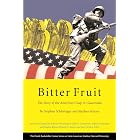
From 1983 to 1989, Kinzer was the Times bureau chief in Nicaragua. In that post he covered war and upheaval in Central America. He also wrote two books about the region. One of them, co-authored with Stephen Schlesinger, is Bitter Fruit: The Untold Story of the American Coup in Guatemala.” The other one, Blood of Brothers: Life and War in Nicaragua, is a social and political portrait that The New Yorker called “impressive for the refinement of its writing and also the breadth of its subject matter.” In 1988 Columbia University awarded Kinzer its Maria Moors Cabot prize for outstanding coverage of Latin America.
From 1990 to 1996 Kinzer was posted in Germany. From his post as chief of the New York Times bureau in Berlin, he covered the emergence of post-Communist Europe, including wars in the former Yugoslavia.
In 1996 Kinzer was named chief of the newly opened New York Times bureau in Istanbul, Turkey. He spent four years there, traveling widely in Turkey and in the new nations of Central Asia and the Caucasus. After completing this assignment, Kinzer published Crescent and Star: Turkey Between Two Worlds.
He has also worked in Africa, and written A Thousand Hills: Rwanda’s Rebirth and the Man Who Dreamed It. Archbishop Desmond Tutu of South Africa called this book “a fascinating account of a near-miracle unfolding before our very eyes.”
Kinzer’s last book was The Brothers: John Foster Dulles, Allen Dulles, and Their Secret World War. The novelist John le Carré called it “a secret history, enriched and calmly retold; a shocking account of the misuse of American corporate, political and media power; a shaming reflection on the moral manners of post imperial Europe; and an essential allegory for our own times.”
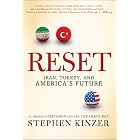
Kinzer’s previous book was Reset: Iran, Turkey, and America’s Future “Stephen Kinzer is a journalist of a certain cheeky fearlessness and exquisite timing,” the Huffington Post said in its review. “This book is a bold exercise in reimagining the United States’ big links in the Middle East.”
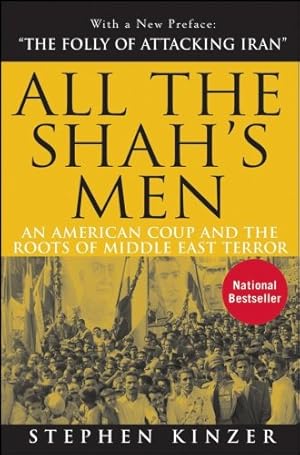
In 2006 Kinzer published Overthrow: America’s Century of Regime Change from Hawaii to Iraq. It recounts the 14 times the United States has overthrown foreign governments. Kinzer seeks to explain why these interventions were carried out and what their long-term effects have been. He is also the author of All the Shah’s Men: An American Coup and the Roots of Middle East Terror.” It tells how the CIA overthrew Iran’s nationalist government in 1953.
In 2009, Dominican University in River Forest, Illinois, awarded Kinzer an honorary doctorate. The citation said that “those of us who have had the pleasure of hearing his lectures or talking to him informally will probably never see the world in the same way again.”
The University of Scranton awarded Kinzer an honorary doctorate in 2010. “Where there has been turmoil in the world and history has shifted, Stephen Kinzer has been there,” the citation said. “Neither bullets, bombs nor beating could dull his sharp determination to bring injustice and strife to light.”
Customer reviews
Customer Reviews, including Product Star Ratings help customers to learn more about the product and decide whether it is the right product for them.
To calculate the overall star rating and percentage breakdown by star, we don’t use a simple average. Instead, our system considers things like how recent a review is and if the reviewer bought the item on Amazon. It also analyzed reviews to verify trustworthiness.
Learn more how customers reviews work on AmazonCustomers say
Generated from the text of customer reviewsSelect to learn more
Reviews with images
Search for truth, questionable.
Top reviews from the United States
- 5 out of 5 stars
An American Dynasty
Reviewed in the United States on June 30, 2021A reporter asked John Dulles if he could imagine meeting the Chinese leader in Geneva. "Not unless our automobiles collide" he replied. - John Foster Dulles, Secretary of State
A reporter asked Allen Dulles what the CIA was. "A State Department for unfriendly countries" he replied. - Allen Welsh Dulles, Director of Central Intelligence
John Foster and Allen Welsh Dulles were brothers born in the gilded age to a rarified clan of politicians and businessmen. The grandfather had been Secretary of State under Harrison and a broker for international trade deals. He was the first secretary to overthrow a foreign government, in Hawaii. The father was a fervent Presbyterian reverend who believed it was America's duty to enlighten heathen masses. Together with 'American Exceptionalism' their creed was to spread trade, democracy and Christ. Their uncle would become Secretary of State under Wilson during WWI. Growing up in their grandfather's Washington DC home, they dined with Carnegie, Cleveland, McKinley, Roosevelt, Taft, and Wilson.
John graduated from Princeton and strings were pulled. He was hired by the law firm that created General Electric and US Steel, with robber barons JP Morgan and EH Harriman as clients. The firm backed a revolution that separated Panama from Columbia to build the canal. Passenger liner Lusitania was sunk by a German u-boat in 1915 and turned US opinion to enter the war. Their uncle was among few who knew it secretly carried ammunition to Britain; he had established a prototype intelligence agency. John rose quickly through the law firm, promoting business in Brazil, Peru and Cuba while exploiting his connections in politics and global business. When uprisings threatened clients the US Navy was sent in.
Allen went to India after Princeton in 1914. En route he read Kipling's Kim, enthralled by the international spy. He joined the State Dept. for ten years until 1926. During WWI he was an intelligence agent in Switzerland and then a delegate to the Paris Peace Conference, as was John. They were both enamoured with Wilson's ideals which included US business, liberty and democracy. Those principles weren't extended to colonies who promptly rose in revolt. Allen was director of the Near East Division for five years. Posted in Turkey and the eastern Mediterranean he met with Kings Abdullah and Faisal, Kemal Ataturk and TE Lawrence. He simultaneously represented both Rockefeller's Standard Oil and the US.
John supported the Nazis rise to power in 1933, an outcome of work done by the brothers on boundaries and reparations in Paris. Allen was the first foreign emissary to meet Hitler. While Allen had an uneasy feeling John saw the Nazis as a bulwark against Bolshevism and his clients lent billions to Germany. The loans helped develop industries like Farben and Krupp, makers of arms and poison gas. As war spread in Europe John reluctantly conceded to his partners business was no longer feasible. It was a rare falling out with Allen. John argued for internationalism and against isolationism, guided by his religion. FDR wasn't interested in Christian imperatives, nor the British foreign office busy with war.
Allen had earned a law degree in 1926 and joined the law firm where his brother was director, quickly rising to a partner. They became even more wealthy and well connected than before but Allen was less happy in the corporate world. As America entered WWII in 1941 he was asked to set up a new US intelligence agency which became the OSS. After recruiting hundreds of agents he left for Switzerland where he gathered information and aided resistance in Germany, Italy and France. The war over, Truman ended the OSS and entered the UN, sending John as the Republican delegate. With publisher Time-Life he promoted US business, world leadership, and cast the USSR as the world's greatest threat.
John popularized the cold war theory that held nationalist movements in Asia, Africa and Latin America were directed from Moscow. He compared communism to the Islamic conquests, an existential threat to Christianity. Supported by the Truman Doctrine of 1947 the National Security Council and the Central Intelligence Agency were created. Allen was passed over for director by a Democrat. Truman had little patience for covert action. When he was re-elected John's hopes to become Secretary were delayed. He was made US senator in 1949 when a NY Republican became ill, but his term lasted only four months. With Truman's term nearly over John bided his time until the tides of politics turned.
Allen was appointed as CIA Director and John Secretary of State when Eisenhower came to power in 1953, and interest increased for covert operations. With the brothers in charge there was no need to consult anyone but Ike. Ike imagined waging war without loss of US lives. It would not be fought with the great communist powers but against third world anti-colonialists, presumed stooges of the Kremlin. When Iran nationalized British oil and blocked Allen's clients a communist plot was claimed and prime minister Mossadegh replaced by US flunky Shah Pahlavi. As Guatemala's Arbenz threatened John's client United Fruit Company the elected government was overthrown by a CIA sponsored dictator.
John believed the front line against communism was now in east Asia. Ho Chi Minh had appealed to Wilson in Paris for Vietnamese independence. Denied, he joined the Comintern. The US funded most of France's colonial war which ended in defeat. John pushed for US troops but Ike demurred. Instead puppet PM Diem was installed in 1954, setting the stage for future war. Indonesia's President Sukarno was invited to the White House in 1956. He was neutral to the great powers and visited China and Russia, infuriating his former hosts. Afraid he leaned left the CIA armed and trained an insurgent army to overthrow him but failed. In 1965 a US backed purge of communists by military dictator Suharto left a million dead.
Allen made plans to depose Egypt's Gamal Nasser in 1956 but was thwarted by the botched British invasion of Suez. Nasser had shaken off UK puppet King Farouk in 1952 and accepted Soviet aid. In turn the brothers backed Saudi Arabia and Israel, plotting against Nasser in Syria and Lebanon. In 1960 the CIA schemed to poison Congo PM Lumumba who had declared independence from Belgium and wasn't pro-western business. The plan failed, but he was executed by future dictator Mobutu and Belgians. From poisoned cigars to dipilatory boots wild ways to kill Castro were conceived. John died from cancer in 1959. After the Cuban invasion of 1961 JFK pinned a medal on Allen's chest and called it quits.
This book explains how US foreign policy was shaped in the 20th century by two wealthy WASPs. Their legacy has lived on. After the Soviet Union fell a new enemy was needed and presented itself in Islamic extremism. Cold war veterans Dick Cheney and Donald Rumsfeld disrupted the middle east and created more terrorism than Osama bin Laden and Saddam Hussein combined. The military industry marched on but as wars ended economies suffered recessions and financial crises. Stephen Kinzer gives an interesting account of how things got done in the highest government offices and agencies. The relationship between privilege and power is nothing new. It is in fact as familiar as politics itself.
41 people found this helpfulSending feedback...Sending feedback...HelpfulThank you for your feedback.Sorry, we failed to record your vote. Please try againThanks, we'll investigate in the next few days.Sorry, We failed to report this review. Please try again - 4 out of 5 stars
Shane . . . Shane . . . Come Back Shane!
Reviewed in the United States on March 20, 2014This book is a rollercoaster ride; it has its ups and its downs. Structured as a short (328 pages of text) joint biography, it focuses on the covert activities that were guided by the Dulles brothers in their roles as Secretary of State and as director of the Central Intelligence Agency in the 1950s. The author brings to this task the writing skills of an experienced journalist. The book is well written and highly readable.
John Foster and Allen Dulles were both intelligent, but differed in personality. John Foster was hard working and serious. Allen was more sociable and somewhat unscrupulous. Both brothers became lawyers, and both joined Sullivan & Cromwell, a prominent New York law firm. With the advent of the Second World War, Allen joined the Office of Strategic Services, and Foster became a political leader in the Republican Party. When North Korea invaded South Korea in 1950, Allen went to work as the deputy director of operations in the Central Intelligence Agency. Foster was appointed adviser to the Secretary of State.
At about this point, I began to experience substantial doubt about the validity of many of the opinions asserted by the author. Sullivan & Cromwell is repeatedly presented as a sinister entity, at odds with the best interests of the United States. I know Sullivan & Cromwell. It is a law firm – a good one. It is comprised of exceptionally talented lawyers who work hard. It is not the sinister entity pictured in this book. The international threat of communist Russia is labeled “illusory.” There was nothing illusory about the trumped up trial of Cardinal Josef Mindszenty in Hungary in the late 1940s. His face stared out at you from every newspaper and every newsreel for several years. It was our first brush with the techniques of brainwashing. But Mindszenty is not even mentioned. The movies “Shane” and “High Noon” are presented as reinforcing a cultural consensus that America was doing the right thing in its international efforts to ensure the triumph of justice. There is no mention of Solzhenitsyn or the Gulag, or any other example of Soviet communist brutality.
The dust jacket states that the book asks why the United States behaves as it does in the world. The book presents an interesting analysis of the way that the Dulles brothers responded to the efforts of third-world nations that were seeking independence from established colonial powers. In particular, the author focuses on six third-world leaders that the Dulles brothers thought were “monsters:” Mossadegh, Arbenz, Ho Chi Minh, Sukarno, Lumumba, and Castro. The covert activities of the CIA against each of these monsters are described in summary fashion. The reasoning is subject to dispute, but the importance of the subject matter is obvious.
This book is a good start for a review of the covert activities conducted by the CIA under the colors of the United States.
52 people found this helpfulSending feedback...Sending feedback...HelpfulThank you for your feedback.Sorry, we failed to record your vote. Please try againThanks, we'll investigate in the next few days.Sorry, We failed to report this review. Please try again - 5 out of 5 stars
A Fantastic Book!
Reviewed in the United States on October 8, 2013The book is fascinating and gripping. I couldn't put it down. It goes a long way in explaining the plight in which the United States finds itself today.
The book's general focus is on the actions of the CIA and the State Department during the early period of the Cold War, specifically 1947 through the late 1960s and the role that the Dulles brothers played during that period of time. John Foster Dulles was serving as Secretary of State and Allen Dulles was serving as director of the CIA. The book specifically focuses on six regime-change operations during the Dulles brothers' tenure: Iran, Guatemala, Indonesia, Vietnam, Cuba, and the Congo, including the first presidentially authorized assassinations of foreign leaders in American history.
We live in a time today when many Americans exalt the national-security state. They honestly believe that if it weren't for the big standing army, the overseas military empire, the CIA, and the NSA, the United States wouldn't exist for very long. Without the national-security state, these Americans honestly believe, America would quickly fall to the communists, the terrorists, the illegal aliens, the drug dealers, or some combination thereof.
They sing the praises of the troops and automatically assume that the more people they kill over there, they safer we are here at home. They glorify the CIA, even while not knowing exactly what it's doing--and, more important, not wanting to know. They like the fact that the NSA is spying on them but would prefer not knowing that it's spying on them. They simply cannot imagine living the life that our American ancestors lived for more than a century and a half before World War II --a life without a national security state.
Such Americans block out of their minds the fact that a free society and a national-security state are irreconcilable. In fact, they've convinced themselves that they're free because of the national security state.
Books like Kinzer's help to pierce through the falsehoods and misconceptions about the military and the CIA that grip the minds of so many Americans. The book shows how the United States veered off into a different direction after World War II, a direction involving much dark-side activity that the national-security state kept secret from the American people and which the American people, for their part, simply didn't want to know about.
It was all justified under fighting the communists or, more specifically, keeping America safe and secure from America's World War II partner and ally, the Soviet Union, which supposedly was orchestrating a worldwide communist movement designed to conquer and control the entire world.
There was the CIA's coup in Iran, which ousted the popular Mohammad Mossadegh from power and reinstalled the brutal dictatorial regime of the Shah. There was the CIA's ouster of the democratically elected president of Guatemala and his replacement by a brutal military dictatorship. There was the CIA's instigation of a horrific civil war in Indonesia. There was the CIA's plan to assassinate the leader of the Congo. There was the CIA's coup and the assassination of the U.S.-appointed leader of South Vietnam. There was the CIA's invasion of Cuba and repeated assassination attempts on the life of Fidel Castro.
Never mind that there were other factors involved, such as the nationalization of British oil interests in Iran or the nationalization of land in Guatemala belonging to a U.S. corporation with which the Dulles brothers had close ties. And never mind that Third World rulers simply wanted to stay out of Cold War politics. What mattered was that whenever any foreign ruler didn't do what U.S. officials wanted him to do, that made his regime a Cold War enemy and, therefore, subject to regime-change, including through assassination. The mindset was "If you're not with us, then you're against us." Neutrality was out of the question.
And never mind that Americans and others around the world are still suffering the horrific results of these regime-change operations. Just look at the state of U.S.-Iran relations. Or the hundreds of thousands of graves in Guatemala as a result of the civil war that the CIA's coup brought about. Or the continuous brutal U.S. embargo against Cuba. Or the families who still grieve the loss of loved ones in Vietnam and here in the United States.
It was all a new direction for America, a dark direction, one that the American people had never before engaged in. And it was all justified under the rubric of "the communist threat," specifically the supposed danger that the communists were everywhere and were coming to get us and take over our country, much like we hear about the terrorists today.
Why is this early period of the Cold War so relevant to today? Because the foreign policy-civil liberties woes that America faces today are rooted in that period. That's why that an understanding of that period is so critically important to understanding what we need to do to extricate ourselves from the morass in which we find ourselves. Restoring the right direction for our nation, a direction based on sound moral, economic, and legal principles, necessarily entails an examination of where American went wrong after World War II.
Another great book about this period is The War State: The Cold War Origins Of The Military-Industrial Complex And The Power Elite, 1945-1963 by Michael Swanson. That book provides the best summary of the military component of the national-security state during the Cold War. If you read both books--The War State and The Brothers -- you will have an almost perfect understanding of how we got into this mess, what the mess has done to our nation, and what we need to do to get out.--Jacob Hornberger, president, The Future of Freedom Foundation
131 people found this helpfulSending feedback...Sending feedback...HelpfulThank you for your feedback.Sorry, we failed to record your vote. Please try againThanks, we'll investigate in the next few days.Sorry, We failed to report this review. Please try again - 5 out of 5 stars
Very Informative
Reviewed in the United States on November 7, 2015I read this book as part of my ongoing research about the John Kennedy assassination. At this point I think I understand the mechanics of where the shooters were during the assassination, how many times John Kennedy was shot, etc.. But there's a more important issue which is who was ultimately behind this assassination and why did they want John Kennedy dead.
Allan Dulles is a key figure in the JFK assassination for several reasons. JFK fired Dulles after the Bay Of Pigs disaster and then later Allan turned up on the Warren Commission whitewash. All the members of the Warren Commission are highly suspect but Allan in particular.
This book portrays President Dwight Eisenhower as someone who was mesmerized by Allan Dulles' covert warfare methods and dirty tricks because regime change could be accomplished without starting World War III. However anyone who is interested in that historical era should listen to Eisenhower's farewell address. Whatever happened when Eisenhower was president by the time he left office he had become greatly disillusioned and distrustful of his own government which included the CIA.
My thoughts about the JFK assassination and Vietnam have been greatly influenced by Fletcher Prouty's two books. Fletcher was a true CIA insider who left the Agency after the JFK assassination. Fletcher's statements about the CIA are shocking to say the least. He says it was the CIA who sabotaged the Gary Powers U2 spy plane mission to derail Eisenhower's planned peace summit with the Russians. The Agency also intentionally prevented planes from supporting the Bay Of Pigs invasion. They believed that when the invasion started to fail John Kennedy would authorize an overt American military response which I guess would have been like a declaration of war on Cuba. JFK did not panic and do this however.
Fletcher Prouty felt the entire Cold War was fabricated by the CIA and the American military industrial complex. He felt there never was any real military objective in Vietnam. The goal in Vietnam was to create a protracted, open ended conflict that would last for decades and consume untold amounts of money.
Stephen Kinzer takes the view that the Dulles brothers were misguided at times but they were ultimately a sort of extension of the American consciousness. Authors like Fletcher Prouty and James Douglass have a more sinister view of the CIA than what this book presents. Those authors felt the CIA had taken over the entire government and they were lying to everyone.
Former presidents Harry Truman and Dwight Eisenhower apparently realized much too late that there are reasons why laws in place. Once the Pandora's Box of disregarding laws was opened it became very difficult to put the lid back on. Eisenhower handed this box to John Kennedy with all the demons and evil spirits already on the loose and spreading out in all directions. John Kennedy attempted to put the lid back on.
Part II of this book is entitled 'Six Monsters'. These are studies of six cases where the CIA used every dirty trick in the book to depose and even assassinate the leaders of foreign countries whose actions were not consistent with the greedy corporations in America and Europe that coveted the resources in those countries. This was all done under the banner of an epic crusade against communism.
Author Stephen Kinzer could perhaps write another book called 'The Seventh Monster'. That other monster was the one the shadow government feared the most because he threatened to shut them down forever.
Here's a new book about Allan Dulles which sounds interesting but I haven't read it yet:
The Devil's Chessboard: Allen Dulles, the CIA, and the Rise of America's Secret Government
JFK: The CIA, Vietnam, and the Plot to Assassinate John F. Kennedy
Me & Lee: How I Came to Know, Love and Lose Lee Harvey Oswald
The Man Who Killed Kennedy: The Case Against LBJ
JFK and the Unspeakable: Why He Died and Why It Matters
On the Trail of the Assassins: One Man's Quest to Solve the Murder of President Kennedy
Expendable Elite: One Soldier's Journey into Covert Warfare
Top Secret/Majic: Operation Majestic-12 and the United States Government's UFO Cover-up
9 people found this helpfulSending feedback...Sending feedback...HelpfulThank you for your feedback.Sorry, we failed to record your vote. Please try againThanks, we'll investigate in the next few days.Sorry, We failed to report this review. Please try again - 5 out of 5 stars
The Dulles Brothers. They changed History.
Reviewed in the United States on February 17, 2015The Brothers, by Stephen Kinzer
Five Stars. Great book. Readable. Well researched, Informative. Highly recommended for someone interested in mid 20th century history or understanding the root cause of the anti-american animosity in certain parts of the world.
The Dulles brothers played pivotal roles in an incredible number of historic events that shaped the 20th century. They exemplified american attitudes and beliefs of their day and were placed in positions to act on these beliefs. The book not only presents their part in history, but also helps us understand the reasoning behind their actions.
I should leave the book review end with the above paragraphs, but I was originally unaware of how many key historical events of the 20th century the brothers participated in and influenced. I find it impossible not to casually speculate on their effect on history. John Foster helped write the Reparation portion of the WWI Treaty of Versailles. Some historians believe German anger over the unfairness of the reparations to be one element causing WWII. John Foster helped write the 1924 Dawes Plan that opened the door to American investment in Germany. Even in 1924 John Foster was obsessed with fighting communism. He saw a strong Germany as an effective stop gap against communistic expansion. Foster used his affiliation with Sullivan & Cromwell and his friendship with Hjalmar Schacht, Hitlers Minister of Economics, to increase American investment in Germany and its industry. Without international investment, Germany probably could not have supported it's military aspirations. Allen and the CIA was instrumental in the 1953 Iranian Coup that overthrew the democratically elected Iranian Government to install the Shaw of Iran. This action and the heavy handed governing style of the Shaw certainly led to some of the anti American resentment in the middle east today and the Iranian (Islamic) Rebellion in 1979. The Iranian Rebellion probably helped elect Ronald Reagan in 1980. In regard to Vietnam. Foster, acting as Eisenhower's Secretary of State, refused to sign the 1954 Geneva Accord. Over considerable objections, John Foster and Allen chose and installed Ngo Dinh Diem as the 1st president of the newly created Republic of South Vietnam. Diem had been a minor official in Vietnam and was Interior Minister for three months in 1933. He had not held a job since. Once in power, Allen's CIA helped keep him there. John Foster continued to support the escalation of our involvement in Vietnam until his death in 1959. Allen took a hands off approach to the Bay of Pigs operation (17 April 1961), but as the Director of the CIA, it was his responsibility. JFK fired him in November 1961. There are JFK Assassination Conspiracy Theory's that include CIA involvement. It is interesting that Lyndon Johnson personally chose Allen to be a member of the Warren Commission. Add U2 Spy Planes, Congo revolts, overthrow of South American leaders, Cuba and a host more. The policies and action of these two men changed global history and probably still effect the beliefs of many today.
12 people found this helpfulSending feedback...Sending feedback...HelpfulThank you for your feedback.Sorry, we failed to record your vote. Please try againThanks, we'll investigate in the next few days.Sorry, We failed to report this review. Please try again - 4 out of 5 stars
What a family!
Reviewed in the United States on May 22, 2019Two of the most powerful men in America during the 1950s were brothers. John Foster Dulles served as Secretary of State under Dwight Eisenhower until Foster’s his death in 1959. His brother, Allen, was the CIA director through Eisenhower’s and the first half of Kennedy’s Presidency. The two had remarkably similar paths to power. Both were Princeton graduates. Both were Presbyterian. Both had spent their civilian careers working for Sullivan and Cromwell, a New York law firm that represented major American interest overseas. Together, seeing the world through a lens of good and evil (good being capitalism and evil communism), their influence was felt around the world and has effected world politics to the present. The two worked together to overthrow a democratically elected government in Guatemala and Iran. They forced out a popular African leader in the Congo, attempted to push out the elected president of Indonesia, and moved America into Vietnam as the French were withdrawing. After Foster’s death, Allen playing this role in foreign governments as the CIA attempted to overthrow Castro in Cuba, leading to the Bay of Pigs fiasco. In addition the brothers also had a talented sister, Eleanor, who played her own role in international affairs, especially in Europe.
Kinzer does a commendable job as he draws sources from across the globe to create a portrait of the Brothers at work. The two brothers were raised within the Presbyterian manse. The father was a pastor, who would later become a professor at Auburn Theological Seminary. On their mother’s side of the family, they were descended from two former Secretaries of State. Ironically, their beloved “Grandfather Foster” had been the American Secretary of State who helped overthrow another government, the Hawaiian monarchy. This allowed the American annexation of the islands. Of the two brothers, Foster settled down quickly (marrying a woman his younger brother had rejected). He lived his life devoted to her. Allen, on the other hand, was always having affairs (his wife even became friends with two of his mistresses) and his many liaisons probably included the Queen of Greece.
Both brothers began their international interest in the aftermath of the Great War (World War I). In the 1930s, Foster was supportive of Germany (Sullivan and Cromwell had many German clients as well as representing American business with German interests). This led to the one time the two brothers had an open disagreement with Allen asking Foster how he could consider himself a Christian and support what the Germans were doing to the Jews. But soon, this became a moot issue as America was drawn into the war. During the war, Allen, who was always interested in covert work, headed the American spy network in Switzerland. After the war, when the OSS was disbanded, Allen was without a job. In less than a year later, the CIA was organized and he was brought on as second in charge. In the early 50s, he became its director. At the same time, his brother served as the Secretary of State.
The idea of two brothers in such key roles, not to mention their legal ties to many leading international businesses, is easily seen today as clearly a conflict of interest. However, such a breach of protocol wasn’t much of an issue in the 1950s when the country felt it was in a battle between good and evil. Whatever it took to win was seen as necessary. While the Soviet Union certainly presented challenges to the Western World, new research indicates the challenge wasn’t nearly as great as it was thought to have been. Kinzer points out the blunders of both sides in Africa, where neither side understood the continent. The Soviets even sent snowplows to a country that had never experienced snow and wheat to the Congo, a country without a flour mill. Kinzer’s view is that the Brothers (and in some way, all of America) were so colored by the Cold War that they were unable to see beyond their own assumptions and thereby missed opportunities to build a more peaceful world.
As divided as the Brother’s saw the world, Kinzer points out how they clearly avoided direct conflict within the Soviet and Chinese spheres. When the Romanians revolted in 1956, they watched as Soviet tanks moved in to crush the rebellion. While there was espionage behind the “Iron Curtain,” such as U-2 flights over Russia, the real battle was waged in smaller counties, many of whom attempted to remain neutral during the Cold War. The Brothers didn’t believe neutrality was possible.
The strength of Kinzer’s thesis is in his research and in his accessible writing style. However, there are weaknesses within his logic and the application of his research. Several times he refers to Foster and Allen’s “missionary Calvinistic background.” Granted, Kinzer isn’t a theologian (he even confuses Princeton Seminary with Princeton University). But a bigger problem is his use of “missionary Calvinism” in a negative (almost ad hominem) manner. First of all, I am not sure what he means by this description (nor am I sure what that he knows what he means). While many Calvinists have been missionaries, some would point out that Calvinism hasn’t displayed the missionary zeal of other theologies. But more importantly, Calvinism, with its view of human depravity, may be more applicable to the situation with the Dulles brothers. The emphasis on depravity is a belief there is a stain on the soul, in the heart of all people, that’s so deep that only God can remove. Such a doctrine stands in opposition to the dual world view of good and evil. Calvinists understand that we (the human race) have fallen. There are not those who are good and those who are bad. The only one good is Jesus, the rest of us are only righteous by his actions. Because of this strong view of how we, as people, seek out own on interest instead of what God desires, Calvinists encouraged from the beginning a system of checks and balances to keep individuals from claiming too much power. Certainly, the Dulles brothers lacked a desire to have such constraints of their power. If anything, it wasn’t Calvinism that cause their blinders that kept them from seeing a more nuanced world. It was either their ignorance of Calvinistic theology or their ignoring of the teachings of their church. The complexity of the human spirit and its complicity in sin can be seen clearly in Allen. He could be noble as in challenging his brother’s support of Germany in the late 1930s while practicing serial adultery and later, approving of covert campaigns in countries striving to be neutral during the Cold War.
The author also places Reinhold Niebuhr, one of America’s leading theologian during the 50s, in conflict with the Brothers. In his concluding chapter, he quotes Reinhold Niebuhr’s critique of the Brothers’ “self-righteousness” and lack of nuance in understanding right and wrong. However, I am not sure the conflict was as divided as Kinzer makes it out to be. Niebuhr is a complex man who wrote prolifically. While Niebuhr understood sin and the dangers of pride, from my understanding, he also supported America in opposition to the Soviet Union throughout the 50s. So while Niebuhr critiqued their self-assured swagger and unchecked power, he may have been supportive of their long-term goals.
Despite the author’s lack of understanding theological nuances, I still recommend this book. It shows the impact American business had on foreign policy. Was the overthrow of the Guatemalan government necessary in the fight of communism or was it convenient ploy that allowed the brothers to help a former client, United Fruit? The danger of ignoring such obvious conflicts of interest is revealed throughout this book. The book demonstrates just how powerful these two men, who are mostly forgotten today, were in the 1950s. They were even able to “force” Hollywood to change movies (George Orwell’s Animal Farm and Graham Greene’s The Quiet American). In both movies, the script departed from the book in a manner that made the story fit the Cold War mentality of the 1950s. Both authors were incensed at Hollywood’s interpretation of their books.
This book provides a portrait of the man for whom Washington’s International Airport is named. Having read this, I would like to read more about Foster’s children. His son, Avery, converted to the Catholic Church and became a Jesuit priest. He would go on to become an American Cardinal. His sister, Lillias, attended seminary and was one of the first women to be ordained in the Presbyterian Church in 1957. He had one other son who was a mining engineer. The family dynamics must have been fascinating. .
This book speaks to our current age and our tendency to demonize our opponents. There are always dangers of seeing the world clearly divided into good and evil, especially when we see ourselves on the side of good and our enemies as always evil. While the Christian faith teaches of a cosmic battle between good and evil (God and Satan), that battle is also taking place within each of our souls, which blurs the battle lines. Furthermore, the victory within the cosmic struggle has already been won at the cross. We pervert Jesus’ teachings when we see ourselves as only good and others as only evil. The human race is much more complicated that this simplistic understanding that leads to a division between “us” and “them.” When we quickly demonize others, we risk denying the image of God instilled in us all.
16 people found this helpfulSending feedback...Sending feedback...HelpfulThank you for your feedback.Sorry, we failed to record your vote. Please try againThanks, we'll investigate in the next few days.Sorry, We failed to report this review. Please try again - 5 out of 5 stars
Very revealing.
Reviewed in the United States on March 22, 2026This book covered a chapter in American history that I had already understood, but it gave me insight into the men, the background, and the rationale behind their actions. The last chapter was especially impacting because it correctly pointed out the American point of view at the time, and explains our current beliefs and values. It holds a mirror up to our false view of American exceptionallism, providing a more realistic portrait of who we are.
Sending feedback...Sending feedback...HelpfulThank you for your feedback.Sorry, we failed to record your vote. Please try againThanks, we'll investigate in the next few days.Sorry, We failed to report this review. Please try again - 3 out of 5 stars
Good Reading for their Early Lives
Reviewed in the United States on October 3, 2014I am very familiar with the archival material related to the Dulles brothers -- both US and foreign. I found the narrative on their early lives interesting and accurate. The author failed to portray the Dulles with sufficient nuance. For example, if one reads all of the notes in the Eisenhower library on the NSC meetings, one cannot help but conclude that Eisenhower himself not Dulles was driving foreign policy. Also if you look at Allen Dulles and his meetings with Kermit Roosevelt you find an interesting reaction to Roosevelt's reluctance to become involved in Guatemala and Nasser. Also one of the big reasons that the British hated JFD was because he had helped to engineer the defensive pact between Australia, New Zealand and the U.S. after the war excluding the British. The latter part of the book took an almost cliche-ish, doctinaire view of policy and Dulles during the Eisenhower period. For example, it fails to point that in the conduct of foreign policy it was Eisenhower that instituted the "country team" concept headed by the ambassador in an attempt to State, CIA, USAID, USIS, and the military working on the same page.
21 people found this helpfulSending feedback...Sending feedback...HelpfulThank you for your feedback.Sorry, we failed to record your vote. Please try againThanks, we'll investigate in the next few days.Sorry, We failed to report this review. Please try again
Top reviews from other countries
CharlesA5 out of 5 starsKinzer knows how to bring history to life
Reviewed in the United Kingdom on May 31, 2015I'd read Stephen Kinzer's 'All the Shah's men' and 'Overthrow' both of which I found excellent. I didn't know he'd written this book, until I stumbled on a youtube video of the author giving a talk.
I'd long been fascinated by the Dulles brothers seeing them as vaguely sinister without knowing very much at all really about them. I knew for example that Allen Dulles was put on the Warren Commission into the Kennedy Assassination, even though he'd been fired by him a couple of years earlier.
It would be very easy to go chapter and verse into the biography of the Dulles brothers and try to summarize the book, but I think you'd get much more from just reading the actual book.
Suffice it to say that the Dulles brothers were a product of their time and their unique background (very well connected, deeply religious, unquestioningly committed to corporate free enterprise and deeply phobic of any form of communism or socialism). They rose to prominence in the light of the 1st and 2nd world wars, and they really put their stamp on history with their virulent hatred of anything that vaguely smacked of communism, concluding that even neutral countries were legitimate targets for overthrow, because by being neutral they were "not on our side, and worse an easy target for a communist takeover".
The book really comes to life in the 2nd part (the first part explains their background in depth and how they got into the very high positions in government) , the 2nd part focuses on 6 'monsters' that the brothers tried (and in some cases succeeded) in taking down. These being, Mossadegh of Iran, Arbenz of Guatemala, Ho Chi Minh of Vietnam, Sukarno of Indonesia, Lumumba of the Congo and Castro of Cuba.
Each one of these chapters is a riveting tale of the sheer depth of the perfidy of the brothers and their willingness to go to any lengths to disrupt the internal politics of countries that they thought were acting against US interests.
Kinzer writes really really well, I do feel though that he ultimately absolves the brothers of any bad faith by saying that they were America and America was them. He could be right, I could be wrong, but I see them as far more malevolent, and I see them as having duped the American people who would have ultimately been much happier with far wiser people at the helm during the Cold War.
One particularly striking theme is just how deceptive and involved Eisenhower was. We always see that clip of him warning us about the 'military-industrial complex' as if he was one of the good guys. He was not, he backed every single one of these 6 take-downs. The Dulles brothers were not deceiving him, they were acting out his (and their) will.
Still in all, a fantastic book, and a fantastically enjoyably written one.
Sending feedback...Thanks, we'll investigate in the next few days.Sorry, We failed to report this review. Please try again
Von Martius5 out of 5 starsour History
Reviewed in Brazil on September 22, 2025Deep and clear, brings the roots of our today world!
Can change the way to see the past and look to the future.
Sending feedback...Thanks, we'll investigate in the next few days.Sorry, We failed to report this review. Please try again
Sourabh5 out of 5 starsA profound impact
Reviewed in India on October 30, 2024Kinzer has not just done an immense research to write it but also narrated it in a fashion which one can relate immediately.
A book worthy of teaching in geopolitical classes in universities. Rarely one findes an account which starts with a strong eye opening revelations and by the end it takes you to a place where it seems simple and obvious. Almost a feeling of 'how could we as a society miss that'
But that is the beauty of the author. Superb !
Sending feedback...Thanks, we'll investigate in the next few days.Sorry, We failed to report this review. Please try again
Wim Adams5 out of 5 starsDe buitenland politiek van de VS is met de komst van deze broers cruciaal gewijzigd.
Reviewed in the Netherlands on March 22, 2026Erg goed geschreven boek, echte page turner. Als je leest wat de VS als sinds WW2 voor misdaden heeft begaan over de gehele wereld in landen die niet meteen in de pas wilden lopen met de VS, en dit alles op voordracht van deze 2 broers, dan waan je jezelf meteen in de wereld van 2026. Alleen is het nu Trump en zijn de leugens op basis waarvan men regeringen omverwerpt en mensen vermoord niet meer verdekt en twijfelachtig maar overduidelijk en open. Alle landen die onder het juk van kolonialisme vandaan wilden komen, zoals bijvoorbeeld Indonesië, waren meteen verdacht en werden direct bestempeld als communistisch.
Sending feedback...Thanks, we'll investigate in the next few days.Sorry, We failed to report this review. Please try again
Joska Reichelt5 out of 5 starsLaid bare!
Reviewed in Australia on April 12, 2014Loved this book. Provided such insight into the behind the scenes actions of the CIA revealed the dark past of some sacred cows. I grew up in Europe and had never heard anything other than praise for the Dulles duo. The disgraceful actions against the so called "monsters" left me deflated , sad and angry at the same time. I look at the world of politics and high finance in a different way after readings this. It has been a mind bender and I can see clearly now that I realized the we are manipulated and indoctrinated and I will try and find ways to gather information about current issues in the hope...vain? ... That I learn about the truth. No more mainstream media for me. I will avoid those publications who push ideology rather than report.
Sending feedback...Thanks, we'll investigate in the next few days.Sorry, We failed to report this review. Please try again