


题目描述
Given an m x n matrix of positive integers representing the height of each unit cell in a 2D elevation map, compute the volume of water it is able to trap after raining.
Note:
Both m and n are less than 110. The height of each unit cell is greater than 0 and is less than 20,000.
Example:
Given the following 3x6 height map:
[
  [1,4,3,1,3,2],
  [3,2,1,3,2,4],
  [2,3,3,2,3,1]
]

Return 4.

The above image represents the elevation map [[1,4,3,1,3,2],[3,2,1,3,2,4],[2,3,3,2,3,1]] before the rain.
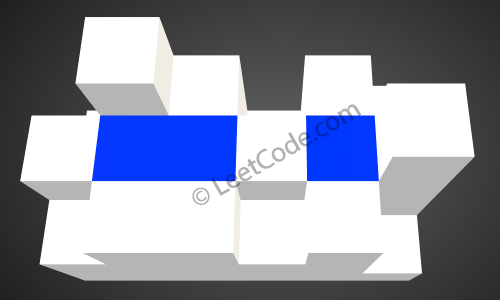
After the rain, water are trapped between the blocks. The total volume of water trapped is 4.
求出凹陷下去的地方能盛的水体积
解题思路
虽然是bfs的标签,但是因为第一次接触这种类型题,完全无思路(毕竟是hard),然后,发现了一位大神图文并茂的解题说明(感激!):
Grandyang的博客(我只是参考了解题思路,代码是自己写的)
一个方块能装水,那么它的四周都必须是比它高的方块,因此,bfs的应用就是,取出一个方块,遍历它外围的四块方块。然而,题目并不是那么简单。这道题还用到了优先队列(每次挑选高度最小的出队,和一般的bfs不一样,优先队列参考内容:ZXH小朋友的上学史 的博客)以及模拟海平面上升的方法(Grandyang 博客里有):海平面初始值为1,取出priorityqueue的top元素,若是 高度 > 海平面,则用这个值更新海平面,遍历元素四周的方块,低于海平面,则可装的水是海平面 - 方块高度。
好了,现在对整个解题过程进行总结:
一、主要准备:
1、priority queue (forBFS):装有最外围一圈方块,并以高度从小到大出队。
2、海平面(seaRevel):方块装水的参照,装水量:海平面 - 方块高度
3、代表元素坐标、高度的box
4、代表box四周方块的坐标偏移量pos{(1,0),(0,1),(-1,0),(0,-1)}(要注意越界问题)
二、核心思路:
出队一个box,判断四周方块是否被访问过,如果没有,把方块入队,置visited = true。判断遍历的方块与海平面的关系,能装的水:海平面 - 方块高度。
代码如下:
class Solution {
public:
    struct Box {
	int x;
	int y;
	int height;

	Box(int a, int b, int c) :x(a), y(b), height(c) {

	}

	bool operator < (const Box& b) const {

		return b.height < height;
	}
};
    int trapRainWater(vector<vector<int>>& heightMap) {
      if (heightMap.size() == 0) {
		return 0;
	}

	int rowCount = heightMap.size();
	int colCount = heightMap[0].size();

	priority_queue<Box> forBFS;

	vector<bool> tmp(colCount, false);
	vector<vector<bool> >visited(rowCount, tmp);

	for (int i = 0; i < colCount; i++) {

		if (!visited[0][i]) {
			forBFS.push(Box(0, i, heightMap[0][i]));
			visited[0][i] = true;
		}

		if (!visited[rowCount - 1][i]) {
		forBFS.push(Box(rowCount - 1, i, heightMap[rowCount - 1][i]));
		visited[rowCount - 1][i] = true;
		}
	}
	for (int j = 0; j < rowCount; j++) {
		if (!visited[j][0]) {
			forBFS.push(Box(j, 0, heightMap[j][0]));
			visited[j][0] = true;
		}

		if (!visited[j][colCount - 1]) {
			forBFS.push(Box(j, colCount - 1, heightMap[j][colCount - 1]));
			visited[j][colCount - 1] = true;
		}

	}

	int seaRevel = 0;
	int water = 0;

	vector<pair<int, int> > pos;
	pos.push_back(pair<int, int>(0, 1));
	pos.push_back(pair<int, int>(1, 0));
	pos.push_back(pair<int, int>(0, -1));
	pos.push_back(pair<int, int>(-1, 0));

	while (!forBFS.empty()) {
		Box now = forBFS.top();
		forBFS.pop();

		if (seaRevel < now.height)
			seaRevel = now.height;


			for (int i = 0; i < 4; i++) {
				pair<int, int> next = pos[i];
				int nextX = now.x + next.first;
				int nextY = now.y + next.second;

				if (nextX < 0 || nextY < 0)
					continue;
				if (nextX >= rowCount || nextY >= colCount)
					continue;

				if (!visited[nextX][nextY]) {

					water = seaRevel > heightMap[nextX][nextY] ? water + (seaRevel - heightMap[nextX][nextY]) : water + 0;
					forBFS.push(Box(nextX, nextY, heightMap[nextX][nextY]));
					visited[nextX][nextY] = true;

				}

			}


	}

	return water;

    }
};
感触:
1、优先队列的使用
2、vector的初始化方法,vector(numberOfElements,value),省去了memset的调用
3、bfs的应用(我觉得也是这道题的难点)





 扫一扫
扫一扫


 879
879

 被折叠的 条评论
为什么被折叠?
被折叠的 条评论
为什么被折叠?
 到【灌水乐园】发言





