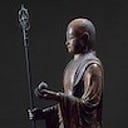
Bardo

Despite my anxiety about the move to live with Anne Mei, Cameron, and their dog Archie, it happened last Saturday without any major problems. That cannot be said about my back. Because of all the bending and lifting to pack up before the movers came, my back gives me extreme pain now if I bend over at all, twist too far, or stand too long.
It’s almost as bad as the summer of 2024 when I spent two days in the Beth Israel emergency department to get relief from crippling pain and uncontrollable spasms. I’ve learned from experience not to keep pushing despite the warning signals as I did that summer. Now it’s lots of time sitting and resting. No bending, except to put Sammie’s leash on. Bending my arthritic knees as much as possible first. Using grabbers to pick up things on the floor. Walking with baby steps, using the cane most of the time. Aside from the usual chaos of living out of boxes and trying to remember where I’ve put things, it’s taking me much longer to do things like dressing and undressing. But slow and steady keeps the pain away. That and heating pads. (I’m trying to avoid pain killers so they’ll be most effective if things get really bad.)
Last night as I was falling asleep in my own bed for the first time in this house, it occurred to me that this body has entered what the Tibetans call a bardo state. Tibetan Buddhists believe in reincarnation. Bardos are periods of experience between this life and the next. Recently, the concept has been applied to other situations. (In a subsequent post I will share what I think about the concept of reincarnation.)
Get drivingwithnohands’s stories in your inbox
Join Medium for free to get updates from this writer.
This winter’s issue of Tricycle magazine has an article about Sharon Lukert, an American nurse and Buddhist practitioner who sees her MCI (mild cognitive impairment) as a bardo between normal functioning and dementia, which her doctors tell her is coming. This insight and other Buddhist practices help her to experience her situation and live kindly, gladly, and evenly.
I shared this article with my fellow meditator at the senior facility who is living with Parkinson’s because the concept of bardo seemed to fit his situation. When I saw how looking at Parkinson’s as a bardo helped, I bought copies of Lukert’s book for us both. Until My Memory Fails Me: Mindfulness Practices for Cultivating Resilience and Self-Compassion in the Face of Cognitive Decline.
There’s probably a medical term that captures the physiological, psychological, and functional aspects of my condition. Whatever it is, it does seem to be a bardo, a transitional state from a healthy state of independent functioning to one where I will need caregivers to assist with basic bodily functions and movements.
In January I meditated again almost every day, inspired by Tricycle’s Meditation Month challenge. I’ve learned that meditation isn’t some esoteric, mystical practice. At least now, meditating means becoming aware of what’s going on in the body. Only aware. No internal talking about what’s happening. No labeling. No judging. Just watching. Returning time and again from the thoughts, stories, and feelings that a busy mind fills itself with. Just aware of what’s going on.
In other posts, I’ve described how just staying aware helps dissipate itches or minor aches which arise while I’m sitting quietly meditating. Practicing with the small aches builds the ability to stay aware not just of crippling pain, but the flashes of anger and grief that arise when, for instance, I spill Sammie’s water bowl all over the floor and it has to be cleaned up. Aware of the feeling before the swearing and tales of failure.