Did Constantine Start the Roman Catholic Church?


Constantine’s actions regarding scripture, as documented by sources like Eusebius of Caesarea, reflect both deliberate endorsement and the complexities of his era. The presence of 1600s tapestries, such as those in the Philadelphia Museum of Art depicting Constantine burning manuscripts. Scholarly debate continues over Constantine’s influence on religious texts; what is clear is that ending Christian persecution required negotiation. According to historians such as Robin Lane Fox, Constantine faced the challenge of converting influential Romans who were less willing to embrace sacrifice — a challenge that required compromises to secure the support of affluent citizens. My assessment is that such a compromise was critical for mass acceptance of the early Christians message across different social classes.
The key issue is that, centuries after its origin, religious leaders formally defined the Bible as universally authoritative, particularly through events such as the Council of Nicaea in 325 CE and subsequent councils. These decisions, shaped by political and social agendas, solidified one version of Christian doctrine. By establishing an official canon, leaders sought not only unity but also lasting power over interpretation, making the Bible a tool of authority for future generations.
When men seek power through wealth, they often experience a shift in identity, prioritizing status over personal meaning, which can lead to social isolation, strained relationships, and immense pressure to maintain that wealth. While it may provide influence and control, it often triggers a cycle of greed or exploitation, potentially leading to emotional detachment, narcissism, or personal destruction. There are many examples throughout the Catholic reign who would persecute their victims to keep their respected status to maintain their wealth?
This ongoing debate about scriptural interpretation echoes in contemporary culture. For example, when The Da Vinci Code movie was released, it stirred many religious people. The pastor of the evangelical church I attended addressed this topic by noting that some believed the person next to Jesus at the table looked like a woman because she had no facial hair, unlike the other men. These examples show how interpretations of both art and scripture can vary widely. People often see different meanings or possibilities in the same image or text. This diversity of viewpoints demonstrates that individuals with different backgrounds and beliefs may reach different conclusions. Recognizing these perspectives can encourage more open and respectful conversations.
With such varied interpretations in mind, there is little evidence to support the view that Jesus had a child with Mary Magdalene to continue his bloodline. Nonetheless, questions persist about how religious leaders have interpreted or represented scripture, particularly in guiding their communities.
Get Diana M Palmer Brooks’s stories in your inbox
Join Medium for free to get updates from this writer.
Given these ongoing questions of authority and interpretation, why, then, are so many people convinced that the Council of Nicaea had something to do with which books ended up in the Bible?
Emperor Constantine, directly convened and presided over the First Council of Nicaea in 325 AD, serving as a key facilitator and active participant in resolving the Arian controversy. He viewed religious unity as essential to imperial stability, paid for the bishops’ travel, presided over the opening session, and promoted the adoption of the Nicene Creed. Without Constantine’s direct intervention and support, it is widely believed that the council would not have happened as it did. We wouldn’t have the Roman Catholic Church as it exists today without Constantine’s support.
People who accept financial support from a powerful leader must also continue to pander to their most affluent supporters. This leads to compromises. If early religious leaders enjoyed an easier life, paid for by their newest followers who were the wealthiest citizens, they would be tempted to do a little ass-kissing to keep their financial support.
Jesus told the rich young ruler to sell all his possessions, give the money to the poor to gain treasure in heaven, and follow Him. When the man went away sad, Jesus remarked that it is easier for a camel to go through the eye of a needle than for a rich person to enter God’s kingdom. What justification do Catholic Bishops deliver in sermons to their wealthiest members of their congregation to keep their wealth? Any justification by Catholic leaders would clearly contradict the message of Christ to the rich young ruler.
Jesus didn’t need a rich young ruler financial support to share his message of hope with the most humble and forgotten people about the dream that was ahead in the next life.
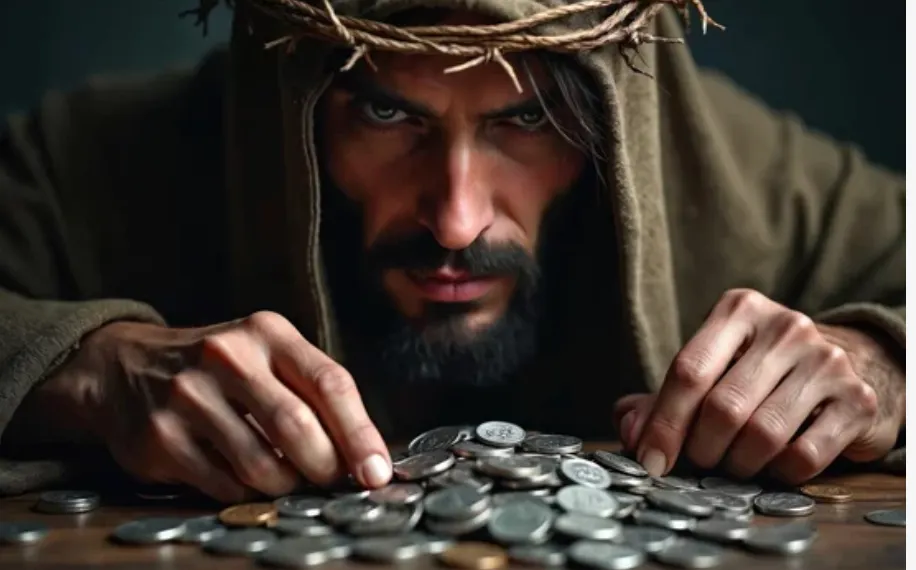
The Agreement: Judas met with chief priests and agreed to betray Jesus for thirty silver coins.
The Signal: Judas used a kiss to identify Jesus to the crowd with swords and clubs, saying, “Whomever I kiss, He is the one; seize Him”.
How wealthy and powerful is the Catholic Church?? Are they truly preaching Christ’s original message to his most humble followers?
Think about it.