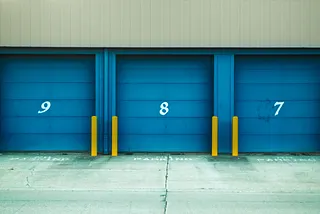
You want to do WHAT with that land?


“What’s the highest and best use of this land?”
I came to hate that question when we were doing a few land deals back in the 90s. That was the first question our agent would ask when we walked a candidate property. Being a creative soul, I could envision some crazy outlandish ideas for a piece of land. So, I completely understand why people will look at a property and declare, “Mini-Storage! This land is perfect for mini-storage!”
Some bank agreed to fund this!?
We have been shopping for an addition to our portfolio lately. Smaller and poorly managed facilities are solidly in our sweet spot for acquisition. We know how to bring the right technology and management to turn them around. But some of the properties we have toured lately make no sense. More than once in the last month, I have stood in the middle of a tiny facility and wondered how the owner talked themselves into building storage in that spot. Even more curious, how did they convince their banking partner? Unless they paid cash for the development, someone had to have provided funding. That means the owner, the banker, and an underwriting committee all bought into the vision. (Scratches head.)
Granted, if you can rent up the facility and make some cash, maybe it is a fair use of the land for the short term. The problem becomes apparent when you decide to sell. Then you have to convince yet another individual that storage is the best use for the property. You have to persuade them enough to pay your asking price.

Seriously, where is that facility?
We toured one property recently that was only a few miles away from an existing portfolio property. We knew going in that it was small — less than 50 units. Its proximity to our existing facility made it easy for our current management team to pick up. Its address suggested a high traffic main street. As we drove in, we realized that the “main” street turned into an older neighborhood and dwindled off to practically no traffic. A tiny wooden sign posted on a residential lot was our only clue that a storage facility might be near. As we turned into the country lane, we found the storage facility at the end of the road, positioned somewhat strangely on property adjacent to the owner’s workshop.
Pinewoods surrounded the facility on two sides with no fencing anywhere. The storage facility and the adjacent workshop shared a nightlight. A lone camera mounted on the workshop provided the facility’s security monitoring. It was apparent that the current owner had not given thought to divide the mini storage services from the workshop services in preparation for selling.
The trees were so close to one building that we couldn’t drive our 4-Runner by it without brushing into the pine limbs. That meant there was undoubtedly not room to install real fencing.
Get Alese Johnston’s stories in your inbox
Join Medium for free to get updates from this writer.
The current owner had allowed the storage buildings to fall into disrepair. There were issues with the guttering, rusted slide locks, and peeling paint — the usual problems we see with neglected buildings. Those are fixable. Honestly, the biggest problem with this facility is the one thing we cannot fix — the location.
No traffic. No security. No visibility.

5 Miles from Civilization
Another small facility we toured had a very different location problem. It backed into a beautiful national forest, situated on an arterial highway leading to a local tourist destination city. The six-lane highway enjoyed constant, heavy traffic.
The facility included a large billboard that generates income, speaking well to the traffic counts. However, this facility was literally in the middle of nowhere. It was at least 5 miles from any civilization in any direction.
I stood on that lot, wondering why renters would drive to that location to store their belongings. How much did that impact their rates and their ability to attract renters?

If the gas station can’t make it, how can the storage facility?
However, the most significant location problem was this facility’s immediate adjacency to a failed gas station. Access to the storage facility required driving across the gas station lot. We assumed there was an easement in place but didn’t bother to check. Our overwhelming concern was about how underground gas tanks at the abandoned gas station might impact the storage facility. Would our lender insist on an environmental impact survey? More importantly, if a gas station can’t survive on a highway that busy, how could a self-storage facility?
This one creates chicken and egg questions for me. Did the gas station fail before or after the construction of the storage facility?
In conclusion . . .
If you find yourself looking at some land and thinking about building storage, give some thought to what your future buyer will have to say about it. Will they scratch their heads in wonderment? If so, perhaps you might reconsider