CIMA Member Profile Connection: Kartemquin talks with SoapBox

Kartemquin Films and SoapBox Productions and Organizing are both proud members of the Chicago Independent Media Alliance (CIMA). On the occasion of CIMA’s annual fundraising campaign, Kartemquin’s Director of Development Emily Long (she/her) and SoapBox’s Founder and Executive Producer Caullen Hudson (he/him) sat down to discuss each other’s latest projects, the challenges and joys of making political media, and what’s next for their organizations.
Click here to learn more about CIMA and donate today.
Portions of this interview have been edited for clarity.
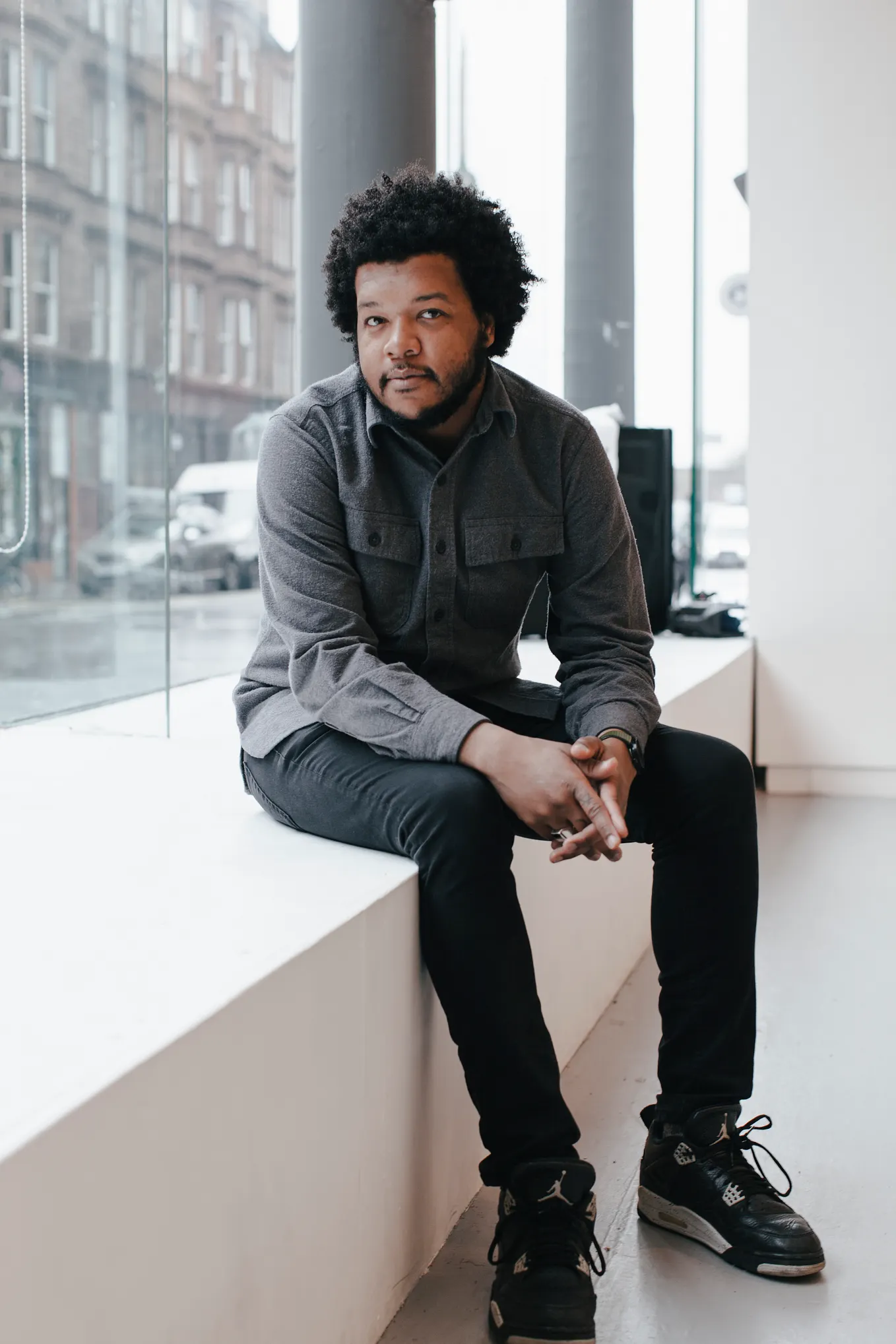
Many thanks for SoapBox Productions and Organizing for the photos.
Emily Long: So, let’s start off by talking a little bit about our respective outlets. Why don’t you tell me a little bit about SoapBox Productions? What do you do and how do you do it?
Caullen Hudson: Yeah, of course. SoapBox Productions and Organizing is the full name. It’s a film/activism nonprofit specializing in what we call multimedia storytelling for structural social change. Our mission at the end of the day is to utilize media, mainly film, to power, frame and sustain social movements that advance holistic solutions to root problems. We do that by working with grassroots organizations, mainly in Chicago, that have racial, economic, and social justice aims. We’ll document those campaigns; we’ll uplift those messages and, at the core of it, the goal is to reshift the narrative and ask the bigger, better questions when it comes to very specific social issues and very specific grassroots campaigns.
So it’s always liberatory-based. How do we move past incrementalism? How do we move past these knee-jerk reactions and really move through by liberatory means, and live out this new world and see the new world through media, through art, through storytelling, and do it in a way that’s fun and exciting and entertaining and accessible? It activates folks, educates folks, inspires folks to ultimately transform how we live as individuals but know that all these systems are working on a much broader level than we do every day. You have to really attack it at the root level and think more broadly, and try to live it out, which is tough, but I think it’s important in doing this work.
EL: So what’s an example of something that you have of how you guys do this, like a project you’re working on right now?
CH: One project that I’ve been using as an example for years is our organizing with the No Cop Academy campaign. That was a campaign from 2017 to 2019 to stop the building of a new cop academy in West Garfield Park. So right now we’re working on a mid-length to feature documentary on the Black youth-led campaign in the city of Chicago. The campaign is over and predates COVID, and it predates the uprisings of 2020. On its face, it’s a campaign to stop the city from building something that had no input from the residents or input from anyone else. But what it did was highlight the way that Chicago in particular yet also in a not unique way, for a large American city, invests in policing.
So on one hand, we can look at this specific campaign about why we shouldn’t do this. No matter where you come from — whether you consider yourself an abolitionist or not — this seems like a poor investment for all these reasons: We already invest too much into policing, AECOM, the builder of the academy has a terrible track record, etc. etc. On the other hand, we also want to educate folks on things happening in the city that they didn’t know about, how the city intentionally tried to skirt by without any input, and also have this bigger conversation about how, in general, large cities budget and continuously give money to institutions that are built on anti-Blackness and violence.

Again, this is all pre-2020 originally. It was great because for me, as Caullen and some of my close colleagues, we had done some organizing before, but we were really in the meetings every week, and we were organizing with No Cop Academy as well as documenting what was happening, as well as making PSAs every once in a while to get folks to be engaged, and that’s continued to now. 2020 happens, and everyone is a critical race scholar, and everyone’s an abolitionist for better or for worse. And so it’s really exciting but also kind of like, “man, where were you?” But it’s nice when watershed moments like that happen, even with Trump, with COVID, with the uprisings, that we have these tools at our disposal — these media tools, these conversation tools to show folks like, “Hey, you’re in the fight now. Awesome. Here’s this thing to understand this issue on a much bigger level.” It’s not just about Trump, it’s about electoralism and our love of celebrity. It’s not just about COVID, it’s about capitalism. It’s not just about this one incident when police kill a Black man, it’s about policing as an institution and as a logic.
And so I think it’s important for us as media creators and storytellers to use these watershed moments where folks are angry and upset and want to learn more, to accept that and receive that, but also push folks to use that to think better and think bigger about these systems, many of which were never meant to help us in the first place, so why did we expect something different to happen? And so No Cop is very much a good example, a longitudinal example, so to speak, for our work over time and just one of many.

EL: So how did you guys pivot after George Floyd was murdered and the whole world blew up? It sounds like you used the documentary as a tool for conversations, but how else did things shift once the whole landscape changed?
CH: Yeah, it’s funny because we were planning to start shooting interviews for the No Cop documentary like February, March 2020 and then COVID happens, and we’re like “oh snap” and have to kind of slow down because we realize we can’t do this in person. It was interesting because — I am the Executive Producer of SoapBox, and so I get very used to roughly planning the year out every year. And so, early 2020, I’m like, “Here’s what we’re gonna do, here’s the plan.” Obviously that didn’t happen. For me personally, the night I heard the news about George Floyd, you know, I look back and I kind of feel insensitive. I kind of feel weird about how I reacted because I was just like, “Oh, this is tragic. It’s Monday, and this is what the police do. I’m not sure why we’re so surprised.”
And it sounds really bad, right? But for one, to be a Black man in this country doing this work, and knowing that police in America kill a thousand people a year, and you know, having been on the front lines of these different campaigns and stuff, just like — this is what they do. And so it wasn’t until probably five days later that we were like, “Oh, this is big. This is something that has gotten global, fast.”
And so for us it was, one, what does our community need right now? What do the folks who we’ve learned from, and organized with, and amplified their messages, need right now? A lot of that was us getting out on the streets and documenting, but also organizing. The Black Abolitionist Network started that summer, the Defund CPD campaign ramped up that summer. It’s doing that work and also amplifying work we’ve done in the past. And two, because films are at the forefront of what we do, we also have a multimedia framework with articles and a podcast. It was asking ourselves, how do we have these conversations a little more rigidly now than we did before? We had mentioned police and prison abolition on other podcast episodes, but this time we thought that we should theme an episode just about this with a homie of ours who can speak on it a little better than we can. So we did that in June 2020, and that is probably one of our most listened to episodes. A lot of the podcast episodes that summer were, positioning different topics within this context of, not just policing, but anti-Blackness and white supremacy and how insidious those are in all institutions, not just the criminal punishment system. It was an interesting time.
EL: Yeah. That’s massive. So how did you come to get involved — you said you’re the Executive Director. Are you also the founder? Or one of the founders?
CH: Yeah, so I’ve done SoapBox since technically in 2013 right out of undergrad. We really got going in 2017 or so when my colleague David jumped on, and more folks supported and we got more capacity. But the first couple years was really just me with a camera learning from organizers here and there, filming protests and stuff, and the way I kind of positioned it then was like, if Black Lives Matter, if Assata’s Daughters, or, you know, a smaller quote/unquote “radical” group wanted a PSA or something, they can’t go to Leo Burnett, so they’re gonna come to SoapBox, and that’s still very much part of some of what we do.
I came to Chicago in 2009 for undergrad, to study film at DePaul. I did a little organizing on campus, and watched a lot more documentaries than I do now but always felt like when I got done watching a “social conscious” documentary, the call to action was like, “Donate to this group,” or, “Read this book,” or something. You know, not not-important, but it didn’t seem like enough. And I felt like lots of films I was watching at the time kind of fell short of that broader, deeper analysis on capitalism, white supremacy, heteronormativity, you know, the -isms go on. And without that analysis, we’re not gonna get anywhere; we’re definitely not going to get to liberation. And so I thought about it, and asked myself, “How do we blend entertaining filmmaking that looks good, that sounds good, that is exciting, entertaining, is accessible, with radical activism as far as organizing? How do we ask these bigger and better questions, that are informed by history and just do better?”
That’s kind of how SoapBox was born. It’s definitely grown over the years, especially when more folks have joined us, whether as contractors, employees, collaborators, learning from each other, organizing with each other, making mistakes, and learning from them. And overall just growing as creatives, as filmmakers, as documentarians, as organizers, and as just people in the world.

EL: Yeah. Yeah. How was it starting your own organization?
CH: Slow and steady. We got our nonprofit status early 2018, we got our 501(c)3 status later 2018. And so before then, it was us just kind of doing stuff, and I feel like a lot of times folks think they need to have all the paperwork submitted before they can start. That can hinder folks from starting sometimes. We started in a way that we could grow as we developed capacity for it, as we needed it. After a while we’re like, “Okay, we need to get some grant money” and so 501(c)3 status was the way to go. We have a podcast all about the nonprofit industrial complex, which is very real but what’s been nice with the years after us getting status, that industrial complex has changed for the better in my eyes, even pre-COVID. The emergent needs of individuals and organizations due to COVID helped that, the uprisings of 2020 helped change nonprofit funding in a way. So now we have been able to apply for grants and not hold back in our politics, and we lean into what we believe in and how we create media and how we try to create change in a way that feels good. And then if we can also get money for it, that’s awesome.
EL: Can you just explain for a second what you mean by nonprofit industrial complex? I think I have an idea of what you mean, but I’m not sure that my idea is the same as your idea.
Get Kartemquin Films’s stories in your inbox
Join Medium for free to get updates from this writer.
CH: No, for sure. I think traditionally when we think about nonprofits, we think that these are organizations, these are groups that are looking out for the world, that are trying to uproot the -isms of our day for a better world. And a lot of the times they can take over the same structure as large corporations, the same inequality, same hierarchy as large corporations, and certain ones aren’t trying to rid society or themselves of these -isms, because if they do, they wouldn’t need to exist, which should be the goal of, not all, but I think lots of them.
And so, sometimes it’s a facade, especially when you investigate where the money goes, where or who funding comes from as some funders or funders’ funders may perpetuate the system of oppression indirectly, or even directly that they’re claiming to oppose. Even financial surveillance from the top-down is an issue especially on smaller organizations, on Black-led organizations; this is all well-documented. So it often reifies the same inequality that it says it’s supposed to get rid of and uproot, and has structures similar to corporations of an inherent capitalist apparatus. We can’t end the systems of oppression, systems of violence that we claim we want to without abolishing capitalism. They’re all very much interrelated and capitalism depends on them to survive.
So that’s something — when I talk about the nonprofit industrial complex — that comes with grant funding as well, having lots of hoops and ladders to go through for organizations to get money for doing good work that’s not “marketable” or profitable. You can’t sell liberation. That doesn’t work in a capitalist framework.
EL: Yeah, no, for sure. I’ve been there too. With my previous organization, we were doing media literacy education, and that was a tough sell. Corporations weren’t interested in helping people think critically about their messages. And that was pre-Trump and people were like, “No, kids know how to use the internet and they know what’s real and what’s fake.” And we were like, “Really? They do?” And then everybody got proved right or wrong, I guess, one way or the other when 2016 rolled around. And, you know, a reality TV star gets to be President of the United States.
CH: Exactly, and it’s almost like, us celebrating celebrity just in general, kind of led us there. You see it on the opposite end too. Someone does a good thing, and they say, “They should be president!” It’s like, well, they just had a good speech. And that was a cool speech but pump the brakes, right? Sometime during Trump’s administration, Oprah gave a speech at the Oscars or something? And it was a good speech because it’s Oprah and she knows how to speak to the public. And people said, “Oh, she’s running for president!” And I’m like, “She’s a billionaire. Come on, y’all. You’ve not learned your lesson?” Again, it’s Trump, but it’s also the presidency. Like, yes it’s Brett Kavanaugh and Clarence Thomas but it’s also SCOTUS in general just existing. It’s fighting for our democracy, but it’s also the fact that the Senate gets two representatives for every state regardless of population, which is ridiculous. It’s absurd.
But we’re not talking about that. I think, to me, it’s laughable all the times the knee-jerk reaction we have at certain watershed moments, and I think those are times that it’s important to really kind of hold people and use that frustration and fear and anger and passion to do something and shoot them in the right direction. Again, we saw that with Trump, we saw that with COVID, we saw that with the uprisings. We saw that with the SCOTUS decision a couple months ago. You know, we’re gonna keep seeing those watershed moments. And I have hope because in each watershed moment that I’ve seen — again, as I’ve grown as a storyteller, and as a purveyor of politics — the narrative that says, “we need to think bigger and better about this system versus just as one incident,” is getting more attention, which makes me feel good. But there’s obviously plenty of work to do and there always will be.
EL: Well, I think that’s, I mean, that’s documentary filmmaking at its best, right? It’s when you get to go deeper into just that one issue and hopefully help people find ways that they can get more active rather than just, like you said, reading a book or giving money. Like, there’s a lot more to it. It’s about changing your mind, getting involved, maybe running for office, but not necessarily. There are other things that you can do. I know for Kartemquin that’s been a challenge for us too. I think we’ve gotten criticism that our films are just preaching to the choir because the person most likely to watch a documentary about criminal justice reform is probably someone who already believes that the criminal justice system should be reformed. So then how do you go deeper into reaching other audiences, and reaching other people? And that can be really a big challenge if you’re going to have a big impact.

CH: Yeah, definitely, and we’ve heard something similar to that before too, and I think in terms of organizing with more quote/unquote “radical” groups, folks have been like, “Oh, this demographic isn’t gonna hear your message. They’re not going to look for your message. This is too whatever for them to hear your message.” And my reaction is often that, “Well, the watered-down version hasn’t ever worked. So like, we might as well just be fully honest, fully transparent.”
And if we’re good about crafting narratives in general, and understanding people, and understanding empathy, then we’re gonna be able to not water-down our message and our politics and the stories, and still reach folks that we previously thought were unreachable. I think we just have to do better. Don’t get me wrong, it’s hard sometimes. But this idea of like, watering it down or shifting so much to the status quo to get an audience that normally wouldn’t agree with you maybe, possibly on board does not entice me. Again, one, let’s be students of history. It hasn’t worked, ever. At least not in a liberatory or systems change-fashion. Two, it’s not going to be true to our message. And I think, three, some people you’re just not gonna reach and that’s okay. I’ve learned this personally over the past 10 years, really.
Everyone has a role in this. Maybe that’s just not your role. I have a friend who is a great filmmaker. I’ve learned a lot from him over the years. He directed some ads for, I’m not sure who, but a House Democrat, running against a Trump-backed Republican. I wasn’t surprised, but I was just kind of like, “Oh, you did this ad, you know, that’s cool.” And he’s kind of like, “Did I do a bad thing?” And I’m like, “Well, you know, no. I guess, I wouldn’t have done that but that’s not my role.” And I think this person winning this election will be better than the Trump-backed person winning the election. But I looked him up a little bit, and you know, he’s a Centrist Dem and I just don’t care that much. It’s just not my role. You kind of have the lanes you want to move in. Those lanes can shift, but, I think, over time, doing the work that — whatever it is for you or your org or your community — that can be your lane. You can stay in there or you can move, but not everyone has to do everything or agree with everyone’s theory of change.
So, I’m curious how you got started at Kartemquin.
EL: Yeah. So I moved back to Chicago after eighteen years in New York. And when I was in New York, I worked for the media literacy organization that I referenced, and then I went from there and worked for Film at Lincoln Center, and was doing fundraising there and then moved out to Chicago. I wanted to be closer to family after the pandemic. And New York is a lovely place but it’s just exhausting to live in, and after eighteen years, I just was tired. New York, everything just felt hard, like getting groceries is hard. And I learned about Kartemquin through Art House Convergence, which is a group that I’m still part of, which is a national coalition of art house theaters across the United States and Canada. Kartemquin happened to have an opening that was coming up, and, you know, that was it.
It’s been almost a year now that I’ve been with Kartemquin, and it’s been fun, going from the exhibition side of fundraising, where it’s all about, “Well, for this amount of money, I can get you into a party with this person.” Which is, you know — fundraising to get a film made is very, very different. And the films that we’re making, documentaries, as you know, they don’t really make money. People don’t get into this because they expect to be wealthy billionaires with a second house at the end of the day. You do it as a labor of love, and that’s how you sell it. It’s cause fundraising. It’s finding people who are aligned with your mission, with your values, and then also with the mission and the values of the film. And that can sometimes be challenging.
I would love to hear more about challenges you guys have experienced in fundraising for political causes. It can be a tough stance to say, “We should abolish the police,” and then find institutions that want to go on record and put their name on that. It can be hard.

CH: Yeah, I kind of alluded to it. It’s been interesting from 2013 to now, even 2018 with that itself. Doing it early on as pro bono, like, protest videos and stuff that I created. And then after a while, I think after kind of making a name for ourselves a little bit, I was surprised with how many groups had access to at least some capital to give to us to at least break even on rental costs and travel and things like that. And then eventually it became, “Hey, we have, like, X amount of budget for said videos or said PSAs about our campaign,” or what have you. And so I think there was, when we started in the first couple years, more groups that either had some kind of finances they gave aid to, and then it kind of grew over time.
I think also what would change over time was folks’ understanding of the importance of media and storytelling and they’re willingness to fund it. Also, we have — not a whole lot of work like this, but — some projects that have more underlined social critiques to them but are either scripted or more traditional, so to speak, so we’ve gone the GoFundMe or Indiegogo route or something to kind of crowdsource funding. And I think being a nonprofit and being cause-based helped in some capacity very early on so we could say, “Hey, rental house, we’re doing this project for the world. Give us a really good discount.” Things like that.
Then once we got grant funding, that helped out a lot. We do a lot outside of the films that people see, and so I was like, “Hey, these thirty hours I spent this week on this admin work or a project has no budget, I would love to get paid for that.” Being able to be frank about that with funders over the past couple years has been really nice. It’s like us being able to eat means these projects you like happen. And also means we can do these projects easier and faster. Certain rapid response pieces we do, say the protests for a group or just for a cause we believe in, we go out, film. We want to make a short recap video, that takes time and energy. Sometimes that group has funds and sometimes that group doesn’t. We want to still be able to do that just because we want to do that, it’s important. Funds for that makes everything easier.
And so I think grant funding has changed not only with giving to more radical, or root cause-based, groups, but also just knowing that media storytelling is necessary — not a bonus but necessary. Trump’s rise, that wasn’t because of nothing. We saw the ads in the ’80s about crack and crime being awful — like, we’ve seen the propaganda across the board on the other side, even this stuff that is quote/unquote “centrist” or middleground or “apolitical”, that’s also not objective, objectivity is bullshit, we know that.
All of this is propaganda but that doesn’t mean it’s necessarily a bad thing. I mentioned this on one of our podcast episodes, toothpaste commercials are propaganda. They’re just trying to get you to buy the toothpaste. Maybe it’s a great product — cool, but they’re trying to get you to do something. And that’s not inherently bad, unless they’re lying to you or if it’s for a violent institution or something. So, like, calling any media propaganda might sound harsh to the untrained ear, but I think it is accurate to an extent. So why not do propaganda for life-affirming institutions, for caring about each other more, and for not backing down when fascist ideology arises? I don’t mean necessarily Trump or Duterte or whoever, I mean any policy that doesn’t value life and doesn’t think about equity within its creation.

EL: Yeah. Yeah, that was a lot of what we did at the media literacy organization, was — you need to understand who’s making the message and what it is that they want to tell you. And I think there’s just such a different understanding now. I feel like there’s a different appreciation for diversity behind the camera as well as in front of it, that it’s not people from just one demographic that are empowered to make media that has a broad reach and gets to people and gets attention. And that’s a tough problem to fix.
It’s one that we’re working on at Kartemquin, trying to get more representative people making films about their communities, rather than having someone flying in as an outsider to make a film. You know, we want to empower communities to tell their own stories and be part of their own narratives and ensure that filmmakers have an authentic connection to the stories that they’re telling, because that media and storytelling piece of it matters. The, “who’s making it, why are they making it, what action do they want you to take?”
CH: Yeah, absolutely. We definitely believe in that as well. What’s nice is some projects will have — some are bigger than others and sometimes we can hire folks we don’t normally work with and we just still become homies by the end of the day. And it’s really nice to have a small team of frequent contractors to bring on and we know that, you know, they either represent the communities we’re following and if not, they’re movement-based and they either have organized or they believe in what we’re doing on a holistic, kind of radical level, which feels good.
EL: Yeah. So we’ve got about a minute and a half left. Is there anything you want to plug real quick?
CH: Yeah, we’re collaborating with AirGo Radio on an experimental doc, based on their podcast series One Million Experiments, kind of showcasing what the world after policing looks like. The question of 2020 uprisings was often, “if not policing, what do we have instead?” Well, we have one million experiments. We’ve got to try new things and a lot of the things we’re already doing right now, and so that series has interviewed a bunch of organizations who are doing awesome work. We’re showcasing that in a very literal, but also kind of metaphorical way. So I like to consider it an experimental documentary, which I’m really excited about because we haven’t done as much fictional or metaphorical stuff as of late and so we’re meshing all the best parts of storytelling in one project.
EL: We have just closed the submission window for our AAPI Voices Fund, which is for Asian American Pacific Islander filmmakers. We got a whole ton of submissions, which now we’re going to start going through and we’re just really amazed at the response for it. That’s been wonderful. We’re also about to reopen soon our Hulu-Kartemquin Accelerator Fund, which this time, for the first time ever, will focus on LGBTQIA+ filmmakers and their stories. So that’s an area we haven’t really explored much yet, and we’re excited to dive into that and to keep that program going, which gives seed funding and also a first look deal with Hulu, to emerging filmmakers. So yeah, it’s pretty rad.