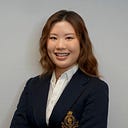
Wonyoug Son
Art Created Through Relationships

When I was in elementary school, I had an art teacher who looked like Kim Gu. Our connection didn’t fade over time and continued into adulthood. Then, one day, I received a call from him. He greeted me, asked how I was doing, and mentioned that one of his juniors was in Eulji-ro. He suggested that to visit her if I had the chance. That’s how I met Wonyoung Son. Climbing the narrow staircase along the boulevard to the fourth floor, you’ll find yourself in front of a plywood door. When you push open this wall-like entrance and step inside, an unexpected studio unfolds before you. The floor is covered in layers of dried paint accumulated over time, and shelves neatly lined with rows of paint fill the space. On one side, you can see the sculptures in form of puzzle pieces. It’s a place where countless fragments come together to form a figure, which I haven’t encountered for a while.
For some time now, there have been efforts to connect artists and art spaces scattered throughout Eulji-ro. It was both an idea and an attempt — rather than leaving these unnoticed, fragmented ties as they were, these efforts explored the possibilities that could emerge by bringing the dispersed elements together. In 2015, a sports day took place on the rooftop of Daelim Shopping Center, and a guerrilla exhibition was held in a space runned by artists. The culture that wasshared in those moments may have laid the foundation for what is to come.
Now, let me introduce the story of Wonyoung Son — an artist who embodies these connections and shows us that, in the end, it was always about art.
Table of Contents
- The story of Wonyoung Son
- Artwork
- Artist’s Space

The story of Wonyoung Son
Please introduce yourself.
Now that I’m introducing myself, I realize how much time has passed since I first came here. When I thought about all the names I could use to describe myself, the one I liked the most was “The Painter.” So, I’ll introduce myself as a painter. I’m deeply interested in relationships, which I’ve explored through the motif of a puzzle. Now, I’m not tied to any specific format — I’m thinking of approaching it in a freer, more fluid way. People might just pass by my work, but at some point, I hope to create a moment of empathy when they stop in front of it.
Are there any other names people call you besides “The Painter”? Nicknames, for example?
Some acquaintances have called me “Son-navi,” “Hocheon Son Wonyoung,” and “Adhesive glue.” In the past, people who had trouble finding their way would often call me for directions. They started calling me “Son Navi” because I was good at explaining routes. Some joked that my curiosity made me always poke around, looking for answers, and called me “Hocheon Son Wonyoung”, like a pen name. And “Adhesive glue” was because I had a knack for bringing people together.
(* Navi is the abbreviation for the English word navigation. Hocheon is the abbreviation for the Korean word Hogishim cheonguk, which means world full of curiosity.)
Interviewer: It seems like all of your nicknames reflect a sense of connection and reciprocity. It’s as if your identity is always rooted in relationships. “Son-navi” stands out — it’s quite an interesting name. Are you also interested in maps?
I’ve always thought it would be great to create a map. Each place has its own unique characteristics — certain stores sell specific ingredients, and different areas are known for particular foods. I wanted to make a multi-layered, three-dimensional map capturing those details. That interest led to projects like Walking in Euljiro, Winter, which mapped out art spaces in the area. I enjoy researching and exploring things I’m curious about. Maybe that’s why I was drawn to Euljiro, with its maze-like alleys and the stories that seem to ripple through them.
Artwork
You introduced yourself as a painter, and I’d love to hear more about what you paint.
Since I’ve been painting for a long time, my artistic style and methods of expression have always changed. In the past, I often painted superficial subjects. But over time, I began to depict the people I met — those who inspired me. They could be writers, musicians, or actors. I’ve always been deeply interested in human relationships, so I started stacking puzzle pieces to create human figures.
I first started drawing faces in 2013, but it wasn’t until I began my residency in 2014 that I fully immersed myself in painting human faces. At that time, my studio was in Euljiro, and my routine involved working there during the week and then staying at the residency on the last 3 days of the week, focusing only on my artwork. As I wandered through the streets of Euljiro, I became more and more intrigued by the relationship between people and the spaces they inhabit. That’s when I began painting cityscapes. It was also a period when I found great joy in exploring alleyways with fellow artists in the residency.
I believe the environment has a profound impact on people. After relocating my studio to Euljiro and staying at the residency in foot of Jirisan Mountain, my surroundings changed dramatically every time I looked around. And so did the things I wanted to express. Naturally, the stories in my paintings got different as well. Lately, I’ve been finding myself drawn to more and more new projects.

In addition to your painting, you’ve planned and led many collaborative projects with local artists and art spaces. Painting is often considered a solitary practice, with many artists being introverted. How did you come to work with so many different people?
After visiting various artist spaces, I noticed that people enjoyed coming to Euljiro’s spaces. That got me thinking — what if we displayed paintings here? What if, instead of confining art to museums and galleries, we made it more accessible — something people could casually encounter, even while just hanging out?
Then, by chance, I came across an open call from the Jung-gu Office aimed at revitalizing local culture and the arts. When I saw the announcement, I suddenly felt the urge to create an opportunity to lower the barriers to experiencing art.
I wanted to collaborate with small, emerging spaces in the neighborhood, such as Sipboon’Il, Zakeun meul, and Mulgyeol. So, I personally went around, passionately persuading the owners to participate. Of course, some refused. But others welcomed the idea, and there were artists who were willing to contribute even with a small budget. As a result, we held guerrilla-style exhibitions across four different locations, each featuring unique works at different times. The exhibition was called ‘walk & work’. Since I physically walked through these spaces, I wanted to incorporate that experience into the project itself.
Later, events like ‘Art Function Space’ and ‘Eulji Service Center’ were held as structured exhibitions within fixed time frames. But with ‘walk & work’, we chose to stage the exhibitions sequentially in different locations. I was curious to see how people would react to encountering art in unexpected spaces. The participating artists and space operators were incredibly supportive and played a crucial role in making it all happen.
From what you’ve shared, it seems that introducing many spaces wasn’t necessarily the main goal. When ‘walk & work’ took place, it created an unexpected encounter with art in the middle of the city — an experience that allowed people to slow down and engage with it without having to make a special trip to a museum or gallery. I believe that these practices will accumulate, creating a kind of gravitational pull for art in Euljiro. And it would foster an environment where artists are naturally drawn to gather and create together.

You seem like an introvert, yet, on the contrary, you appear to have a wide network and interact with many people. Is there a project you’ve worked on with others that stands out to you?
In 2015, the Seoul Cultural Foundation supported a project called the ‘Cheonggye Olympics’. At the time, a teacher I worked with jokingly called me “Bond” because I acted like adhesive glue, connecting people. I genuinely enjoy bringing together people who need each other.
To talk more about the ‘Cheonggye Olympics’, I was participating in a residency at the foot of Jirisan Mountain when I started hearing words from fellow artists — things like, “I heard there are some artists in Euljiro,” or “Apparently, someone’s working in Euljiro.” There were all these scattered stories, and I realized there must be many people in Euljiro whom I didn’t know yet.
During the residency, we often studied together, brainstorming ways to do something constructive while learning from one another. We would gather at my studio in Euljiro, which had great accessibility due to its location. That’s how we ended up working on a rooftop project called ‘Euljiro Hawaii’. Of course, just gathering to have fun wouldn’t have much meaning, so we decided to incorporate something related to art. Entering an unfamiliar neighborhood, I felt like we could interact with the embedded stones of the area. That’s when the idea of an “Sport Festival” came to mind.
사진 — Cheonggye Olympics, 2015 © Wonyoung Son
At first glance, sports and art may seem unrelated, but we wanted to show how the physicality of sports could be expressed through an artistic lens. We ended up holding a festival on the rooftop of the six-story Daelim Shopping Center, which was spacious like a town square. I planned the event with three other artists from the residency, along with artists who had previously gathered under the ‘Euljiro Hawaii’ project. We also recruited participants through an open call.
We engaged in discussions, seminars, and research about the history and mood of Eulji-ro area, and created artwork to present them in a form of a festival. Urban photographer, an architecture scholar, and an anthropologist joined the festival, and helped us to deepen our understanding of the neighborhood. That experience led me to publish papers that combined these insights and creative interpretations of Euljiro. In result, I made a newspaper-style publication called Eulji-ro — Things, featuring imaginative takes on the people who work in various industries throughout the district.

While participating in the residency and working on projects in Euljiro, I kept hearing words like, “Someone is working somewhere in Euljiro.” Over time, I realized that scattered individual studios, galleries, and even for-profit art spaces were gradually forming. Visiting one exhibition space would often lead to discovering another, and then another. It felt like a collection of dots, all connected but still somewhat fragmented.
So, in 2019, I started ‘Walking through Winter Euljiro’ to link these scattered dots. I created a map to connect the various art spaces — though looking back now, it seems quite rough and handmade. I drew each path by hand, including alleys and routes that didn’t even appear on official maps. Some of those places have disappeared since then, while new ones have emerged.
Thanks to your efforts in building artistic possibilities in the region, I believe younger artists have been able to establish themselves in Euljiro within a more supportive environment. It seems like, one by one, people who share that vision have gathered here, continuously working to connect people, and even bridging spaces with one another.
I was really happy to see you open Space Unit 4, an artist-run space where so many artists can gather and work. It seems like you had a strong vision for this space. I’m curious about the process behind it and why you chose to create it next to your studio.
When I first moved into this building, I used the entire fourth floor. The space that eventually became Space Unit 4 was originally part of my studio, but I had to give it up when a business called ‘Gukbo gongye moved in. Then one day, I heard that the space was becoming available again. If possible, I wanted to reclaim it and turn it into a place where artists could create and experiment as freely as they wanted.
I had been to Bali and Jeju island with some fellow artists. During our conversations, I mentioned my idea of creating an artist’s gathering space — a place where I could say, “You have a month — use it however you want.” Then they immediately wanted to be involved. Among them were school teachers, directors and writers. I encouraged them to participate in the project.
From then on, we longed for the space to become ours. That’s how Space Unit 4 started. I reached out to artists through Instagram and held an open call for those who needed a workspace. Many of them were eager to participate, and before I knew it, a community of artists had formed around the space. Looking back, I feel incredibly lucky. I’ve been able to meet and collaborate with so many talented artists, and I’m deeply grateful for the experiences we’ve shared.
Were there any challenges or things that didn’t go as planned during the process?
One regret is that we didn’t have enough time to fully explore everything we wanted to do, since most of us were juggling multiple jobs. Another thing is that I originally envisioned the space as a hands-on, artist-driven studio — a place for creating and launching projects. But in reality, it ended up being used more as an exhibition space than I had intended. That part still feels like a missed opportunity.
It’s really inspiring that you wanted to reclaim your old studio and open it up for other artists to use and experiment with. I can only imagine the incredible things that could have happened if you had a little more time. I hope that spaces like Space Unit 4 continue to emerge elsewhere, carrying on the same spirit of creativity and collaboration.
Artist’s Space
I’m curious about where you were before finding your studio in Euljiro. When did you move here?
Was it 2008? Or maybe 2009? I think I came to Euljiro around that time, so it’s been about 14 or 15 years. That’s longer than my stay at the previous studio. Before moving here, I had a studio in Jamwon-dong, just five to ten minutes from home. I’d eat at home and then head to the studio to work.
I imagine your daily routine changed quite a bit after relocating — different streets, a new commute, and a different crowd. Did you face any inconveniences?
The commute itself wasn’t a big adjustment. My old studio was about a five- to ten-minute walk from home, while Euljiro is about 15 minutes away by subway. What changed more was my perception of distance — moving here made Gangbuk(the northern part of Seoul) feel much closer.
Now I installed an art piece at the Shinhan Card space in Euljiro’s underground walkway, but I remember how intimidating that road felt back then. Before I moved, when I occasionally visited here come here to meet someone, and I’d grumble to myself, Why did they ask to meet in a place like this? But within a year — maybe two — I found myself building my own studio here.
In the early days, I locked myself at my 4th floor studio and would not go down, like Rapunzel in a tower. I often went up to the rooftop while working, watching the sunset with a beer I had brewed myself. A small chair and table up there gave me a sense of peace and romance, and that’s how I gradually fell in love with Euljiro. Down on the streets, it was a gray industrial area — deserted and quiet — but up on the rooftop, I had an entirely different world, with mountains, sunsets, and an open skyline.


Earlier, you mentioned how quickly time seems to pass in this place, which makes me feel that Euljiro and your studio hold a lot of significance for you. When you first came here, there probably weren’t many artists or art spaces yet. What led you to move here?
At first, I had no idea what Euljiro was like. It wasn’t my neighborhood, and honestly, I found it a bit intimidating. I remember coming here once to eat sea snails and feeling unsafe at the underground walkway. Then one day, a close junior reached out to me. He had been using a space here for a while but was looking for someone who might be interested in taking it over. Out of curiosity, I came to check it out. The lighting streaming through a narrow, slightly crooked window immediately struck me. The rooftop with the completely open view was astonishing too. Standing up there, I was amazed to find myself in the heart of downtown Seoul, surrounded by landmarks like Namsan, Bukhansan, Ansan mountain, and even Dongdaemun. I thought, This is my space. It was such a powerful first impression that I even joked to myself, Maybe I lived here in a past life hundreds of years ago. I just knew I had to take it.
The space was large and though it wasn’t as pricey as a first- or second-floor unit, the rent was still too high for me to cover alone. So I teamed up with five other artists, and we started working here together. Over the years, as everyone’s situations changed, people moved in and out. Eventually, it became difficult to find new studio mates. Around that time, someone approached me about using part of the space as a gallery. I reached out first and made them an offer, which led to us sharing the space as it is now.
Looking at your journey, it’s clear that you have a deep affection for this neighborhood. You also seem to care about the neighboring artists very much. How did you come to love it so much?
At first, I didn’t really explore the area beyond my commute between home and the studio. But as time passed, my initial feelings of unease and discomfort gradually shifted into curiosity and familiarity. That’s when I started wandering through the streets. As I walked around, I kept discovering unexpected places, and founding the handwritten signs everywhere was so fascinating and fun. Over time, my walking routes expanded — just like how cats slowly expand their territory. That’s when my interest in ‘urban space’ really started growing. I think that’s the biggest change I’ve experienced since coming to Euljiro. I didn’t notice it at first, but at some point, my perspective had completely shifted.
Through these walks, I began ‘discovering’ things. Little by little, new spaces started appearing. At first, the changes happened very slowly, and I think that slow transformation is what deepened my affection for Euljiro. As new spaces run by young artists emerged, I became increasingly interested in ‘artist-run’ spaces — which led me to start actively exploring. It felt like every new art space was another comrade joining in.
As more creative spaces opened, I’d go visit them, whether it was to see my seniors owning Yeongdo LED nearby or to show my friends around when they visited my studio. Those moments — just hanging out, sharing ideas, and seeing the area evolve — are some of my happiest memories.
I heard that after 15 years, your time in this space is coming to an end. That must make every remaining moment even more precious. Do you have any plans for the future?
Get Kikii Park(Jiseon Park)’s stories in your inbox
Join Medium for free to get updates from this writer.
Since I’ve been here for so long, I have a lot of emotions tied to this place. Right now, I feel a bit lost about where to go next.
Going through all of this has made me realize just how important relationships are to me. I’ve also come to understand that, no matter where I go, I just want to keep drawing. I think I’ll continue my work while holding onto the connections I’ve made.
Before leaving, we’re planning one last event in December, with Space Unit 4. We want to create a gathering where all the artists who have worked and exhibited here can come together, share their work, and exchange ideas. That’s how we’re hoping to bring this chapter to a close — together.


One who draws the beauty of connecting dots into lines
Now that I think about it, the way she pieces together small fragments like a puzzle feels very much like her artistic journey of mapping out connections and building relationships.
Euljiro has become a place where diverse artistic expressions unfold. Watching these loosely connected yet interdependent artists flourish in their own unique ways made me realize the hidden effort of the bees and butterflies, weaving connections between each flower blossoms. In a way, every moment the artist spent here — drawing, meeting people, and forming bonds — has been part of a larger artistic process, where relationships themselves become art. Perhaps that very network of connections is like a canvas, small in its individual moments but vast in its impact on Euljiro as a whole.
Thank you for sharing your perspective with such depth and reflection. I’ll see you again at the final event in December.

Studio of Wonyoung Son


Wonyoung Son’s history of moving

Find out more about Wonyoung Son
● Wonyoung Son : @artist.wonyoungson
● SPACE UNIT 4 : @spaceunit4
● Euljiro Hawaii : @euljirohawaii
CREDIT
Artists who shared her Studio
- Lee Sanghee
- Oh Sun-young
- Kang Seunghee
- Kim Jiyoung
Participants of the Cheonggye Olympics
- Gu Soohyun
- Kim Yonghyun
- Kim Chaerin
- Kim Hyun-ji
- Park Cheon-wook
- Son Wonyoung
- Yoo Hwasoo
- Lee Sang-won
- Jo Moonki
Participants of Euljiro — Things
- Culture Breeding Laboratory
- Yeo Inhyuk
- Yoo Mok-yeon
- Yang Gil-ho
- Luuk Schroder
- Heo In
- Lee Sang-won
- Yang Chanjae
- Im Jinwoo
- Seokho Kang
- Kim Yonghyun
- Choi Yoon-seok
- Euljiro Hawaii
- Taehoon Lee
- Yoo Hwasoo
- Kim Chanwoo
- Kim Hye-soo
Participants(artists, galleries) of walk & walk
- Oh Yongseok
- Lee Moon-ho
- Lee Sang-won
- Yoon Jeong-mi
- Son Wonyoung
- Zakeun mul
- Mulgyeoul
- Sipboon’Il
- Sangup Gallery

Translated and edited from “작은도시의 들, 꽃” by Dae Woong Ko, originally published on Brunch. The original text is available at Brunch.
Translation and editorial adaptation by Jiseon Park.