Shamata: Tranquility Meditation


By Michael Erlewine
Khenchen Thrangu Rinpoche:
“The instruction of shamatha has been passed on orally from one individual to another. One first receives instruction on shamatha, much like the instruction in a book. This first stage is called the experience of instability. When one begins to meditate, one first experiences the mind as very unstable with many thoughts arising. There are good thoughts and bad thoughts, and this onrush is likened to a waterfall pouring off a cliff. When the water hits the bottom, it splashes up with a great deal of agitation and makes many waves.
“In meditation it seems that one has never had so many thoughts and one thinks, “I’m getting worse because of my meditation.” But, in fact, one is not developing more thoughts; rather, before one had begun to meditate, one didn’t think about how many thoughts one had. Without analyzing them, one wasn’t aware of their number. Actually, mediation is the beginning of dealing with one’s mind because one becomes aware of one’s thoughts.”
End of quote.
I first learned Shamata in February of 1974 from Chögyam Rinpoche himself. That was a life-changing event so I might as well detail it.
At that time of Trungpa’s visit to Ann Arbor in February of 1974, we were living in an old house suspended on a steep hillside overlooking North Main Street in Ann Arbor, just across the street from Lansky’s Junkyard and the Huron River.
There were wharf rats around the garbage cans outside our house the size of house cats. They came from the junk yard just across the street. We had about zero money, but, as mentioned, were happy nevertheless. I have always been a pretty positive type.
I saw a mimeographed memo on a university board that Chögyam Trungpa Rinpoche was coming to Ann Arbor, and I had read his book “Cutting Through Spiritual Materialism,” which was published in 1973. I called the number and ended up designing the poster for his visit and acting as chauffeur as well.
I was geeked to chauffeur Trungpa Rinpoche, but I didn’t have a limousine. Instead, I had an old beater of a Ford station wagon, the kind with fake wooden sides that, when you turned off the ignition and pulled out the key, kept on sputtering and coughing for something like ten or twenty seconds afterward. You could walk down the street, turn around, and see that Ford still chugging away. I couldn’t believe I would get to drive to Detroit Metropolitan Airport and pick up Trungpa Rinpoche.
And that day finally came. There I was at the airport (and early too) in my Sunday best (which since I never went to church Sundays, was not much), but as enthusiastic as all get out. Let me tell you, I was pumped.
The plane was a little late and I peered into the jetway as the passengers filed out, but no Rinpoche. Then, finally, way at the back I saw this short Tibetan man in a suit; he was smiling and looking directly at me!
And suddenly there we stood, eyeball-to-eyeball, even a little too close for my comfort. I am sure I mumbled something, but what I saw was this very tired pair of eyes staring into mine, and with a yellow tinge to them at that.
Then Trungpa, still looking right at me, rolled his eyes up into his head until all I could see were the whites of his eyes, and they stayed there for an uncomfortable amount of time. When at last they rolled back down, I found myself looking into perfectly clear eyes with no tiredness or yellow. Hello!
Suddenly here was this incredible being, only inches away, staring right into me, and friendly too! Traveling with Trungpa was Larry Mermelstein, who later became the head of the Nalanda Translation Committee in charge of translating so many valuable texts from Tibetan into English.
I was already in some kind of contact-high as we made our way out of the terminal, into my station wagon, and headed back to Ann Arbor where Trungpa would stay at the house of a professor at the University of Michigan.
I carried Trungpa’s bags into the professor’s house, where a small welcoming committee was doing just that. My job as chauffeur was done for the moment, but I hated to leave, so I kind of hung around at the back of the room taking this in. I was very intrigued by Trungpa Rinpoche.
Before I knew it everyone there had decided to go for a tour of the U-M campus and they were heading for the door, while I scrambled to get out of the way, hoping I would not be noticed.
Suddenly Trungpa Rinpoche said that he was tired and that they should go ahead while he took a nap. I kept my head down and politely waited until the rest filed out and then began to follow suit, at which point Trungpa motioned to me. “Michael, you stay here with me.”
Get Michael Erlewine -- Archivist Popular Culture’s stories in your inbox
Join Medium for free to get updates from this writer.
This was like too good to be true, and he motioned me into a small room that turned out to be the professor’s office and had me sit in a straight-backed wooden chair that was there. I sat down.
Meanwhile, Trungpa Rinpoche proceeded to completely ignore me while he went over every inch of that office, picking up and examining all of the various statues and knickknacks that were there and, at the same time, drinking a bottle of saki.
I sat there like a bump on a log and hoped I was not disturbing him. Like a turtle coming out of its shell, I gradually relaxed and realized that Trungpa was totally occupied in every moment, delighting in everything that was there. I had never in my life seen this kind of focus being exercised, and that was my first lesson right there.
My natural inclination in that kind of spot would be to do nothing but fidget, which is exactly what I was doing. After a while, Trungpa finally got around to examining me and suddenly there he was right in front of me and looking right at me again.
He proceeded to give me a series of instructions, never telling me what it was that he was doing. But it had to do with watching my breath and breathing in and out, deeply, like we do when a doctor uses a stethoscope. And this next part is hard to describe, so you will just have to take my word for it.
I was breathing in and out, as directed, and Rinpoche was watching my breath, but he was concerned with my outbreath, the way I was breathing out. He told me I was not letting the breath go out far enough but somehow holding back.
By now I was nervous for sure, and I sat there trying to exhale as hard as I could without actually fully exhaling. And I didn’t want to breathe all over him. I was just too nervous and simply going through the motions. Then he said to me, “Michael, let it go all the way out. Don’t worry, it will come back!” And with that I exhaled, and all of the way out too. And here is the unusual thing:
At the same moment that I really let my breath go out, in the back of my mind (and at some higher level) all of my fears of death and dying that had haunted me all my life arose like a swarm of darkness and just evaporated. Gone.
While today I am still not anxious to die, I no longer have the kind of dread and fear that I had before those instructions. Of course, later I was to find that Trungpa Rinpoche was teaching me basic Shamata Meditation, the cornerstone of all basic meditation practice.
I am trying to communicate here that doing ordinary things with Trungpa Rinpoche end up being extraordinary. I must have spent an hour and a half with Trungpa Rinpoche, after which he did go to take a nap, and I hit the road.
We had one more significant exchange on my way out of the professor’s house. Trungpa pointed to a copy of the poster I had made for his talk that was on the wall. It was a woodblock print of a Tibetan dragon flying in the clouds, while each of its four feet clutched a pearl.
“Do you know what this represents?” he asked? I told him I did not, but that I just loved the image and thought it might be appropriate for his talk. He went on to explain that the dragon, which in the Tibetan and Chinese cultures is perhaps the most important and positive of creatures, could fly, but only as long as he held those four pearls, one in each hand. If he dropped even one of them, he would fall from the sky.
Of course, I took this in. Later I understood that the four pearls that the dragon held were what are called in Tibetan Buddhism the “Four Thoughts That Turn the Mind to the Dharma,” sometimes called the “Four Reminders” or the Common Preliminaries. And those four thoughts have always been key in my understanding of the dharma.
Here Trungpa was pointing them out to me and making it clear that we must hold all four thoughts in mind at once to maintain our awareness. The Four Thoughts are something one encounters at the beginning of Buddhist study, but also just before learning the highest form of meditation, called Mahamudra. They are profound and so much already a part of each of us. Trungpa was pointing something important out to me. There are other stories of Trungpa’ s visit, perhaps for another time.
I will never forget the last thing that Trungpa said to me. He had just got into a car that came to pick him up and it was on the side of Main Street in Ann Arbor, a very busy spot. I was bending over and peering into the open window where he was sitting.
I was trying to tell him that he was the first person I ever met for whom I had no personal resistance or criticism. It was true. He turned to me, took my hand in his, and said: “Well, Michael, we are both married men and we are about the same age.” And then he was gone.
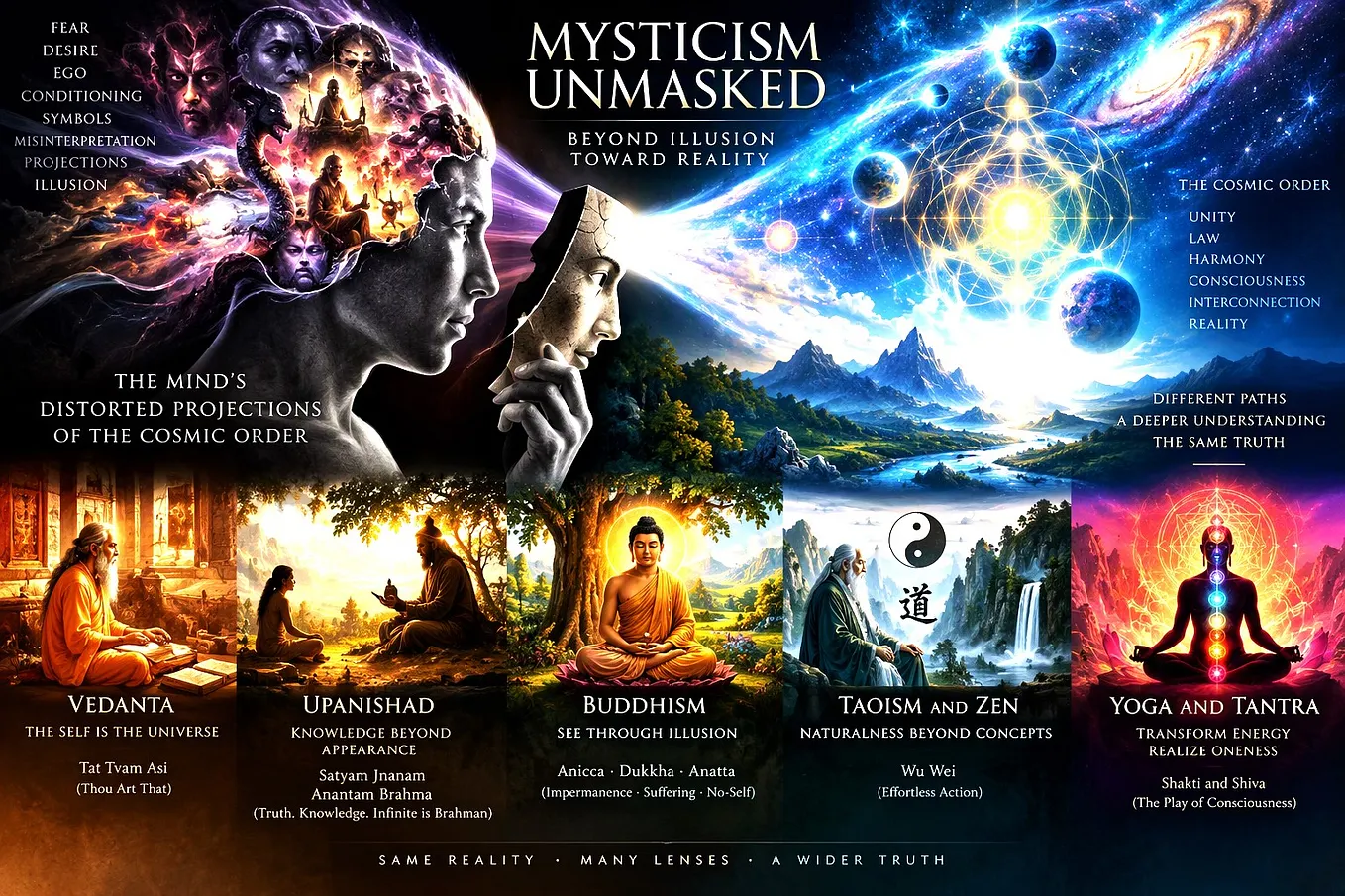
[Midjourney AI graphic prompted by me.]
EMAIL Michael@Erlewine.net Note: If you would like to have access to other free books, articles, and videos on these topics, here are the links: SpiritGrooves.com.
As Bodhicitta is so precious,
May those without it now create it,
May those who have it not destroy it,
And may it ever grow and flourish.