Desmond Paul Henry

Technological Contributions in the Era of Computational and Kinetic Art
With the emergence of Kinetic Art, the seminal figure of Desmond Paul Henry, a pioneer in the convergence of art and technology during the 1960s, comes to the forefront. This article explores Henry’s notable contributions, specifically in the development of drawing machines powered by analog computers, grounded in the system used in World War II bombers.

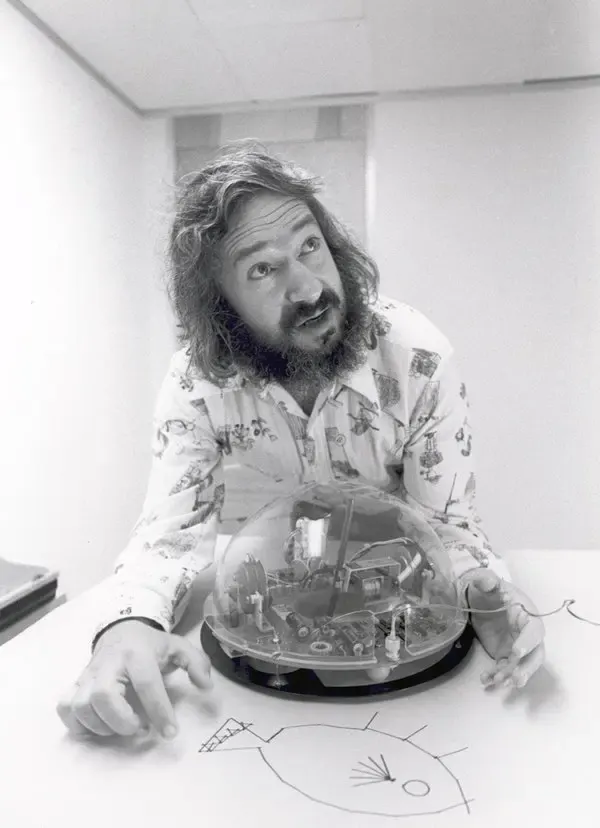
During this innovative period, Henry conceived and built three drawing machines, integrating analog computers and components acquired for his workshop in Whalley Range, Manchester (O’Hanrahan, 2018). These machines were intricately linked to the “computers” employed in World War II to calculate trajectories of bombs dropped from planes. The notable exhibition of these creations took place at Cybernetic Serendipity in 1968, marking a milestone in the intersection of art and technology (Reichard, 1968).

Cybernetic Serendipity in 1968
It is crucial to emphasize that Henry’s drawing machines were not limited to being fully programmable, allowing human intervention during the creative process. This unique aspect underscores the coexistence of artistic agency and algorithmic execution in the resulting works.
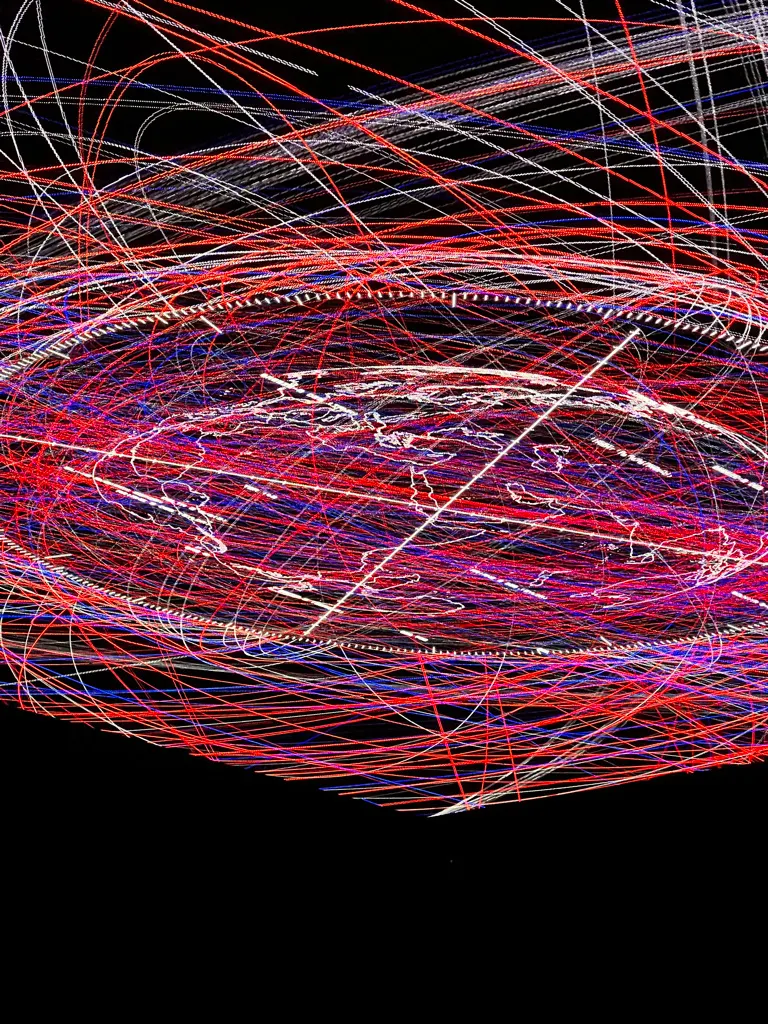
Henry’s drawing machines produced distinctive visual works characterized by abstract, curvilinear, and repetitive lines. The peculiar aesthetic of these records was compared by Henry himself to mathematical parabolas and organic production derived from pendulum harmonographs and ornamental geometric lathes.

Henry played a significant role in the development of computational art by exploring the intersection between military technology, artistic expression, and human intervention. His machines not only reflected the unique fusion of military heritage and creativity but also provided a singular experience where human control melded with algorithmic unpredictability.
Get Miguel [ 🤖 ]’s stories in your inbox
Join Medium for free to get updates from this writer.
The legacy of Desmond Paul Henry resonates in the contemporary understanding of the interconnection between creativity and technology. His striking contributions in the era of computational and kinetic art offer valuable insight into the evolution of artistic practices driven by technological innovation. This study highlights the importance of Henry as a visionary who transcended boundaries, indelibly influencing the landscape of contemporary art and its intrinsic relationships with technology.
References: