Modernizing Compliance: Implementing an Electronic Quality Management System (eQMS) in Medical Device Manufacturing

Relying on physical paper binders, wet ink signatures, and manual routing sheets exposes medical device companies to significant regulatory risk. Human errors — such as misplaced records, unapproved document revisions in circulation, or missed training assignments — frequently lead to severe audit observations. Implementing an Electronic Quality Management System (eQMS) transforms compliance into an automated, reliable operational workflow.
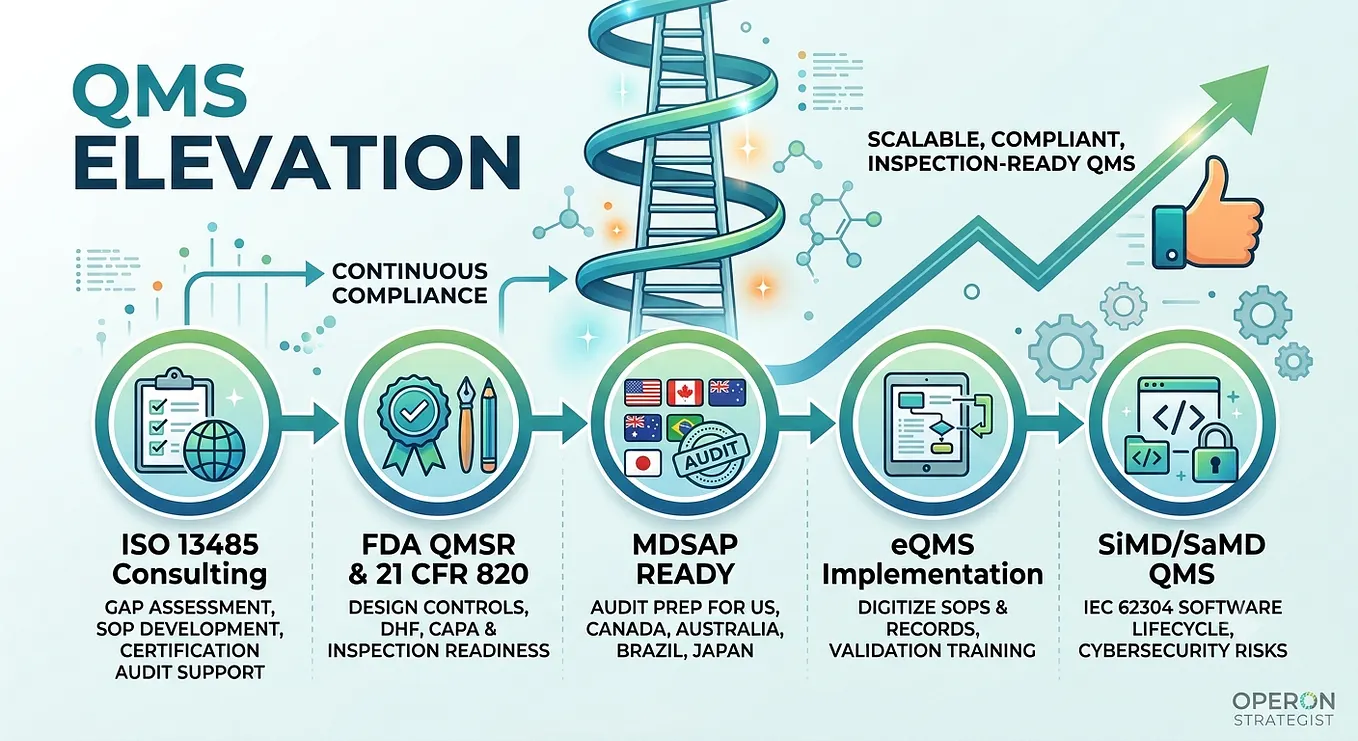
Discover how digital QMS platforms are deployed by reviewing Operon Strategist eQMS Implementation.
1. Critical Modules of a Compliant eQMS
A fully integrated, medical device-focused eQMS digitizes end-to-end quality activities across the organization:
- Document Control: Automated routing, workflow approvals, electronic signatures, version management, and scheduled document review cycles.
- Training Management: Automatic assignment of updated SOP training tasks to relevant employees with tracking of training completion records.
- CAPA & Non-Conformance Management: Digital forms to log, track, assign, investigate, and close non-conformances and CAPA workflows with automated escalation alerts.
- Supplier Quality Management: Approved Supplier Lists (ASL), supplier scorecard tracking, automated re-audit reminders, and digitized incoming inspection logs.
- Change Control & Change Orders (ECO/DCO): Automated engineering and document change order routing with mandatory impact assessments across risk files and regulatory submissions.
2. Software Selection and System Validation Requirements
Implementing eQMS software requires meeting strict computer system validation (CSV) standards. Because the software manages regulatory records, it must comply with FDA 21 CFR Part 11 and EU Annex 11 guidelines for electronic records and electronic signatures.
Get Palak Ankam ✨’s stories in your inbox
Join Medium for free to get updates from this writer.
Validation Methodology (IQ / OQ / PQ):
- Installation Qualification (IQ): Verifies that the eQMS application and underlying cloud infrastructure are properly installed according to vendor specifications.
- Operational Qualification (OQ): Tests every feature and workflow within the software (e.g., password enforcement, audit trail logging, signature security) to ensure it operates as intended.
- Performance Qualification (PQ): Demonstrates that the software handles real-world business workflows reliably in a live operational environment.
3. Long-Term Benefits of eQMS
Transitioning to an eQMS eliminates document routing delays, establishes an immutable electronic audit trail, grants immediate remote access during audits, and provides real-time executive dashboards for monitoring quality system metrics.
Learn more about selecting and validating eQMS software at Operon Strategist Quality Consulting.