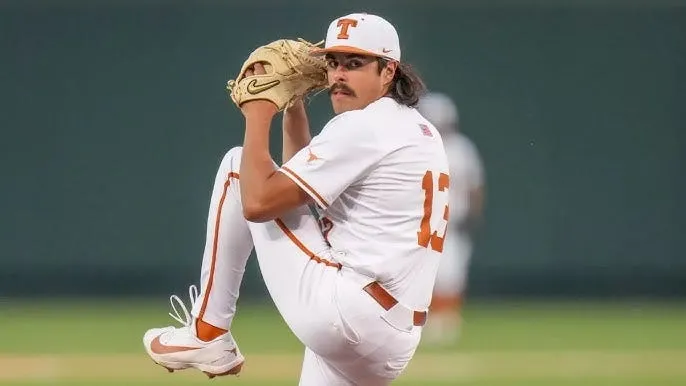
Why You Should Shift (Almost) Everyone in College Baseball


Big-league teams broke baseball with the shift. In 2022, the last season before MLB banned traditional shifts, teams put three infielders on one side of second base in 38% of plate appearances. Left-handed hitters were shifted on 55% of their plate appearances, and they hit just .200 on ground balls into a shift against .238 when teams played them straight up.
College baseball has been slow to adopt this trend. Division 1 teams shifted 14% of the time last year, with lefties getting shifted on 19% of the time and righties 11%. That puts college rates roughly where MLB rates were in 2015 or 2016, before the shift took over. Just three D1 programs, Charlotte, Tulane, and Georgia Tech, shifted more than MLB’s 2022 league average.

The gap is strange considering college baseball is rarely more than 3–4 years behind MLB trends. College pitchers added sweepers at scale in 2023, about three years after big-leaguers started adding them, and one-knee catching followed a similar timeline.
So either college teams are leaving outs on the field or the shift just doesn’t work at this level. We went through the last two seasons of TrackMan positioning data to find out. Long story short, the shift works and it is undervalued in college baseball. Here’s how the programs that commit to it over a full season are going to get paid for it.
The data
We measured about 323,000 balls in play across 6,427 college games in 2025 and 414,000 across 8,311 games in 2026. For every one of them, we know three things: how hard it was hit, where it was hit, and where the defense was standing.
Our expected wOBA model uses the first two and ignores the third. In theory, xwOBA tells you what a batted ball is worth with league-average defensive positioning. The gap between what actually happened and that expected number is the defense’s share of the result. Compare that gap on shifted balls to the gap on unshifted balls, and you get a clean read on whether moving the infield helped or hurt.
The shift works
Across every shifted ball in play over the last two seasons, hitters came out about 20 points of wOBA worse than their contact said they should have (−.021 in 2025, −.018 in 2026). In plain terms, that is roughly 1.5 runs saved per 100 shifts. The shifts college teams are already putting on are working really well in the aggregate, but there aren’t enough of them.
Predictably, the payoff grows with the hitter’s pull rate. Against the bottom half of pull hitters, the shift was only marginally positive, around −.006 to −.012 wOBA per ball. However, against dead-pull hitters, it was worth a significant −.025 to −.028 points of wOBA per ball. It’s worth noting that pull hitters batted .345 on pulled ground balls against a standard alignment in 2025 versus just .258 against a shift.

Although the shift is great in theory, it does give something back to the hitter. Backside ground balls turn into hits 10 to 17 points more often when the left side of the infield is vacated. But the hitters who get shifted don’t hit many balls that way, and most of the ones that do get through are mishits that found open grass, not a hitter going the other way on purpose. For every grounder a pull hitter sneaks through the open side, he’s pulling three or four into the stacked side. Over the course of a season, the trade comes out in the defense’s favor.
Who should be shifted?
This is where college teams are furthest off. Even the most pull-heavy lefties in the country got shifted on only about a third of their plate appearances in 2026, and the most pull-heavy righties were shifted on barely a fifth of the time.
To put a number on who’s worth shifting, we ranked every hitter with 40 or more tracked ground balls by pull rate, then split them into ten groups within each batting hand. Then we took every grounder those hitters hit into a standard alignment and asked one question: against the same kind of ground ball, same batter hand, same direction, and same exit velocity, how often does a shifted defense turn it into an out? The difference is the number of hits a shift would have saved on balls that were actually put in play.

For lefties, the answer is uncomfortably simple. Shifting helped against every lefty group in both seasons. It was close to break-even against the least pull-heavy lefties, worth 2 to 4 hits per 100 grounders in the middle of the pack, and 6.5 to 7.8 hits per 100 against the most pull-heavy. For righties, the shift starts paying off around the third decile and climbs to 4 to 5 hits per 100 grounders at the top. The one group where shifting is proven to cost you hits is the bottom 20% of righties by pull rate, where it gave back 1 to 4 hits per 100 grounders.
The obvious pushback is runners on base, since somebody has to hold the runner and cover second on a double play. However, when we reran everything on bases-empty balls in play only, the numbers barely moved. With nobody on, shifting still helped against every decile of lefties and against righties from the third decile up. Teams already know this on some level, because they shifted 14 to 16% of the time with nobody on against 8 to 9% with runners on last year. But even the most pull-heavy lefties were shifted under half the time with the bases empty, which is the easiest spot on the field to do it.
Add it up: a team that shifted every lefty and every righty from the third decile up would save about 15 hits and 10 runs over a season. About half of that comes from bases-empty situations alone. Ten runs is worth roughly one extra win.
Who shifts?
Only three programs shifted more often than MLB’s 2022 league average in 2026: Charlotte (51.5% of balls in play), Tulane (42.5%), and Georgia Tech (39.6%). West Virginia was right at 38%, and Samford, Kansas State, Michigan, Virginia Tech, Utah Valley, and Virginia were all between 33 and 37%. All of them shifted roughly twice as often or more as other defenses did against the same hitters. On the other end, Arkansas shifted on just 6% of balls in play, and Bowling Green, South Dakota State, and La Salle almost never moved at all.

Which of those shifts actually took outs away? Comparing each team’s shifted balls in play to its own unshifted ones, the biggest gains in 2026 belonged to Washington, UAB, UIC, and Pittsburgh, each about 14 to 16 runs better on the balls they shifted. Charlotte saved about 13 runs on more than twice as many shifts, and Notre Dame and Old Dominion were around 12. At the bottom, Duke, App State, Michigan, Florida Atlantic, and Nebraska all gave back 10 to 16 runs on shifted balls.

Interestingly, just over half of the teams that shifted at least 150 times came out ahead. Shifting a lot and shifting well are not the same thing. The teams that gave runs back were mostly shifting hitters who hadn’t earned it or leaving the full shift on behind the wrong pitchers.
Should pitchers determine shifts?
The other piece of shifting is determining whether the pitcher on the mound should change the alignment behind him. If a sinker-baller is out there, is a pull hitter still going to be that pull-heavy?
Get ParadigmPDS’s stories in your inbox
Join Medium for free to get updates from this writer.
The arsenal effects line up with what you’d expect. Pitchers with harder fastballs, more sinkers, and more arm-side run got more contact the other way because hitters are late and/or jammed on them. Pitchers with more ride and more breaking balls got pulled more because hitters get out front.
The strongest opposite-field-inducing arms were mostly funky sinkerballers or high-stuff lefties, guys like FAU submariner Brayden Gilson (84 mph, 87% sinkers) and Jacksonville State flamethrower Beau Bryans (95 mph, 72% sinkers). These arms pushed batted ball direction 4 to 5 degrees the other way on average.
So the rule of thumb is simple. The hitter’s pull rate sets the baseline, then the pitcher adjusts it. Behind a breaking-ball-heavy arm or a fastball with ride, go to the full shift. Behind a hard sinkerballer with run, shade toward the pull side but keep the left side covered, because that hitter is going to be late more often than usual. And a ground-ball pitcher of any kind makes the shift matter more, not less. The shift only earns its money on balls that stay on the ground, so the more grounders your guy generates, the more outs there are to take.
Does anyone actually beat the shift?
Not really; we found that very few hitters reduced their pulled ground ball rate in consecutive years when being shifted. Louisville’s Tague Davis might be the exception. He was shifted on 76% of his balls in play in 2026 and pulled 66% of his grounders (97th percentile), so shifts were justified. He was also the only hitter in the country with two straight years of adjusting his batted-ball spray to the defense in front of him. Without a shift, 85% of his ground balls were pulled. Against the shift, just 60% were. He did the same thing in 2025, pulling 48% of his grounders against the shift and 61% without it.
Davis was a unique edge, and it still didn’t make shifting him a bad idea. If your best hitter can do what Davis does, you’ll know it from the data within a few weeks. Everybody else is going to keep pulling the ball into the shift.
What’s the catch?
“Hitters will just bunt.” They could, and when they do, it works. With the bases empty, lefties who got a bunt down against a shift hit .525 on it in both seasons against .480 into a standard alignment. They also aimed it at the vacated left side more often. But almost nobody does it. Comparing the same lefties shifted and not shifted, they bunted on 1.1 to 1.3% of balls in play against the shift, up only slightly from 0.7 to 1.1% without it.
Even at that success rate, bunting is too rare to move the value of the shift, and every bunt is already counted in the numbers above. Bunts tend to work regardless of alignment and are underused anyway because of a mix of bad optics, offensive stubbornness, and flat-out difficulty. A hitter who shows he will bunt into the open side every time has earned a straight-up alignment, but one bunt single in March is not a reason to pull the shift off for the rest of the season. Right now, defenses are leaving outs on the table by not shifting, and some hitters are leaving hits on the table by not bunting more, shift or no shift.
Why don’t teams shift more?
Optics and lack of sample, mostly. A single through the vacated left side is the kind of play everybody in the dugout remembers, and it gets the coach who put the shift on chewed out. The extra outs the shift creates on the pull side look like routine ground balls to short, so nobody thinks twice about them.
Over a season, effective shifting adds up to a couple of runs saved per month, which isn’t something a coach is going to feel from the top step. That’s exactly why shifts are undervalued. The cost of the shift is ugly while the benefit is invisible, and most programs are pricing shifts on what they can see.
What we recommend
Here’s how we would set the infield if we were running your defense based on everything above.
Shift every lefty from the middle of the pull distribution up, and shift the most pull-heavy lefties every time. The data says shifting lefties is positive at every pull rate, so the only real question is how far over to go. For the top 30% by pull rate, the answer is all the way, bases empty or not.

Shift righties in the top 70% by pull rate, and don’t hesitate on the top 30%. The righty shift pays off from the third decile up. The bottom 20% are the only hitters in college baseball where moving the infield actually costs you, so leave them straight up.

Let the pitcher adjust the shift, not decide it. Behind a breaking-ball arm or a riding fastball, full shift. Behind a hard sinkerballer with run, shade the pull side and keep the left side covered. Behind any ground-ball pitcher, expect the shift to matter more, because there are more grounders to take.
Commit for the season and judge it on the data, not the single that got through. The teams that gave runs back on the shift in 2026 were mostly shifting the wrong hitters, not shifting too much. Set the plan in the fall, track actual against expected on shifted balls, and revisit it monthly. If a hitter proves he will bunt or go the other way on purpose, adjust for him. Don’t adjust for everyone because of him.
Done right, that plan is worth about 15 hits and 10 runs a year, which is a win you are currently giving away.
The takeaway
College baseball shifts about a third as often as MLB did before the ban, and the data says it should be shifting a lot more. The shift is undervalued at this level, and the programs that use their personnel and trust the numbers over a full season are going to be rewarded for it.

The shift is one example of a bigger pattern. The edges left in college baseball live in the margins, a couple of runs a month in spots where the eye test and the numbers disagree. The programs winning those margins are the ones who know before the series starts, which of the opposing hitters pull 70% of their grounders, which opposing lefties should be shifted, and which of their own arms turn a pull hitter into an opposite-field hitter. That is what Paradigm builds for its programs: the same positioning data behind this article, pulled from every game you play, turned into a decision your staff can trust on Friday night and defend on Monday morning.