Your Brain Knows It Has a Backup, And That’s Changing You

I came across a line recently that I haven’t been able to shake:
“Your brain processes and stores information differently now that it knows there’s another device for it.”
Read that twice. It’s not a metaphor. It’s not a warning from a Luddite uncle at Thanksgiving. It’s a description of something neuroscientists have actually measured, and once you see it, you can’t unsee it in your own life.
The Phone Number Test
Here’s a simple exercise. Try to recall three phone numbers from memory, not counting your own. If you’re under 35, there’s a good chance you’re stuck after one, maybe zero.
Twenty years ago this would have been trivial. Not because people were smarter, but because remembering phone numbers mattered. Your brain allocated resources to it. Now it doesn’t, because your phone remembers for you, and your brain knows it.
This isn’t a coincidence or a personal failing. It’s a documented cognitive phenomenon called the Google Effect, first named in a 2011 study by Betsy Sparrow and colleagues at Columbia University. The finding, in short: when people believe information will be accessible later, they remember less of the information itself — and more about where to find it.
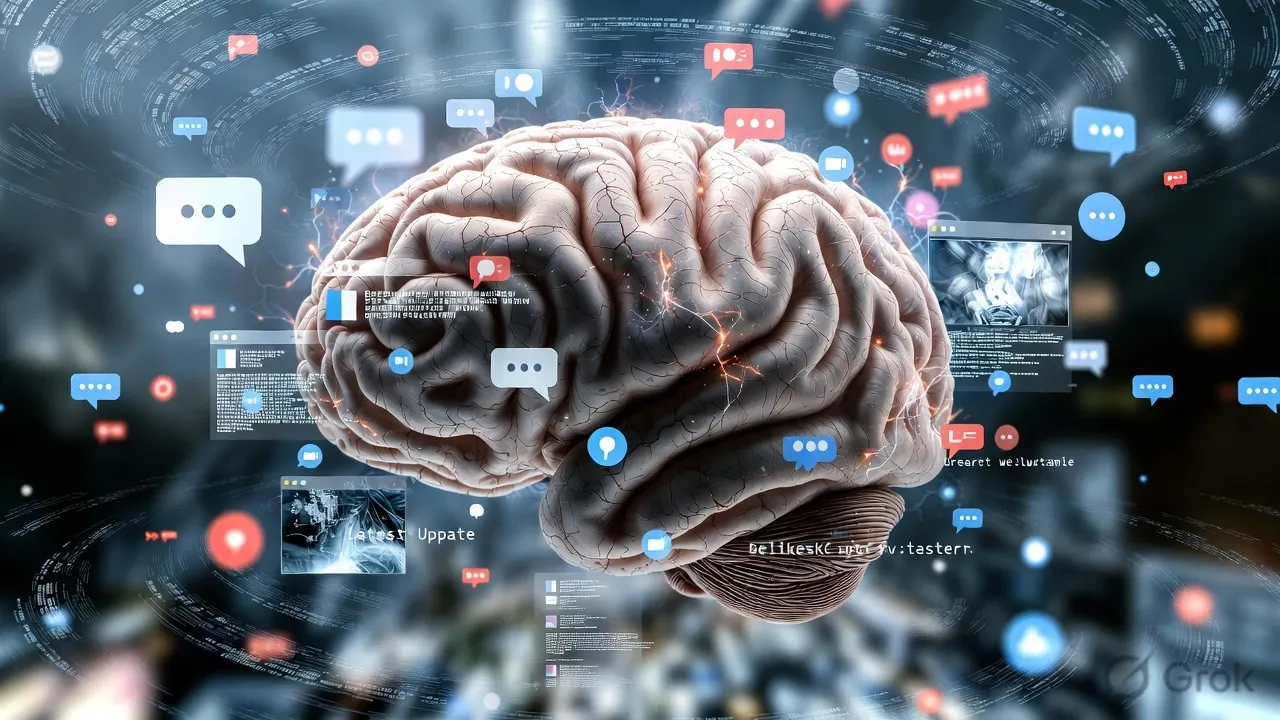
Your brain isn’t a hard drive filling up. It’s a routing system. And it’s constantly asking one question in the background: do I need to keep this, or do I just need to know where it lives?
Offloading Isn’t New, But the Scale Is
Humans have always used external memory. Cave paintings, knotted string, the written word itself — all “devices” that let us offload what we didn’t want to carry in our heads. Socrates famously worried that writing would weaken memory. He wasn’t wrong, exactly. He just didn’t anticipate what we’d do with the space it freed up.
The difference now isn’t the offloading — it’s the density and immediacy of it. It’s not one external memory (a book, a notebook). It’s a constant, instant, searchable, editable second brain that fits in your pocket and is touched, on average, over 2,000 times a day.
Every calendar reminder, every saved note, every “I’ll just Google it,” every group chat you scroll back through instead of remembering what was said- each one is your brain quietly negotiating: storage cost too high, outsource it.
Get Prathikshaa’s stories in your inbox
Join Medium for free to get updates from this writer.
This isn’t laziness. It’s efficiency. The brain is a resource-constrained system, and it has always optimised for what’s actually worth holding onto.
What Gets Left Behind
Here’s the part that’s less comfortable to sit with.
Memory researchers distinguish between two kinds of engagement with information: knowing the thing, and knowing where the thing is. The second is faster to acquire and endlessly scalable. The first is slower, harder, and — this is the part that matters — it’s also the substrate for everything we call understanding.
You can’t have insight about something you never actually held in your head long enough to turn over. You can’t connect two ideas that both live in “the cloud” and never in your working memory at the same time. Deep pattern recognition, the kind that produces a genuinely original thought, seems to require information to be internal, not just retrievable.
So the tradeoff isn’t “remembering less.” It’s subtler: it’s remembering differently. Less depth, more access. Less synthesis, more search.
That’s not automatically bad. But it’s not automatically fine either. It depends entirely on what you’re using the freed-up capacity for.
The Uncomfortable Question
This is where it stops being a fun trivia fact about memory and starts being personal.
If your brain now stores less and retrieves more, what did it do with the space it saved? For a lot of people, honestly, the answer isn’t “deeper thinking.” It’s more input. More scrolling. More notifications. The freed capacity gets immediately reoccupied by more things to offload, and the loop tightens rather than opens up.
The optimistic version of this story is that offloading the mundane (phone numbers, appointment times, trivia) frees the brain for higher-order work, creativity, judgment, synthesis. That’s the theory behind “extended cognition,” and there’s real substance to it. Tools genuinely can make us smarter, not just lazier.
But that only happens if you spend the freed capacity deliberately. Otherwise you’re not extending your mind, you’re just renting out the space you used to think in.
So What Do You Do With This
Not everything needs defending against. Let the phone remember phone numbers. Nobody needs to memorise a grocery list on principle.
But it’s worth being honest about where the line sits for you. Which things have you offloaded that you actually wanted to keep — a person’s story, an argument you found convincing, a skill you meant to actually learn instead of look up each time? The device doesn’t decide that line. You do, by default, unless you decide it on purpose.
The quote isn’t really about memory. It’s about attention — about noticing that your mind is already adapting to its environment whether you’re paying attention or not, and asking whether you like what it’s adapting into.
Your brain will always route around effort if you let it. The only question is whether you’re choosing what it keeps, or whether the device is choosing for you.