In Defense of “Wuthering Heights”


This Valentine’s, roses are accompanied by moorish passion as Emerald Fennell’s “Wuthering Heights” hits theaters with a slimy splat; and the biggest issue the general public already has with this semi-loose and electrifying adaptation of Emily Brontë’s 19th century novel is that exactly– the adaptation itself. Assimilation with the gothic classic is making people’s heads spin, and, though the film has just barely debuted, nobody is holding back from expressing their strong opinions– good and bad. But, despite divisiveness, I think it succeeds heavily, and I find it rather emotive, artistically sharp, and somewhat cozy.

“Whatever our souls are made of, his and mine are the same.”
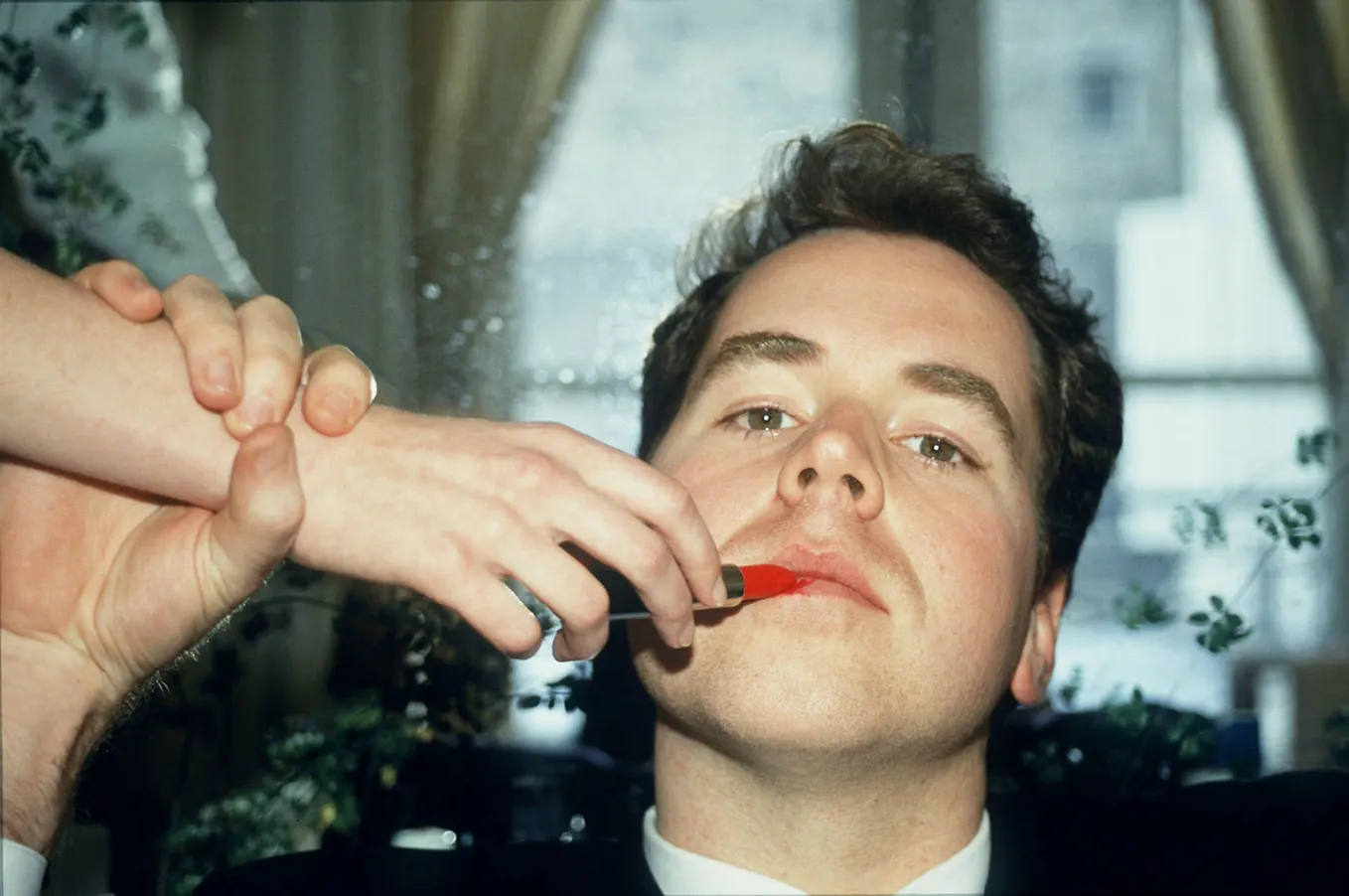
A general concern most devoted fans of the novel point out is the impact this interpretation of the story will have on the public and how their perception of Brontë’s harrowing tale will change. That change, that switch, is what frightens people, but I say let us not stir. Emerald Fennell is an artist of much controversy, but she creates films that are undeniably saucy. In every sense of the word. It is not the sexual raunchiness that drives her stories, as many claim, but rather her characters and the well-rounded worlds they are confined into. The sexual deviancies are a point of purposeful emotional reference, especially for me. I’ve felt connected to both “Saltburn’s” Oliver Quick and Felix Catton. I felt the pain of Heathcliff’s monologue. I felt, deeply in my soul, Cathy’s struggle and joy. I’ve found Fennell’s words and dialogue to scratch an itch only true gems such as 1986’s “Heathers” can.
This film is not a faithful adaptation of the classic novel, but it isn’t trying to be. After all, Brontë never conjured up a fireplace made out of hands or a Heathcliff who was into pup-play. The film, instead, dives head-on with interconnecting themes of violence, sexuality, and romance, blurring all the lines through a powerful opening scene. Emerald Fennell toys with you during the film. She knows what will move you, good or bad, she knows when to place a fun-filled montage of luxury, yet this bothers most, this feeling of manipulation (as many have been calling it), and it’s something that I revel in, I must admit. She creates these distorted views. And whoever said this adaptation is the absolute adaptation of the novel? It is simply a perspective, a specific lens, different.

Both Margot Robbie and Jacob Elordi deliver strong, grounded, and exciting performances. Robbie continued to surprise me as she positioned Cathy’s character in a state of nuance. She played the character so well, many of those who have been opposed to the film have admitted to this being true. She has a sense of realism and relatability even through a character as multifaceted as Cathy. Elordi is a slowburner in terms of his Heathcliff interpretation. Coming off seeing the younger version of the character, Elordi’s felt a bit tricky to decipher, for he doesn’t speak too much when he’s still the shaggy man in the barn.
However, as his character develops and unravels, and his older, richer self becomes more and more desperate for Cathy, Elordi’s performance doesn’t just change, it twists beautifully. You see his face completely morph into a wall of sorrow in that last scene, and it just broke me. His performance, paired with Brontë’s devastating words, Fennell’s close direction, a soul-pinching instrumental, and followed by young Heathcliff’s confession to Cathy, made for a heartbreaking ending. I was sobbing at that movie theatre, in public, something I genuinely haven’t done since “Up.”

“So kiss me again, and let us both be damned.”
The sets are visually stimulating, dripping with fantasy and an other-wordly element. I loved everything about both estates, how they differed immensely from each other, so dazzling and colorful and done with such strange purpose. Thrushcross Grange was like a house in Wonderland, with a doll house and all. Wuthering Heights was dark and windy and so intense, with a cozy element that dissipated as the story turned colder.
Get Simon Gonzalez’s stories in your inbox
Join Medium for free to get updates from this writer.
There was also something intense and, as some have said, campy, about the portrayal of toxicity and abuse. This hasn’t gone over well with some audiences, considering both Cathy and Heathcliff are, for the most part, unlikable, bratty, and stubborn, yet the source material begs for these archetypes, and that mere humanity within them makes the story land harder for me. Heathcliff’s abusive dynamic with Alison Oliver’s Isabella Linton is indicative and reflective of real-life power-play-based relationships, and how blurring lines has been occurring since the beginning of time. Heathcliff’s predisposition to turn out like this is believable, and it makes you reflect on your own toxic dynamics.

Emerald Fennell was clearly visually and emotionally inspired by the massively adored 1939 film “Gone With The Wind.” It is a movie that I find to be extraordinary, and “Wuthering Heights” has many visual shots and iconic postures that are almost fully extracted from MGM’s classic. The way Heathcliff holds Cathy’s head tilted back; Heathcliff’s silhouette cast against a gorgeous red sunset; Cathy’s dramatics, her looks, dresses, earrings, ways of expressing herself, her spoiled nature, and fierce drive; the look of Cathy’s gown when she visits her father at Wuthering Heights, almost identical in flow and shape to Scarlett O’Hara’s makeshift dress in “Gone With The Wind” when she visits Rhett Butler. Even Cathy’s ultimate mental decline is a point of comparison, though both characters meet completely different fates.
“I have not broken your heart — you have broken it; and in breaking it, you have broken mine.”

Alison Oliver and Hong Chau were side-standouts for me in this film. I’ve seen it in theatres twice now, and both times Oliver’s character, Isabella Linton, got plenty of laughs at her fun and addictive character. Her recount of “Romeo and Juliet” (it also beautifully being a great literary work within the other) is cheeky and makes you feel immensely gone from this world, somewhere else, within the hedges of Thrushcross Grange. Hong Chau, on the other hand, delivered an almost opposite performance filled with emotional weight and massive control. She demonstrated Nelly Dean’s escalating pain, her numbness to the life she was given, her immense guilt near the end. It’s all calculated and soft in great contrast to Cathy and Heathcliff’s chaotic, loud, and dramatic relationship.
I adored seeing the two as children. The way they fought and played, it all felt real. They were cruel to each other, as they would grow up to be– really, as everybody in Brontë’s novel was written to be. And as Fennell’s version is heightened, this aspect will be too. I saw true sparks of life in both young Cathy and Heathcliff, thanks to the actors’ performances but also the direction which Fennell steers. This allowed me to follow their grown-up versions with much more realism, despite having Hollywood legends on screen.

And yet, that’s a tasty morsel of the excitement of it all, too, don’t you think? Back to “Gone With The Wind,” for example. This piece of Hollywood gold is filled with passion and rich colors, and it is a story of survival led by the fierce Scarlett O’Hara played by icon Vivien Leigh. Her counterpart, a proper but rebellious gentleman named Rhett Butler, is played by the beloved Clark Gable. It was these stars that accentuated the film, just like Robbie and Elordi do in “Wuthering Heights.” I’m not saying because they are stars the movie gets a pass, I’m saying it is their stardom, combined with their passion for their craft and their good job at it, that make for a special piece of art. Does it excuse making Heathcliff white when he’s clearly not in the novel? No, but I think I can see what occurred.
The matter of Heathcliff being cast as white is undoubtedly unfortunate. I won’t deny that Brontë intended for him to be somebody fully outcast, in race too, and that Fennell’s decision to cast a white man to play him is more than questionable. Many are disappointed by this, reasonably so. Was Fennell’s intention to be racist, as many have strongly stated? I surely hope not, but can I assume that it wasn’t? Yes, I don’t think Fennell was focused on the book-to-movie accuracy so much as on the visual elements of the film, combined with the shiny Hollywood duo. When people say this film should have just been an original story inspired by Brontë’s classic, I can’t help but agree.

In the end, I found it in my heart to adore the movie, to hold it dear, for what it made me feel. How I felt like an inhabitant of these moors, of these wonderfully dreamy settings. I allowed the film to consume me. I put aside the twenty-year-old version of myself who read the book, focused on the romance (yes, the toxic parts, too), and simply allowed myself to feel seen and devoured. I don’t find the toxicity between Cathy and Heathcliff to be hot or something anybody should replicate– it’s just passionate, it’s intense, it drives storytelling and emotions forward. Their behavior warns you, it prepares you, but it also envelops you. It’s cathartic. And in the end, it is their love, deep-rooted joy, and devotion for each other’s existences — as well as their stubbornness and cruelty stemming from an isolated place of mist and loneliness — that brings them together, as they take any form, for eternity.
“Catherine Earnshaw, I will love you until the day that I die. And forever after.”