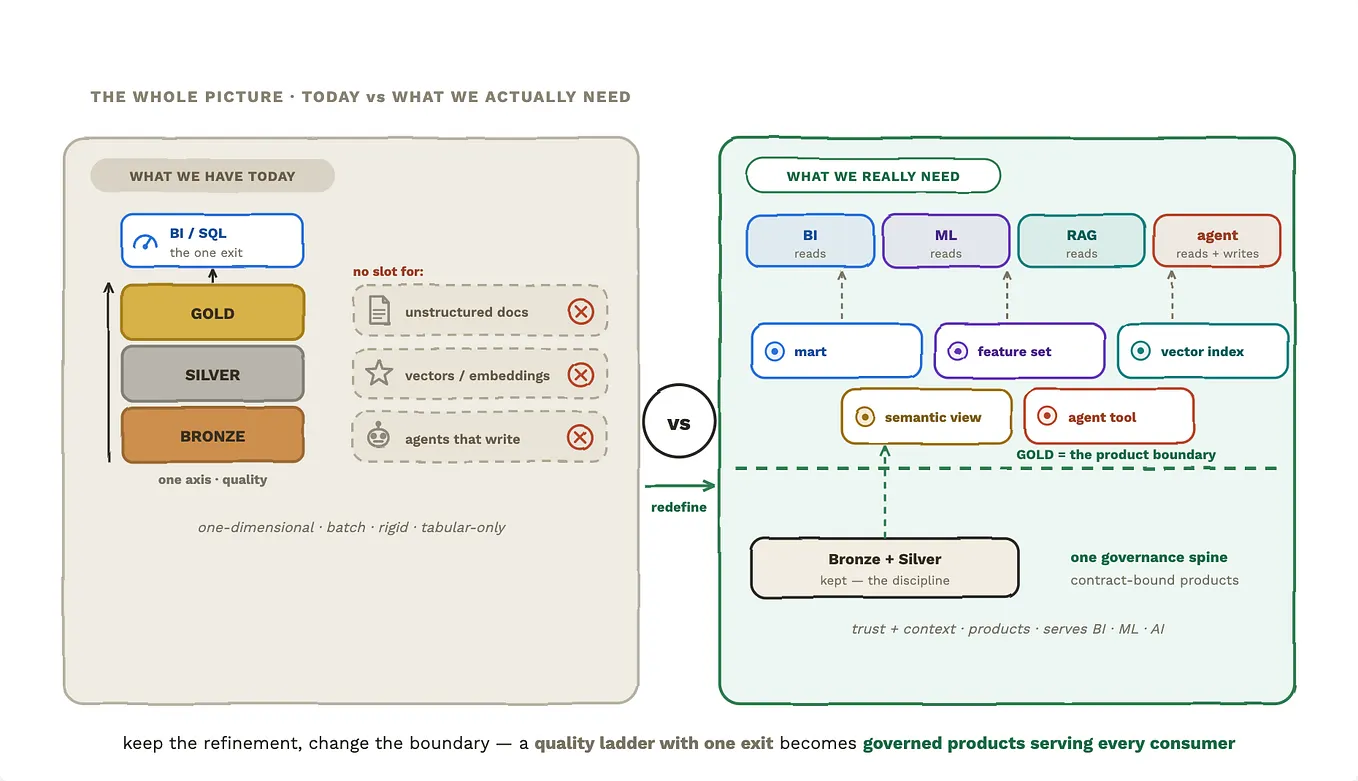
AI-First Data Platforms Powering Predictive and ML-Driven Systems

AI-first data platforms are designed to treat artificial intelligence as a core operating capability rather than an add-on. They unify data ingestion, processing, storage, and analytics in a way that allows predictive analytics and machine learning models to function continuously and reliably. Instead of moving data between disconnected systems, these platforms enable intelligence to be embedded directly into data flows, making insights available as part of everyday operations.
Unlike traditional data architectures that focus primarily on reporting or historical analysis, AI-first data platforms prioritize real-time access, model readiness, and scalable computation. This approach supports faster decision cycles, consistent model performance, and improved data trust across complex environments.
Why Traditional Data Platforms Struggle with AI Workloads
Many data platforms were originally built to support batch reporting and business intelligence use cases. While effective for structured reporting, these designs often introduce delays, data duplication, and operational friction when used for machine learning or predictive analytics.
AI workloads require continuous data availability, feature consistency, and flexible compute scaling. When data pipelines are rigid or fragmented, model training becomes slow and inference pipelines become unreliable. This results in models that are technically accurate but operationally difficult to deploy or maintain.
AI-first data platforms address these challenges by aligning data architecture with the needs of machine learning systems. They reduce friction between raw data, engineered features, and deployed models, enabling analytics and intelligence to evolve together rather than in isolation.
Core Characteristics of AI-First Data Platforms
At the foundation of AI-first data platforms is an architectural focus on adaptability. Data ingestion is designed to support both batch and streaming sources, ensuring predictive models can work with fresh data when required. Storage layers are optimized for both analytical queries and model access, avoiding unnecessary data movement.
Another defining characteristic is the close integration of machine learning workflows into the platform itself. Feature engineering, training pipelines, and inference services are treated as first-class components rather than external processes. This enables teams to maintain consistency between what models learn from and what they operate on in production environments.
Scalability is also a key consideration. AI-first data platforms are built to scale compute independently from storage, allowing machine learning workloads to expand during training cycles and contract during quieter periods without affecting overall system stability.
Enabling Predictive Analytics as a Native Capability
Predictive analytics becomes significantly more effective when supported by an AI-first data platform. Instead of relying on static datasets or periodic refreshes, models can be trained and updated using continuously evolving data. This improves accuracy while reducing the risk of outdated assumptions influencing outcomes.
When predictive models are embedded directly into data pipelines, outputs can be generated as data flows through the system. This allows predictions to inform operational processes such as demand forecasting, risk scoring, or performance optimization without manual intervention.
AI-first data platforms also support experimentation by making it easier to test new models against live or near-live data. This shortens feedback loops and helps teams refine predictive strategies based on measurable outcomes rather than theoretical performance.
Supporting Machine Learning Across the Data Lifecycle
Machine learning requires consistency across the entire data lifecycle, from ingestion to inference. AI-first data platforms support this by standardizing how data is transformed, labeled, and accessed. This reduces discrepancies between training and production environments, a common source of model degradation.
These platforms often incorporate metadata management and version control mechanisms that track how data and features evolve over time. This visibility is critical for maintaining trust in machine learning outputs and ensuring that changes in upstream data do not silently impact model behavior.
By centralizing machine learning workflows within the data platform, teams gain better control over resource usage, performance monitoring, and model governance without introducing unnecessary operational overhead.
Get Sophia Nellon’s stories in your inbox
Join Medium for free to get updates from this writer.
Data Architecture Patterns That Enable AI-First Design
Several architectural patterns support the goals of AI-first data platforms. Event-driven ingestion enables real-time processing, while layered data models separate raw data from refined features and analytics-ready datasets. This structure supports flexibility without sacrificing performance.
Feature stores are another important pattern, providing a shared layer where machine learning features can be reused across models and applications. When implemented within the data platform, feature stores reduce duplication and ensure consistency between training and inference.
Distributed processing frameworks play a key role as well. They allow large-scale data transformations and model training to occur efficiently, supporting both structured and unstructured data without forcing rigid schemas.
Managing Operational Complexity Without Slowing Innovation
As data platforms become more intelligent, operational complexity can increase if not managed carefully. AI-first data platforms address this by emphasizing automation and observability. Automated pipeline orchestration ensures data and models move through defined stages reliably, while monitoring tools provide visibility into performance and data quality.
Cost control is another practical concern. Machine learning workloads can be resource-intensive, making it important to align compute usage with actual demand. AI-first data platforms often support dynamic resource allocation, helping organizations balance innovation with financial discipline.
Security and access control are embedded into the platform design, ensuring that sensitive data used for training or inference remains protected without restricting legitimate analytical use.
Aligning AI-First Data Platforms with Business Outcomes
The value of AI-first data platforms lies in their ability to translate data into action. By embedding intelligence into core data flows, these platforms enable insights to influence operations directly rather than remaining confined to dashboards or reports.
Predictive analytics can inform planning, optimization, and risk management processes with greater accuracy and speed. Machine learning models can adapt to changing conditions by continuously learning from new data, improving relevance over time.
This alignment between data infrastructure and intelligent outcomes helps organizations move beyond experimentation and toward sustained, scalable use of AI across multiple functions.
Building for Long-Term Adaptability
AI-first data platforms are not defined by specific tools or technologies but by design principles that prioritize flexibility and integration. As machine learning techniques evolve, platforms must support new frameworks, data types, and deployment models without requiring complete redesigns.
This adaptability ensures that investments in data infrastructure continue to deliver value even as analytical requirements change. It also allows teams to adopt emerging capabilities incrementally rather than through disruptive overhauls.
By treating AI as an integral part of the data platform, organizations create a foundation that supports continuous improvement rather than one-time transformation.
Final Thoughts
AI-first data platforms represent a shift in how data systems are designed and used. By aligning architecture, analytics, and machine learning into a unified platform, they enable predictive analytics and intelligent decision-making to operate at scale.
Instead of separating data management from AI initiatives, this approach integrates them into a single, coherent system. The result is a data platform that not only stores and processes information but actively contributes to smarter, faster, and more reliable outcomes across the organization.