Prime Hydration: How Logan Paul and KSI’s Billion Dollar Drink Brand Collapsed

In July 2026 the Australian arm of Prime’s parent company was placed in administration with A$84,855 in the bank and A$7.92m owed. The inventory line in that filing explains what the sales charts only imply.
By Editorial Staff | The Capital Review

On 7 July 2026, Alice Ruhe of The Ruhe Group was appointed voluntary administrator of Congo Brands Australia Pty Ltd, the Melbourne company that had brought Prime Hydration and Prime Energy to Australian shelves. A first meeting of creditors was called for 17 July. By the time it convened, the staff had been terminated. A separate winding up application, brought in the Federal Court by the packaging group Orora, was listed for the end of the month.
The numbers lodged with the Australian Securities and Investments Commission are worth reading slowly. Revenue fell from roughly A$31m in the 2023 financial year to A$14.5m in 2024, a decline of about 53 per cent. The company recorded a net loss of A$1.42m. Liabilities stood at A$7.92m against cash of A$84,855. Creditor claims were dominated by the group’s own companies: A$8.85m owed to Congo LLC in Kentucky, A$854,327 to Congo Brands Switzerland, A$361,900 to Congo Brands Korea, A$39,987 to Congo Brands Japan.
The most revealing figure is none of those. It is inventory, which fell from A$28.9m to A$1.7m, with A$4.57m written down inside the period.
Read that against the revenue line. Sales halved. Stock fell by 94 per cent. A company does not clear that much product in a year of falling demand at anything close to list price. What the Australian filing records, in the neutral language of a set of accounts, is a business that bought against a demand curve which had already ended, then spent a year destroying and discounting the difference.
That pattern was not confined to Melbourne. It is the whole story of Prime, and it is visible in every jurisdiction where the company was obliged to file anything at all.
A billion dollars in eighteen months
Prime Hydration was announced on 4 January 2022 by Logan Paul and Olajide Olatunji, the British YouTuber known as KSI. It went to market first through a single website, then to UK shelves in June 2022, then everywhere.
What followed was one of the most efficient demand events in modern consumer goods. British supermarkets fitted individual bottles with anti theft tags. Tesco imposed purchase limits. Resale listings ran into the hundreds and, in isolated cases, well beyond. Paul marked a billion dollars of sales with a gold bottle giveaway. Bloomberg reported the brand was on track for roughly $1.2bn in sales in 2023. In Walmart’s hydration set, a two year old creator brand outsold Gatorade.
One structural fact is usually lost in the retelling. Paul and KSI did not run this company. Prime Hydration LLC is majority owned by Congo Brands, the Louisville business founded by Max Clemons and Trey Steiger, with the two creators holding roughly 20 per cent each. Congo supplied the manufacturing, the distribution relationships and the retail arithmetic. The creators supplied the demand. That division of labour matters, because it is the reason Prime’s collapse cannot be explained by amateurism. The operators were among the most successful in the category, as their other brand would shortly prove.
Trial and repeat
Every consumer beverage business rests on two separate questions, and they are not related. The first is whether someone will buy the product once. The second is whether they will buy it forty times a year.
Prime answered the first question more emphatically than almost any product in living memory, and never answered the second. Brand awareness among younger consumers approached saturation. The proportion who bought more than once did not: the retail analyst Reilly Newman and others put repeat purchase in the low teens, against the multiples achieved by Coca-Cola, Celsius or Liquid Death. Children queued for Prime the way they queued for trading cards. The purchase was an act of participation in an internet moment, and internet moments are not consumed weekly.
This is where the category is unforgiving. Gatorade, Red Bull and Monster are habit businesses. Their revenue is a frequency number multiplied by a household penetration number, and both move slowly in either direction, which is why they survive bad years. Prime’s revenue was a curiosity number multiplied by an availability number. Curiosity is spent on first contact.
The Instagram version of this insight, currently circulating in business explainer accounts, is that getting someone to try your product is marketing and getting them back is the business. That is true, and it is where most accounts of Prime stop. It does not explain why the failure was so violent rather than merely disappointing. For that you have to look at what the company built while the first number was still climbing.
Ninety thousand doors
By the peak, Prime was in more than 90,000 retail locations worldwide. That expansion was executed before anyone had established that the product had a repeat rate capable of holding those locations.
Retail shelf space is not free and it is not permanent. It is bought with slotting fees, trade spend and promotional commitments, and it is retained on one metric: units per store per week. A retail buyer does not care what a brand sold last year, or how many followers its founders have. The buyer cares what the facing turns. When velocity falls below the category threshold, the facing is reallocated, usually at the next planogram reset, and the brand loses in a fortnight what it took a year to win.
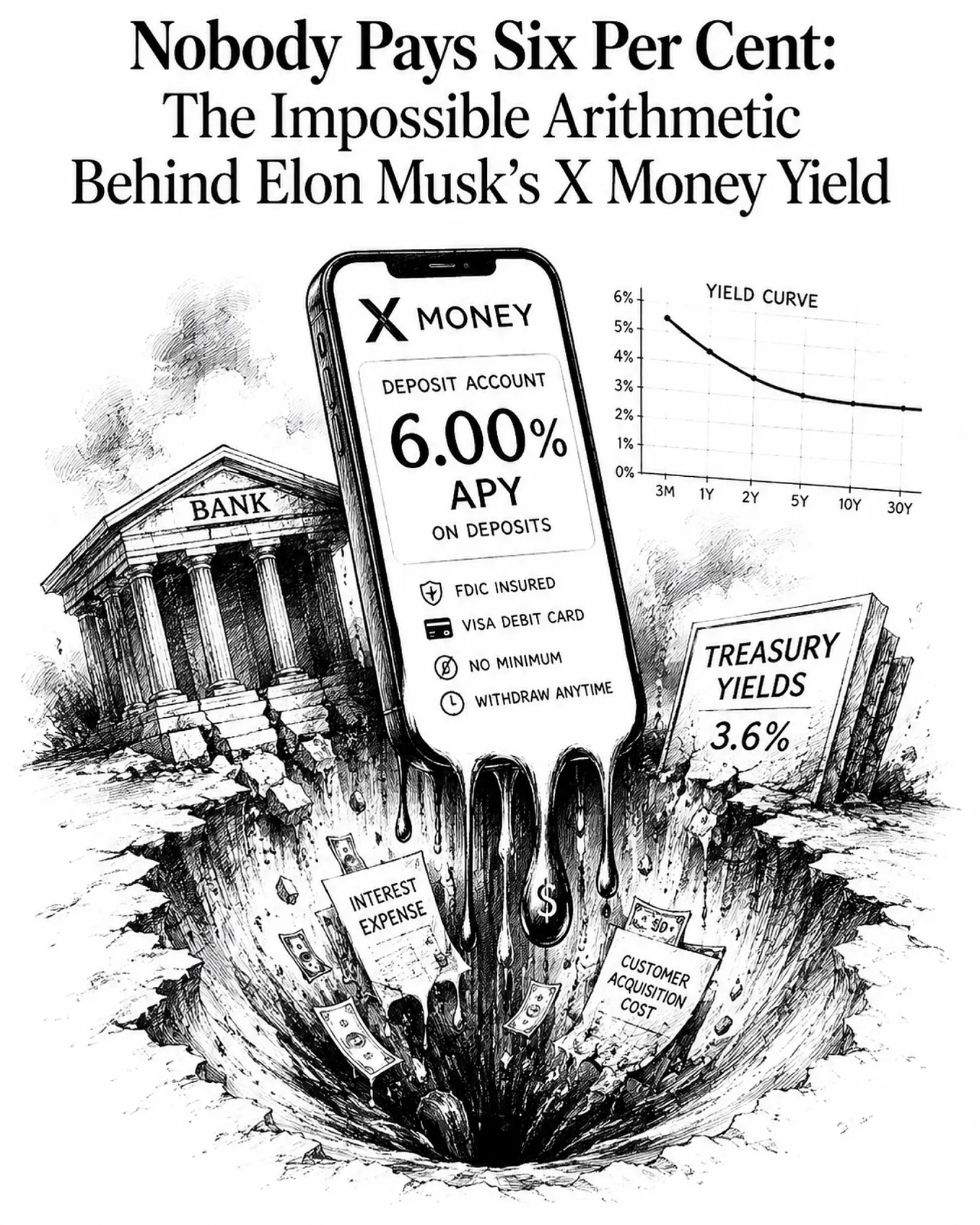
Prime’s velocity fell everywhere at once. In the United States, Numerator data showed sales down roughly 40 per cent in the first half of 2024, in a category that was still growing. Beverage Digest placed the brand in negative sales territory. A year later, Circana data reported by Darren Rovell put the trailing twelve month decline at 42 per cent, with a projected 2025 figure of about $300m against a peak above $1.2bn.
The British numbers are the cleanest, because British companies must file them. Prime Hydration UK Ltd went from £112.2m of turnover in 2023 to £32.8m in 2024, a fall of about 71 per cent. Gross profit fell 85.4 per cent, from £21.6m to £3.1m. Pre tax profit fell from £4.3m to £940,458. Net profit fell 91.6 per cent to £312,393. The directors announced a strategic review to work out what a sustainable long term presence in the market would look like.
The gross margin line is the one to sit with. Turnover fell 71 per cent; gross profit fell 85 per cent. The gap between those two numbers is discounting. A brand that is clearing stock does not merely sell less, it sells worse, and in Britain the evidence was photographed and posted: Prime in clearance bins at 31 pence a can, having been secured with anti theft tags eighteen months earlier.
Once a consumer has seen a product at 31 pence, its shelf price is a work of fiction. This is the mechanism by which a hype brand destroys itself faster than a merely unsuccessful one. Ordinary failure is a slow fade. Hype failure involves a large physical quantity of inventory that must be liquidated in public, in front of the same audience that was told the product was scarce.
The Refresco line
The best single document on Prime’s collapse was not written by a journalist. It was filed on 2 August 2024 in the Delaware Court of Chancery by Refresco Beverages US Inc, the largest independent bottler in the country, seeking $67.7m from Congo Brands and Prime.
The complaint describes an agreement struck in April 2023, at the top of the curve. Refresco would build a dedicated production line at its facility in Truesdale, Missouri, including custom moulds for Prime’s distinctive bottle. In exchange, Prime committed to 55.5m cases over three years, with a financial penalty if it failed to take at least 90 per cent of the agreed annual volume.
Set the litigation aside and look at what that contract reveals. In spring 2023, Prime’s own management believed it would need roughly 18m cases a year of additional capacity, on top of everything it was already producing, for three consecutive years. That was the internal forecast, made by people with full visibility of their own sell through data, and committed to in a document with penalties attached.
By the time the equipment was ready in March 2024, according to Refresco, Prime declined to participate in a final test run and submitted no orders at all. Not a reduced volume. Nothing. Prime’s position was that no binding master supply agreement had ever been executed.
Whichever party is right on the contract law, the commercial fact is not in dispute: less than twelve months separated a three year capacity commitment from a refusal to run a single test batch. That is the interval in which the company discovered that its demand was an event rather than a habit. Everything that followed, in Missouri, in London, in Melbourne, is the cost of having built for the first number.
Parents at the till
Running underneath the volume story is a distribution problem of a different kind. Prime’s marketing was aimed with great precision at an audience that does not hold a debit card.
The pressure arrived in July 2023, when the then Senate majority leader Chuck Schumer wrote to the FDA about Prime Energy, which carries 200mg of caffeine in a twelve ounce can, roughly two and a half times a Red Bull. Schumer called it a cauldron of caffeine and made the point that mattered commercially: the caffeinated can and the caffeine free hydration bottle were packaged in near identical style, so parents were buying one believing it was the other. The American Academy of Pediatrics does not recommend any caffeine for children. Schools in Britain and Australia banned the product outright.
Get The Capital Review’s stories in your inbox
Join Medium for free to get updates from this writer.
A month later came a class action alleging that a since discontinued grape flavour contained PFAS compounds. Paul denied it forcefully on video. The suit ran for more than two years and was resolved by settlement, with a federal judge in California dismissing the action in January 2026. A separate action over caffeine labelling was also settled. The United States Olympic and Paralympic Committee sued over the use of protected Olympic marks in listings for a Kevin Durant tie in product.
None of these cases produced a finding that the drink was unsafe. That was never the point. The point is that Prime’s growth depended on a purchase decision made by an adult on behalf of a child, and every one of these episodes gave that adult a reason to reach past it. School bans in particular are commercially lethal in a way that legal outcomes are not, because they convert a status object into a confiscated object.
By 2025 the litigation had acquired its own momentum, and its own tell. Prime spent much of that year fighting Mark Anthony International, the owner of White Claw and of Más+ by Messi, over bottle trade dress, then filed a fresh false advertising action in Florida in October 2025 arguing that Lionel Messi had not in fact created the drink bearing his name. Everything was dismissed by agreement in January 2026. A company with strong velocity does not spend two years litigating the shape of a bottle cap against a rival launched by a footballer. A company defending shelf space does.
The Alani Nu control
The most useful evidence in this entire story is what happened to the other brand in the same building.
Congo Brands operated Alani Nu, a functional energy business built with Katy and Haydn Schneider, aimed at women in their twenties and thirties. It had none of Prime’s cultural voltage. It was never resold at absurd prices and no supermarket fitted it with security tags.
In February 2025, Celsius Holdings agreed to buy Alani Nu for $1.8bn, or $1.65bn net of tax assets, from the Schneiders and from Clemons and Steiger. The deal closed on 1 April 2025. The disclosed multiple was less than three times 2024 revenue of $595m, on fully synergised adjusted EBITDA of $137m.
Hold those two brands side by side. Same operators, same city, same distribution capability, same period. One produced $595m of revenue with $137m of earnings and a buyer prepared to pay $1.8bn in cash and stock. The other produced a larger peak revenue number and an Australian subsidiary in administration with A$84,855 in the bank.
The difference is not execution. It is what each brand sold. Alani Nu sold an occasion to an adult buyer with her own money and a reason to return next week. Prime sold an event to children, brilliantly, once.
That comparison also disposes of the most common misreading of the Prime story, which is that celebrity brands fail because celebrities are bad at business. Congo Brands is very good at business. The Alani Nu sale is what a functioning consumer beverage asset is worth. Prime’s peak revenue was never that asset, and the sale of one and the retention of the other is the clearest available statement of how the people closest to the numbers assessed each of them.
The sponsorship treadmill
Prime bought legitimacy at institutional scale: Arsenal from 2022, the UFC from February 2023, FC Barcelona from July 2023 in a slot previously held by Gatorade, Bayern Munich from August 2023, WWE from 2024, the Los Angeles Dodgers, and endorsements from Patrick Mahomes, Aaron Judge, Kevin Durant and others.
These deals did real work, though not the work usually described. Their audience was not the consumer. It was the retail buyer. A brand that is the official hydration partner of Arsenal, Barcelona and Bayern is not a fad in a category review meeting; it is a serious CPG business with committed marketing support, and it wins the facing.
The difficulty with buying legitimacy on multi year terms is that the payments do not fall with volume. As velocity collapsed, a fixed cost structure sized for a $1.2bn business sat on top of a shrinking one. In July 2025, Arsenal’s three year contract expired and was not renewed, with the club understood to be seeking a replacement in the category. The Barcelona and Bayern relationships continued.
Arsenal was KSI’s boyhood club and Prime’s first major partner. Losing it was reported in the same week as the 42 per cent Circana decline, and the two facts belong together: the sponsorship was bought to signal durability to retailers, and it was not renewed once the durability failed to appear.
What is actually left
Prime has not disappeared, and the honest account has to say so. The company launched Prime Ice in early 2025 and a ready to drink protein line in January 2026, at 32g of protein in an eleven ounce can, chasing the one genuinely growing corner of the category. It remains in major retailers on both sides of the Atlantic. Prime Energy has been withdrawn in some markets. The projected $300m of 2025 revenue, if approximately right, still describes a substantial beverage business, one that most founders would take.
What died was not the company. What died was the valuation implied by 2023, and everything the company had built on the assumption that the valuation was real: the case commitments, the dedicated production lines, the 90,000 doors, the sponsorship portfolio, the international subsidiaries. Congo Brands Australia was the smallest of those structures and therefore the first to fail outright. It is unlikely to be the last piece of the peak era architecture to be dismantled.
What Prime is worth now
The valuation history is the cleanest measure of what was lost, because it was never based on anything.
In late 2023, CB Insights published a comparables exercise that put Prime somewhere between $3.1bn and $8.4bn, and observed that at a midpoint around $5.5bn, Logan Paul’s stake alone would be worth about $1.1bn. That analysis was widely reported as the moment the first YouTube billionaires arrived. Mams Taylor, KSI’s manager and himself a shareholder, went considerably further on a podcast, putting the business at £8bn to £10bn.
No one had bought anything. Prime has never taken outside institutional money at a priced round, has never issued audited group accounts, and has never been sold. Every headline valuation in its history is a multiple applied to a revenue number by someone with no obligation to be right.
There is, however, one real transaction to anchor against, and it belongs to the same owners. Celsius paid $1.8bn gross for Alani Nu, closing in April 2025: less than three times 2024 revenue of $595m, and roughly twelve times fully synergised adjusted EBITDA of $137m. That is what the market pays for a scaled, profitable, growing functional beverage brand with a proven repeat consumer, in cash and listed stock, after diligence.
Now apply that framework to Prime. Revenue for 2025 was projected at around $300m against a peak above $1.2bn. The trend is down, not up. The brand has lost a flagship sponsorship, is discounting in at least two major markets, has written off inventory, and has put one national subsidiary into administration. Buyers do not pay three times revenue for that profile; declining consumer brands with unproven repeat rates change hands closer to one times revenue, and often below it. That arithmetic lands somewhere between $300m and $600m in enterprise value, before any adjustment for the litigation tail or for whatever the group balance sheet actually looks like.
A second and independent estimate points to the same order of magnitude. Celebrity Net Worth, which tracks Paul closely, values his Prime holding at $100m to $200m. If the widely reported ownership structure is correct, with Congo Brands at roughly 60 per cent and each creator at roughly 20 per cent, that implies a total equity value of $500m to $1bn.
So the honest range for Prime today is a few hundred million dollars to perhaps a billion. Against the $8.4bn ceiling of the 2023 estimates, that is a destruction of something in the order of 90 per cent of the implied value of the business, achieved in under three years without a single quarter of published accounts to mark it against.
Logan Paul supplied the most telling detail himself. In a March 2026 podcast appearance with Graham Stephan and Jack Selby, he said he owns no stocks, holds roughly $30m to $40m in liquid cash, and that the majority of his net worth is his equity in Prime. The hosts had estimated his liquid position at two to three times that.
Read that against what his business partners did. Clemons and Steiger were sellers in a $1.8bn transaction that converted the brand that worked into cash and listed Celsius shares, with a lock up releasing over two years. The creators still hold paper in the brand that did not, in a private company with no priced round, no auditor’s group opinion and no buyer in sight. In beverage terms, the value in the Congo Brands portfolio has already been realised. It simply was not realised out of Prime.
That is the position as it stands in August 2026. Prime is a real business doing real revenue, probably in the low hundreds of millions, sold in major retailers on three continents, extending into protein because that is where the category is growing. It is also a business whose founders’ wealth is almost entirely notional, marked to a number that no counterparty has ever agreed to pay.
Attention and demand
The lesson usually drawn from Prime is that hype fades. That is true and it is not very useful, because hype is supposed to fade; the question is what a company does with the money and the time that hype buys.
Prime spent both on scale. It bought shelf space in ninety thousand locations, committed to tens of millions of cases of capacity, signed multi year contracts with four of the largest sports properties in the world, and stood up subsidiaries across Europe, Asia and Australia. Each of those decisions was rational if the demand was structural. Every one of them was a liability if the demand was an event.
The evidence that it was an event was available early, in the one metric the company appears not to have run its strategy on. Awareness was close to universal and repeat purchase was in the low teens. Those two numbers together describe a product that everybody has heard of and nobody drinks. It is possible to earn $1.2bn in a year on that combination. It is not possible to build a supply chain on it.
The final entry in the Melbourne accounts, the A$4.57m of inventory written down, is what that mistake looks like when it is finally converted into a number. Someone manufactured that stock, shipped it, financed it and stored it, on the strength of an audience that had already moved on.
Sources: https://www.insolvencyinsider-au.com/p/congo-brands-australia-enters-administration-as-sales-slump-winding-up-case-looms, https://www.smartcompany.com.au/retail/australian-arm-prime-energy-drink-falls-administration-only-85000-in-bank/, https://www.netinfluencer.com/prime-australian-distributor-collapses-into-administration-with-8m-usd-in-debt/, https://www.c-store.com.au/prime-distributor-enters-voluntary-administration/, https://www.buzzincontent.com/news/logan-paul-and-ksis-prime-parent-under-8m-debt-all-employees-of-the-australian-company-terminated-12253974, https://www.cityam.com/prime-logan-paul-and-ksis-energy-drink-runs-out-of-juice/, https://www.thegrocer.co.uk/news/energy-drink-brand-prime-crashes-as-sales-suffer-71-collapse/706040.article, https://www.marketingweek.com/prime-profits-plummet/, https://find-and-update.company-information.service.gov.uk/company/13862601, https://therobinreport.com/how-once-hot-prime-hydration-flatlined/, https://www.tubefilter.com/2025/07/22/prime-hydration-sales-decline-year-over-year-creator-product/, https://fortune.com/2024/04/27/logan-paul-prime-energy-drink-ksi-gen-alpha-rise-fall-sales-lawsuits, https://www.bevnet.com/news/2024/refresco-files-67m-lawsuit-alleging-prime-maker-congo-backed-out-of-production-deal/, https://www.fooddive.com/news/refresco-prime-lawsuit-drink-hydration-energy-logan-paul-KSI-sued-beverage/723284/, https://news.bloomberglaw.com/litigation/logan-pauls-prime-sports-drink-sued-by-bottler-for-68-million, https://www.democrats.senate.gov/newsroom/press-releases/majority-leader-schumer-demands-fda-investigate-prime-for-absurd-caffeine-content-and-marketing-targeting-kids-on-social-media-schumer-warns-parents-that-summers-hottest-drink-has-so-much-caffeine-that-it-puts-red-bull-to-shame, https://www.npr.org/2023/07/11/1186818826/logan-paul-ksi-prime-energy-drink-caffeine, https://www.law.com/therecorder/2026/01/28/prime-hydration-reaches-settlement-in-forever-chemicals-suit-/, https://www.nbcnews.com/sports/olympics/us-olympic-committee-sues-logan-paul-prime-hydration-rcna162917, https://news.bloomberglaw.com/ip-law/messi-logan-pauls-prime-settle-sports-drink-trademark-suit, https://www.fooddive.com/news/mas-lionel-messi-sued-false-advertising-prime-hydration-logan-paul/802849/, https://ir.celsiusholdingsinc.com/news/news-details/2025/Celsius-Holdings-to-Acquire-Alani-Nu-Creating-a-Leading-Better-For-You-Functional-Lifestyle-Platform/default.aspx, https://www.sec.gov/Archives/edgar/data/1341766/000134176625000018/a992investorpresentation.htm, https://www.sportspro.com/news/bayern-munich-prime-hydration-drinks-sponsorship-isotonic-partner-ksi-logan-paul/, https://www.powerhousejournal.com/articles/prime-expands-beyond-energy-amp-hydration-with-rtd-protein-shakes, https://www.cbinsights.com/research/youtube-billionaire-prime-valuation/, https://www.celebritynetworth.com/richest-celebrities/actors/logan-paul-net-worth/, https://scrollnetworth.com/logan-paul-net-worth/, https://www.sportskeeda.com/esports/news-about-8-10-billion-ksi-s-manager-claims-prime-hydration-multi-billion-dollar-valuation-fans-react, https://www.quantumrun.com/consulting/who-owns-prime-drink/