Renaissance & Scientific Revolution: Europe Awakens
The Intellectual Journey That Redefined Humanity’s Place in the Universe

Introduction: Europe Awakens
After centuries of feudalism, plagues, and wars, Europe slowly began to stir. The Middle Ages had preserved knowledge, but curiosity, art, and science were still tightly bound by tradition and religious authority. Around 1300 CE, a transformation quietly began in the bustling cities of Italy a transformation that would change the world forever.
This was the Renaissance, the “rebirth” of human creativity and intellect. Artists painted with realism and emotion, writers celebrated human potential, and thinkers began asking questions that had been considered dangerous for centuries. People were no longer content to accept the world as it had been told to them they wanted to observe, explore, and understand.
Soon, this spirit of inquiry spilled into the world of science. What began as curiosity about the human form, nature, and the stars grew into systematic experimentation, precise observation, and the Scientific Revolution. Figures like Copernicus, Galileo, Kepler, and Newton challenged old beliefs, proving that the universe was governed by laws that could be understood through reason.
The Birth of the Renaissance
The Renaissance did not begin with a sudden revolution. It started quietly, almost like a slow awakening after a long sleep. By the late 13th and early 14th centuries, Europe was changing. Towns were growing, trade was expanding, and a new class of merchants and bankers was gaining power. These social and economic changes created the perfect environment for a cultural rebirth.
The Renaissance began in Italy, not by accident. Italy was home to wealthy city-states such as Florence, Venice, and Milan. These cities thrived on trade with the Middle East and Asia. Unlike feudal kingdoms, they were governed by merchant families who valued education, art, and innovation. Families like the Medici of Florence used their wealth to support artists, scholars, and architects. This system of support, called patronage, allowed creative minds to work freely without worrying about survival. Italy also had a direct physical connection to the ancient world. Roman ruins surrounded people daily, reminding them of a time when human achievement was celebrated. This constant presence of classical history inspired Europeans to look backward in order to move forward.
Rediscovering Ancient Knowledge
One of the most powerful forces behind the Renaissance was the rediscovery of classical texts. Ancient Greek and Roman works on philosophy, science, medicine, and politics resurfaced. Many of these texts had been preserved and expanded by Islamic scholars and later translated into Latin. After the fall of Constantinople in 1453, Byzantine scholars migrated to Italy, bringing rare manuscripts with them. These texts introduced Europeans to thinkers like Plato, Aristotle, and Galen, whose ideas emphasized logic, observation, and human reasoning.
Humanism: A New Way of Thinking
At the heart of the Renaissance was humanism. Humanism focused on Human potential, Education, Ethics, Individual achievement.
Unlike medieval thinking, which centered almost entirely on God and the afterlife, humanists believed that studying literature, history, and philosophy could improve life here and now.
Humanists did not reject religion. Instead, they believed that humans were capable of greatness because they were created by God.
Key humanist thinkers included Petrarch, often called the “Father of Humanism”. Erasmus, who promoted education and critical thinking.
Boccaccio, whose writings focused on human emotion and experience
Renaissance art was a dramatic break from medieval styles.
Artists began Studying human anatomy, Using perspective and proportion, Showing emotion and movement
Art was no longer just symbolic it became realistic and expressive.
Leonardo da Vinci combined art with scientific observation
Michelangelo celebrated human strength and beauty
Raphael balanced harmony, knowledge, and emotion
The Renaissance did not overthrow kings or churches overnight. Instead, it changed how people thought. Curiosity replaced blind acceptance. Observation challenged tradition. Confidence in human ability grew.
This intellectual shift would soon move beyond art and literature into the realm of science And that shift would change the world forever.
The Renaissance was not only about painting beautiful faces or writing elegant poetry. Beneath the art and philosophy, a quieter revolution was taking place one that would permanently change how humans understood nature. Renaissance thinkers began to believe that the natural world was not a mystery to be accepted blindly, but a system that could be observed, studied, and understood.
Breaking Away from Medieval Thinking: During the Middle Ages, science in Europe was heavily influenced by religious authority. Ancient ideas, especially those of Aristotle, were accepted without question as long as they aligned with Church teachings. Experiments were rare, and observation was secondary to belief. The Renaissance challenged this approach. Scholars began to ask What if ancient authorities were wrong?
What if nature could be tested and measured?
This shift did not reject religion, but it placed human reason and experience at the center of knowledge.
Leonardo da Vinci: Art Meets Science

No figure represents Renaissance science better than Leonardo da Vinci. He studied human anatomy by dissecting bodies. He carefully observed plants, animals, water, and machines. His notebooks are filled with sketches of muscles, bones, flying machines, and engineering designs. Leonardo believed that understanding nature required direct observation, not blind trust in old texts. Though many of his ideas were not published during his lifetime, his method of thinking deeply influenced later scientists.
Advances in Medicine and Anatomy
Renaissance medicine slowly moved away from superstition. Andreas Vesalius challenged centuries-old medical errors by dissecting human bodies. He published detailed anatomical drawings that corrected Galen’s mistakes. Doctors began learning from real human bodies, not ancient assumptions

Though medicine was still limited, this was a major step toward modern medical science.
Astronomy: Questioning the Heavens
One of the most revolutionary changes came in astronomy. For centuries, Europeans believed the Earth was the center of the universe. This belief matched religious teachings and seemed obvious.
But in 1543 Nicolaus Copernicus proposed a bold idea the Sun, not Earth, was at the center of the solar system. This heliocentric model was shocking. It challenged not only science, but also religious authority. Though Copernicus died before his ideas spread widely, the question had been planted.

Science advanced because technology improved: The printing press spread new ideas quickly. Improved lenses led to better microscopes and telescopes. Mathematical tools became more precise
Knowledge was no longer locked inside monasteries it moved freely across Europe.
A New Scientific Attitude By the end of the Renaissance:
Observation mattered more than tradition
Experiments mattered more than opinion
Questions mattered more than acceptance
This new attitude set the stage for something even bigger. The Scientific Revolution was about to begin.
Get The Curious Mind’s stories in your inbox
Join Medium for free to get updates from this writer.
During the Renaissance, fear of the Church still existed, but it was slowly weakening. The Renaissance lived in a middle space: Not fully medieval (total Church control) Not fully modern (freedom of thought)
The Scientific Revolution: When Reason Challenged the Universe
By the late 16th and 17th centuries, Europe entered a period that would permanently transform human understanding of the world. What began as curiosity during the Renaissance matured into something more powerful a systematic way of discovering truth. This was the Scientific Revolution, an age when observation, mathematics, and experimentation replaced tradition and authority.
For the first time, humans believed that nature followed universal laws and that these laws could be understood by the human mind.
Galileo Galilei: The Courage to Observe

Galileo Galilei was one of the most important figures of the Scientific Revolution. He improved the telescope and used it to study the heavens
He discovered moons orbiting Jupiter. He observed mountains on the Moon and phases of Venus. These observations proved that the universe did not revolve around Earth.Galileo believed that truth came from observation and experiment, not from ancient texts. This brought him into direct conflict with the Church. In 1633, he was tried and forced to publicly deny his findings. Even so, his ideas could not be silenced.
Johannes Kepler: Finding Order in the Cosmos

Building on Copernicus’s ideas, Johannes Kepler used mathematics to explain planetary motion. He discovered that planets move in elliptical orbits, not perfect circles. His laws described how planets speed up and slow down
Kepler showed that the universe followed precise mathematical rules, reinforcing the idea that nature was governed by logic, not mystery.
Isaac Newton: The Universe Explained

The Scientific Revolution reached its peak with Isaac Newton. He formulated the laws of motion. He explained gravity as a universal force. He united motion on Earth and motion in the heavens under one system. With Newton, the universe became understandable as a machine governed by natural laws.
His work marked the foundation of modern physics.
The Scientific Method: A New Way of Knowing
Perhaps the greatest achievement of the Scientific Revolution was not a single discovery, but a method.
Thinkers like:
Francis Bacon emphasized experimentation
René Descartes stressed rational thinking and mathematics
Together, they shaped the scientific method:
1. Observation
2. Hypothesis
3. Experiment
4. Conclusion
This method ensured that knowledge could be tested, corrected, and improved.
Science vs Authority
The Scientific Revolution challenged traditional power structures.
Religious authority weakened
Ancient philosophers were questioned
Truth became something to be discovered, not inherited
This shift was slow and often dangerous, but irreversible.
The Scientific Revolution: Laid the foundation for modern science. Encouraged critical thinking. Changed how humans viewed themselves in the universe
Humans were no longer passive observers they were active discoverers.
Impact and Legacy: How Europe Changed Forever
The Renaissance and the Scientific Revolution did more than produce great artists and famous scientists. Together, they rewired the way Europe thought. For the first time in centuries, curiosity was no longer a danger it was a virtue. Observation mattered. Evidence mattered. Human potential mattered.
Changing the European Mindset
Before this period, most Europeans explained the world through tradition and religious authority. After it, they began asking: How does this work?
Can it be tested? Can it be improved?
This mental shift affected every part of society: Education became broader and more practical. Universities encouraged debate and inquiry. Literacy increased due to the printing press
Europe slowly moved from faith-dominated thinking to reason-supported belief.
Fueling the Age of Exploration
The new scientific mindset directly supported the Age of Exploration. Better astronomy improved navigation. Mathematics improved mapmaking. Scientific instruments guided ships across oceans
At the same time, political and economic pressures including Ottoman control of land trade routes pushed Europeans to seek new paths to Asia.
The result was global exploration, contact, and transformation.
Although the Renaissance and Scientific Revolution are often described as European achievements, they were built on global foundations:
Ancient Greek philosophy
Indian mathematics
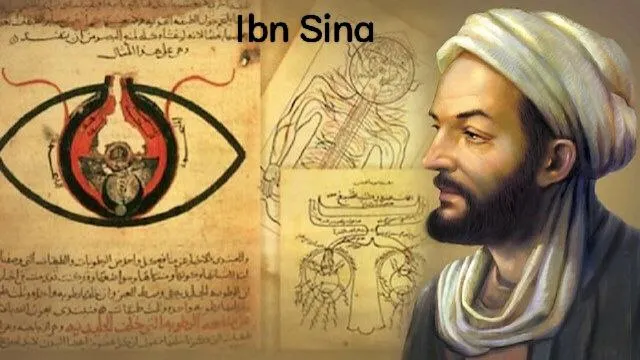
Islamic astronomy, medicine, and translation movementsProgress was collective, not isolated.
Conclusion: From Rebirth to Reason
The Renaissance taught Europe to see humanity again.
The Scientific Revolution taught humanity to understand the universe.
Together, they ended the medieval worldview and opened the door to the modern age — an age defined by science, exploration, innovation, and continuous questioning.
The world we live in today from medicine to technology is a direct result of this long journey from faith to reason, from tradition to discovery.
And the journey is far from over.