West Africa at a Crossroads


UPF Africa | March 2026
West Africa was once described as one of the most ambitious experiments in African unity. Fifteen countries. Three hundred million people. Dozens of languages, religions and histories — and one shared dream: that together, they could build peace, prosperity and a future for their children that no single country could build alone.
A Region Split in Two
In January 2025, Mali, Burkina Faso and Niger officially walked out of the Economic Community of West African States — ECOWAS — after years of tensions following military coups in all three countries. They formed their own alliance: the Alliance of Sahel States, or AES. A year on, the fallout is still unfolding.
This is not just a political disagreement between governments. It is a fracture that runs through real lives.
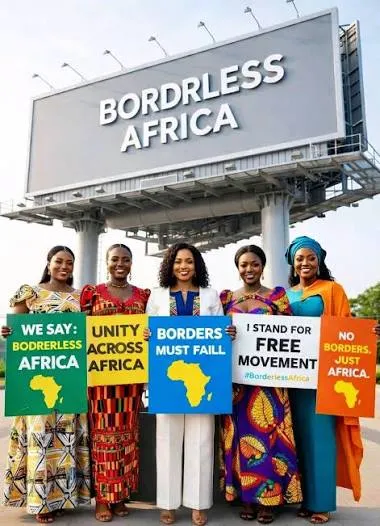
Families that straddle borders between Niger and Nigeria, between Mali and Senegal, between Burkina Faso and Ghana now navigate stricter entry protocols, changing passport rules and evaporating free movement rights they had taken for granted for decades. The Ecowas Commission itself acknowledged it plainly: “We remain a community, a family.” But families do not stay together by saying so. They stay together by choosing each other, even when it is difficult.
At its December 2025 summit, the AES deepened its break with ECOWAS, strengthening its own mutual defence arrangements and introducing the first AES biometric ID card to eventually replace ECOWAS documentation. Meanwhile, in March 2026, ECOWAS launched mediation efforts to reconcile with the three Sahel nations — a sign that the door, however strained, is not yet fully closed.
What the Split Costs Ordinary People
The leaders who signed these documents will not feel the consequences. The traders, farmers, students and families crossing those borders every day will.
Experts are clear: the departure of the three Sahel nations from ECOWAS has significantly undercut counterterrorism cooperation across the region. Intelligence sharing has collapsed. Military coordination has broken down. And the jihadist groups — JNIM and ISSP — have exploited the vacuum, spreading deeper into coastal countries that were until recently considered relatively stable.
Benin is a stark example. The W-Arly-Pendjari wildlife park complex — a region straddling Niger, Burkina Faso and Benin — has become a staging ground for armed groups pushing toward the Beninese coast. In December 2025, JNIM killed 30 Beninese soldiers near that border. In April 2025, 54 security personnel were killed nearby. Attacks on Beninese civilians in the north are rising.
A fisherman in Kandi, a teacher in Natitingou, a market woman in Malanville — none of them voted for this situation. None of them had a seat at the table when the alliances were reshuffled. Yet they are the ones adjusting their daily routes, keeping their children closer, and wondering whether tomorrow will be safe.
Benin: Democracy’s Next Moment
On April 12, 2026, Benin holds its presidential election. It is a significant moment — President Patrice Talon, who is completing his constitutionally allowed second and final term, has stated clearly that he will not seek a third term. The ruling coalition has nominated Finance Minister Romuald Wadagni as its candidate.
But the election is happening in a contested space. In October 2025, the constitutional court barred the main opposition party, Les Démocrates, from participating. In January 2026, parliamentary elections saw the ruling coalition sweep all 109 available seats — with turnout at just 36.73% and the opposition shut out entirely. Only two parties met the electoral threshold to stand.
A month earlier, in December 2025, Benin survived a coup attempt — soldiers mutinied and were stopped within hours, with help from neighbouring Nigeria. The country held its elections just weeks later, on a quiet, calm morning.
Benin has long been held up as one of West Africa’s more stable democracies. This presidential election will test whether that reputation holds — and whether an election with no meaningful opposition can still reflect the genuine aspirations of its citizens.
These are not abstract questions. They are the questions families in Cotonou, Parakou and Porto-Novo are asking right now.
ECOWAS: Still Standing, Still Needed
It is easy, in 2026, to write off ECOWAS as a weakened institution. Three members gone. Military coups ignored. Sanctions that hurt citizens more than generals.
Get Universal Peace Federation - Africa’s stories in your inbox
Join Medium for free to get updates from this writer.
But something important needs to be said: ECOWAS is still there. And it is still trying.
In February 2026, ECOWAS launched a new $140 million peace and security initiative co-funded with the European Union, Germany and Spain — focused on early conflict detection, security sector reform, electoral support and inclusive peace processes. These are not glamorous programmes. They are the slow, patient work of building institutions that last.
In January 2026, ECOWAS allocated nearly $720,000 to Togo to support refugees, internally displaced persons and host communities — practical help for families caught between jihadist violence in Burkina Faso and the borders they need to cross to survive.
And at its December 2025 summit, ECOWAS heads of state committed collectively to halt the spread of military coups and strengthen democratic governance — a resolution that matters because it was made publicly, on record, by leaders who can be held to it.
Is ECOWAS perfect? Absolutely not. Has it failed too many times? Yes. But the answer to a broken institution is not to abandon it. It is to fix it — and analysts increasingly argue that fixing ECOWAS means listening more and threatening less, building inclusion and restoring public trust, rather than responding to every crisis with the threat of a gun.
That is a deeply human lesson — and one that applies far beyond West Africa.
The Deeper Question This Raises
There is something worth sitting with in all of this.
West Africa built ECOWAS because its leaders understood, at least in principle, that no country is an island. That peace in Senegal depends on stability in Mali. That a family in Ghana is safer when a family in Burkina Faso is safe too. That shared institutions, however imperfect, are better than fragmentation.
The current fracture — ECOWAS on one side, the AES on the other — is not just a political disagreement. It is a test of whether West Africans still believe in each other. Whether the dream of a shared home is stronger than the anger of the moment.
That is a question that faith communities, civil society, interfaith networks, teachers, parents and young people across the region have a role in answering. Not just governments. Not just generals.
That has always been true. It is especially true now.
For more insights and updates on our peace initiatives, follow us on our social platforms.