What is Pressure Compensation?


As equipment is deployed to greater depths, the pressure increases. All enclosures, connectors, cable assemblies and moving parts will need to be designed to function under increased pressure.
Pressure compensation is a technique that can be used to reduce the pressure differential by allowing the internal pressure to follow the water pressure. Rather than fully relying on a rigid enclosure.
This can be completed in various ways throughout the whole Subsea Engineering industry to avoid a rigid pressure housing.
How does it work?
As you increase your depth, the pressure of the water increases. This can cause significant pressure differentials on equipment that has air or gas in at atmospheric pressure.
To counteract this, pressure compensation is used so that the pressure can be adjusted within a defined area.
Typically an incompressible fluid like mineral oil will be placed inside an enclosure or defined area. This will allow the pressure to be transferred via a flexible component.
Examples of this could include:
- A flexible bladder that will expand/contract depending on the pressure
- A piston that will move based on the pressure differential
- A diaphragm transferring the pressure
- A bellows
This will allow the pressure inside to match the surrounding water pressure whilst keeping sensitive parts away from seawater.
Whilst this doesn’t eliminate the hydrostatic pressure it will reduce the pressure differential on components and enclosures designed to work in a balanced pressure environment.
Pressure Compensation vs Pressure Housing
Both techniques are used to overcome the issues presented by the environment. However they are completed using different methods.
With a typical pressure housing the internal environment is separated from the surrounding seawater by a rigid enclosure. This will be designed to withstand the pressure differential. The material, thickness, shape, joints and seals will all affect the performance.
With pressure compensation, the pressure is transferred into a fluid or defined area to reduce the pressure differential.
Pressure housings can offer a controlled environment for sensitive electronics. Pressure compensation can reduce the need for a heavy rigid enclosure if the components are suitable for a fluid filled environment.
There is no definitive answer to which is better. It will depend on the depth of operation, what components are being used, available space and how serviceable they are.
Pressure Compensation Applications
Pressure compensation can be used in many areas of subsea hardware.
Electrical & Electronics
Some subsea electronics can be used within an oil filled pressure compensation enclosure. The oil will transfer the pressure and give an insulating environment for suitable electrical components.
However, this will need to be designed with consideration to material compatibility, insulation, heat transfer and moisture/contamination.
Not all electronic components will be suitable for direct exposure to oil or a balanced pressure system.
Connectors & Cable Assemblies
Electrical connections can be seen as a weak point within subsea systems. Connectors will need to provide good electrical connection whilst avoiding any unwanted moisture.
Pressure compensation connectors can use fluid filled areas with pressure balancing components to reduce the pressure differential around the internal components.
Get Undersea Frontier’s stories in your inbox
Join Medium for free to get updates from this writer.
Performance will depend on the sealing, material, insulation and pressure cycling.
Hydraulic Equipment
Hydraulic systems already use a pressurised fluid. With subsea equipment pressure compensation can help control the pressure within the hydraulic system.
This can reduce unwanted pressures on specific components and help ensure predictable performance.
Battery Systems
Battery systems present their own challenges for subsea engineers. Some designs use pressure housings, others use oil filled or pressure resistant designs.
Pressure compensation can reduce the need for a rigid enclosure around suitable battery components. However, the chemistry of the cells, electrical isolation, heat management, fluid compatibility and safety will all affect the design.
The pressure compensation method used will depend on the battery system.
Engineering Challenges
Whilst pressure compensation can reduce some of the requirements for structural design, there are some considerations to make.
Material Compatibility
The pressure compensation fluid will need to be compatible with the seals, cables, insulation, coatings and internal components. A material that works well in one application may not perform as well in another.
Expansion
Fluids will expand and contract with temperature changes. There will need to be enough pressure compensation to accommodate this.
Air/Gas Bubbles
If there is any trapped gas it can compress significantly. This can affect the performance of the pressure compensation system. It will be important to ensure correct filling.
Sealing & Contamination
The pressure compensation enclosure will need to prevent any seawater or contamination getting to components that will not be able to handle it. Seals, diaphragms and interfaces will need to be reliable.
Movement & Mechanical Performance
The pistons, bladders and bellows will need to be able to compensate for the pressure and temperature changes. The materials, movement and fatigue will all be important.
Serviceability
The fluid, seals and pressure compensation will need to be considered throughout the service life. If the design works when deployed it should be easy to inspect, service and repair.
Why it’s important for AUVs
Autonomous Underwater Vehicles combine many aspects of Subsea Engineering. They include electrical systems, sensors, propulsion, navigation and payload systems. Pressure compensation can be used on some of these components.
It also effects the design of the component. You will need to consider how it will connect to other components, how the fluid and mechanical connections are arranged and whether it can be serviced.
It will depend on the overall requirements of the vehicle.
Pressure Compensation
Pressure compensation is one of many methods used to prepare equipment for subsea operations. It helps to reduce the pressure differential without all components needing to be enclosed in a heavy rigid enclosure.
It won’t work for all applications. Some electronics will require a sealed environment. Some components will be able to operate in a balanced pressure fluid filled environment. The depth of operation, materials, electrical requirements and servicing will all affect which option is best.
Understanding these decisions will help companies who specialise in advanced Subsea Engineering and manufacturing design equipment that can operate reliably in challenging underwater environments.
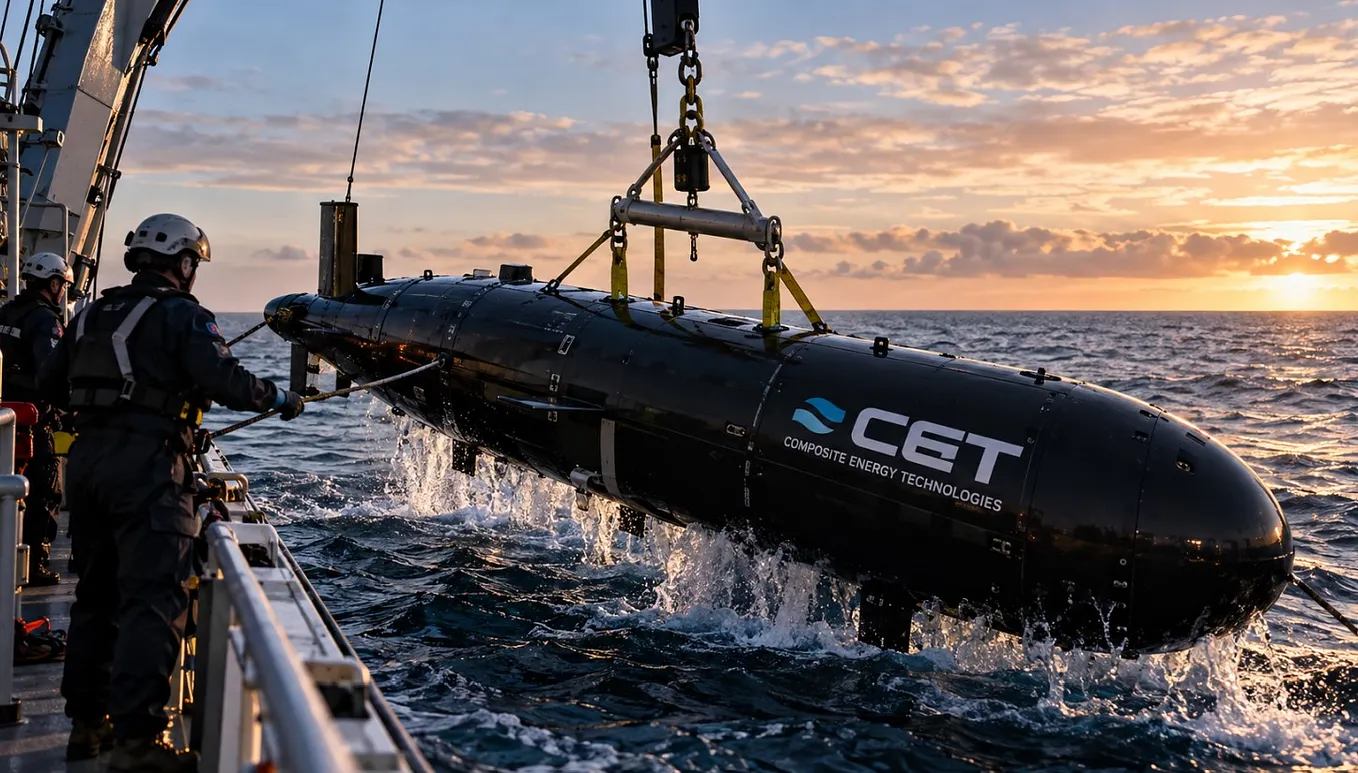
Composite Energy Technologies (CET) specialise in the design and integration of autonomous undersea systems and advanced composite subsea solutions. Public information shows the capability of composite pressure vessels and undersea vehicle development. It is not clear what pressure compensation methods are used in CET systems.
Ultimately pressure compensation is a system design decision. It will involve consideration of the materials, fluids, electrical design, mechanical connections and serviceability. Ensuring these are all correct will help subsea equipment operate at depth without unnecessary structural complexity.