The Epochal Showdown (5) — The Dinosaurs’ Last Dance
How Tokyo and Washington Both Bet Big on Artificial Intelligence — and Let the Market Decide Who Won

Would you trade a beautiful woman for a computer? Would you give up a tender, flirtatious afternoon for the sake of your work?
Yes — I was that fool. I was once the callow youth who believed myself a giant scaling a mountain, too busy with the climb to notice the breathtaking scenery along the way. I thought I was building something great. In truth, I was merely missing one thing after another.
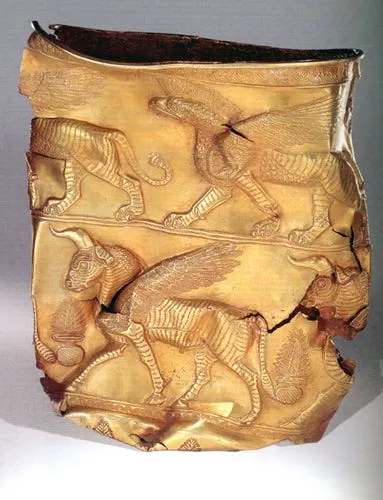
Today, I crack open a bottle of wheat beer, let the malt and hops keep me company on the porch swing this afternoon, and let it carry me back to that romantic summer — much like [the Dinosaurs’ Last Dance this section is about to tell]. For a moment I feel transported to the Jurassic; in truth, it was only the snap of a finger.
The Professor’s Daughter
Back in middle school, one of my teachers used to say that people who accomplish great things are simply the ones who spend on work what everyone else spends on coffee breaks. To this day I have accomplished no great thing — though I remain, as ever, on the road toward one. I suppose that counts as its own brand of self-deprecating comfort.

The 1980s were a decade when hope was in generous supply in every major country on earth — an age you might name, borrowing the title of a hit charity anthem of the day, We Are the World. It was a time when belief alone seemed enough to guarantee you a future. Back then, either the anti-intellectual, anti-science, anti-human breed of fool-and-villain simply did not exist, or whatever dregs of them remained kept to the gutters, scuttling about with the cockroaches. No one in that bright age could have imagined a future in which such people would dare roar in public, preening with satisfaction at their enmity toward humankind.
It was into that sun-drenched era that I entered university. I have been fortunate, over the course of my life, to have crossed paths with more than a few good teachers. Beyond my formal coursework, I wanted to get my hands on something practical. The head of my department — a venerable old professor, widely respected — learned of this ambition and arranged for me to come to his home every day after lunch to do some research.

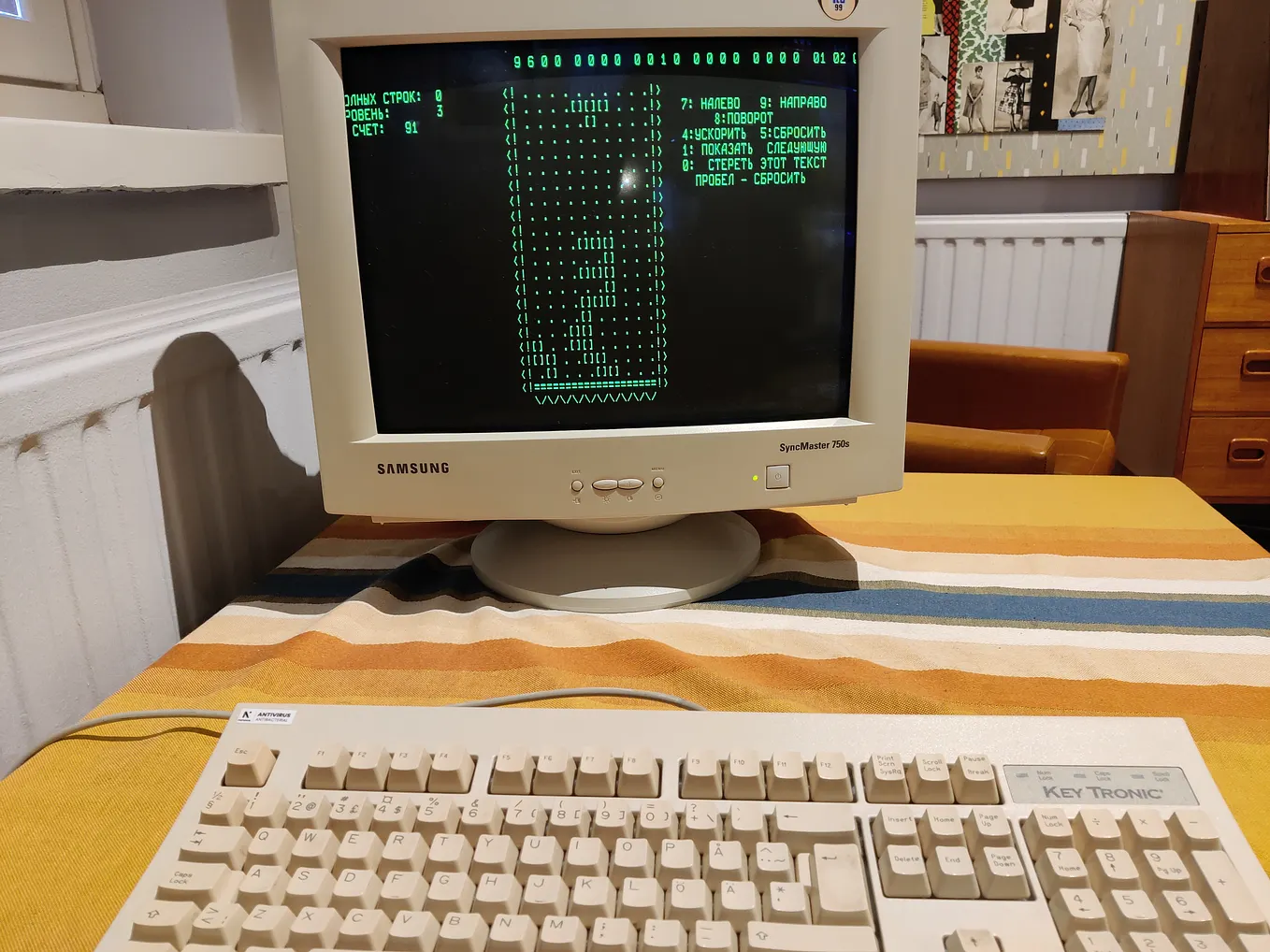
He had just returned from a year’s research leave in Japan, and had brought back with him an all-in-one computer-printer — a machine roughly the size of today’s gaming laptops, combining a computer with a four-colour (red/green/blue/black) printer. It was, for its time, remarkably portable, and remarkably cool. The old professor set me to work implementing several matrix-based computational models.
Bear in mind: it was only in 1981 that IBM released its first personal computer, the IBM 5150, running an Intel 8088 processor and Microsoft’s MS-DOS. A PC was, for us, a rare and precious thing. Many of my fellow students had never so much as touched one — so for me to already have my hands on an all-in-one computer-printer felt almost unbelievable.

Every day at noon I worked in the professor’s study. His wife would always brew me a cup of tea, with a little sweet on the side. Every few days, the professor’s daughter would peel me an apple, or bring me an orange. She was, for someone my age, rare in being both beautiful and gracious. But the youth I was then took the professor’s every instruction as gospel — and besides, my heart had already been pickpocketed by that exquisite little computer I couldn’t take my eyes off.
The professor gave me three months for the task. I — a man who has never accomplished great things, yet never stops trying — somehow blitzed through it in one month flat. Looking back now, it’s enough to bring tears to my eyes. What a blockheaded, thick-skulled fool I was, one who kept working and working and never once caught on. Even if I hadn’t the wit to recognise flirtation, I might at least have strung it out two more months for the apples alone.

Don’t blame me for trading the professor’s beautiful daughter for a nimble little Japanese all-in-one machine. Young people today can hardly imagine it, but in that era Japan’s momentum in catching up — its sheer intensity of investment in technology — looked poised to flatten America into mincemeat.
However much America fears China today, that is exactly how much it once feared Japan.
Pearl Harbor, Tech Edition
Today, artificial intelligence (AI) has become something close to the decisive arena of great-power rivalry. The intensity of the US-China contest has become a wildfire on social media, one so bright it has thrown every other front of technological and industrial competition into shadow. But this particular volcano first erupted back in the 1980s.
In April 1982, Japan’s Ministry of International Trade and Industry (MITI) announced the launch of the Fifth Generation Computer Systems (FGCS) project, with the goal of building a new kind of supercomputer capable of reasoning, knowledge processing, natural language understanding, and machine vision — in short, artificial intelligence. Japan’s ambition was never merely to out-compute America. The real question it was asking was: how do we make a computer begin to process knowledge, reason, and understand language the way a human does?
To carry out the project, the Japanese government established the Institute for New Generation Computer Technology (ICOT), placing at its head Kazuhiro Fuchi (淵一博, 16 February 1936–13 August 2006), one of the early pioneers of the global AI field. Fuchi assembled a “kamikaze squadron” drawn from across Japan’s scientific and technical establishment, with a ten-year mandate to make Japan the dominant power in world technology. The industrial plan touched on nearly every core theme of today’s AI:
- Artificial intelligence
- Logic programming
- Knowledge processing
- Natural language
- Machine vision
- Massively parallel computing
- Ultra-high-speed computers
Among the companies that took part in the plan were, one might say, all eight of the era’s most celebrated Japanese industrial giants: Fujitsu, Hitachi, NEC, Mitsubishi, Toshiba, Oki, Matsushita, and Sharp.

Readers who recall my earlier chapter on Japan’s “daimyo capitalism” will remember Japan’s postwar “Big Six” keiretsu. Standing behind these eight firms were, formally, the six great zaibatsu — Mitsubishi, Mitsui, Sumitomo, and their peers — the very groups that between them controlled more than half of corporate Japan. One might say this was the moment Japan’s daimyo capitalism sounded the horn for total war, marshalling the country’s entire technological research apparatus, and every industry connected to it, into the Fifth Generation Computer Systems project. At the time, it was already being called, in tech circles, an Attack on Pearl Harbor (真珠湾攻撃, 7 December 1941) — the tech world’s own.
Japan’s blistering industrial rise had already rattled America; its audacious industrial policy now drove Washington to something close to a last stand. In response to this technological Pearl Harbor, a coalition of American high-tech firms — including Control Data, DEC, Honeywell, RCA, Motorola, AMD, and National Semiconductor — banded together to found the Microelectronics and Computer Technology Corporation, or MCC.

The US government came to believe that a private-sector consortium alone would not be enough to counter Japan’s kamikaze squadron (特別攻撃隊, Tokubetsu Kōgekitai) — daimyo capitalism marshalled by the full weight of the state. The following year, 1983, the Defense Advanced Research Projects Agency (DARPA) launched its now-famous Strategic Computing Initiative, or SCI.
Washington’s anxiety at the time bore an uncanny resemblance to today’s US-China contest over AI — if anything, it ran deeper still. America had concluded that the age of “AI + vision + speech + high-speed computing” was no longer a matter of mere commercial rivalry, but went to the very heart of the military balance of power between Japan and the United States. DARPA’s programme accordingly drew in America’s leading universities and research institutions alongside its industrial consortium, assembling a full-spectrum ecosystem of science, research, and industry to compete with Japan in history’s first national-level race for artificial intelligence and advanced computing.

Who Won
The 1980s arms race in artificial intelligence between the two great technology superpowers pitted Japan’s daimyo capitalism — a super-team formed by the state in alliance with its zaibatsu — against an American ecosystem of open innovation, one led by the Department of Defense but fused with private capital. The two sides squared off in a full-spectrum Battle of Midway (ミッドウェー海戦, 4–7 June 1942) for technological supremacy.
A decade later, Japan — having tried, through state direction and concentrated industrial force, to define the computer of the future as a “knowledge-processing machine” — had finally built a parallel inference system on the scale of a thousand processors. Along the way, it scored genuine triumphs in PIM, in the KL1 parallel logic-programming language, and in large-scale knowledge-processing systems. But it discovered that these achievements proved stubbornly resistant to commercialisation. Japan’s daimyo technocracy had grown a dazzling flower — one that never quite set fruit.

America, for its part, produced its own line of supercomputers, epitomised by Cray. But the market proved to have little room left for dinosaurs. What it wanted instead was an ecosystem built around “parallel computing + cheap general-purpose processors + AI software” — compact, miniaturised, computation as a means to an end, something that could solve concrete industrial problems and boost productivity. In the end, SCI conceded the point: if a swarm of cheap microprocessors could be assembled into a supercomputing array, there was simply no need to build the expensive, monolithic dinosaurs of inference computing in the first place.

The truth is that neither Japan nor America achieved its strategic goal. Both sides fought their way, bayonets fixed and eyes bloodshot, toward the summit of K2 (8,611 metres) — only to look up and discover that the market had already planted its flag on Everest (8,848.86 metres).
Japan’s bid never won, though naturally its government would never call it a defeat — if nothing else, the project left behind a pile of research with no market to speak of. America’s state-led ecosystem, for its part, fell short of its own targets too. In the end, it was the market that crowned America ruler of the computing age, through a different combination altogether: microprocessors, PCs, Unix, networking, workstations, and a thriving software ecosystem.
The Terminus of Misreading
It was at the very end of the last century that a new colossus was born: the age of the Internet of Everything, made possible by the rise of the internet itself. Many credit this success to America’s industrial policy, forged in the crucible of its rivalry with Japan. Perhaps that is simply laying a few wilting roses on the grave of industrial policy, cranking up the music for a graveside disco, in the hope of drowning out the mess left behind by taxpayer money.
Technically speaking, the internet traces its origins to ARPA in 1958. After the Soviet Union launched Sputnik 1 (Спутник) on 4 October 1957, the entire Western world fell into the grip of the Sputnik crisis — a spasm of fear and anxiety. America, which had believed itself the unrivalled leader in missiles and space, would go on to suffer its own very public satellite launch failure just weeks after Sputnik’s triumph. The success of Sputnik 1 touched off a space race between the two superpowers that would run for more than twenty years.

To reclaim an unshakeable foothold at the frontier of technology, the US Congress in 1958 authorised the Department of Defense to establish the Advanced Research Projects Agency, or ARPA. By 1972, ARPA had been renamed the Defense Advanced Research Projects Agency, or DARPA. In February 1993, the newly inaugurated administration of William Jefferson Clinton (né Blythe III; born August 19, 1946) renamed it back to ARPA, dropping the “Defense” once more.
ARPA’s mission was never to manufacture products itself. It was, instead, to fund universities, laboratories, and companies to pursue high-risk technologies that might just change the future.
Get iLighter, Gazing at flowers from the roof of hell’s stories in your inbox
Join Medium for free to get updates from this writer.
In 1962, ARPA established the Information Processing Techniques Office, or IPTO. Its first director was the celebrated computer scientist J. C. R. Licklider (Joseph Carl Robnett Licklider, March 11, 1915 — June 26, 1990), an American psychologist and computer scientist widely regarded as one of the most important figures in the history of computer science and general-purpose computing. His thinking was visionary in the truest sense: he argued that the computer should be more than a mere calculating machine — it should become a tool through which people could share information and exchange ideas with one another.
Under IPTO’s stewardship, 1969 saw the birth of the Advanced Research Projects Agency Network, or ARPANET. But ARPANET was, at first, just a network — it could not yet make fundamentally different kinds of computing nodes talk to one another. Not until 1973, when Robert Elliot Kahn (born December 23, 1938), ARPANET’s chief architect, sought out Vinton Gray Cerf (born June 23, 1943) at Stanford University, did the two of them join forces to develop TCP/IP — and only then did a network capable of connecting everything finally take shape. From that point on, everyone from the defense establishment to research institutions began adopting the TCP/IP-based ARPANET.

If you think that alone was enough to ignite today’s internet, you’d be wrong. A product succeeds in the market not because it is dazzling, but because it works. The real commercial breakthrough was never “everything connected to everything” — it was person connected to machine. A field in glorious bloom is worth less than an autumn harvest. The seed planted in 1974 did not flower until 1983, and it would not bear fruit until 1990.
On 1 January 1983, ARPANET formally retired its old protocol, NCP, and switched over to TCP/IP. But the bee that would come to pollinate that flower did not arrive until 1989 — and we owe that to a great British scientist, Tim Berners-Lee (Sir Timothy John Berners-Lee, born 8 June 1955). In March 1989, in a report submitted to CERN (the European Organization for Nuclear Research, whose acronym derives from its predecessor, the Conseil Européen pour la Recherche Nucléaire) titled Information Management: A Proposal, he laid out his vision for what would become the World Wide Web. His supervisor, Mike Sendall, scrawled a now-famous verdict on the cover of that report — “Vague but exciting…” — and gave him the go-ahead to keep working.

In 1990, Berners-Lee built the three foundation stones of the web: the HTTP protocol (Hypertext Transfer Protocol), HTML (the markup language for web pages), and the URL (Uniform Resource Locator) — and wrote the world’s first web browser and web server.
Great commercial success requires far more than great technology alone. Berners-Lee then spent roughly six more months hammering out legal questions with CERN’s legal department — no small feat, coaxing Europe’s lumbering scientific bureaucracy into giving the technology away for free. On 30 April 1993, CERN signed a formal document permitting anyone to use, copy, modify, and distribute the three core components of the Web software — the basic client, the basic server, and the public code library.

The arrival of the World Wide Web pulled the internet out of the world of engineers and scientists and put it into the hands of everyone else. Web plus browser: together, they turned the internet from a research tool into a mass medium. This marked the beginning of the single most important era since industrialisation — the age of the super-connected. Without that era, today’s big-data-dependent artificial intelligence simply could not exist. Without it, the second great US-China AI showdown would never have happened at all.
The market is both the proving ground of truth and the sacred site where miracles are made. From the moment the Soviet Union and Japan first challenged America, every national strategy since — America’s own included — has amounted to little more than fireworks scattered across the sky: dazzling, mesmerising, a brief and glorious high before the inevitable crash, never enough to build a harvest-laden farm on solid ground.
The great victories belong to the market — to the market’s freedom, and to the countless, half-mad dreamers bold enough to dream, to challenge, and to innovate within it.
Who Knows?
Let us return once more to the summit of the Forbidden City, to watch two grandmasters do battle in their duel of the century: Justin Yifu Lin (b. 15 October 1952) and Zhang Weiying (b. 1 October 1959). Let us take an economist’s-eye view of history, and distil, from history’s oaken cask, the true essence of development economics. Seen through the wide lens of grand history, the technology war between Japan and America stands as a vivid case study for testing Justin Lin’s theory of New Structural Economics.
The core of New Structural Economics is this: identify a nation’s own comparative advantage, then use government-led industrial policy to exploit that advantage and accelerate economic development. It is, on paper, a nearly flawless model of development economics. But applied to this imperfect world, it runs into its single greatest problem: how do we actually know what our comparative advantage is? How do we know the future?

Did Japan, back then, genuinely hold a technological comparative advantage over America? Was Japan’s industrial policy wrong? Can we really call its Fifth Generation computing project — Japan’s own tech-sector “Great Leap Forward” — a failure? Ten years into the American-Japanese showdown, we now know that the dinosaur-scale computer did not win out. But in today’s US-China race for artificial intelligence, do we yet know whether open-weight models will beat closed ones? Will the future belong to a handful of AI supergiants running centralised cloud factories — or to an interconnected ecosystem of AI, distributed across every enterprise and even every individual, each trained toward its own particular purpose, much like the personal computer once was?

Let us pull the lens back further still — all the way back to a dungeon in the Republic of Genoa in 1298. There, Marco Polo (c. 1254–8 January 1324) was regaling his fellow prisoners, eyes alight, with tales of a black stone in the East that could burn — the substance Westerners would only later come to understand as coal.
By Justin Lin’s theory of comparative advantage, coal ought to have been China’s fossil fuel of choice — the one resource in which the country had held a natural edge since antiquity. So why, after Reform and Opening, did oil become China’s energy lifeline instead? And now that the Strait of Hormuz (阿拉伯语: مضيق هرمز, Maḍīq Hurmuz; 波斯语: تنگه هرمز, Tangeh-ye Hormoz) has become a chokepoint Iran can squeeze at will, will renewables become the next energy hegemon? Or nuclear power? Or perhaps some synthetic fuel not yet invented?
Too many models that look flawless on paper run aground the moment they meet an imperfect world. Japan’s parallel inference computer, America’s supercomputers — both were, in theory, exquisite; in practice, remarkably fragile. Justin Lin’s New Structural Economics runs into precisely the same problem. The elegant scholar, sword in hand, marches out to meet the brutal soldiery of real-world competition — and stands almost no chance of winning. The deepest issue is this: human society is never static. Today’s comparative advantage may well be tomorrow’s comparative disadvantage. The withered flower of yesterday may yet bear fruit tomorrow. But what the future holds — WHO KNOWS?

In 1945, Friedrich Hayek (Friedrich August von Hayek, 8 May 1899–23 March 1992) published his paper “The Use of Knowledge in Society.” In it, he laid out a plain truth about human society: the knowledge that is genuinely useful to society is never concentrated in any single mind — it is scattered across the particular circumstances, experiences, and actions of millions of individuals. Put plainly: you don’t know, I don’t know, nobody knows! The labourer sweating over his shift doesn’t know. The experts in their exquisitely equipped laboratories don’t know. And the bureaucrats sitting in air-conditioned offices know least of all! No one can predict everything — not even Laplace’s Demon.
But we — the countless labourers, the countless scientists, the countless entrepreneurs, all of us cutting through the waves together in the marketplace — we know all of it, collectively! The market takes the millions of individual “knowings” scattered across all of us and distills them into a single number: the price. Price is the market’s baton — but never forget, it is the people within the market who are the deciding force. It is the mad ones, the entrepreneurs as the Austrian school defines them — it is us, the countless self-reliant, self-strengthening, gloriously stubborn fools who never accomplish great things and never stop trying anyway — who decide the future!
We cannot know the future. We can only choose our beliefs — and our beliefs shape the future we are able to see.
— Arno Will
This is the very core of Zhang Weiying’s dual-track price reform: letting price become the vessel that carries the sum total of human society’s dispersed knowledge. But knowledge alone, however useful, is not enough to build a complete road for development economics. That is precisely the subject of our next section, “What Did China Get Right” — for the market belongs to everyone, and so too must the road that leads to it.
Arno Will, August 26, 2026
Theory of Relativity in Economics — The Coase Theorem Under the Mass Critique
When Capital Substitutes Labor, Where is Our Future?
Liberty is Not ‘Negative’, Only ‘Exist’ and ‘None’
Redistribution? Why is the Government Spying on My Wallet
Immoral Property Taxes Infringe on Personal Liberty
The Epochal Showdown
The Epochal Showdown (1) — Kindergarten Macroeconomics meets Daimyo Capitalism Bookkeeping
The Epochal Showdown (2)— Of Myths, Monks, and Markets
The Epochal Showdown (3)— The Road to Prosperity
The Epochal Showdown (4)— Free Markets or Free Falls?
The Epochal Showdown (5) — The Dinosaurs’ Last Dance
The Eye, The World We “See” [1] — Allegory of the Cave
The Eye, The World We “See” [2] — Misplaced Love
The Eye, The World We “See” [3] — From Data to Information
The Eye, The World We “See” [4] — How We See the World: From Knowledge to Wisdom
The Redundancy We “SEEe”[1] — I Really Did See Ghosts
The Redundancy We “SEEe”[2] — Descartes’ Evil Genius
The Redundancy We “SEEe” [3] — A Superfluous self?
The Redundancy We “SEEe” [4] — The Enemy Is “ME”