The Best Approach to Vendor Due Diligence

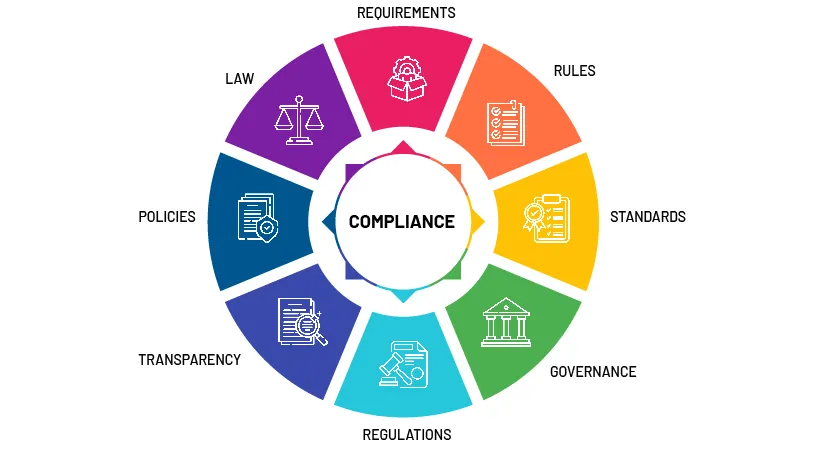
The global nature of the economy today exposes businesses to a large number of regulations, which mandates them to mitigate the risk posed by external vendors and third parties. Thus, vendor due diligence has become an integral part of the compliance process.
Vendor due diligence is the process a business undertakes before partnering with an external entity in order to detect and assess associated risks, including unfair business practices and breach of sanction regulations.
Risk assessment should take into consideration attributes such as:
1. Country of origin
2. Industry risk, as certain sectors (such as defense, oil and gas exploration) pose higher risk than others
3. Share structure such as issuance of bearer shares
4. Purpose of business transactions
5. Stakeholders involved and their profile(s)
The solo way to comply with global code of ethics and code of conduct is to perform due diligence diligently, not only before entering into an agreement with a vendor but also periodically. This allows to actively monitor the relationship and uncover any issues.
The first (and a vital) step in due diligence is to collect primary information on areas including
1. Line of business
2. Geographic location
3. Incorporation documents
4. Ownership
5. Leadership team
6. Political connections
Get Acuity Analytics’s stories in your inbox
Join Medium for free to get updates from this writer.
The information collected needs to be verified using reliable sources to arrive at the perfect risk scoring. For example, a high-risk vendor, as well as its subsidiaries and associated entities, calls for enhanced due diligence. Sanctions/Politically Exposed Persons and negative news checks are essential to establish any hidden risks associated with global databases and media archives.
As an additional step in the due diligence process, firms can ask their vendors to complete an anticorruption questionnaire and then analyze the data collected to assess risks involved.
Top three benefits of performing rigorous vendor due diligence:
1. The most important benefit is that it allows businesses to understand their vendors and provides insights into what they need to focus on.
2. It helps businesses scrutinize the reputation of the vendor and assess whether the relationship will be fruitful or harmful.
3. It shields businesses by mitigating their exposure to bribery and corruption.
How Acuity Knowledge Partners can help
To truly know who you’re doing business with, you need to harness human expertise, combined with high-quality data, which is what Acuity Knowledge Partners does.
Acuity Knowledge Partners has a pool of compliance specialists who are experts in carrying out vendor due diligence. This, combined with our source of company information (Bureau van Dijk [BvD] — a global provider of business intelligence and company information Moody’s acquired in 2017), helps you take best possible decisions at any point in time.
BvD aggregates, standardizes, and distributes one of the world’s most extensive private company datasets, with coverage exceeding 300 million companies 1. It focuses on financial data, ownership information (including beneficial owners), and the leadership team and has the wherewithal to screen prospective parties against sanctions and PEPs.
The Acuity Knowledge Partners advantage
1. Efficient due diligence life-cycle management, reducing operational costs by up to 30%
2. Availability of scalable and dedicated workforce to meet project timelines
3. Track record of meeting stringent SLAs
4. Trained pool of KYC resources from various verticals in financial industry
5. Access to globally leading company database source — BvD
Orignal source : https://www.acuitykp.com/