Asteroid 16 Psyche might not be as it is portrayed to be

16 Psyche, the 16th Asteroid to be discovered, is a fortune seeker’s dream.
Would the latter part of the above statement be the reason behind data editing?
Let’s find out.

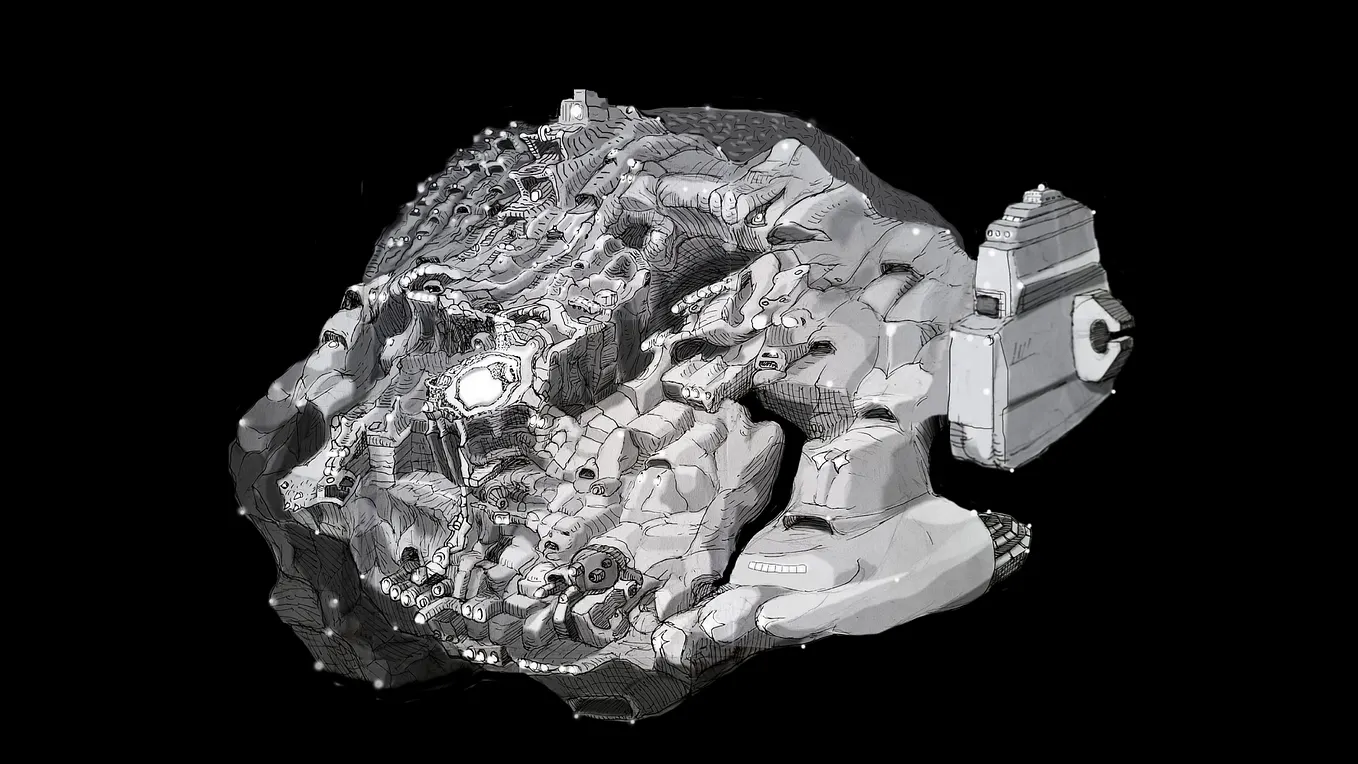
Take a look at this image of 16 Psyche. An amateur astrophotographer gets the same shot. We examine the differences between the two pictures. The crisp focus and the detail. One could argue that NASA software is more sophisticated, the telescope more powerfull and therefore the image looks clearer than an image my spectacles give me of an earth rock in my hand. The Amateur gets the shot with what he has available. He is up against distance and software limitations. However, his intention is to get the best shot he can of the object. He is not interested in anything else.
Get Adi Setterfield’s stories in your inbox
Join Medium for free to get updates from this writer.
With the two images side by side we comb the surface of the asteroid because we have an intuition that NASA is hiding data from the public. We analyse and compare. And then we begin to ‘see’. First there are cross-hatch markings on the side of a massive crator. We look at geological features on earth and Mars and we see that these occur naturally and yet, something irks us on because the way those grooves run makes our searching brains restless. So we look at the NASA image for a crisper focus on this specific feature and we cannot find it there. For this reason our search takes another trajectory. We are now looking for ‘edits’ by comparing the differences between the two images. Not long after this, on the far right edge, just out of sight, we see the next clue. The geometry present in the amateur’s image is distinct. The objects present are too obvious to brush off as image compression defects.
*Note to the viewer: The viewer should first acquaint their eye and brain with the surface of the rock before attempting to compare and analyse this area.
There are some distinct features here that bring a sinister aspect to the NASA footage. The way the ‘highlights’ have been flattened out is probably invisible to an unsuspecting eye. However, on comparison, it is obvious. NASA took those ‘structures’ and ‘smudged’ them across the area, the result is certainly not natural looking. They could have done a better job with that small crater because it looks like an ellipse cut and paste job, something like cutting and pasting a nose from one face onto another. This area has been deleted from the public eye. It has become ‘Area 51’. As for the triangular structure in the centre, the one made up of three distinct points or dots, that has been removed. To the right we see other structures that have been smudged into a pathetic jagged array of pseudo highlight and shadow floating above a smudged surface. (image below)


What we are looking at here is not image compression defects (a problem with amateur footage), but the ‘missing link’ that science uses as a means to an end?