Of Two Longings in Khamaj


As Pandit Ji begins with a soft encouragement to sing the antara, the first glimpse of longing is immediately visible before the eyes; what better than to start by highlighting the arrival of the moon and stars to mourn the absence of the beloved? And this phrase of emphasising the absence repeats in steadily elongating variations before a final lament of aan milo sajna- a final sentimental plea to the beloved for a reunion before such a desire morphs into a frenzied restlessness.
Get Aliyah Banerjee’s stories in your inbox
Join Medium for free to get updates from this writer.
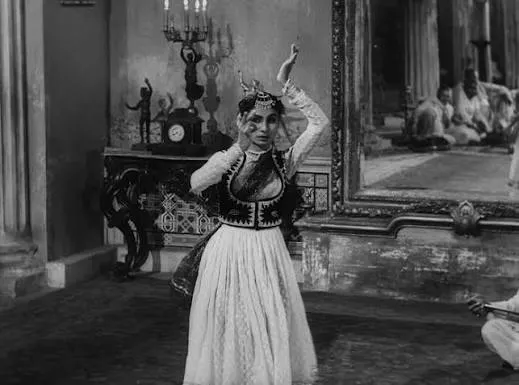
With the laggi on the tabla, played with absolute mastery (and besides my personal enjoyment as a Kathak dancer recognising what Pandit Ji rightfully calls an apparent image of the form in such a theka on the tabla), the mood is now such that kaun gali gayo shyam spontaneously emerges as both lament and curiosity. The earlier longing has intensified because the beloved has now disappeared from sight and it pulls at the heartstrings to be unaware of the direction in which he has gone, because then one has no way to follow even with the eyes, let alone the heart. Such a feeling is mirrored by the increasing speed of the tabla- and here, allow me to point out yet another intricacy in how the laggi feels, perhaps just to a dancer’s body. Instead of the usual straightforward dha dhin dhin dha, if visualised, this particular play of the tabla almost seems to pull back and then release, retreat and then move forward in the way it plays the theka. As we yearn to follow the beloved while not being able to catch a glimpse, it is not the same as our body yearning to follow a few steps in search, and then retreat, then follow with a sudden abandon again, and then again pull back uncertainly?
Chanda aaye, taare aaye, aane wale saare aaye, aaye tumhi sang naa . . .
I glimpse the arrival of the moon and the stars and all those who accompany them, and yet you are not with them.
Kaun gali gayo shyam, bata de guiya . . .
Which road did my beloved shyam walk down, tell me, o friend?
And khamaj perennially sounds with longing, with complaints of the beloved, with how the melody of the koyal bird pulls at the heartstrings, with the beloved’s truancy amidst the moon and stars as his flute sounds on an unseen path.