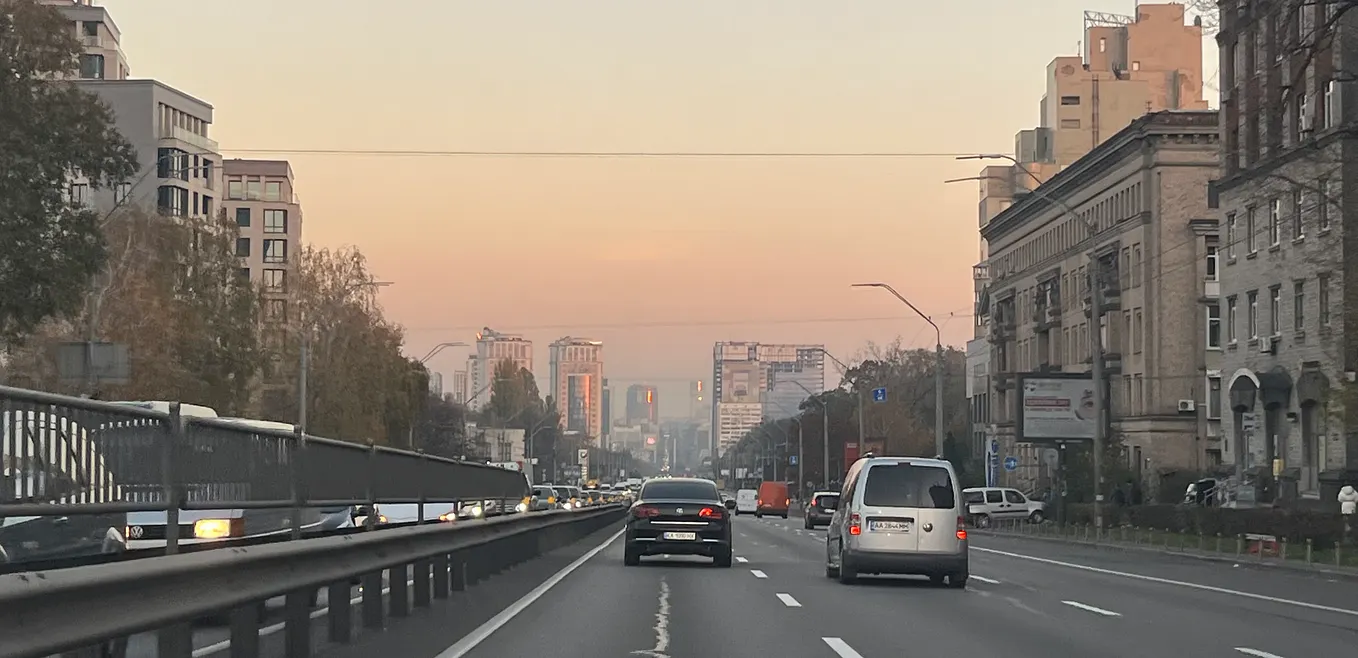
Nondescript building

Note: This is a series that represents my own observations in Ukraine of the strange reality that war creates. Check out the introduction here.

I walk towards an acquaintance in an I-have-no-idea-where-I-am part of town. He told me to meet him at a shopping mall in this neighborhood.
Somehow, I’m surprised he trusts me enough to allow me to not only come visit him, but also see his training in action.
As we meet, an air alarm starts going off. I half expect the missile to come towards us, as this is most definitely a target for the Russians. When nothing happens for the next 5–10 minutes, we set off towards the nondescript building that houses the medical aid training for those working on the frontlines of the war.
I turn off my phone. Even in airplane mode, I’ve learned, my presence can still be seen. And I’ve also learned that having a local number is not enough to hide my foreign-ness. It turns out, my phone’s inherent digital fingerprint is sharing with anyone who cares to look that I’m not from around here.
From what I understand, everyone going through training must come in civilian clothes. Otherwise, having large numbers of military clad men and women coming in and out of the building can draw unwanted attention.
There have been many stories of saboteurs living among civilians, looking for any suspicious activity to report to the Russians so they can send the next missile to that location.
Get AMalikova’s stories in your inbox
Join Medium for free to get updates from this writer.
I enter the building with my phone turned off. It’s dark. An adjoining room is filled with about 40–50 people sitting in classroom style chairs, listening to the instructor talk about various parts of the body.
“We provide this training over many weeks”, the acquaintance turns to me to explain. “We set up classes to teach different aspects of medical rescue out in the field.”
Some classes are lectures providing an overview of the knowledge needed. Some are hands-on exercises requiring repeated practice.
For hand-ons parts of the class, it is imperative to know the medical process so well that you can do it in your sleep. Your mental capacity for thought declines significantly when you’re injured. Medical aid processes needs to be as natural as breathing.

The courses run for 6–8 weeks. It seems like a long time, but when you realize that this training is meant to not only teach a wide set of life-saving techniques, but also ingrain it into each students subconscious, this is not a long time. Especially since this is aimed at students who have no medical background.
I also learned that this is not the standard. There are other medical trainings that are done over 2–4 weeks, at least that was the case in early 2025. There are many organizations and people who provide courses on frontline medical training, some following stricter, international protocols, like the Tactical Combat Casualty Care TCCC, that require that longer time.
To me it’s wild — depending on your luck of the draw, you can get better training that can ultimately save you. I’m not saying that the shorter training is bad, but if I was in such a position myself, I would want to get the longer, more extensive training.
After about an hour, I walk outside of the building, understanding better that I know nothing about medical rescue. I’m not sure I would pass this class at all! I walk a few hundred feet and look back at the nondescript building. Now I know its remarkable contents. The students inside will inevitably save dozens, if not hundreds, of lives. It’s something to be in awe of.
As I slowly make my way back to the mall, other people walk past as if nothing has changed. The cars drive past mindlessly as if all scenery is the same. Let’s hope it stays that way.