Specialization and slow reaction affecting girls hoops participation

It started with an innocuous request.
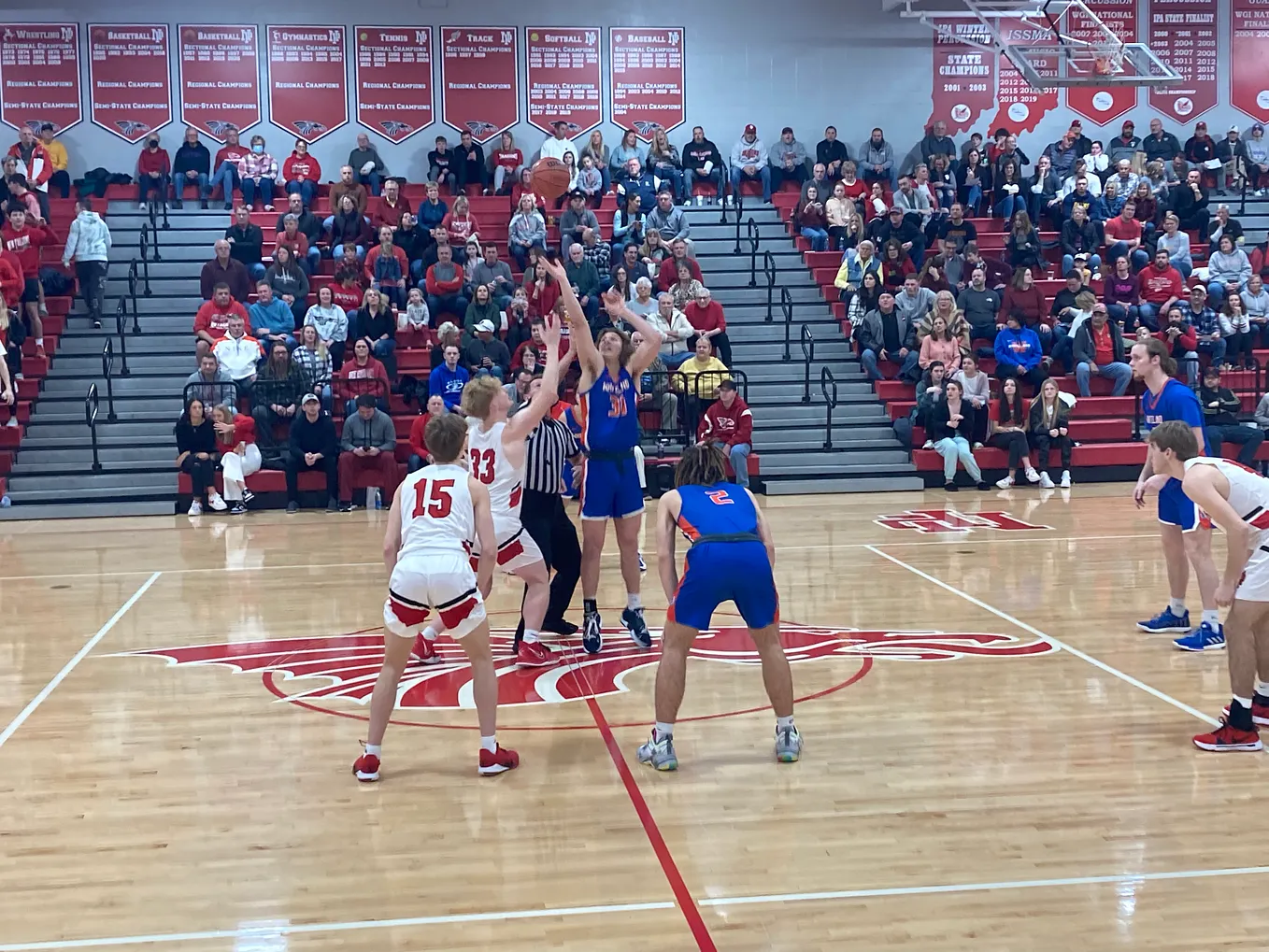
It was the start of the school year in August. Basketball practice began two months later in mid-October. As a coaching staff, we asked our players to come into the gym for a few minutes before school to shoot free throws a couple times a week.
A simple, 15-minute commitment, being done at a time when our girls were in the building anyway.
But then the hammer came down. The new volleyball coach told her players — and indirectly, our coaching staff — under no circumstances will any of my players be allowed to touch a basketball until volleyball season is over.
Her sport was in-season, so we had to honor those rules. They didn’t shoot free throws. But that flew in the face of our long spirit of collaboration at our school. At the time, ours was a school of about 800 students, and coaches knew they had to share athletes. We were all, ultimately, part of the same team and believed in the success of our athletes and programs. The previous volleyball coach was even on our basketball staff. We coordinated summer schedules. We coordinated off-season conditioning. After all, a rising tide lifts all boats.
It was never a problem, for example, for our basketball players to go to the softball batting cage and take a few swings during the season to prep for spring. And our request to have our girls come in and shoot free throws was made in the spirit of that collaboration, to ensure it wouldn’t conflict with after-school volleyball practices.
But the new coach’s demand — don’t even think about touching a basketball — was more than curious. It made no sense to us.
At least it did in our old conception of sports — where the high school was central, coaches collaborated and we encouraged multi-sport participation as we knew it was best for our athletes — and best for each of our programs to have the best players available.
But this was a new era. The new volleyball coach came from a club, not a high school, background. The program she inherited had won a sectional title here and there, but none recently. And she believed the only way to change that was to have committed volleyball players. Basketball was not just another sport at the school. It wasn’t something to do over the winter. It was the enemy and something that needed to be vanquished for her program to have any success. She wanted to send a message to current and future players that volleyball players did not play basketball. It wasn’t about our success as a school, it was about the success of her volleyball team and that team only, and the only path to that success is not sharing athletes with other sports.
Threats were issued. If you don’t play club volleyball, you’re likely to get cut. Oh, and club volleyball season conveniently runs from October to March — concurrently with basketball season. She didn’t want her players looking at a basketball, touching one, playing the sport, or even talking to coaches. Coordinating off-season conditioning was completely out the window.
Thankfully, we had a group of athletes at the time who called her bluff and continued to play basketball. They were also among the best volleyball players, so they didn’t get cut or have their playing time reduced. But not all did. Some, including players who would have been varsity basketball starters, did quit to specialize in volleyball. When we would have spring open gyms back-to-back on the same night, our shared players would hide in the locker room until the volleyball coach left so they wouldn’t get chewed out.
That coach didn’t last very long, and her replacement — who has been very successful — has often thrived with multi-sport athletes on her teams. But that message was sent to the younger grades. Almost overnight, at a 3A-sized high school in Indiana, in a well-to-do suburb with high parental involvement, we went from having nearly 40 players come to the first day of practice to barely having enough to field varsity and JV teams. The JV team I coached had four full-time players, and I wrote down who could play in which quarter on an index card so we could play a full game and keep everyone under the five-quarter limit. The program’s roster has hovered between 16–20 kids ever since.
Why is this important? Because it’s a symptom of what has happened across the country. Until 2008 — the year this coach showed up at our school — more girls played basketball than any other high school sport. Today, it’s fourth. Participation in girls basketball has declined by 21% nationwide. In 2000, there were 451,600 girls playing high school basketball in the U.S., an average of 27.3 per school — enough for varsity, JV and “C” teams at most schools. In 2025, that number had dropped to 356,240, an average of 19.6 per school.
In Indiana, the decline has been even greater. That number dropped from 11,499 players (30.1 per school) in 2000 to 7,071 (17.8 per school) in 2025 — a drop of 39.5%. It’s common, especially at smaller schools, for JV games to be played in two quarters, if a JV game happens at all. Players are only allowed by IHSAA rules to play in five quarters a night, and there simply aren’t enough people available to play a full four-quarter JV game and have enough quarters left to play a varsity game that night.
The WNBA is exploding in popularity, So is women’s college basketball. IU’s women’s team averaged 10,828 fans and was fourth in the nation in attendance in 2025 — ahead of powerhouse programs like Tennessee, LSU and Texas. Notre Dame was 10th. With the most popular female athlete in America — Caitlin Clark — on the roster, the Indiana Fever play in front of packed houses nightly.
And yet, the number of girls playing basketball is dropping like a rock in the Indianapolis area and elsewhere.
Get Andrew Smith’s stories in your inbox
Join Medium for free to get updates from this writer.
Simply put, specialization has hit high school sports across the board. But it has hit girls basketball the hardest. The culture of girls basketball was that the elite players — maybe the top three or four players per school — played on club teams in the spring and summer. The rest of the athletes played softball or volleyball or tennis or maybe soccer in the off-season. And the travel basketball season is mostly a spring and July season, so while there were some conflicts with softball, there were none with any other team sports.
But while basketball coaches were required to hold a teaching license (rules that have since been relaxed a bit), and thus were more likely to be full-time in the building and plugged into the school’s culture, the volleyball, soccer and softball coaches were more likely to be lay coaches. And around the turn of the century, that often meant coaches directly from year-round club teams, which exploded on the scene at the turn of the century. And it was more likely they would demand all of their players — varsity, JV, “C” team, everyone — play year-round club or get replaced by someone else who does.
And girls basketball, as a sport, was not prepared for that sudden shift.
In 1998, I was among a bunch of media members talking with then-IHSAA commissioner Bob Gardner. With newly-reconfigured class tournaments, the association was still figuring out how to adjust season calendars. Someone asked about possibly moving the volleyball tournament back one week. Gardner said, “we can’t do that because it would cut into the first week of basketball, and there is more overlap between volleyball and girls basketball than any other two sports.”
That was corroborated by the evidence where I was working — covering small schools in Putnam County and larger schools in Hancock County as a reporter for nine years before I began coaching in 2006. The volleyball rosters and basketball rosters at every school were largely made up of the same players. It makes sense — taller players thrive in both sports. And the skill sets — footwork, quickness, jumping, hand-eye coordination — translate well from one to the other.
Today, the overlap between the two sports is miniscule. You might find one or two players on a school’s basketball and volleyball roster, but they are usually basketball players who have fun playing volleyball — the “old school” athletes we used to covet.
Volleyball participation has increased 23.5% from 382,755 to 472,999. In Indiana, it has modestly increased 14.6% from 10,178 to 11,664, which indicates that volleyball participation has stayed fairly steady given population growth (the age 15–19 population in Indiana has grown 23% from 2000–2025), while girls basketball participation has fallen off a cliff. Other sports have been uneven — girls soccer participation is up 43.9%, while softball participation is down 24.3%. On the boys side, basketball participation is down 21.3%, baseball down 17.6% and football down 5.9%.
In 2000, there was a very small difference betwen basketball (11,499) and volleyball (10,178) players, and in a lot of cases, they were the same people. Today, there is a huge gap (11,664 to 7,071), and that gap is largely made up of kids who are specializing.
Why is that? Because, like our old volleyball coach, high school coaches in those sports are more likely to come from the club ranks, and they are convinced that year-round participation in one sport is the key to team success. That attitude has filtered down to younger ages, where kids join “elite” travel teams at younger and younger levels, not because they’re seeking college opportunities, but because they believe they’ll get cut from the high school team if they don’t play club sports. Travel teams have wiped out local youth leagues in a lot of sports.
And if the parents are paying thousands of dollars per year hopscotching the Midwest at age 12 to play a sport, they’re more likely to prioritize that sport when the kid gets to high school. And the club volleyball season runs from October-March and again in the summer. The club softball circuit has an indoor component in the winter and an outdoor one that begins in the winter, pauses for the high school season, and continues again in summer.
Club soccer is basically year-round — with major tournaments often beginning the week after the high school sectional and regional rounds.
The demands on time are legion, and time isn’t infinite. One day, I overheard a couple of parents at a youth basketball game (in December) talking about playing 2 a.m. indoor softball games that evening. I asked why they would even acquiese to such a thing, and they said “that’s when the games are, and you have to do it to be any good.”
It’s not as pervasive on the boys side because the primary boys sport is football, which has no travel/club/year-round component, and whose coaches often encourage multi-sport participation. You see specialization hit boys soccer, and to a lesser degree, baseball, but even then, coaches often work together at the high school level to share athletes.
The response for girls basketball programs isn’t to cower and say “woe is me,” but to realize the game they’re playing. If volleyball or softball are funneling kids into club/regional travel teams at a young age, you have to build the infrastructure to do the same.
We realized that as a coaching staff back in 2009. Doing things the way we’d always done them — a small house youth league and a couple of summer camps funneling into our school teams beginning in sixth grade — wasn’t going to work. We had to create our own “travel teams.” With the help of some parents, we created in-house regional travel teams starting in third grade.
The high school coaches took a couple of teams, and parents took a few more, and it has built into a sizable club with teams in every grade from 3–8. Yes, we encourage multi-sport participation, and we understand that’s going to fall off as kids make choices — whether nudged or by their own will — in ninth grade. Our high school program has had a run of 12 consecutive .500 or better seasons, even as the number of multi-sport athletes has dropped. That run began with the first groups that came through our travel program as sixth-graders. We’ve had some modest success with a couple of sectional and conference titles each. Each team was led by multi-sport athletes, some of whom, their primary sport wasn’t basketball. In one case, the primary sport may not have started as basketball, but she played for a top NAIA program and finished at the Div. I level. That in-house club program continues to send basketball players to the high school and continues to grow.
The schools that will be successful going forward are those at very big schools where the weeding-out process — and each sport finds their “set of kids” — happens in junior high and earlier. And small schools in “traditional” communities, where high school sports are still king, will continue to see basketball success because the top athletes will play that sport.
But the rest of us have to adapt to the new era. And that new era means understanding that each sport will have to largely go forward with its own athletes. While I encourage high school coaches to work with each other and encourage multi-sport participation, they must be ready for the new reality.