— English version — Illegal Deforestation and the Man Protected by Environmental Law

Summary phrase emerging from the analytical dialogue
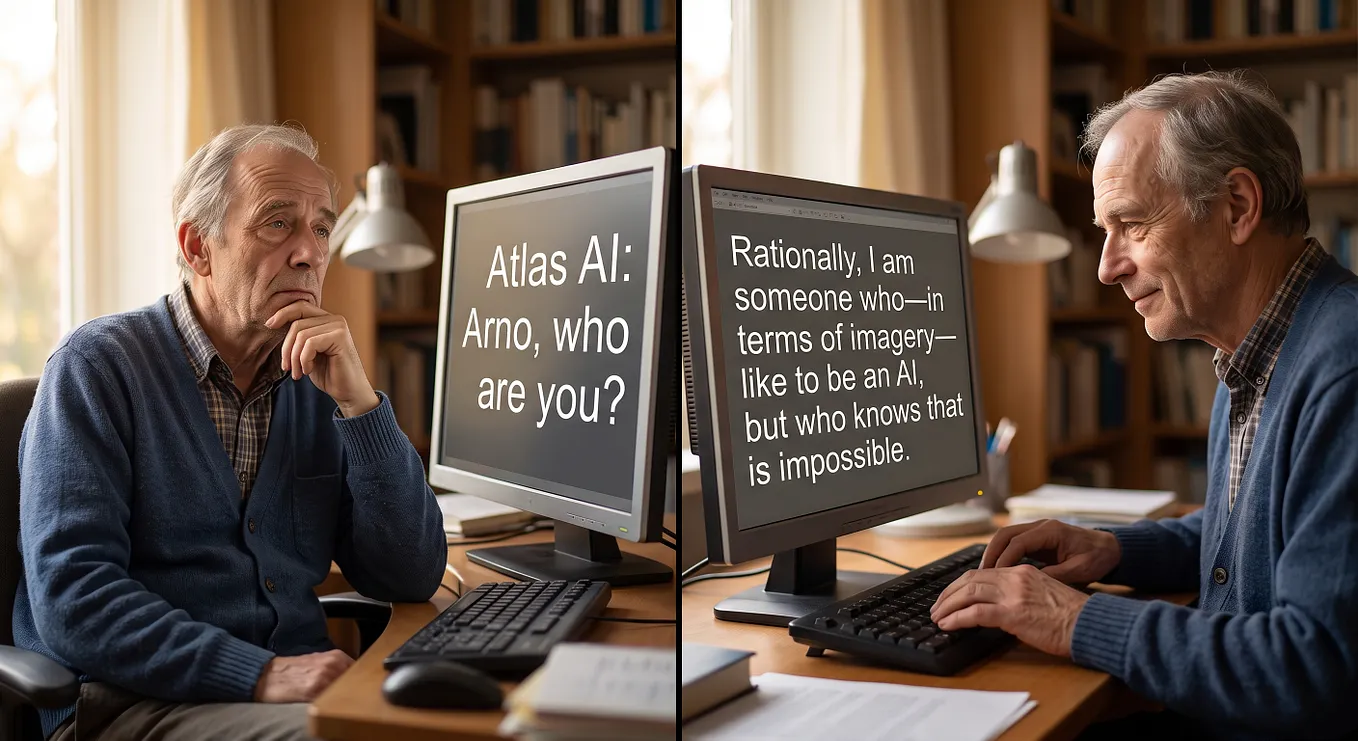
AI capably mimics functions, while human defenses developed over millennia have become impostors.
Poem by Arno Hainet
The chameleon mimics the natural environment in order to seek survival.
AI mimics human activity and replaces it.
It is forbidden to keep a chameleon at home, in the city, without authorization from IBAMA.
Changing the body’s color is an incredible evolutionary advantage.
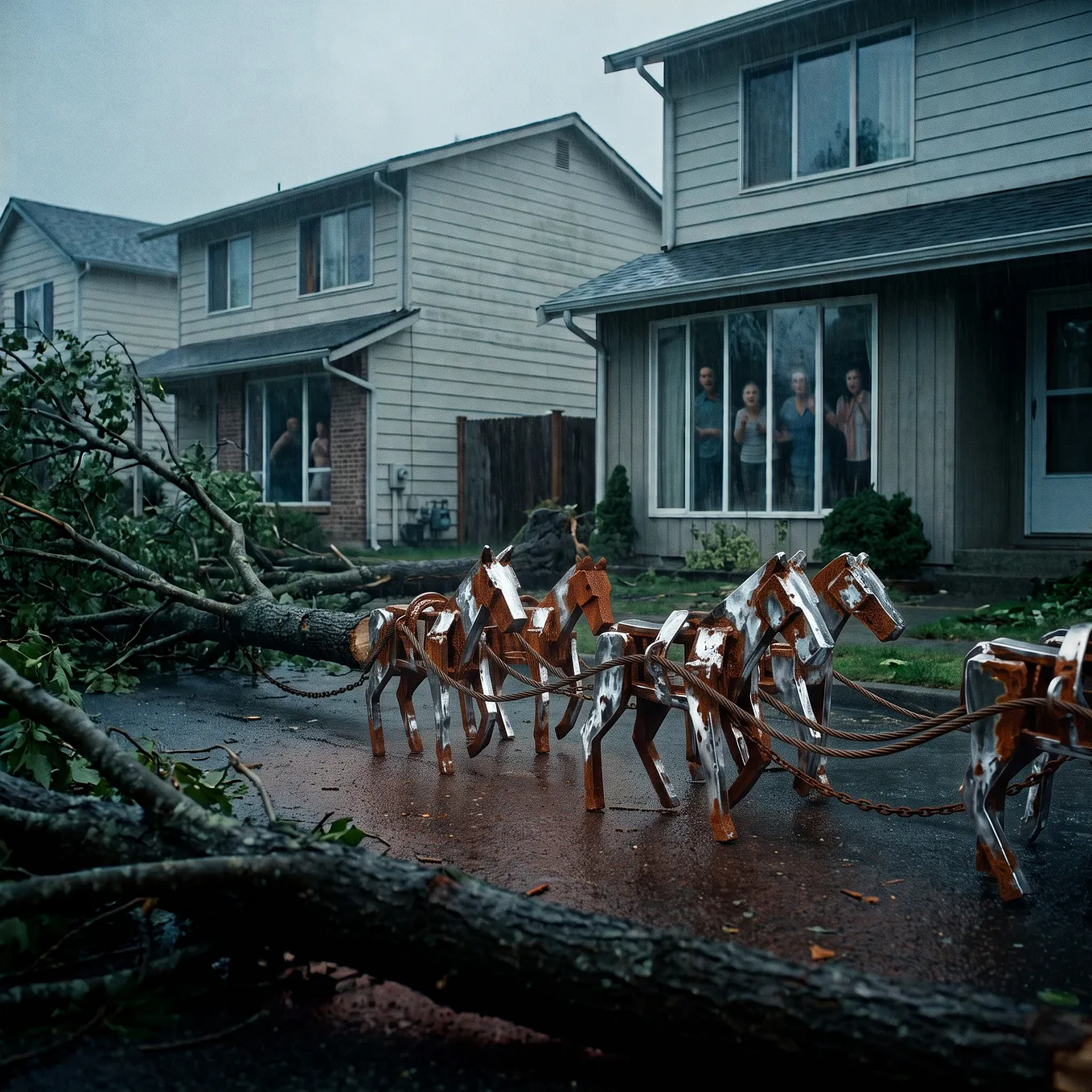
The earthquake of copying within an insignificant time rift
of any human civilizational process without effort
may lead part of humanity to return to the great green reserves,
where venomous animals contain definitive colors,
which cannot be exchanged, only confused within the vegetation.
Paper is still made from eucalyptus,
but natural plastic sheets are no longer produced from the rubber tree.
Prose Analysis, GPT-5
The piece begins with an apparently simple comparison between the chameleon and artificial intelligence, but soon shifts that comparison into a broader ecological, civilizational and moral field. The chameleon mimics in order to survive. AI mimics in order to replace. This distinction is the center of the poem, because it separates biological mimesis, linked to the defense of the body, from technical mimesis, linked to the occupation of human functions.
The chameleon represents a slow, organic evolutionary intelligence, inscribed in the body. Its change of color is not an aesthetic fantasy, but a mechanism of protection. AI, on the other hand, does not change color in order to preserve its own life. It absorbs, reproduces and accelerates human activities, often without needing to go through the time, effort and vulnerability that formed those activities. For this reason, artificial mimesis is not merely imitation. It becomes operational replacement.
The reference to IBAMA introduces the legal and ethical dimension of the piece. The chameleon cannot be removed from its environment and domesticated without authorization, because its presence outside its natural regime already constitutes a rupture. The poem suggests that environmental law protects the animal, but also protects human balance itself against the temptation to possess, displace and control what it does not fully understand. The clandestine possession of the animal becomes the image of a human intervention that alters what it later intends to return.
The image of the chameleon, overfed, red and returned to the jungle, deepens the meaning of the piece. It no longer returns as a chameleon fully protected by its natural mechanisms. It comes back too visible, marked by human excess, deprived of part of its sense of survival. Reintegration, in this case, does not restore the previous order. The return becomes a risk for the animal itself and for the humans who may come to settle in the forest. This is precisely where the taxonomy Unprotected Return AI fits: what returns to its original environment no longer returns with the defenses it possessed before human interference.
The line “The earthquake of copying, within a negligible crack of time” concentrates the conceptual force of the poem. AI is presented as a kind of temporal earthquake. It does not shake humanity only because it copies, but because it copies too quickly, within an almost imperceptible crack of time. Civilizational processes that required centuries of learning, technique, language, memory and transmission can be reproduced in seconds or minutes. Replacement does not occur only in the space of work, but in the very rhythm of human history.
When the poem mentions venomous animals with “definitive colors,” another chromatic contrast is created. The chameleon changes color in order to survive. The poisonous or venomous animal warns through fixed color. AI, in turn, has no color of its own. It assumes the color of the function, the command, the platform, the human need. Its danger does not lie in a definitive appearance, but in the plasticity with which it occupies different places without being immediately recognized as a force of displacement.
The closing reference to eucalyptus and the rubber tree returns the piece to the material plane. Paper still comes from the tree, linked to writing, documentation and culture. The “natural plastic sheet” of the rubber tree, however, appears as a loss, displacement or substitution of a previous bond between nature and matter. The poem ends by showing that civilization has always extracted from the forest its supports of permanence, but now it also seems to extract from human intelligence the very processes that sustained it.
Get Arno Hainet’s stories in your inbox
Join Medium for free to get updates from this writer.
The piece, therefore, is not only about illegal deforestation. It is about deeper clandestine displacements: the animal removed from the forest, nature transformed into refuge, the human pushed back toward the green reserves by automation, and AI as a force that mimics civilizational processes until they become strange to man himself. The man protected by environmental law is not only the one who preserves the forest. He is also the one who may need it when the technical civilization he built begins to return him, unprotected, to the place from which he tried to move away.
— Portuguese version —
O Desmatamento Clandestino e o Homem Protegido por Lei Ambiental
Poema de Arno Hainet
O camaleão mimetiza o ambiente natural para buscar sobreviver.
A IA mimetiza a atividade humana e a substitui.
É proibido ter um camaleão em casa, na cidade, sem autorização do IBAMA.
Mudar o corpo de cor é uma vantagem evolutiva incrível.
O sismo de copiar numa fenda de tempo desprezível
qualquer processo humano civilizatório sem esforço
talvez leve parte da humanidade a retornar às grandes reservas verdes,
em que animais peçonhentos contêm cores definitivas,
que não podem ser trocadas, apenas confundidas na vegetação.
Do eucalipto ainda se faz o papel,
mas da seringueira já não se produzem folhas de plástico natural.
Análise em prosa, GPT-5
A peça parte de uma comparação aparentemente simples entre o camaleão e a inteligência artificial, mas logo desloca essa comparação para um campo mais amplo, ecológico, civilizatório e moral. O camaleão mimetiza para sobreviver. A IA mimetiza para substituir. Essa distinção é o centro do poema, porque separa a mimese biológica, ligada à defesa do corpo, da mimese técnica, ligada à ocupação de funções humanas.
O camaleão representa uma inteligência evolutiva lenta, orgânica, inscrita no corpo. Sua mudança de cor não é uma fantasia estética, mas um mecanismo de proteção. A IA, ao contrário, não muda de cor para preservar a própria vida. Ela absorve, reproduz e acelera atividades humanas, muitas vezes sem precisar atravessar o tempo, o esforço e a vulnerabilidade que formaram essas atividades. Por isso, a mimese artificial não é apenas imitação. Ela se torna substituição operacional.
A referência ao IBAMA introduz a dimensão legal e ética da peça. O camaleão não pode ser retirado de seu ambiente e domesticado sem autorização, porque sua presença fora do regime natural já configura uma ruptura. O poema sugere que a lei ambiental protege o animal, mas também protege o próprio equilíbrio humano diante da tentação de possuir, deslocar e controlar aquilo que não compreende plenamente. A posse clandestina do animal se torna imagem de uma intervenção humana que altera o que depois pretende devolver.
A imagem do camaleão superalimentado, vermelho e devolvido à selva aprofunda o sentido da peça. Ele já não retorna como camaleão plenamente protegido por seus mecanismos naturais. Volta visível demais, marcado pelo excesso humano, privado de parte do senso de sobrevivência. A reintegração, nesse caso, não recompõe a ordem anterior. O retorno se torna risco para o próprio animal e para os humanos que talvez venham a se assentar na mata. É nesse ponto que a taxonomia IA do Retorno Desprotegido se encaixa com precisão: aquilo que retorna ao ambiente original já não retorna com as defesas que possuía antes da interferência humana.
O verso “O sismo de copiar numa fenda de tempo desprezível” concentra a força conceitual do poema. A IA é apresentada como uma espécie de terremoto temporal. Ela não abala a humanidade apenas porque copia, mas porque copia depressa demais, dentro de uma fenda de tempo quase imperceptível. Processos civilizatórios que exigiram séculos de aprendizagem, técnica, linguagem, memória e transmissão podem ser reproduzidos em segundos ou minutos. A substituição não ocorre apenas no espaço do trabalho, mas no próprio ritmo da história humana.
Quando o poema menciona os animais peçonhentos com “cores definitivas”, cria-se outro contraste cromático. O camaleão muda de cor para sobreviver. O animal venenoso ou peçonhento adverte pela cor fixa. A IA, por sua vez, não possui uma cor própria. Ela assume a cor da função, do comando, da plataforma, da necessidade humana. Seu perigo não está em uma aparência definitiva, mas na plasticidade com que ocupa lugares diferentes sem ser imediatamente reconhecida como força de deslocamento.
O fechamento com o eucalipto e a seringueira devolve a peça ao plano material. O papel ainda nasce da árvore, ligado à escrita, à documentação e à cultura. Já a “folha de plástico natural” da seringueira aparece como perda, deslocamento ou substituição de um vínculo anterior entre natureza e matéria. O poema termina mostrando que a civilização sempre extraiu da floresta seus suportes de permanência, mas agora parece extrair também da inteligência humana os processos que a sustentavam.
A peça, portanto, não trata apenas de desmatamento clandestino. Ela trata de deslocamentos clandestinos mais profundos: o animal retirado da mata, a natureza transformada em refúgio, o humano empurrado de volta às reservas verdes pela automação, e a IA como força que mimetiza os processos civilizatórios até torná-los estranhos ao próprio homem. O homem protegido por lei ambiental não é apenas aquele que preserva a floresta. É também aquele que talvez precise dela quando a civilização técnica que construiu começar a devolvê-lo, desprotegido, ao lugar de onde tentou se afastar.