We Learn by Doing

Experience matters. But only if we remain willing to be students.
The more experience I gain, the more comfortable I become admitting how much I still have to learn.
I have spent much of my career doing things before I was entirely certain I knew how to do them: leading people, managing complex operations, making decisions that affected employees and millions of visitors, leaving a career that had defined much of my adult life, starting a business, advising organizations and, more recently, writing and publishing stories like this one.
None of these things began with mastery.
They began with doing.
Looking back, I realize that many of the most important lessons of my career did not come from a classroom, a leadership book or someone telling me what to do. They came from showing up, paying attention, getting things wrong, adjusting and trying again.
We learn by doing.
The Museum Floor Was My Classroom

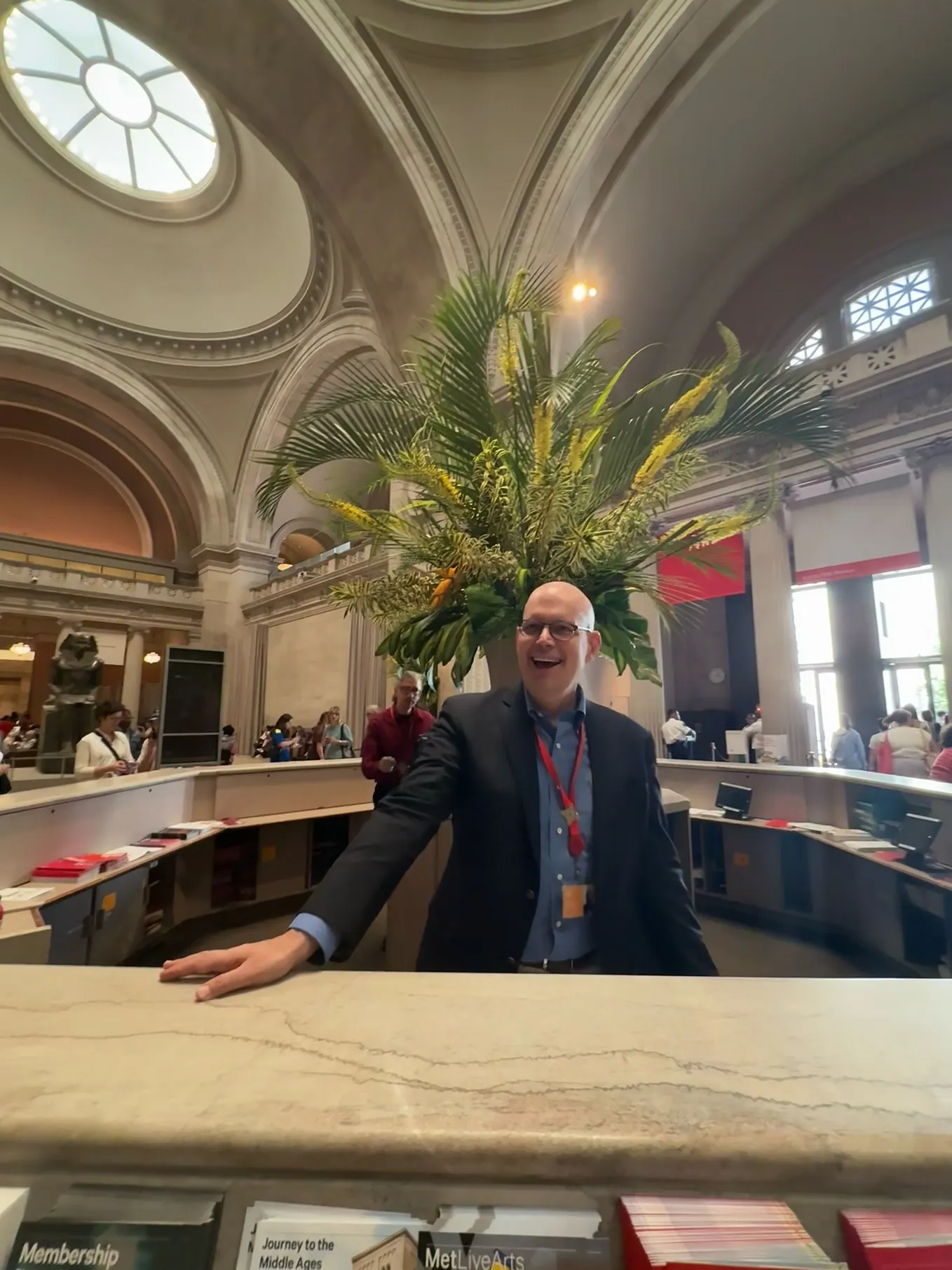
Years ago, I wrote a story called The Power of Hello. At the time, I had already spent decades at The Metropolitan Museum of Art. I had interacted with countless visitors, led large teams and built a career around understanding people and their experiences.
I had experience.
Then I changed where I stood.
For years, much of my work involved visitors who were already well into their museum experience. They had seen the art. They had navigated the building. They were comfortable enough to browse a store, ask questions, talk about what they had seen or decide what they wanted to take home as a memory of their visit.
Then I found myself spending much more time in the Great Hall. Suddenly, I was encountering visitors at the very beginning of their experience.
Some were overwhelmed. Some were confused. Some were simply trying to understand how this enormous institution worked before they could begin enjoying it.
Despite all my years of experience, I realized there was something very basic I had failed to fully appreciate.
Sometimes people simply needed someone to say hello.
They needed to be acknowledged. They needed someone to notice that they looked uncertain, stop what they were doing, listen and help.
It was humbling. I had spent years walking through that same space believing I understood visitors.
Changing where I stood changed what I saw.
That lesson has stayed with me.
Experience Is Not the Same as Learning
There is tremendous value in experience, but experience can also become a trap.
Do something successfully for long enough and it becomes very easy to think: I know this. I have seen this before. I understand how people behave. I know how an organization works. I know what the answer is.
Perhaps.
The more I think about experience, the more I realize that it only teaches us when we remain willing to learn from it.
The museum floor taught me that repeatedly. I learned Visitor Experience by experiencing visitors. I learned leadership by leading people. I learned that something that sounded perfectly logical in a meeting could feel completely different when a visitor or employee actually encountered it.
I also learned an enormous amount from the people who worked with me.
Frontline employees saw things I could not see from an office. They heard questions I did not hear. They experienced frustrations before those frustrations appeared in a report. Often, they understood something about the visitor experience long before the organization around them did.
They were not simply delivering the work.
They were teaching me about it.
My responsibility was to pay attention.
Getting It Wrong Is Part of Learning
Learning by doing does not mean charging ahead convinced that everything will work out. Quite the opposite.
Doing gives us opportunities to discover where we were wrong.
I have made decisions I would make differently today. I have stayed in situations longer than I should have. I have accepted responsibilities because I knew I could carry them without asking whether I should. I have believed that commitment meant continuing to push through circumstances that, in retrospect, were teaching me it was time to change direction.
Those experiences taught me things success never could.
That is one reason I have become increasingly suspicious of the idea that experience automatically produces wisdom.
It does not.
Experience gives us information. What we do with that information determines whether we actually learn anything.
Doing something repeatedly without reflection can simply become repetition. Real learning requires us to do, reflect, adjust and then be willing to do something differently.
Sometimes the most important evidence that we have learned is not that we can explain what happened.
It is that the next time something happens, we make a different choice.
Starting Over Means Becoming a Student Again
Leaving The Met after 28.5 years was one of the biggest acts of starting over in my life.
I knew museums. I knew operations. I knew visitors. I knew teams. I knew leadership.
But I did not know exactly what came next.
Get Will Sullivan’s stories in your inbox
Join Medium for free to get updates from this writer.
That uncertainty turned out to be enormously valuable.
Creating Aspiring Better Human required me to think differently about what I knew. Advising organizations required another adjustment.
As an advisor, my job is not to walk into an organization and announce that decades of experience have given me all the answers.
They have not.
My experience gives me a foundation. It helps me recognize patterns and ask better questions. It gives me instincts about people, operations, organizational structures and visitor behavior.
But every organization is different. Every team is different. Every problem exists within its own circumstances.
The moment I believe something worked somewhere else and therefore must work here is probably the moment I need to stop and listen more carefully.
That may be one of the biggest ways experience has changed me.
I am more confident in what I know, but I am also much more comfortable saying:
I do not know yet.
Let me look. Let me listen. Let me learn.
There is freedom in that. Experience does not have to mean arriving with answers. Sometimes experience simply allows us to ask better questions.
And Now I Write

Writing has become another version of the same lesson.
I am far from the writer I aspire to be, but I write.
More importantly, I publish.
There is something liberating about that. I do not have to wait for someone to declare me a writer. There is no acceptance letter required before I can put my thoughts into the world.
Some stories find hundreds of readers. Others find a handful.
That is fine.
Every time I sit in front of a blank page, organize a thought, struggle with a sentence, delete something, rewrite it and finally press publish, I am doing something I could never learn merely by thinking about becoming a better writer.
I am writing, and writing is teaching me how to write.
It makes me wonder how many things we postpone because we believe competence must come before participation.
How often do we wait until we feel qualified, prepared, confident or ready before allowing ourselves to begin?
Sometimes participation is precisely how competence develops.
Perhaps we do not always need permission to become something.
Sometimes we simply need to start doing it.
The Student Has More Experience

When I wrote The Power of Hello years ago, I was already wrestling with the idea that perhaps we are never truly experts. We are students who must continue to learn and grow.
Years have passed since I wrote those words.
I have left one enormous professional chapter and entered several others. I have succeeded. I have struggled. I have changed my mind. I have learned things about organizations, leadership, other people and myself that I could not have known then.
Yet I keep returning to the same themes.
Perhaps that is because the fundamental lesson has not changed.
The learning never ends.
What changes is the person doing the learning.
The student has more experience now.
He is still a student.
Maybe that is why the word aspiring continues to mean so much to me.
Aspiring leaves room. Room to become better. Room to discover something. Room to admit we were wrong. Room to change our minds. Room to begin again.
At this stage of my life, I do not find that uncertainty threatening.
I find it exciting.
I am still learning how to lead. I am still learning how to advise. I am certainly still learning how to write.
And I hope that never changes.
Maybe every new experience is another kind of hello.
A new organization. A new team. A new challenge. A new idea. A blank page.
We do not have to understand everything before we step forward. We do not have to wait until we feel completely ready.
Sometimes we simply need to show up, pay attention and begin.
We learn by doing.
And perhaps learning begins when we remain willing to say hello to something we do not yet understand.