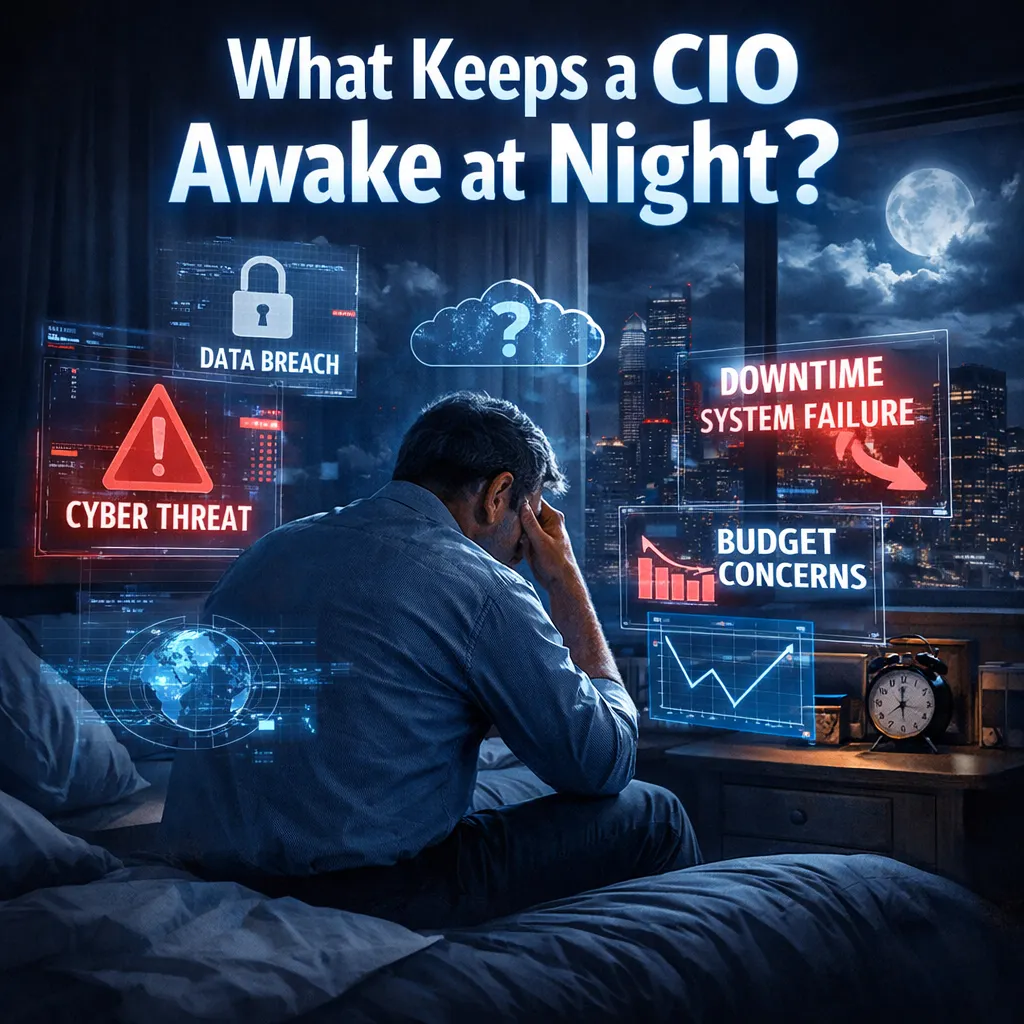
Top 5 IT Risks Most Mid-Size Companies Ignore


Over the years, while working with mid-size organizations across IT operations, cloud, cybersecurity, audits, and governance, I’ve noticed a consistent pattern.
Most business leaders do care about technology.
They invest in systems, cloud platforms, tools, and vendors.What often gets ignored is how risk quietly builds around those systems.
Unlike large enterprises, mid-size companies don’t usually fail due to one dramatic incident. They struggle when multiple small IT risks remain unaddressed, until one day the impact becomes visible — to customers, auditors, or regulators.
Based on my experience, here are five IT risks that mid-size companies commonly underestimate, along with why leadership should pay attention.
1. Treating Cybersecurity as an IT Department Responsibility
In many organizations, cybersecurity is still viewed as a technical problem — something the IT team is expected to “handle.”
Firewalls are deployed.
Antivirus is installed.
Security tools are purchased.
But critical questions are rarely discussed at the leadership level:
- Which business processes are most critical?
- What data would cause real damage if compromised?
- Who decides which risks are acceptable?
When cybersecurity ownership sits only with IT, decisions get made without business context.
Business impact:
Security gaps don’t show up until there’s a breach, downtime, or customer impact — and by then, accountability shifts upward very quickly.
From what I’ve seen, organizations that manage cyber risk well treat it as a business risk with IT involvement, not the other way around.
2. Cloud Adoption Without Clear Governance
Cloud migration is often driven by speed and cost efficiency.
Governance usually comes later — if at all.
In many mid-size environments, I’ve observed:
- Over-permissioned user access
- Poor visibility into where sensitive data resides
- Shared admin accounts
- No clarity on compliance responsibility between the company and the cloud provider
None of these issues feel urgent — until an audit, incident, or data exposure forces attention.
Business impact:
Unexpected compliance gaps, security incidents, and escalating cloud costs that leadership struggles to explain.
Strong organizations don’t slow down cloud adoption — but they define access controls, security responsibilities, and compliance expectations early.
3. Underestimating Third-Party and Vendor Risk
Most mid-size companies rely heavily on external vendors — SaaS platforms, managed service providers, payroll systems, cloud partners, and consultants.
Get Astra Global Consulting’s stories in your inbox
Join Medium for free to get updates from this writer.
What’s often missing is a structured way to assess:
- What data vendors can access
- How they protect it
- What happens if they are breached
I’ve seen situations where internal controls were strong, but a vendor became the weakest link.
Business impact:
When a vendor has a security incident, customers and regulators don’t distinguish between “their systems” and “your systems.”
Mature organizations accept that vendor risk is business risk and apply basic third-party risk checks — even if the vendor is well known.
4. Assuming Backups Equal Business Continuity
Many companies feel confident because backups exist.
But backups alone do not ensure business continuity.
In practice, I’ve seen organizations struggle because:
- Restoration processes were never tested
- Critical applications had unclear recovery priorities
- Decision-makers were unsure who was responsible during an outage
During an incident, confusion costs more than technology failure.
Business impact:
Extended downtime, revenue loss, customer dissatisfaction, and leadership firefighting instead of decision-making.
Organizations that handle this well connect IT disaster recovery with real business scenarios, not just technical recovery metrics.
5. Treating Compliance as a One-Time Activity
Whether it’s ISO certification, SOC reports, or regulatory requirements, compliance is often approached as a project with an end date.
Policies get written.
Audits get passed.
Attention moves elsewhere.
Over time, controls weaken because:
- Processes change
- Systems evolve
- People move on
Business impact:
The next audit becomes painful, risk exposure increases, and leadership confidence drops.
In my experience, organizations that stay ahead treat compliance as part of day-to-day operations, not a yearly event.
Closing Thought
Every organization accepts risk — intentionally or unintentionally.
The real difference between resilient companies and reactive ones is whether:
- Risks are visible
- Decisions are documented
- Ownership is clear
In today’s environment, IT risk is no longer just an operational concern.
It directly impacts growth, trust, and leadership accountability.Ignoring these risks doesn’t make them disappear.
It simply delays when the business has to deal with them — usually under pressure.