Let’s Talk Cupping


Every coffee enthusiast has heard the term “cupping” before whether it’s a “cupping score” on certain beans or roasters and distributors bragging about their team of “cuppers”. So, we’ve heard it. It sounds good. Maybe we have a general picture of what a professional coffee cupper should look like, what they should wear, what facial expression they should have . . . Fine. Let’s keep those thoughts, but what if you wanted to “cup” a cup?
You can, you know. Coffee’s for everyone. Why not cupping?
First come the beans.
Find the beans you’d like to try. And, please, let’s not bother cupping beans past the two week mark. They aren’t fresh, and they aren’t worth their space in your coffee cupboard. So, go for the fresh beans. For single origin, Bacca Bella’s cuppers suggest our Bali Blue Moon, found here: http://baccabellabeans.com/single-origin/bali-blue-moon-organic-grade-1-12oz-30.html But if you fancy a blend, our Bittersweet Pesante is a winner, found here: http://baccabellabeans.com/bittersweet-pesante.html Both will give you the complexity you’re looking for in a first cupping.
Got your beans? Now, for some prep. You’ve only got two minutes to get that coffee steeping after it’s ground so better be prepared.
We’re not going to pull shots or get fancy. Cuppers do it the old fashion way. Those grinds are going straight in the cup so get your hot water ready. The water is best at 202F, but let’s just call that 200F, shall we?
Get BaccaBella’s stories in your inbox
Join Medium for free to get updates from this writer.
While your water is boiling grab your cups, depending on how many beans you’re going to try at once. Measure out your whole beans (our cuppers use a ratio of 7oz of water to 13 grams of coffee, but adjust to your taste). Put those whole beans straight in the cup.
Don’t forget your paper and pencil. Cup it like a pro! You’re going to want notes, aren’t you?
Now grind away! Make sure you pat out the grinder between each batch of beans so that you don’t mix the beans’ attributes. Dump those grinds right back into the cups and line them up. Work quickly, but give yourself the time to smell the aromatics of each cup of grounds and jot down a couple notes.
Pour your water right in with the grounds and start you’re clock. It’s going to take about 4 minutes for it to be ready. The grounds should float to the top as time goes on, forming a thick “crust”. It might look less appetizing, but “breaking the crust” is one of the joys of cupping. Get down low when the time’s up; you’ll want your nose and face right in it to take full advantage of the aromas that are going to waft toward you when you break through. Sink your spoon into the crust and pull back. Feel the aromas!
You’ve “broken the crust”.
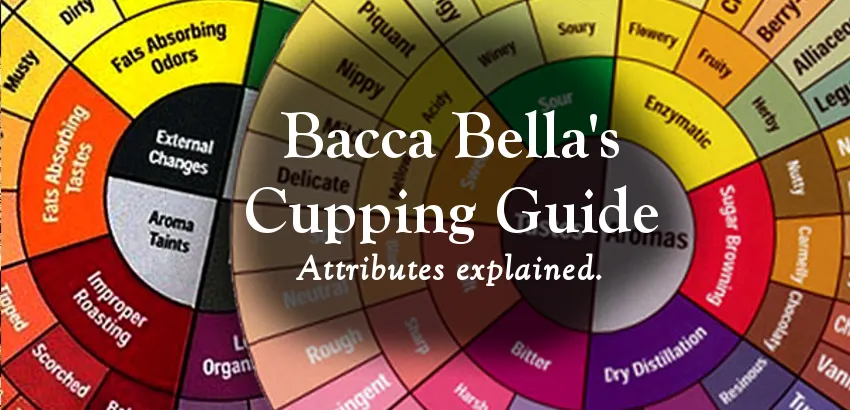
Scoop out the remaining grounds, and get ready to sample. Mull the coffee over your tongue. Let those aromas seep out. Sense the body, the complexity, the sweetness. Is there a hint of anise? Or jasmine pearls? Let yourself feel the coffee. Mark down your notes, fill your “cupping chart” (check out Bacca Bella’s here: http://baccabellabeans.com/ves-blog/our-guide-to-coffee-attributes.html).
If you have multiple cups, do the same for each. Then compare your notes and scoring.
Well, now… Do we spot a cupper?
Go ahead, brag. We won’t tell.