The Secret Sauce to Successful Agile Planning

I have worked with various teams and business partners over the past few years who have been striving to be more ‘agile’ and adapt to the changing landscape and operating models of the developer teams with whom they interface.
An agile transformation is an arduous task for any group to undertake and requires a significant time commitment. It is not just a case of paying lip service to the various recommended ceremonies and roles, but rather there is often extensive coaching and support required to ensure that an agile transformation is successful.

Agility represents many things; collaboration and regular communication, faster delivery, and faster feedback, all resulting in the delivery of a quality product.
To suitably set teams up to reap these benefits, there must be alignment and openness.
One established approach for helping teams off the starting blocks is some variation of a group planning exercise; referred to as one of the following terms,
- Big Room Planning,
- Quarterly Planning,
- Program Increment (PI) planning…
Regardless of the label, they all involve:
Planning (sometimes at scale), every 90 days, usually lasting 2–3 days in duration, involving all stakeholders, subject matter experts, product owners and development teams who are working together to deliver a product or share a common vision.
Based on my observations, here are 10 tips for making your planning event a success. (If you are new to the concept of agile planning, take a few minutes to read this first.)
1. Business Mission: The raison d’être
This is a go/no go objective that must be satisfied in advance of the event. All attendees must understand the business mission. The mission should be compiled by the business or customer, detailing the key objectives for the product or service, with a medium to long term view.
The mission is one of the first items on the agenda to kick off the planning event. It should be a rallying call to action, which articulates why everyone has been assembled to collectively plan together.
2. Architecture roadmap
Similar to the business mission, it is key that all attendees are familiar with the architectural vision and roadmap. This has a bearing on the technical decisions that the development teams will make throughout the planning. The architecture representatives should also be available for the duration of the planning to assist the teams with any emergent questions or concerns.
3. Buy-in
This is pretty obvious, but it can be highly detrimental if buy-in is lacking. Planning events are costly, time-consuming and quite frankly, intense! Everyone needs to be bought in to ensure effectiveness.
The root cause of apprehension or a (perceived) lack of buy-in can often be attributed to a lack of understanding. In my experience, participants and attendees are significantly more likely to commit their team to a planning event, if they have been effectively communicated to in advance, specifically regarding how the decision for planning in this way has come about, what the benefits are, and what will be expected of them. This goes a long way to assuage any fears and generate buy-in.
4. Attendees: the right people
Not just any people, but the right people. Try to keep the participants as lean as possible in the first instance.
Without the right people, it can be difficult to come up with a comprehensive 90-day plan. The right people are the business, consumers/users, architecture representation, subject matter experts, product owners, scrum masters and developers. The right people will be tasked with translating the business mission into deliverables, and user stories.
Get Berni Greer’s stories in your inbox
Join Medium for free to get updates from this writer.
In order to create a safe environment for the attendees to complete the task at hand, it is necessary to minimise the number of attendees who are not able to actively contribute. Observers can be distracting and needlessly derail progress. To mitigate this, clearly define the role of the observer and communicate this upfront. An observer should not interrupt the flow or make contributions unless they are called upon.
5. Location, location, location!
Ideally, the planning event is held away from the daily grind, either off-site or another floor. This helps to minimize distractions, participants are less likely to be pulled into other meetings if they can remove themselves entirely.
A large open space is required to congregate for the mission and architectural briefing at the beginning of day one. For the actual planning, there needs to be sufficient space for each team to have a team area, allowing space for people to move around, and to prevent the noise levels between teams being disruptive. If possible, it is beneficial to also have access to smaller rooms for break out discussions.
There should be lots of available wall space for hanging posters and flip charts. Along with the sharpies and post-its, they are your critical planning instruments.
6. Preparation
The old adage — ‘fail to prepare, prepare to fail’, rings true. It can be difficult for teams and individuals to free up their calendars for 2–3 days out of the office for planning. Do as much preparation upfront as possible to assist with making it a success.
Have some assigned ‘organisers’ to take the lead on the preparation.
- Prep the business so that they can articulate the vision
- Prep the Product Owners so they understand how to break down the vision into epics/objectives for the development teams to digest
- Prep the participants regarding what to expect
- Prep the room so that you are ready for when people arrive
- Prep the required resources so that everything is at hand; sharpies, post its, flip charts, ELMO (Enough, let’s move on!) cards.
- Prep the catering order (move to come at #7!)
- Prep any slides/material, including a comprehensive agenda
7. Sustenance
Food aids productivity. Snacks, both healthy and sugar-laden are essential to maintaining the concentration and focus of your participants.
To prevent disruption with people coming and going, to aid collaboration and the building of a social network, provide breakfast, lunch and snacks. Make sure to satisfy all the dietary requirements of your group!
8. Commitment to deliver on the plan
As previously mentioned, there is a significant investment required when planning, both with regards to time and the financial implications of taking everyone away from their day job. The aim of the planning session is not to come up with an inflexible 90-day plan for delivery.
Rather, the aim is to come up with a plan for 90 days, that is robost, realistic and flexible! Be cognizant of the fact that there may be changing priorities that a team will need to flex to accommodate (see Agile Manifesto, third value; We value responding to change over following a plan). But ultimately, be able to commit to delivering on the plan that has been derived from the event. This is not disposable planning.

9. Facilitation
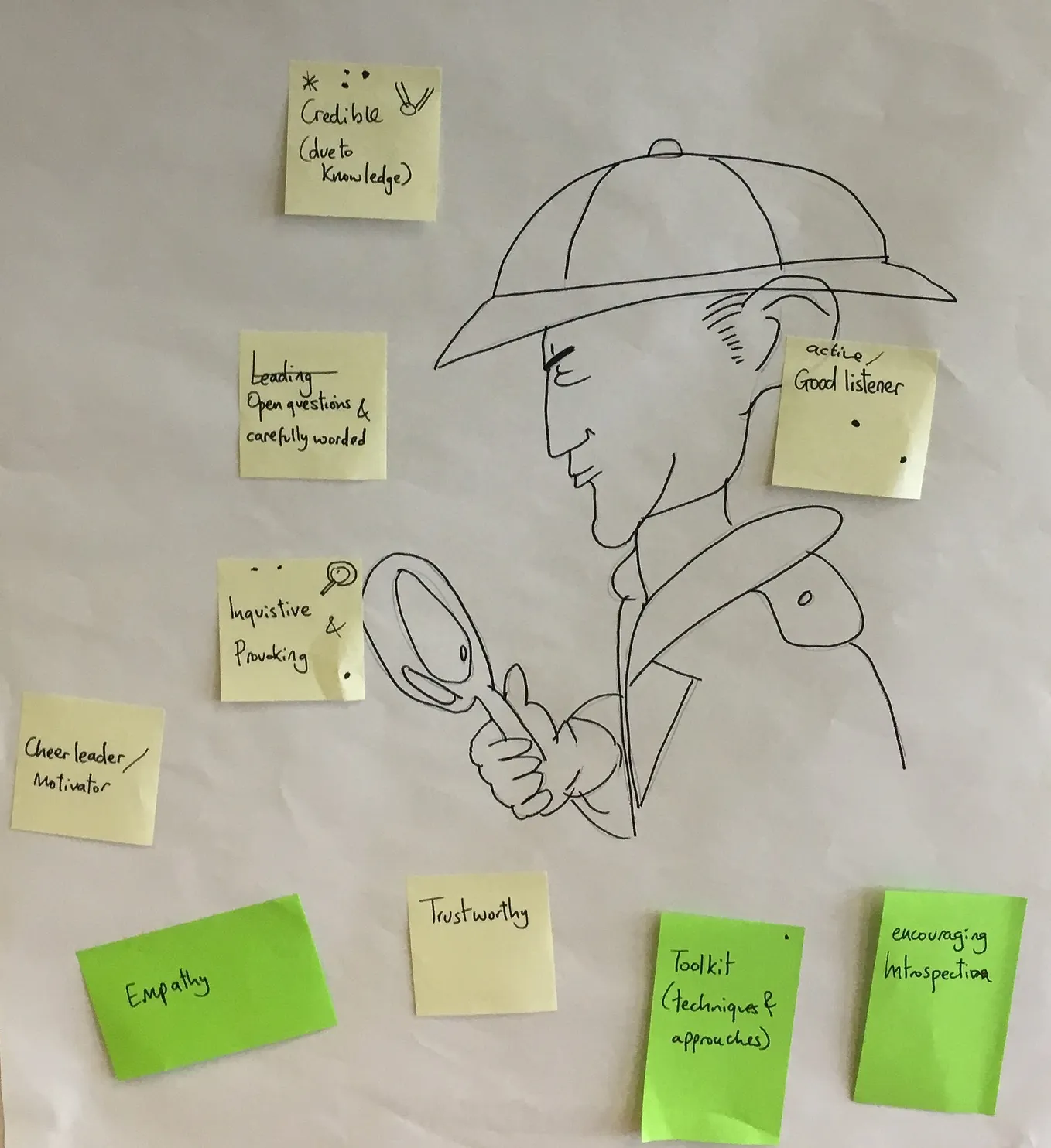
Use a facilitator who can help prepare the group for the event. They can assist with setting up the room, but most importantly ensure that the event runs smoothly, assist with timekeeping, and shepherding the groups in each of the tasks that they are presented with.
10. Practice makes perfect
The first planning event may feel clunky and uncomfortable, despite the best endeavours of the organising team. Planning is hard, a testament to the fact that there are 10 steps required to help ensure it is a success. Recognise this, call it out and appreciate that planning will get easier. It is a technique that teams will need to mature into!