A Corporate Gift Doesn’t Need to Look Corporate
Perhaps the best employee and client gifts are the ones that stop feeling like corporate merchandise altogether.

There is something strange about the way we approach gifting at work.
When we buy a gift for someone we know personally, we think about the person.
When companies buy gifts for people, we often begin with the product.
What fits the budget?
Can we put a logo on it?
Can someone produce 200 pieces?
Can they deliver before Diwali?
These are necessary questions. But perhaps they shouldn’t be the first ones.
The first question could simply be:
Would the person receiving this actually want it?
Companies don’t receive gifts. People do.
A company may be paying for 300 Diwali gifts, but there are still 300 individual people opening those boxes.
Each has a different home, personality and taste.
Of course, it isn’t practical to choose 300 completely different gifts.
But scale doesn’t have to remove thoughtfulness.
Sometimes a small shift is enough.
Choose something useful.
Make the packaging beautiful without making it excessive.
Tell the recipient where the product came from.
Personalise it when possible.
Keep company branding subtle enough that the gift can continue to belong to the recipient after the occasion is over.
Branding and personalisation aren’t the same thing
This distinction interests me.
A logo says:
This came from us.
A person’s name says:
This was made for you.
Neither is inherently better. Corporate branding has a purpose.
But when the objective is appreciation, the second message can sometimes be more powerful.
A gift doesn’t stop representing the company simply because the company’s logo isn’t the biggest thing on it.
In fact, the care with which something is selected may communicate far more about a company’s culture than its logo ever could.
Handmade brings another dimension
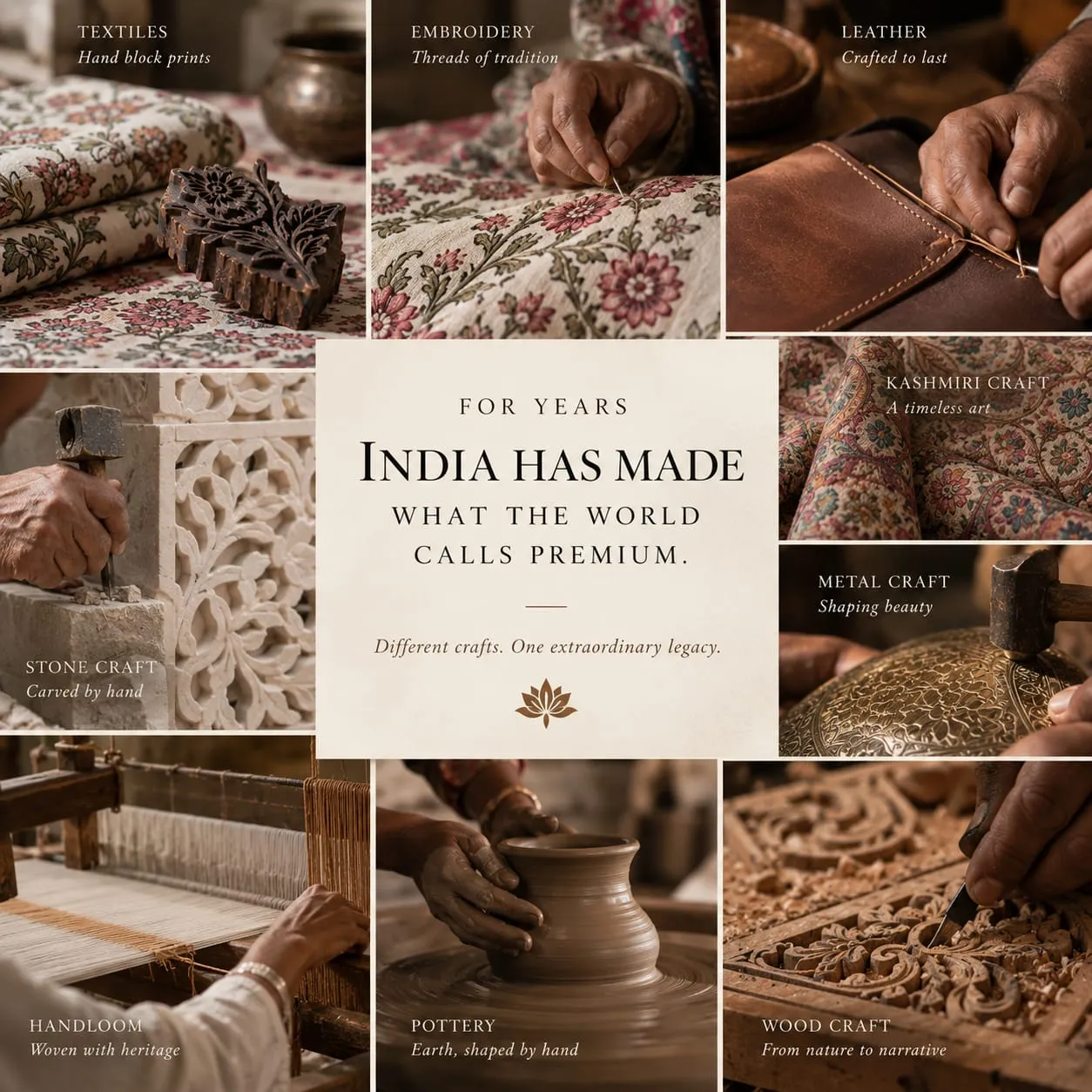
My perspective on this has also been shaped by working with handcrafted textiles.
Get Bichhavans’s stories in your inbox
Join Medium for free to get updates from this writer.
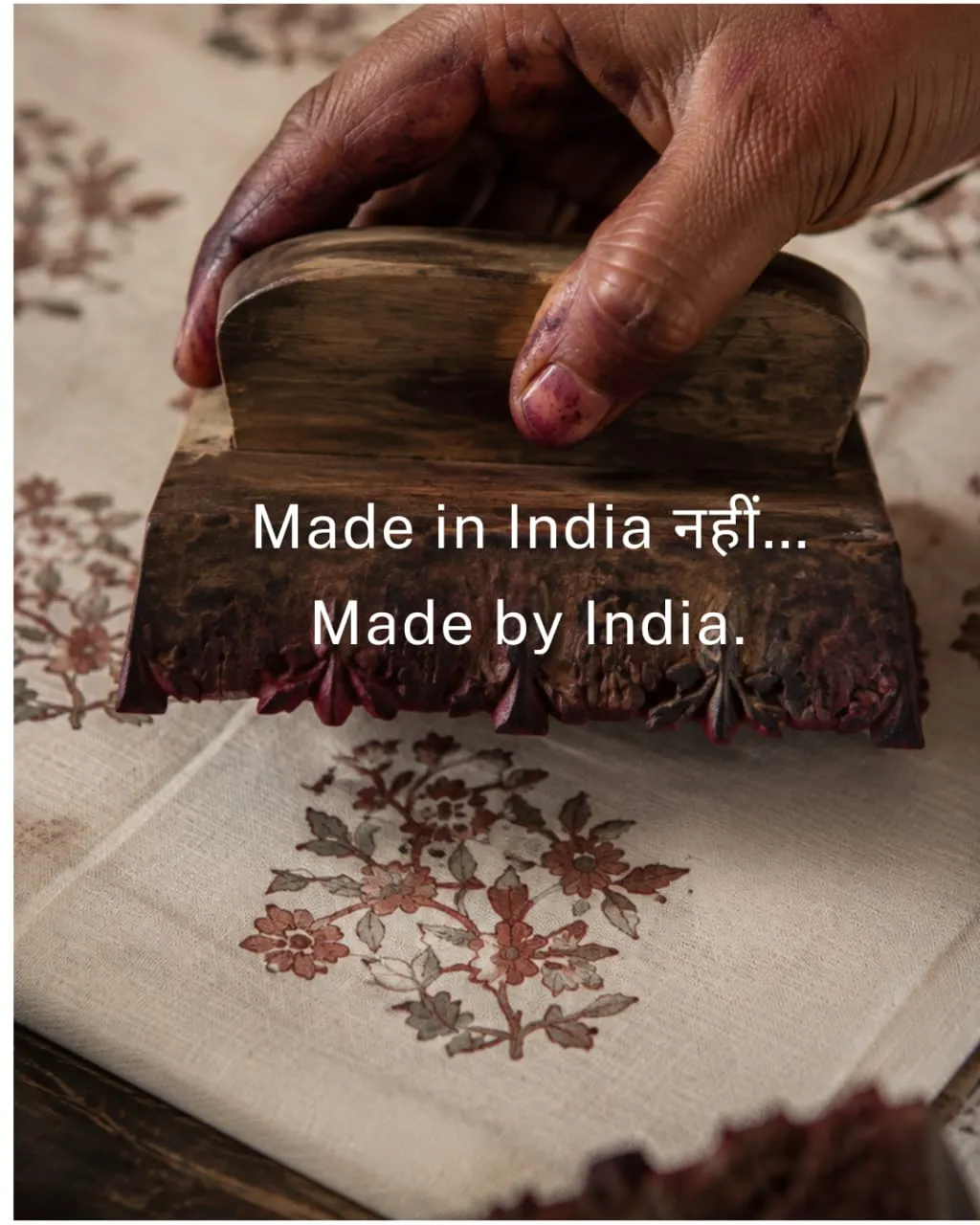
When you see hand-block printing closely, you realise how different its journey is from industrial production.
A block is positioned by hand.
Colour is applied.
The impression is made.
The process repeats across the fabric.
Then come stitching, finishing, checking, personalising and packing.
By the time the recipient sees the final product, most of that journey is invisible.
But it exists.
And perhaps telling that story is part of the gift.
It reminds us that gifting can connect people who may never meet — the organisation giving the gift, the person receiving it and the artisan whose hands helped create it.
Useful doesn’t mean ordinary
We sometimes equate gifting with novelty.
The gift must surprise.
The box must be bigger.
There must be more things inside.
But I’m increasingly drawn to the opposite idea.
Give fewer things.
Choose them better.
Give something someone can actually use.
An everyday object made beautifully can remain with someone much longer than a complicated hamper assembled only to create an impressive unboxing moment.
There is something meaningful about a gift becoming part of someone’s ordinary life.
Perhaps we should start with a different question
Festive gifting will always involve budgets, timelines, quantities and logistics.
It has to.
But before opening another catalogue, perhaps companies could ask:
What do we want this gift to say?
Thank you?
We value you?
We’re celebrating together?
We’re glad you’re part of this journey?
Once that answer is clear, choosing the product becomes easier.
And perhaps the final gift starts looking less like something ordered by a corporation and more like something chosen by a person.
Because corporate gifting doesn’t have to stop being human simply because it happens at scale.
Sometimes the most memorable corporate gift is the one that doesn’t look corporate at all.