Lunch with Mildred Fenton and Big Ralph was pretty interesting. She must have had four pounds of hamburger to mold into patties, and an enormous cast-iron skillet to grill them in, plus a deep-fry basket arrangement for French fries made from fresh potatoes, which it turned out Ralph had already peeled. He sat patiently slicing them into strips with his big paws, deeply focused on the job at hand. Mildred marshaled the meal with the quick, unwasted motions of a skilled short-order cook. With my approval, she filled one of my son’s bottles with cold Coke to hold him until the fries were ready.
“I was weaned on Coke,” I said. “I grew up in the South.”
“I wondered. There’s an accent still. Some parents are pretty uptight about things like a Coke for their children.”
“That would be the parent in Tacoma,” I said. “Ralph, you’re pretty handy with that Chef’s knife.”
“French fries,” he said. “Love ‘em!” He didn’t look up from his work.
“Fwenfi?” My son said. “Fwenfi, Da?”
Ralph looked up then, with a grin on his weathered old features. “You betchum, Red Ryder. French fries! Love ‘em.”
“Love ‘em,” my son imitated, like a parrot.
Once we were settled in to eat, my son marched around the small kitchen table and crawled up on Ralph’s lap without so much as a by-your-leave. One of those big mitts came up and petted his hair gently. My son took one of Ralph’s fries and began to gnaw it. Ralph beamed.
“Thank you for letting him do that,” Mildred Fenton said. “Ralph is just a big kid himself. I know he misses having kids around.”
“Did he have a family?”
“Nobody knows, and he can’t really answer. He’s been in soldier’s homes since Armistice Day.”
More than sixty years. “Good god,” I said.
“There are a lot of sad stories at the Home,” she said. “We do what we can for them. Your son is really good for him.”
When we had eaten all the hamburgers and fries we could hold, Mildred brought out the ice cream, Neapolitan, to the mutual joy of Ralph and my boy. Years seemed to drop away from the old man’s face as they tucked into their bowls side-by-side, my son still perched on his lap.
When I mentioned that I should let the dogs out for a constitutional, Mildred said, “Go ahead, your son is perfectly safe there,” and I believed her. Then she produced four left-over patties. “For your pooches. I love dogs.”
“I’m surprised you don’t have one up here, it’s so isolated.”
Her face lost expression. “I did.” Then she seemed to shake herself. “In fact I’ve got a Husky pup at home now. But I don’t bring him up here. Don’t let your dogs wander too far.”
I thought about that while Paka and Harry made short work of the hamburger, nuzzled my hands to make sure that’s all there was and then trotted off to do their business, sniffing the news off the underbrush. Harry was about fifty yards away when he almost buried his nose in the mud and growled. I went over there quickly and spotted paw prints in the mud. If she had no dogs here, it had to be those coyotes she was worried about. Harry didn’t like coyotes.
I kenneled the dogs and went back inside. Ralph and my son had moved to the snug front parlor, crowded with old wicker vacation furniture, and Ralph was trying to show my son how to play checkers. My son thought they made fine wheels, and rolled a couple of pieces across the table. Ralph caught them out of the air as they fell. He looked at them like he’d never seen them before. Then his brow lightened and he rolled them back. My son caught one and missed the other, and clapped his hands in glee.
“Looks like Ralph’s the one getting the lesson,” Mildred said softly. “Look at him! This is so good for him.”
They rolled checkers back and forth until half of them were on the floor on my son’s side of the table. Then he yawned broadly, crawled down from his chair and went to Ralph and held his arms up. Ralph picked him up and cradled him tenderly. He was asleep in minutes, head on Ralph’s broad flannel shoulder.
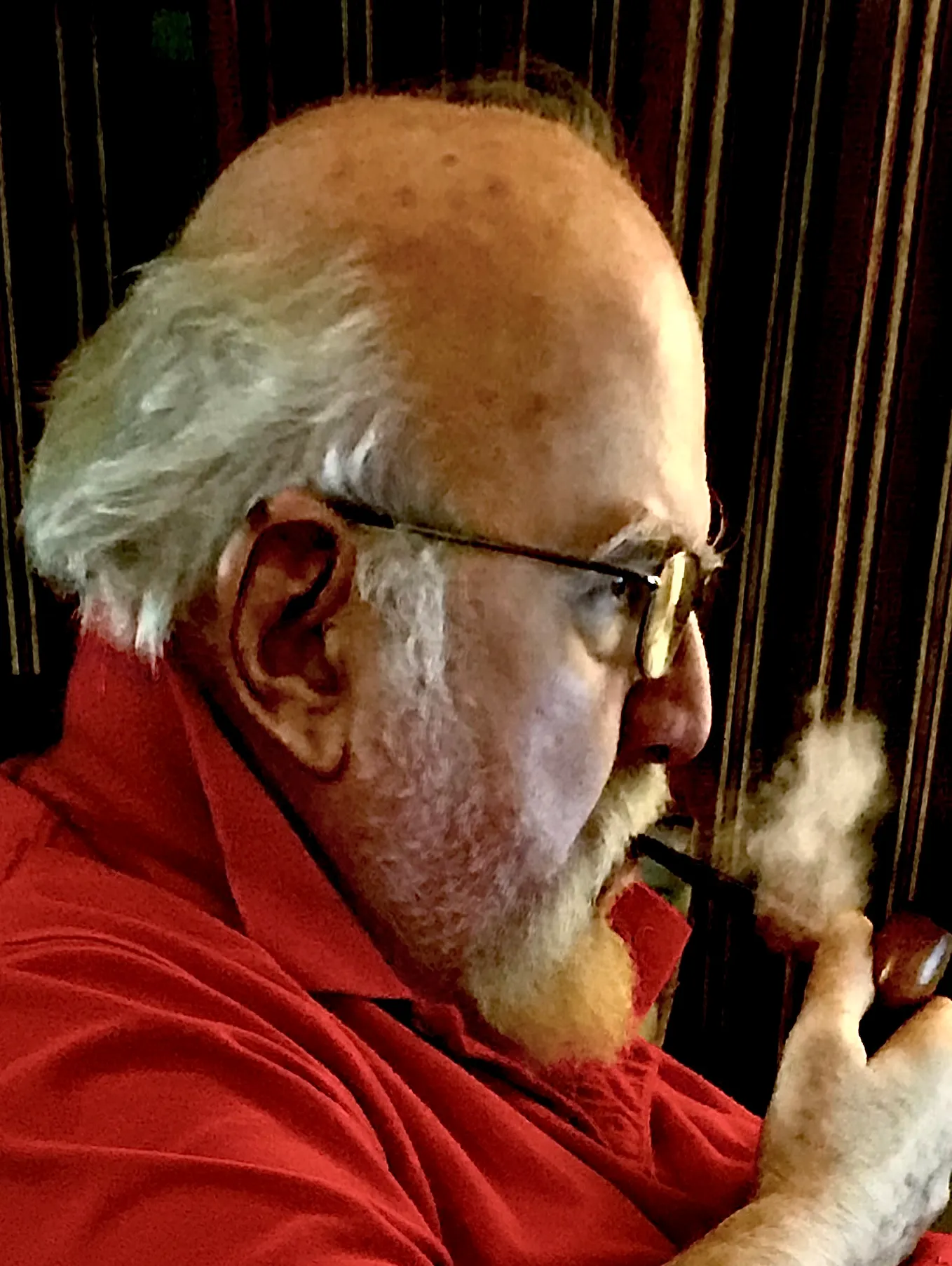
“You think it’s all right to go out on the porch and leave them there?” I said. “I’m kind of craving my pipe after that good meal.”
“They’ll be perfectly fine,” she said. “I’ll bring us out some coffee and join you.”
I was firing up my pipe when the monsoon came back, drawing a cloud like falling smoke across the meadow. The sound on the shake roof was far quieter than the tin roof of my vacation cabin.
“I love the smell of a pipe,” Mildred said. “My dad smoked a pipe. Not too many younger men do anymore. It’s a shame.”
I thought that if I wasn’t married, I might consider proposing on the spot. These Carbon Gorge people were really appealing to me — including poor Ralph. I puffed for a while and we drank coffee and watched the rain.
“I have a couple of questions,” I said finally. “If you don’t mind my asking.”
“About the coal towns?”
“Actually — no. Bob Petoskey said you might be able to tell me something about Mr. Tuchi’s salmon-eating wild men that he used to see out in the brush.”
“Oh.” She regarded me levelly over the brim of her cup. “Is this for your story about the Gorge?”
“I don’t think so. It wouldn’t fit, and I’ve already got a ton of stuff that’s really interesting. I guess I’m mostly curious.”
“I’m curious why Bob told you to ask me.” I had the impression that she was not pleased.
I shrugged. “Fairy tales from the Old World transplanted to the New.”
“Is that what Bob said?”
“More or less.”
She said nothing for a discernible time, gazing off across the rain. When she spoke again, she surprised me.
“Are you one of these anti-gun nuts like so many in the media are these days?”
“Absolutely not. I know what you mean. I never mentioned that I’m a hunter on some of the newspapers I worked for. Just to avoid the hassle.”
She nodded. “I couldn’t help notice you were surprised I brought a rifle along today, and that you kept looking at it. That’s why I told you about the coyotes.”
My turn to nod; I puffed my pipe in silence. She was leading up to something, and I wanted her to find her own way to it. The rain beat down and my stomach was uncomfortably full — I had eaten too much.
“Do you know much about firearms?”
“A little,” I said. “In fact I’m working on a freelance story for one of the gun magazines about custom hand-loads.”
Get Bill Burkett’s stories in your inbox
Join Medium for free to get updates from this writer.
“My coyote rifle is actually a Remington bolt-action .222.”
“Not the .348,” I said.
“You do know guns.”
“Marauding bears up here too?”
She gave me a look, and sighed. “There’s one word you will never hear cross the lips of anyone who lives in the Gorge. The folks up here absolutely hate being laughed at.”
I waited.
“That word is Sasquatch,” she said, watching for my reaction.
“Okay,” I said neutrally. “Also known as Bigfoot, right?”
“We call ’em skooks up here in the Gorge. Know anything about ‘em?”
“Big and hairy and run through the woods,” I said. “Plus the big feet of course. I wear a size 14 boot. I had a boss once who listened to that description of a Bigfoot and said hell, I hired one.”
She gave a short laugh. “You see? It’s always a joke. We don’t like getting laughed at and nobody from outside knows what we’re talking about if we say skook.” She stood and put her coffee cup down. “I want to show you something. Grab you cap.”
She went back inside and came out with a dark-green hooded rain slicker — and the .348.
“Are they okay in there?”
“Both sound asleep,” she said. “Ralph is snoring. We won’t be long.”
She led me around the cabin in the downpour. Rain ran down my neck under my jacket and drained off my cap brim. Her hooded form blended with the foliage as she moved ahead of me past the chicken coop and onto a path into the woods. We didn’t go far before I could hear the river above the sound of rain. It sounded like a rapids. She stopped, turned and leaned close, holding her hood off her face.
“Right here is where they came onto the trail last winter when it snowed,” she said. “I was out looking for coyotes.”
“What came onto the trail?”
“Naked footprints. In the snow! But not huge footprints — they were so small I thought for a minute some poor child was running barefoot in the woods. But they were actually about my size foot. They went this way.”
She led down the path until we came to the lip of the cliff. I had been right, the rock formations down there narrowed into a white-water chute. She turned back to me.
“You can’t see it now — but the ground and the snow were ripped up right here on the edge, where it went over. It landed on the rocks down there. Something must have frightened it — maybe a pack of wild dogs.”
“Coyotes, now wild dogs. There are wild-dog packs up here?”
“Oh, yeah. Pets left to run loose that form up and breed. They sound like jackals on a kill — not like coyotes at all. They’re not afraid of people — they’re not afraid of anything.”
“They chased a child over the ledge?”
“Not a child. An immature skook. That’s why the foot prints in the snow were so small. It died on the rocks down there.” She pointed.
“Why didn’t this make the news? All I’ve read says they’ve never seen a young Bigfoot, which adds to the idea that it’s all a hoax.”
“I saw a young one. A young one with its head broken open on those rocks, dead. It was one of the saddest things I’ve ever seen. I could see it clear as day. I’ve got good eyes.”
“What did you do?”
“I went back to the cabin for my camera. And of course I’d left it at home that day. By the time I could get there and back, with all the snow and ice on the roads…”
“It wasn’t there anymore,” I guessed.
“Right. I stayed down here that night, I don’t really know why, and that was when I heard the most god-awful screeching — like something in terrible pain. No, like grief. Like something in awful grief.”
She was speaking so matter-of-factly that I had to give myself an internal shake. Was this the story Bob Petoskey wanted her to tell me? I asked her that.
“Let’s start back,” she said. The rain hadn’t let up a bit and it was damn chilly. “Bob of course thought I imagined the whole thing. Maybe I did see a child without many clothes down there — kids from that state school are escaping all the time, some of those teenagers are pretty big, and more than one of them has come to harm.”
“Barefooted in the snow?”
“A lot of those poor kids are as damaged mentally as Ralph. They night not feel the cold like we do.”
“So if that’s what you saw, where did the body go?”
“That’s the thing, see — none of the rescue squads were called out. And it would have taken a major effort to get down there, lots of manpower.”
“But something took it away.” We were almost back to the cabin.
“The skooks came and got their child. I’m sure of that. I’m pretty sure wild dogs chased it to its death. I know they blamed dogs.”
I felt a creeping little chill that had nothing to do with the temperature. “Who blamed dogs?”
“They did. Mr. Tuchi’s wild men, skooks, take your pick. After all that screeching, when I let King out to do his business that night, I heard this horrendous slam against the side of the house. King never came back. When it was daylight I found fur and blood frozen on the wall. But King was gone.”
“King?”
“My first Husky. I named him for that old TV series.” Her face was grim as death.
“Never saw him again?”
“Oh, yeah. What was left of him.” Her voice could have cut glass. “They dumped him down there where the baby was found. Like they were sending a message about dogs.”
“God in Heaven,” I said.
“His body was down there until scavengers dragged off the bits.”