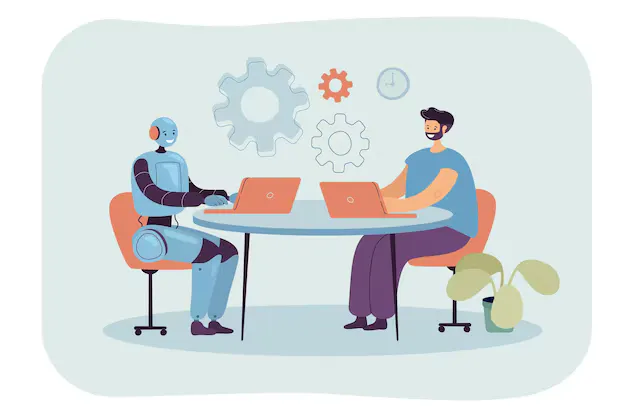
Adopting AI Hiring Software: What works & what doesn’t


The AI software method of hiring has gone beyond the stage of being a mere hype and is now a reality. Most frequently, organizations use AI for initial screening of resumes, job fit prediction, as well as communication tone evaluation.
However, the AI solution is not a magic one, AI cannot solve all problems but only simplifies the recruiting process. Nevertheless, if someone uses it blindly, he may suffer setbacks. So, let’s see which things really work and which don’t when AI hiring software is used in recruiting.
What works: smart automation, not full replacement
Artificial intelligence is able to achieve a great success when it selectively automates the part of the work which is monotonous and routine without which people may monotonously and monotonously have to perform.
Part of the work in a company, consisting in the parsing of resumes, ranking of candidates, and arranging of interviews, can be a perfect example of this. Various manual processing procedures may even take days, but tools such as HireVue, Fetcher, or Bizhire can do them in a matter of minutes. As a result, recruiters shift their attention to performing tasks of more value such as the evaluation of cultural fit or building the candidate engagement.
Nevertheless, accomplishment depends on the way you utilize it. Those businesses whose data models are trained on current and unbiased data usually demonstrate hiring accuracy at a higher rate.
According to a Gartner study conducted, companies that use data-driven models have reduced early turnover by almost 18%. The main takeaway is that while robots facilitate the job, people should have the last say in decision-making.
What doesn’t work: excessive reliance on algorithms
One of the major AI hiring issues is the lack of human control over the decisions. AI bases its decisions on historical data, and such data often includes biased information. A prime example of biased AI recruiting is the case of the Amazon’s flawed AI recruiting system, which apparently downgraded resumes that had words related to women’s colleges. The project was definitely abandoned after that.
Another mistake is not having humans double-check the work. There are recruiters who consider the algorithmic results as the ultimate truth and think that a candidate with a high score is the best one. It is a dangerous approach.
Get BizHire’s stories in your inbox
Join Medium for free to get updates from this writer.
AI models are not designed to psychologically analyze people. A candidate who might do wrong in achieving keywords could turn out to be highly successful in the job.
Such results can be prevented by companies through the implementation of hybrid hiring models where AI is used for large-scale tasks and human judgment is applied by recruiters.
What works: continuous feedback and transparency
When departments communicate openly about the way AI hiring software arrives at hiring decisions, trust is established not only with candidates but also with hiring managers. Moreover, having clear feedback channels enables the system to be aware of its errors and learn from them.
For example, if the tool incorrectly excludes qualified candidates, recruiters can indicate such instances to get assistance in retraining the system.
Being transparent also helps in maintaining your brand’s reputation. Today’s candidates are concerned with the fairness of the evaluation process. Informing them that AI is only a tool that supports hiring decisions and not the one making them will definitely increase the trust.
What doesn’t work: one-size-fits-all tools
Each business has its own unique way of hiring. For example, a startup may require a quick screening process for roles that are high in volume, whereas a large company may focus more on cultural fit and retention. Using the same hiring platforms for small businesses and large corporations can be ineffective.
It is wise to first figure out what your actual needs are before deciding on the way to use AI hiring software. In case the objective is speed, then it is better to have a platform that can easily schedule and shortlist candidates. If accuracy is what you are after, then you should be looking for tools with predictive analytics and bias control features.
Conclusion
The implementation of AI recruiting software should not be seen as a move to replace human recruiters, rather, it is to enhance their productivity. Finding the balance is the key to success.
AI can be allowed to do the monotonous work while people use their judgment, empathy, and intuition. Those companies that understand this equilibrium early on become stronger, more loyal, and fairer teams.
In case you are encountering difficulties with AI recruitment and wondering what could be the reason, it may be the time to reconsider your technology stack. Is the current process that you are using making it easier for recruiters to come up with better decisions, or just quicker ones?