A Vegan’s Defense of Cultured Meat


I recently wrote a post about trying cultured meat for the first time, and received a thoughtful critique from Pathless Pilgrim arguing that using animal cells (even if it causes minimal harm) is against the principles of veganism. The question of whether we should treat animals as resources, even to a small degree, indeed deserves serious consideration. But I think this discussion overlooks another urgent question we need to wrestle with.
Reducing suffering
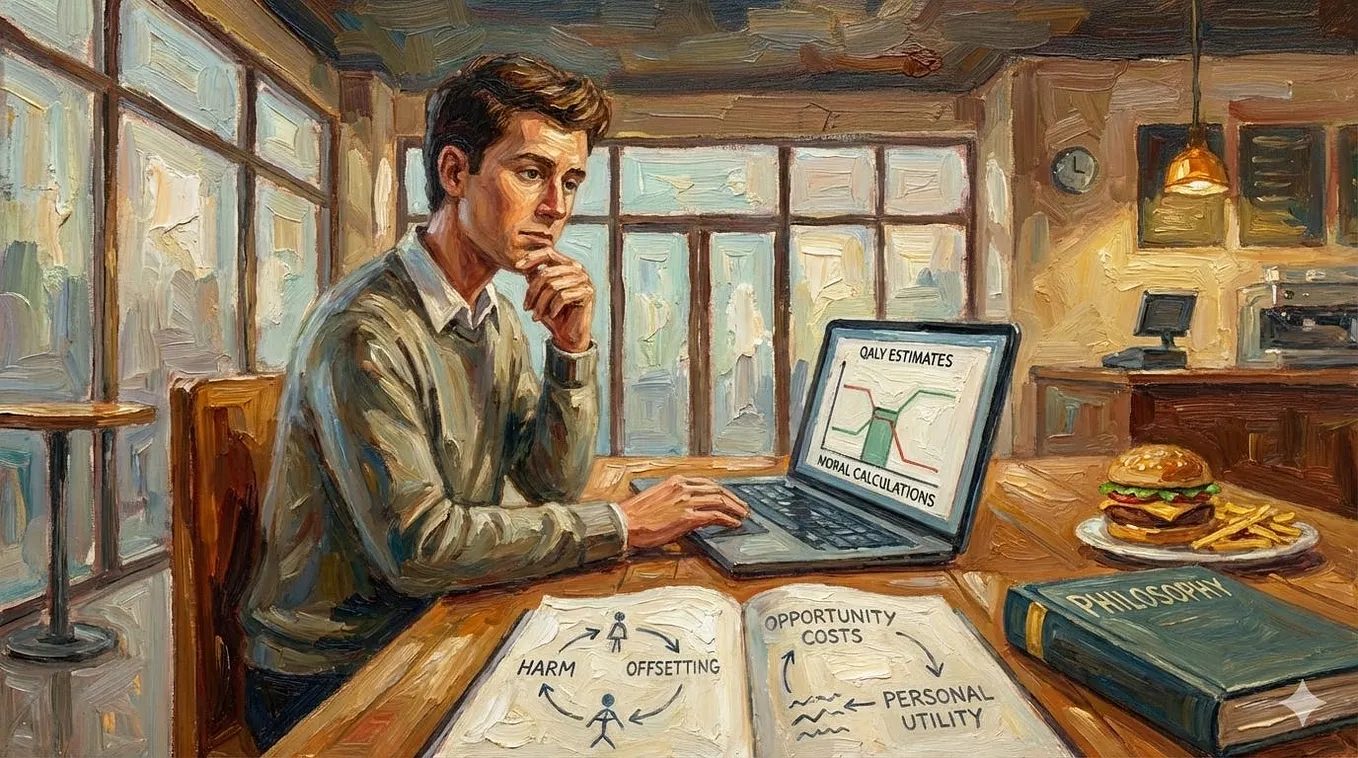
My moral intuitions generally align with negative utilitarianism. From a negative utilitarian perspective, preventing pain holds much greater moral weight than increasing pleasure. Hence, I prioritise reducing suffering over maximising happiness. When there is so much suffering to address in this world, personally, I don’t really care for maximising happiness.
I definitely disagree with increasing someone’s happiness at the expense of someone else’s suffering (which is why I’m vegan). Pathless Pilgrim presented a stark example to test utilitarian reasoning — a gang rape scenario where multiple people derive pleasure from a victim. Let me address this directly. The gang rape was indeed abhorrent, and there is no reason to care for the boys’ pleasure, because removing the suffering the girl (and her loved ones) experienced holds more moral urgency than generating 15 seconds of pleasure (sound familiar?).
However, I believe that if there’s a chance to minimise future suffering at the expense of a much smaller amount of current suffering (which is the case in cultured meat), and there’s no better or more certain alternative, then I would take that chance.
In a world where hundreds of billions of animals are farmed every year, this is what I consider to be the core question: How much animal suffering should we accept while we wait for a perfect vegan world?
Purity and pragmatism
I want to be clear about something: individual moral consistency usually contributes to better outcomes for animals. When we choose not to eat meat, our choice reduces demand and shifts culture. That’s powerful and important. The purity framework (refusing to participate in any animal exploitation) generally serves animals well. But cultured meat represents an edge case where purity and pragmatism pull apart.
With most choices, boycotting animal products creates market pressure and normalises alternatives. But with cultured meat, opposition doesn’t reduce harm — it potentially delays the end of the entire system we’re fighting against.
Get duck dive’s stories in your inbox
Join Medium for free to get updates from this writer.
This is one of those rare situations where we have to choose which matters more: maintaining categorical rules, or reducing actual suffering. I think all vegans can agree that we are doing this for the animals.
Where vegans diverge
I agree that cultured meat doesn’t fit the traditional definition of veganism. I also worry that veganism can become more about personal purity than actually helping animals. We feel good (myself included) when we remove ourselves from the industries that exploit animals, and I feel it’s the LEAST we could do for animals. I dream of a world where everyone is vegan — where animals are free from exploitation and oppression, and get the same moral consideration that humans get.
At the same time, I think trying to convince people to go vegan is a slower, long-term, and more uncertain strategy. I myself took 6 months to go from a full-fledged meat-eater to vegan, and I considered myself highly compassionate towards animals. Imagine how long it would take others who aren’t super compassionate towards animals.
Vegan recidivism rates are as high as 84%, unfortunately. All this suggests that, however good we feel about being 100% vegan and pure, we can’t rely on turning everyone vegan as our sole strategy to ending animal exploitation.
What matters in the end
I always try to sense-check myself when I’m thinking about interventions that help animals at scale. I ask myself, “If animals could speak and contribute to these interventions, what would they want?” While we can’t know for certain, I believe they’d want their suffering to end as quickly as possible.
If veganism is not the quickest way to reduce their suffering, we have to turn to other methods and frameworks — ones that scale better. For example, introducing robust legislation around animal welfare and rights, or making alternative proteins and cultured meat equally tasty and affordable as traditional meat, in hopes that meat eaters find it easy to switch to these products. We need a variety of strategies trying to make short- and long-term progress for animals.
One biopsy from a living animal could produce unlimited cultured meat, preventing the suffering of millions: confinement, mutilation, separation from offspring, transport, slaughter. Even accounting for uncertainty, the impact is clear. This isn’t about trading someone’s pleasure for another one’s pain. This is about accepting a small amount of harm to prevent a FAR greater harm from continuing.
I would also like to point out that not all cultured meat companies use the same approach. Some are more animal-friendly than others. For example, Magic Valley, an up-and-coming cultured meat startup based in Melbourne got its first biopsy sample from Lucy the lamb, who they rescued from a truck on its way to a slaughterhouse. They then surrendered her to a farmed animal sanctuary, where she continues to live a happy and healthy life.
Closing thoughts
I think Page 9 of this opinion piece by Dr. Chris Bryant nicely summarises my stance on cultured meat.
I’m still vegan. I still believe in refusing to participate in animal exploitation in my daily life. But I also believe that if cultured meat can end animal agriculture, one of the largest human sources of animal suffering on Earth, then opposing it on grounds of definitional veganism is choosing personal purity over animals.
The question isn’t ‘Is cultured meat vegan?’ It’s ‘What world do we actually want for animals?’ I want one where they’re free from suffering, even if the path there isn’t perfectly pure. And I think cultured meat is one of the more realistic ways to get there.