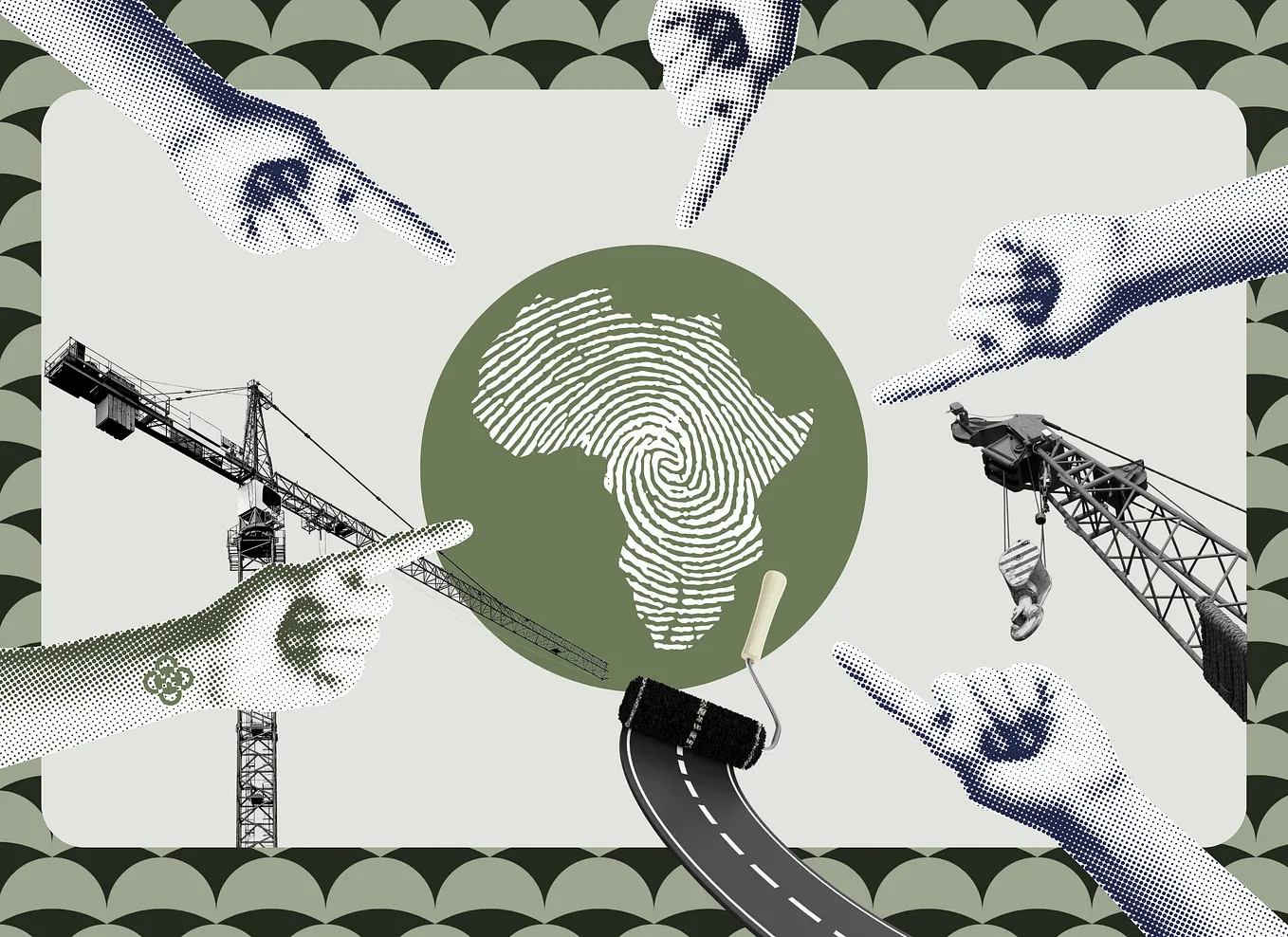
Culture Built This. Tourism Followed.

Cultural tourism is 40% of global travel. Whether the money reaches the people who made the culture depends on one thing: infrastructure.
World Tourism Day gets marked with photographs of monuments and skylines. The more honest image is an arts and crafts stall where the industry’s real question gets answered every day: does the money a tourist spends on culture reach the person who made it, or does it not.
Cultural tourism now accounts for roughly 40% of all global tourism (UNESCO; UN Tourism). Travel and tourism contributed an estimated $10.9 trillion to global GDP in 2024, near 10% of world output, and supported some 357 million jobs (WTTC, 2024). None of that scale says where the money goes once it lands. For that, the picture has to get smaller.

Two versions of the same transaction
In Uganda, cultural handicrafts are the kind of product tourists want to bring home, but most local producers struggle to meet the volume international buyers expect, and sellers often import goods instead of sourcing from them (Katongole, 2025). That is an infrastructure problem: nobody invested in the capacity that would have let local production meet the demand. The tourist still buys “a Ugandan craft,” but the local craftsman, gets no value for it.
Accra runs the other version. The Accra Arts and Crafts Market connects artisans directly with buyers, drawing shoppers from across the world (Ghana Tourism Authority, 2025). Ghana earned $4.8 billion from international visitors in 2024, tourism’s GDP share still climbing. The market exists because someone built the infrastructure that lets the tourist dollar land on the artisan rather than an importer.
Get Bold Canvas Network’s stories in your inbox
Join Medium for free to get updates from this writer.
A heritage label alone doesn’t settle the question about the value’s reach to the local craftsman. Nigeria’s Osun-Osogbo Sacred Grove holds UNESCO World Heritage status, and its annual festival supports the local economy, artisans, hoteliers, food vendors, drivers according to a 2026 study of the site. But that took a working local economy built up around the grove long before the recognition happened. Researchers who study these named sites elsewhere find the opposite sometimes: the “heritage” label pulls in money and investment, causing the prices of local resources to climb, while the community that made the place worth visiting gets priced out of it.
A heritage label attracts global value. Where it lands after that is a question of infrastructure, not the label.
Infrastructure, not intention
Neither place lacks good intentions. Uganda’s tourism strategy explicitly wants handicraft revenue to reach producers. What separates the outcomes is infrastructure that routes the tourist dollar to the maker instead of around them. Nigeria’s heritage sector shows the same gap from another angle, just 4% of the country’s already-modest creative-industries GDP contribution (Afreximbank, 2024), trailing Ethiopia’s 4.7%, in a country whose film and music exports lead the continent. The headroom is a lack of the infrastructure that would allow heritage to capture value the way other creative sectors and Global South economies already do.
None of what separates Accra’s market from an importer-stocked souvenir stand is unique: a venue where buyers can find a specific maker, a sourcing standard that favours the known local artisan over an imported substitute, a direct payment path, and consistent buyer traffic. Accra and Osun-Osogbo both have this but Uganda’s importers, and heritage districts that get priced out, are both missing at least one piece of it. Who can build it? A municipal government, a public-private partnership, or a network built to connect creative practitioners with buyers directly.
Where BCN sits
The connective infrastructure that decides which outcome a place gets is the terrain that BCN builds its network for.
A tourism campaign runs for a season. A heritage designation gets announced once. The infrastructure underneath either one, if it exists at all, is the only part built to keep routing money to the right people after the campaign ends.
Tourism does not create cultural value on its own. It only ever moves money toward wherever the infrastructure tells it to go.
Culture built this. Tourism followed.