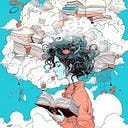
Three things that helped me overcome dyslexia as a child.

Reading can be painful to some kids, but there are ways to help.
Crying every time someone asked me to read was normal. The letters would dance and twist, the words were easily forgotten. It was an impossible task, an unreasonable request.
My older brother had learned to read just fine, so it was quite a shock to our mom when my sister and I had problems.
I understood that my mom desperately needed me to read. But I didn’t understand why. My grandpa never learned how and he seemed to be doing alright. Of course, he needed my grandma to help with all the bills, and taxes. Things that seemed unimportant to a child.
So how did I come from this mindset to writing as my profession?
Of course, I have help now, technology is extremely helpful for people with learning disabilities. But what helped me most when I was younger were about three things.
Repetition is Key
I used to read the same books on repeat. It would help if the words were in the context of a story. You could ask me to memorize words all day, but if they weren’t in a sentence then they didn’t make sense. I reread Jonie B. Jones, The Magic Treehouse, and A to Z mysteries so many times, that I can probably still tell you what each book is about.
Get Bookish Blair’s stories in your inbox
Join Medium for free to get updates from this writer.
Another way to get kids interested in reading is comic books. Some people think that reading a comic doesn’t ‘count’ as reading. But I think any reading is better than no reading for kids.
Audiobooks All Day
Every summer my mom listened to audiobooks with us. Sometimes we would listen all day.
Chapter books can be scary for most kids, and even more so if that kid has dyslexia. Audiobooks help kids overcome that fear. This was how I got into chapter books with no pictures. Listening to new books was an easy way to get kids interested in different genres too.
I still listen to a lot of audiobooks. I even follow along in physical books if I have the time. This is good practice for both children and adults who want to improve their literacy skills.
Spelling Mistakes
I used to be so stressed about spelling, and unfortunately, I think spelling will always be a struggle for dyslexic people. At least that is my experience. Spelling is the number one way to know that someone is dyslexic. (And just as an afterthought: whoever decided to spell dyslexia with a silent ‘y’ hated dyslexic people.)
As a kid, reading helped me a ton with spelling. It’s the repetition and memorization of everyday words. I would like to think my vocabulary is quite extensive too because of my many hours of reading.
As an adult, I can now use the Grammarly extension to help me, and an audio extension when I get tired of reading. So writing at least on the computer is easier. Please don’t ask me to write a letter, my handwriting is atrocious.
The Gift of Dyslexia
There are a lot of downsides to having dyslexia, but there are also some cool things that we can do that other people can’t. We can be awesome puzzle solvers, we have amazing abstract thinking skills, and we can be great conversationalists. As an adult, I can now appreciate my dyslexia for the many gifts that it gives me.
As a kid, I would have liked someone to point out the many great things that I could do because I was dyslexic. Helping kids understand the many positives to being dyslexic can help them see it as an advantage that others don’t have. So, if you have a kid or you have dyslexia, I encourage you to look at the gifts that you have because of it.