LoRa based wireless Sensor Network in IoT Explained.

The phrases LoRa (Long Range) and wireless sensor networks are combined to form the phrase LoRa-based wireless sensor network. Let’s first grasp what these two phrases genuinely signify before learning more about this.
WIRELESS SENSOR NETWORK
A wireless network that is self-configured and devoid of infrastructure that is used to track various physical and environmental parameters, such as temperature, sound, vibration, pressure, motion, pollution, etc.
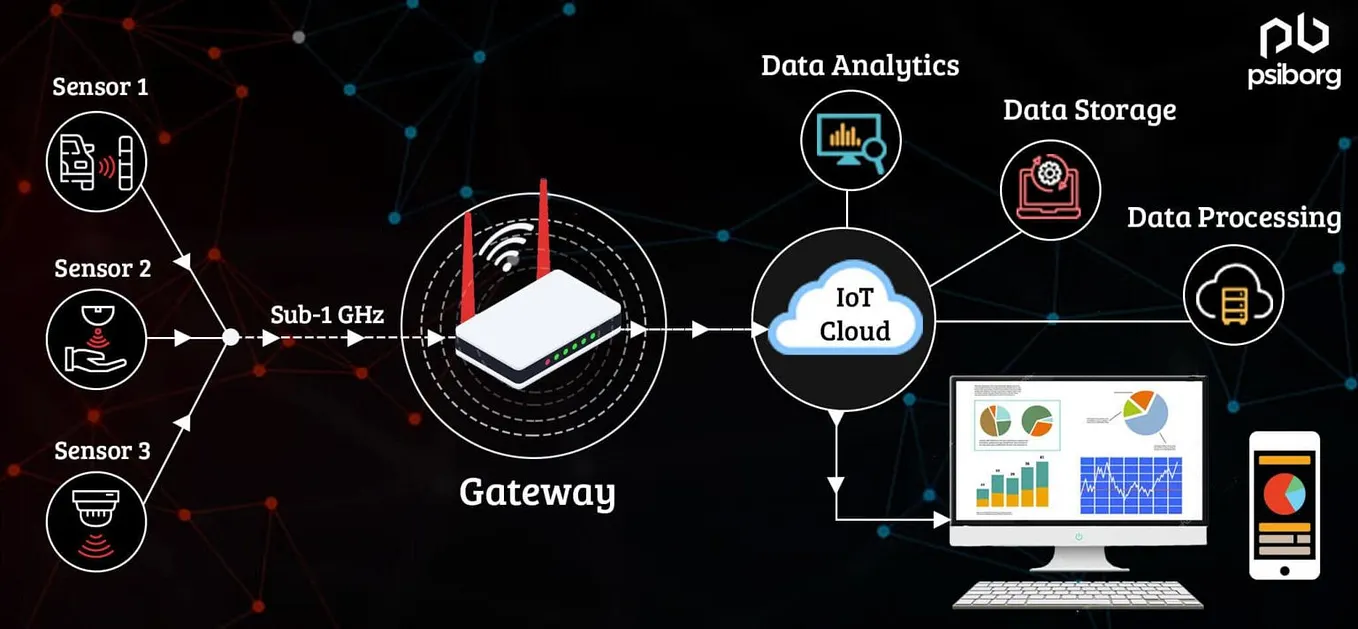
The gateway receives the wireless sensor data via the network, where it is monitored and analysed. Additionally, this data is transferred to the cloud.

LONG RANGE
For Internet of Things (IoT) devices, Long Range (LoRa) is a wireless technology that can provide long-range, low-power, and secure data transfer. It was created by Cycleo, a French business. Sensors, gateways, machines, devices, and other items may all be wirelessly connected to the cloud using LoRa.
It is a low power, chirp-based spectrum modulation that may be applied to long-distance communication. For each region, LoRa uses a distinct operating band. It is-
Band 915 MHz for the USA
Band 868 MHz for Europe
Asia’s frequencies are 920 to 923 MHz and 865 to 867 MHz.
Some key features of LoRa-
- Long Range
- Low Power
- Secure
- Low Cost
- High Capacity
WHY USE A WIRELESS SENSOR NETWORK BASED ON LORA?
In the IoT space, wireless sensor networks are widely used and highly well-liked. However, the two main issues facing WSN are energy usage and coverage area. The development of the LoRa-based Wireless Sensor Network, which is low energy and has a long coverage range, resulted from recent improvements made to improve the performance of WSN.
Due to these characteristics, the LoRa-based Wireless Sensor Network is the best choice for applications where the communications infrastructure must operate independently for an extended period of time and across a vast region.
Smart homes, smart agriculture, and other important IoT applications use LoRa-powered sensor networks today. Let’s take a detailed look at a few of these applications.
A FEW APPLICATIONS OF THE WIRELESS SENSOR NETWORK BASED ON LORA
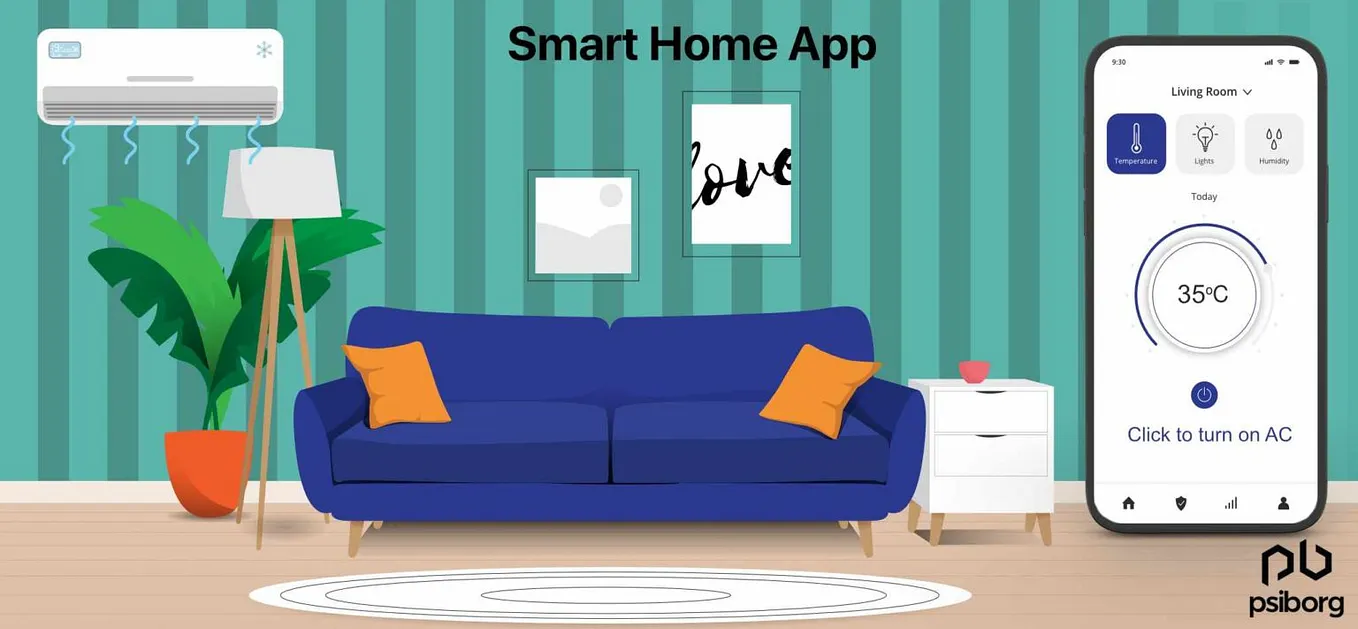
SMART HOME USING LORAWAN
Using a LoRa-based wireless sensor network, users may receive real-time updates while various devices and sensors are being monitored. Monitoring smoke, humidity, temperature, and other environmental factors is the key priority.
This technology enables remote monitoring and sounds an alarm when a sensor’s value exceeds the threshold. In order to improve communication, sensors are linked to microcontrollers through the LoRaWAN (Long Range Wide Area Network) module.
Get PsiBorg’s stories in your inbox
Join Medium for free to get updates from this writer.
LORA-BASED SMART AGRICULTURE
Various sorts of agricultural data are collected today using a wide variety of sensors. However, these sensors can only gather data; they cannot effectively use or analyse it. It is necessary to create an intelligent platform to address this issue.
This platform may be utilised to gather data in the field and send it to distant computers for analysis. The long-range data transmission capabilities, battery-powered operation, and ability to function for years in outdoor settings like fields make LoRa technology a wonderful fit for this.
LIVESTOCK MONITORING USING WIRELESS SENSOR NETWORK BASED ON LORA
Along with other agricultural uses, LoRa is crucial for cattle ranchers to track and instantly spot abnormal behaviours in livestock. Farmers equip the collars and tags of their livestock with LoRa-based sensors so they can follow their whereabouts in real-time and receive alerts if any of the animals stray outside of their allotted territory or are stolen.
These sensors can monitor the health of the cattle so that the farmers can act quickly to separate sick animals from the herd and stop the spread of disease. Anywhere in the world, data collected remotely may be forwarded to a veterinarian.
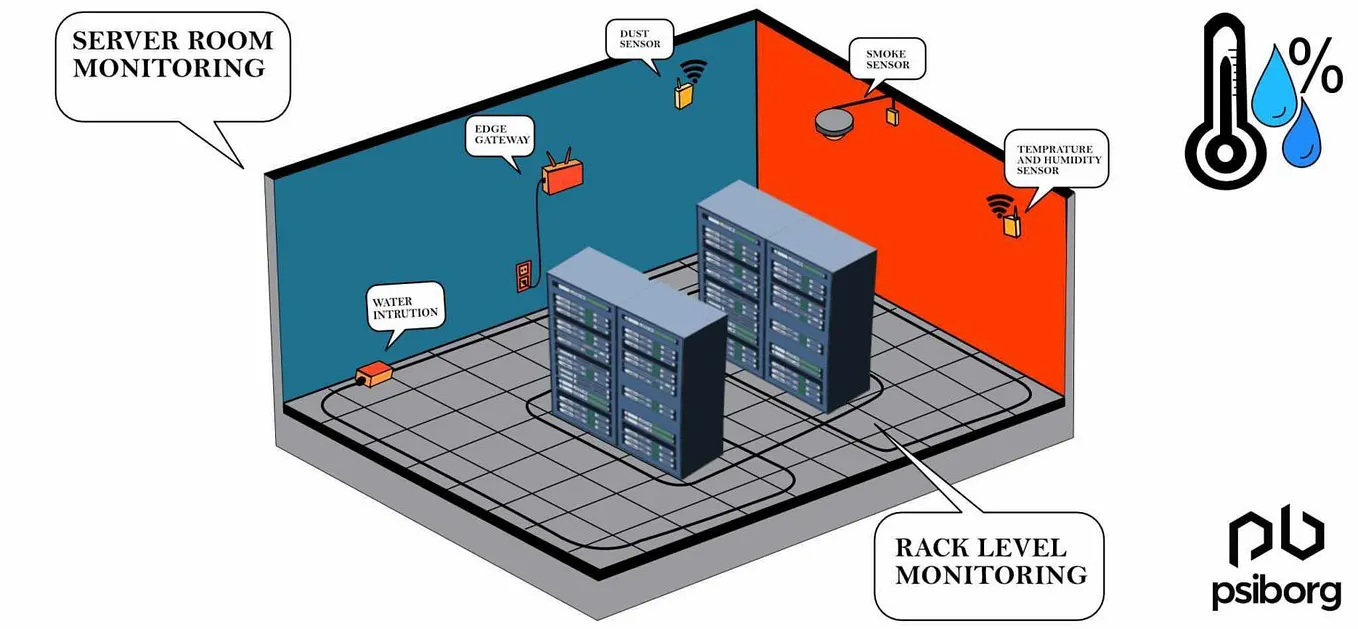
MONITORING OFFICE TEMPERATURES USING A LOW-POWER WIDE-AREA NETWORK
A significant number of powerful computers must be deployed in IT centres and data centres’ facilities. Due to the over-design of the cooling system, it has been discovered that 60 percent of the energy used in these workplaces is used to cool the computers.
For long-term temperature monitoring, the introduction of a low-cost, battery-powered LoRa-based wireless sensor network can be very helpful.The office may be made more energy-efficient by using real-time data collected combined with previous data to identify difficulties and anticipate potential thermal problems.
BUILDING A MANAGEMENT SYSTEM USING LORA
Only miles-long cable wires have prevented business management systems from developing and automating more quickly. Due to LoRa’s wireless technology, the installation of cables was made easier.
Additionally, unlike the power-hungry WiFi and cellular networks, LoRa uses less electricity. Building management systems that use LoRa can improve safety, cut cost dramatically, reduce environmental impact, and simplify management.
A SYSTEM FOR MONITORING ENERGY BASED ON LORAWAN
Around the world, several renewable energy facilities have recently launched. However, these renewable energy sources have unpredictable outputs and are challenging to use on a scheduled basis.
Utilizing the information that is regularly created at these plants to gather, analyse, and take action on makes managing these renewable energy resources simple. Here, LoRa-based sensor networks play a crucial role in wide-area networking and the provision of affordable wireless solutions.
LoRa-based energy monitoring may be used in large companies and in communities where managing energy use is necessary.
SMART CITY BASED ON LORA
Applications for a smart city include coordinating city services like lighting, parking, garbage management, etc. and streamlining resources and staff to save time and money. Many systems must have low energy consumption, be portable, and have a generally low long-term cost because these applications involve a large number of individuals utilising them often. The LoRa-based Sensor Network is utilised to satisfy all of these needs.
WIRELESS SENSOR NETWORK BASED ON LORA FOR ENVIRONMENTAL MONITORING
This technology is often used in industries to monitor the environment. Gas sensors, flow sensors, and temperature sensors are all deployed in businesses for monitoring and worker safety. Given the rise in pollution, air quality monitoring is one of the crucial factors.
These sensors maintain a continuous record and transmit the information to the microcontroller. If any value is abnormal, action is done right away by notifying the relevant authorities. All of these sensors may interact with the gateway using several LPWAN technologies, the most popular of which being LoRaWAN.
THE MILITARY OR DEFENCE’S OFFLINE MONITORING SYSTEM
The battlefield of the future will be covered with a variety of sensors, actuators, equipment, and information sources. One of the main drivers of scientific growth has always been conflict.
Therefore, the military always keeps up with the latest technological developments. The LoRa-based sensor network experienced the same thing. In the military, LoRa is used for a variety of things, including managing weapons and ammunition, tracking soldiers’ whereabouts and health, managing fleets, and identifying enemies.
In wide-area communication, the LoRa-based wireless sensor network is frequently employed. To use this technology in several other spheres of life, there is still a tonne of research being done.
This article was originally published here: LORA BASED WIRELESS SENSOR NETWORK IN IOT