9 AI Search Visibility Tools Compared: Which One Actually Closes the Gap?


AI search visibility tools all solve the same basic problem: they tell you whether your brand got mentioned the last time someone asked ChatGPT, Gemini, or Perplexity a buying question. Nine of them now do that job in nine slightly different ways, and the differences matter more than the marketing pages suggest.
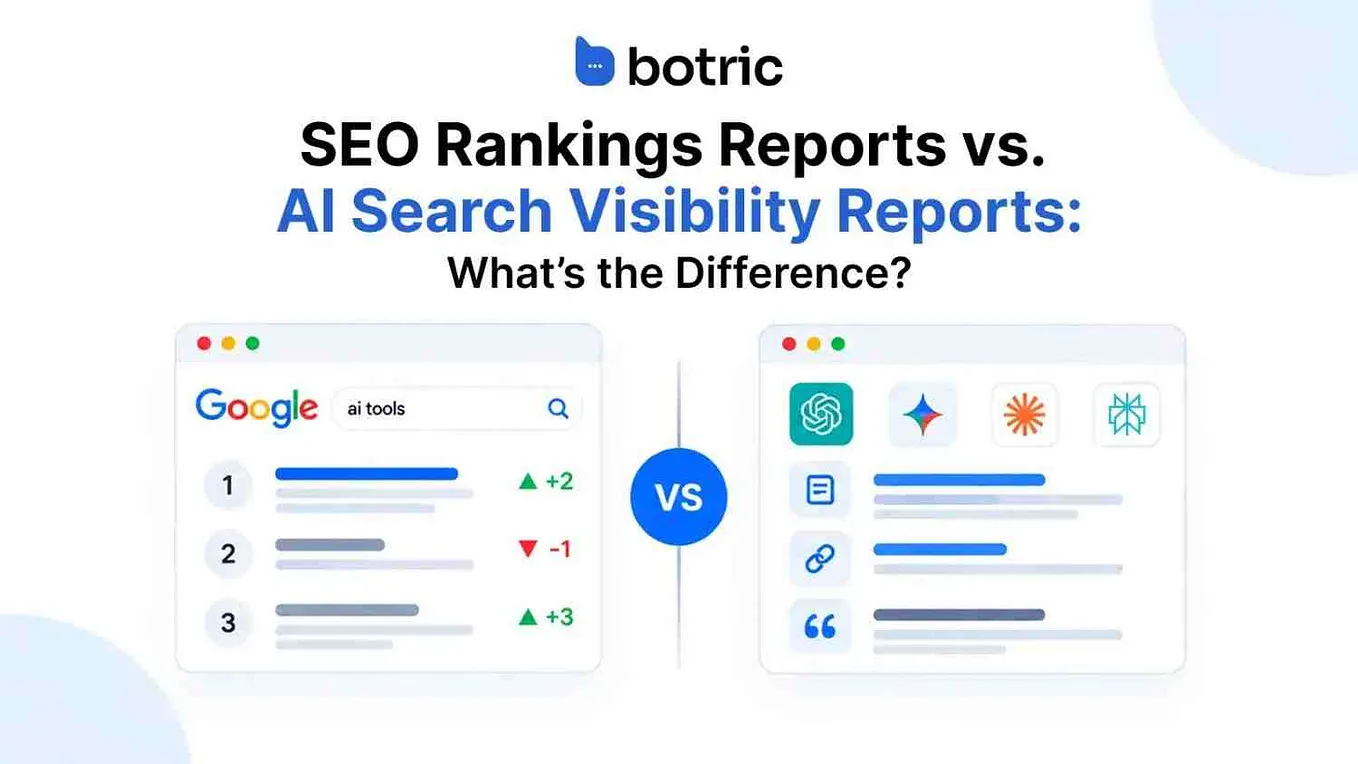
The reason this category exists comes down to how AI answers actually get built. Google’s AI Overview, and the equivalent in ChatGPT or Perplexity, doesn’t display a ranked list the way a search results page does. It synthesizes an answer from sources the model already trusts. A brand can hold the top organic spot for a competitive keyword and still be invisible in that synthesis, because AI Overviews and similar answers are generated from a synthesis of trusted sources, not a display of ranked pages. Reviews, comparison articles, Reddit threads, and industry write-ups all feed into that trust, not just your own site.
Two categories of AI search visibility tools
Semrush, Ahrefs, and SE Ranking approach AI search visibility as an extension of SEO. Semrush’s AI Visibility Toolkit sits inside its existing platform and starts at $199/month for five domains, with Semrush One (SEO plus AI visibility combined) running $199 to $549/month depending on domain count. Ahrefs took a citation-research angle with Brand Radar, $129/month for the Lite plan (5 projects, 5 tracked prompts), scaling to $449/month for 50 projects and 20 prompts on Advanced. SE Ranking starts at $129/month for 10 projects and 100 daily tracked prompts. All three are strong if AI search visibility is one more line item in a workflow you already run through an SEO platform.
Get Botric’s stories in your inbox
Join Medium for free to get updates from this writer.
The other group was built for AI search visibility specifically. Profound tracks prompts daily and starts at $99/month for ChatGPT tracking and 50 prompts, scaling to $399/month for three engines and 100 prompts on Growth, which also unlocks Profound Agents for content generation. Peec AI ($95/month for 50 prompts, one project) and Otterly AI ($29/month on its Lite plan) both lean toward straightforward monitoring across multiple engines rather than deep optimization tooling. AthenaHQ offers a free Essential plan with $25 in credits and focuses squarely on GEO, while Scrunch AI ($250/month) is built for enterprise teams that need AI platforms to represent their brand accurately, not just mention it.
Botric sits in this second group of AI search visibility tools but tries to close the loop between finding a gap and fixing it: it tracks brand mentions, prompts, citations, and competitors, paired with GEO and site audits meant to explain why a gap exists. The free plan tracks 5 prompts with Site and GEO audits included; paid tiers start at $15/month (Bit), scaling to $49/month (Byte) and $149/month (Infinity). Stated plainly rather than glossed over: teams managing a very large number of brands, regions, and prompts will outgrow it and need the enterprise tier or a heavier reporting platform.
The question the tools themselves can’t answer
Say a dashboard shows a competitor appearing in 40% of the answers you’re tracking, and you’re at 10%. That number is useful. It’s also not the point. The point is the next question: why? A visibility score with zero citations for prompts you already rank for organically usually traces back to something specific and fixable, missing structured data, thin bottom-of-funnel content, or AI crawlers that are quietly blocked. Among AI search visibility tools, none of the nine compared here differ much on whether they can show you the gap. They differ on whether they help you close it.
That’s the real filter for picking between AI search visibility tools. If you’re already paying for Semrush, Ahrefs, or SE Ranking, adding AI visibility inside that platform is the path of least resistance. If you’re moving from SEO into a dedicated GEO strategy, citation data from Ahrefs is genuinely useful, and Botric or AthenaHQ go further into fixing what the citation data reveals. If you’re running AI search at enterprise scale across many products or markets, Profound and Scrunch AI are built for that scope. If you just want to know whether you have a problem before committing to a monthly tool, Botric’s free plan is built for exactly that starting point.
Don’t pick the AI search visibility tool with the longest feature list. Run a baseline audit, find out where your brand actually stands, and choose based on what that audit turns up.
Run a free AI visibility audit with Botric to see where your brand shows up in ChatGPT, Gemini, and Perplexity, and what’s limiting it.