Inheritance and Memories

As we engage more interviewees, we uncover new narratives, old stories and timeless tales. Buried but not forgotten, Project Broken Barges hopes to preserve these stories for posterity.
After all, these precious recollections shape how these communities lived and evolved over time.
In this interview, we learn more about the stories witnessed and stories passed down from generation to generation.

Interviewee #2: Mr. Ismail and Mr. Zairil

A father and son duo that recall the kampong days like it was just last Tuesday. Interviewing them was fascinating, it felt like one was peering into a much older, near mythological time.
To a Singaporean youth today, our land’s history appears as a split timeline with a beginning in 1819, followed by various chopped up moments, then it begins in the 1940s once more. A timeline that permeates through these gaps seems blurry, almost fantastical in comparison.
To Mr. Ismail, an octogenarian who was born before the Japanese Occupation, and Mr. Zairil, who is well-versed in his own kampong heritage, the history of their kampongs did not merely start in the 40s. To them, therein the details lie a complex history that they are determined to preserve.
Born in 1941, Ismail Bin Awang is a spry, elderly gentleman who was born and raised in the area of Tongkang Pechah. As one of the pioneers of the kampong, he shares his own unique story on growing up in the area. He schooled at the Kalaimagal Indian School, a Tamil language school that was present beside Yio Chu Kang Primary School.
Mr. Mohd Zairil Bin Ismail, born 3 decades later in 1971, is a humorous man who was raised in the neighbouring kampong of Pengkalan Petai, attending Yio Chu Kang Primary School. With relatives in both Pengkalan Petai and Tongkang Pechah, he has grown up seeing both areas. He shares his unique upbringing which showcases how the 2 kampongs interacted. In 1984, Mr. Zairil and Mr. Ismail were then relocated to an HDB.
Origin of the name: Tongkang Pechah
Interviewer: Do you know how Tongkang Pechah got its name?
I&Z: When you entered the kampong, there was a big tongkang. There were people that brought tairu (milk curd) and other items to the area. Then once, one of their tongkangs broke and that’s how we called it “Tongkang Pechah”. These tongkangs came from Paya Lebar.
Everyday Life
Interviewer: How were weddings celebrated in the kampong?


I&Z: I experienced one in Kampong Tongkang Pechah. Basically … they would make tents and there would be a procession. On the days before they would cook, with a lot of activites. Yes, there were a lot … There was also silat performances. The married couple would be sitting down and there would be people playing silat.
Interviewer: What associations/groups did you have in the kampong?

I&Z: We had a sepak raga team. Very strong. We would win every year, then you had to give back the trophy after the year.
Interview: Was there a penghulu (chief) in the kampong?
I&Z: We did not have a penghulu. We appointed the imam (religious leader), and people would respect their decisions like we would a penghulu. We had 3 imams who were like the penghulu. Every few households would then be led by one of these imams.
Relationship with other communities
The above map was circulated on Facebook a while ago, with an incomplete mapping of kampongs. Inaccurate and unverified, the placings of the various kampongs are askew.
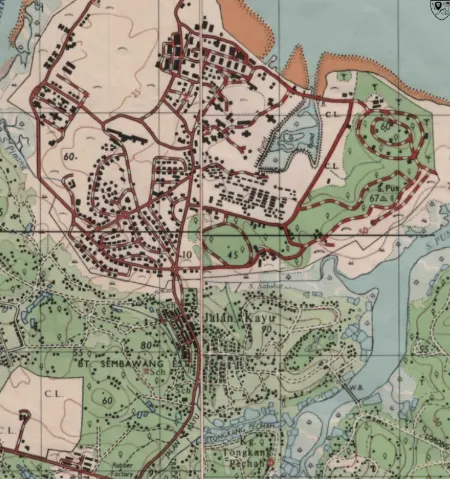
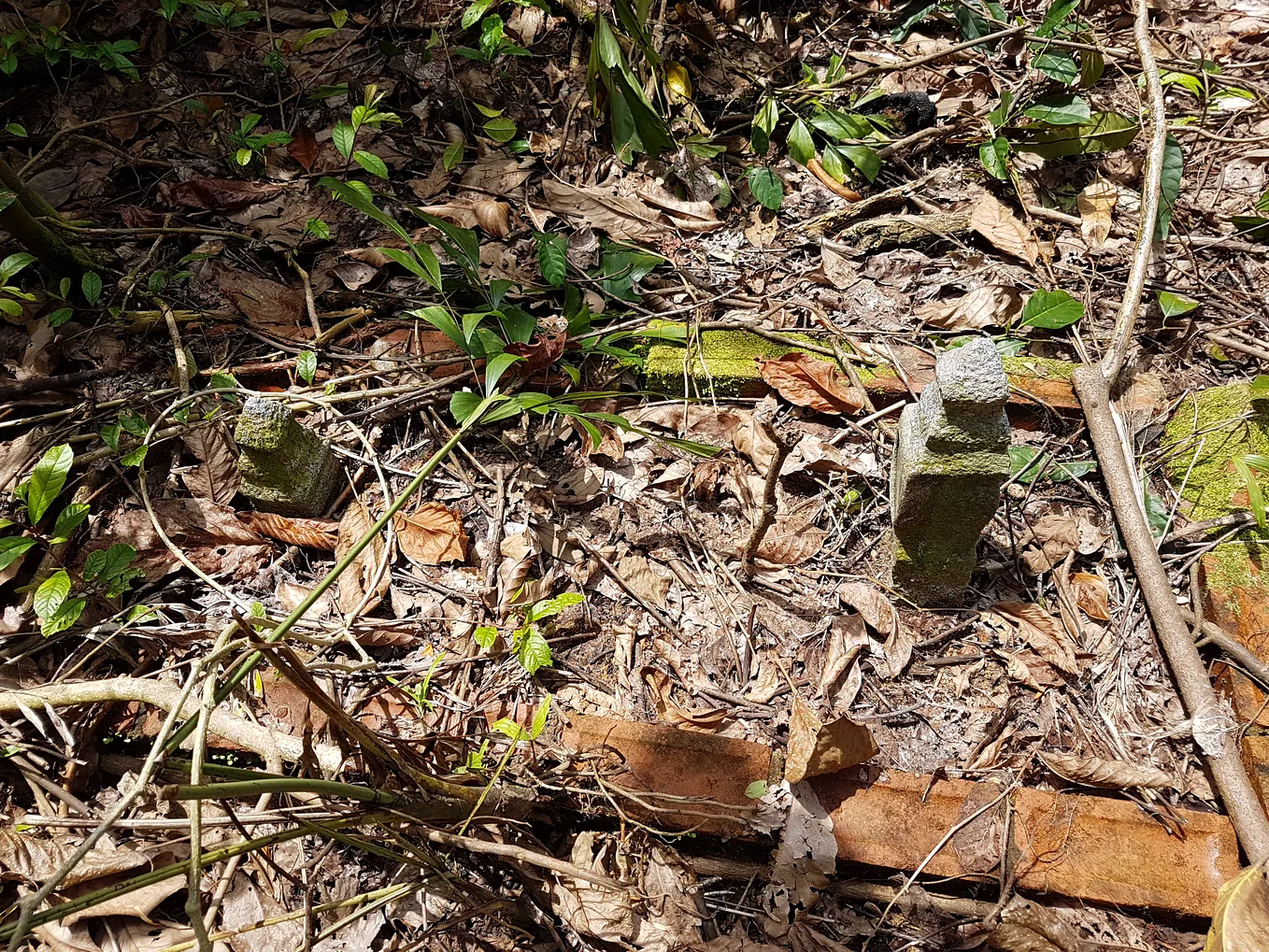
I&Z: (Points to above map) This is Tongkang Pechah. Then this is Pengkalan Petai and in the centre is Jalan Kayu Village. These 3 villages have the same kubor (cemetery).

Boh Sua Tian
This one … I think this area … this is Boh Sua Tian (Points to an area above Telecom). When we go out from the kampong though Jalan Yio Chu Kang, we would need to walk or take a bicycle down. Along the way, we would see a pig farms in the chinese communities. Every morning, yes … the dogs there will always chase us!
Get Project Broken Barges’s stories in your inbox
Join Medium for free to get updates from this writer.
Singapore Telecomm Company
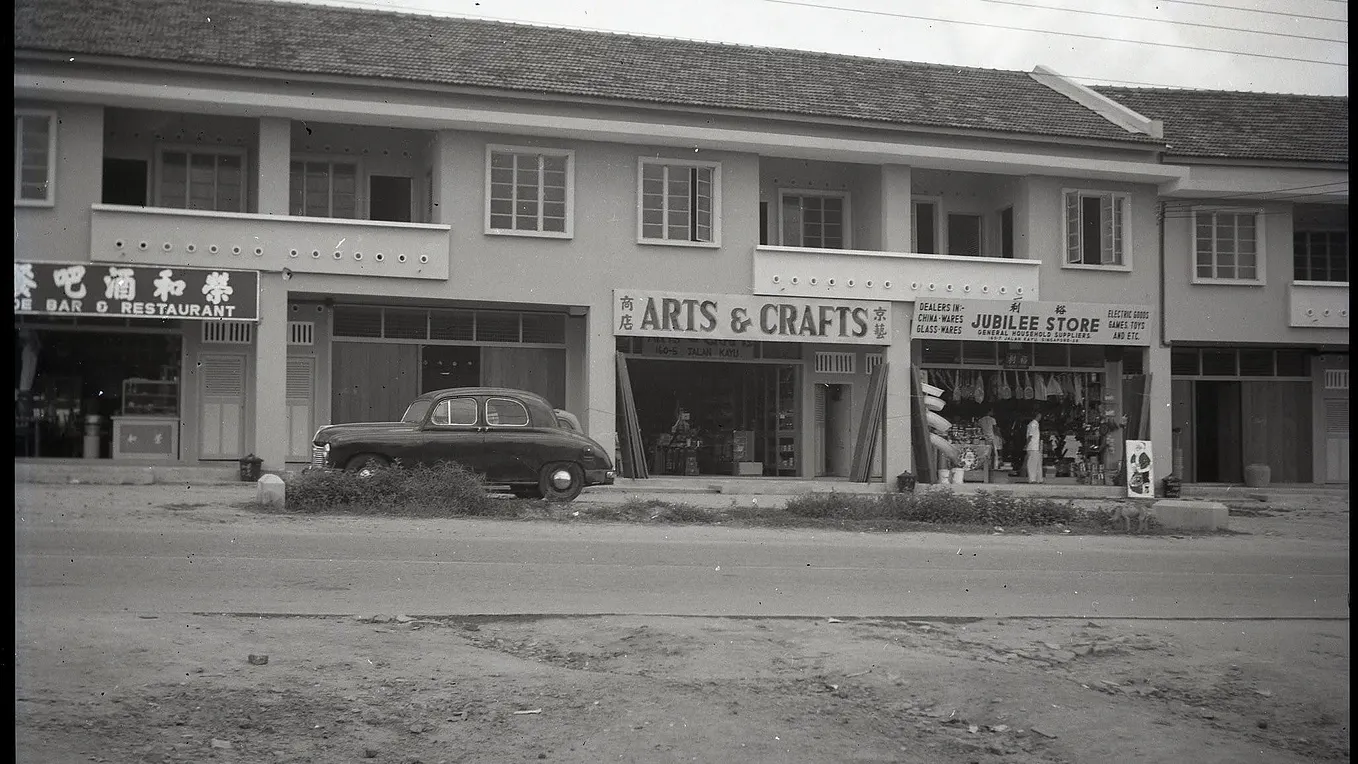
So down here, below Jalan Kayu, there’s a telecom quarter. One of our relatives stayed there. In the past, if you worked with Singapore Telecoms, they would prepare some quarters, a flat for you.
Seletar Hills
(Points to Singapore United Plantation at bottom of map) So this is the Seletar Hills. Last time, there was a doctor down here, a Dr. Kang, for the kampong. We would all come down from Kampong Tongkang Pechah and Pengkalan Petai and go to see Dr. Kang.
My mother gave birth in Jalan Kayu clinic, yes, but then sometimes we would also go to the private clinic below.
Kampong History
Posted to Tongkang Pechah
As the interviewees brought forth memory after memory, a natural topic that came up was its founding. Who developed the area? Where did the people come from?
Interviewer: Before 1941, who was staying at Tongkang Pechah?
I&Z: Nobody. We were the first people. Got tiger staying there (laughs). We moved there as a whole village. The British gave us the land.
Their answer, to me, was interesting as I previously estimated the area’s founding to have been the 1920s at least. However, this answer threw me off. I had to know more about the time period. We were now stepping into a historical gap that the Broken Barges team had no prior knowledge of.
After a lot of discussion, it was shared that the residents of the Tongkang Pechah and Pengkalan Petai came from another kampong further up in Jalan Kayu. A kampong called “Kampong Pos”.
Kampong Pos? Was this an area that actually existed? Turns out, it is indeed corroborated by existing interviews.
In a 1985 oral history interview with Awang Bin Osman, a past resident of the area, he recalls his own father staying at Kampong Pos before moving to Kampong Wak Sumang (Punggol Village).
In fact, the malay literary pioneer Mastomo detailed in his 1957 publication, Tok Sumang, that during the founding of the time of Kampong Wak Sumang (Possibly as early as 1840s), some of Tok Sumang’s relatives settled in Kampong Pos around the same time.
The maps highlighted something similar, but it revealed that that in the area, there was a village called “Kampong Pus”, located near the area of Sungei Pus.
Based on existing resources, it is said that residents of Kampong Pos were then relocated to land further down as the British Royal Air Force (RAF) Seletar Airbase in the 30s. Residents then shifted to Pengkalan Petai and Tongkang Pechah.


Even as someone interested in Singapore history, this was news to me. To find out how interconnected and just how old this history could be.
Pengkalan Petai and Tongkang Pechah
The villages of Pengkalan Petai (Close to Seletar River) and Tongkang Pechah (Close to Punggol River) also share many relations, with a communal grave being found near the western village.
Anecdotally, the villages of Pengkalan Petai and Tongkang Pechah are known to share many familial relations as well.
In passing, it was mentioned that the grave near Pengkalan Petai was said to house the descendents of Wak Sumang’s family, Awang Bin Lambak.
Conclusion
Hearing these stories being passed generation after generation, I am humbled at the pride that heritage and rememberance can bring. To share these memories of the past, to wish these stories to be carried to the future. To be part of a chain that hopes to never end.
As custodians and inheritors of this land’s story, I found it a genuine pleasure to hear these stories being shared with such animation.
If there was one lesson I took away from the 2nd interview, it is that the Singapore story started long before Singapore. A legacy of pride that continues to be carried forward.
This is the end of our interview with Mr. Ismail and Mr. Zairil! Stay tuned for more interviews and stories!
Interview conducted by: Rustam Shariq
Article published by: Rustam Shariq
Photos provided by Mr. Zairil.