When the School Bell Rings: the Old Teachers’ Housing Estate

“One day, an idea struck me: that the Teachers’ Union should develop a Teachers’ Estate!”
Where Educators Were Home
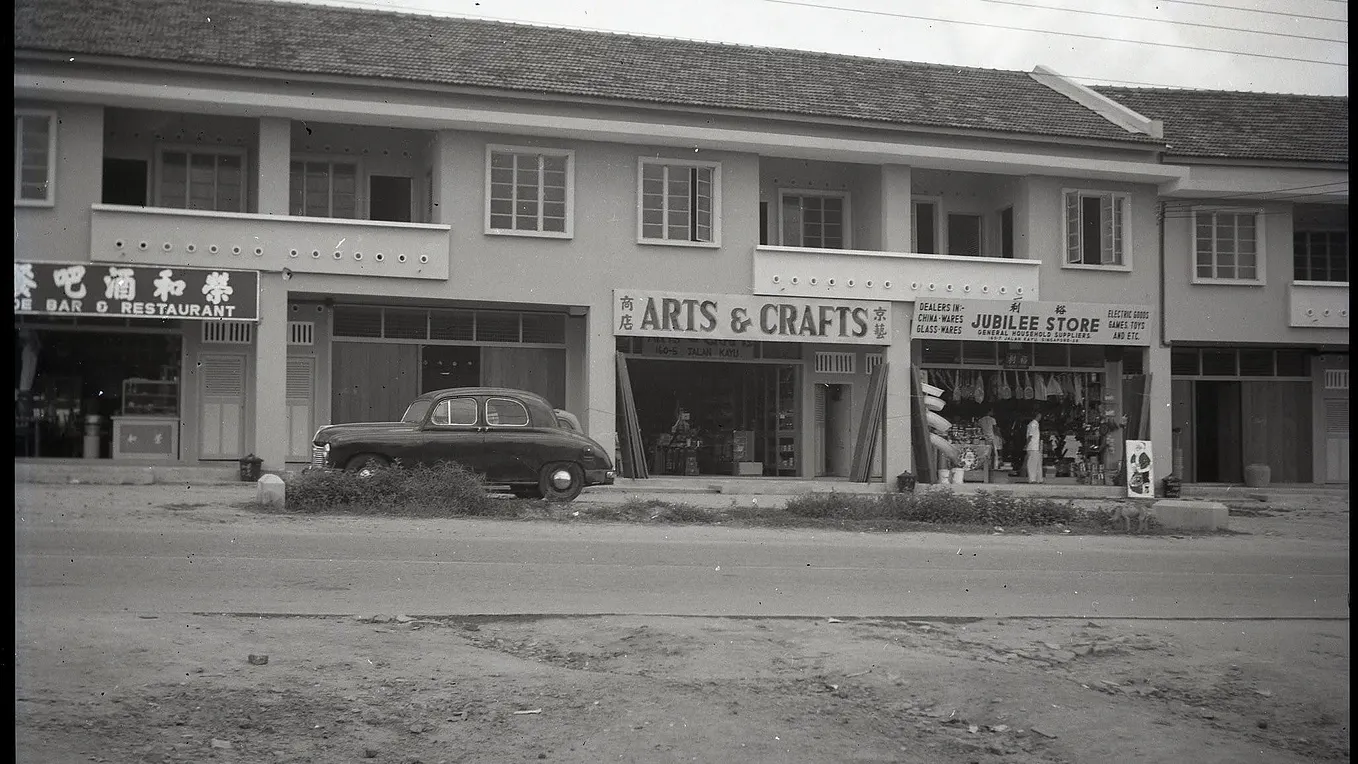
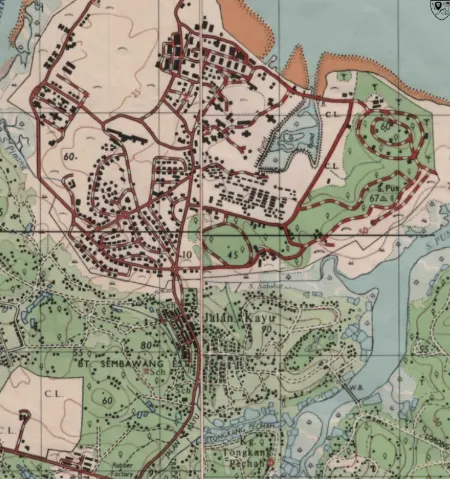
Seletar was home to a diverse lot of communities, enclaves, and villages in the past. A multicultural tapestry, each neighbourhood would have a common identity — Occupation e.g Woodbridge Quarters, Culture e.g Kampong Tongkang Pechah, Commerce e.g Jalan Kayu.
Among those, we have a community united by their passion for scholarship and education. Roads paved with the names of famous poets and literary titans. Munshi Abdullah Avenue, Tagore Avenue and Tung Po Avenue. Built for teachers, by teachers. Welcome to the Teachers’ Housing Estate!
Education and Estate Developers
The magnum opus of the Singapore Teachers’ Union (STU) in the late 1960s, the Teachers’ Housing Estate, was envisioned as a housing community for teachers. Situated on a 90,000 square metre piece of land at the junction of Upper Thomson Road and Yio Chu Kang Road, the Estate comprised of 256 terraced houses and its very own Teachers’ Clubhouse, formally known as the Teachers’ Centre.
Mr. Yeoh Beng Cheow 杨明照
Central to this article is Mr. Yeoh Beng Cheow, a man who wore many hats, but remains an educator at heart. Mr. Yeoh had served as a teacher at Bartley Secondary School, and later the Deputy General Secretary of the Union, and the Secretary of the Union’s sub-committee for the Estate.
Born in 1936, Mr. Yeoh was born. A native resident of Penang, Mr. Yeoh and his family moved around regularly in Penang due to the war and conflicts in the 40s.
Growing up in such circumstances, Mr. Yeoh’s unbreakable spirit was forged from young. In order to earn enough money, he helped his mother sell old fruit while studying.
At the age of 20, Mr. Yeoh came to Singapore and went to the Teacher’s Training College (TTC). To his shock, he failed the Teacher’s exam the first time.
“When the results came out… I got the shock of my life!
I failed my oral english! I was a school debater!”
— Mr. Yeoh, recounting his past in the Teacher’s Training College
Yet he was undeterred, Mr. Yeoh sat for the exam again, setting his expectations high, aiming for the highly competitive Certificate-Trained Teacher course. With his ambitions fixed, Mr. Yeoh went through a gruelling process of interviews and examinations before being selected as one of the chosen candidates to go for this prestigious programme.
In 1956, Mr. Yeoh enrolling in the Certificate-Trained Teacher course from TTC. A 2 year full-time programme, Mr. Yeoh graduated from the TTC in 1958. Proceeding that, he worked as a teacher and pursued further studies in the following decade.
In 1967, he joined the STU as a representative in the Graduate Teachers’ branch and was present during the 3rd Asian Teachers’ Seminar, a well-known event of that pitted the Head of Executive (Then PM Lee Kuan Yew) and the Head of Educators against each other.
After an accomplished career as an educator, Mr. Yeoh left the public teaching service and moved to the private sector, serving as a management consultant in many industries. Even as he worked in the private sector, Mr. Yeoh did relief teaching and conduct education classes at the Chinese Development Assistance Council (CDAC).
Drawing from Mr. Yeoh’s tumultuous personal recounts in the National Archives of Singapore, this piece explores his role during his time with the Teacher’s Union in the development of the Estate, and the lessons we can glean from it.
[The quoted statements in this article were translated from transcripts of interviews with Mr. Yeoh and were adjusted for clarity. These oral history interviews are openly available in National Archives of Singapore site here.]

One Man’s Search For A Home
In a paper published by Rita Z. Nazeer-Ikeda and Sarah R. Asada [3], we learn that against the backdrop of Singapore’s early self-governance, there was stark wage disparity between the local teachers vis-a-vis the foreign teachers, where the local teachers’ pittance of wages made it difficult for them to afford basic necessities such as housing.
One might think that the wage disparity would have improved with the establishment of the Teachers’ Training College (TTC), but it was disappointing that it simply resulted in a different form of wage disparity; this time, between the Normal-Trained Teachers and the Certificate-Trained Teachers.

‘Cher! Why got “Normal-Trained” and “Certificate-Trained” Teachers?
In the past, there were two types of courses at the TTC for primary school teachers — three-year part-time normal course and two-year full-time certificate course.
Then, in January 1960, the 2 courses were merged into a single three-year in-service part-time certificate course.

Given that most teachers were Normal-Trained Teachers who had not received university education, they received lower compensation as compared to their Certificate-Trained counterparts. It was no surprise then, that most teachers were still not able to afford a house.
Ai-yeoh… Back in my day, housing was so expensive
The Union then took matters into its own hands, championing the rights of its teachers and along came the idea of a housing community for teachers. The community, comprising the terraces and a Teachers’ Clubhouse, would be known as the Teachers’ Housing Estate.
But perhaps, a more compelling impetus would be Mr. Yeoh’s personal search for a home. Mr. Yeoh, then-teacher at Bartley Secondary School and a member of the Cooperative Society, had been trying to secure a housing loan for around two years. Out of frustration, Mr. Yeoh wrote a strongly worded letter to the Society, where he complained that the office bearers were undeserving of their salaries, because it had failed to serve its function: people who were in dire need of housing were unable to afford one. This sentiment was shared by fellow teachers in Bartley Secondary School, who were similarly fuelled by discontent of being rejected for housing loans. These teachers then signed the letter written by Mr. Yeoh, following which, Mr. Yeoh’s application for a housing loan was approved at last.
Having experienced firsthand the difficulties in procuring a housing loan, Mr. Yeoh was determined to develop a housing estate for his fellow teachers. It instilled in him a strong resolve that would fuel his creativity and commitment in the development of an estate teachers could truly call home.
Brick by Brick
“One day, an idea struck me:
that the Teachers’ Union should develop a Teachers’ Estate!”
- Mr. Yeoh, fondly remembering his eureka moment
Funded With Conviction
Equipped with nothing but conviction, Mr. Yeoh set out to develop his plans for the Estate. Handicapped with limited funding and experience in property development, challenges arose right from the outset. While it was possible to purchase a property and transform it into a Clubhouse, Mr. Yeoh was riddled with worry that the Clubhouse would eventually succumb to vices.
Mr. Yeoh’s limited fund sources amounted up to $80,000 in the 1960s, which would be estimated at about $347,000 in 2025, after adjusting for inflation based on data from the Monetary Authority of Singapore. He was in a severe deficit — His funds would not even fully cover 1 HDB flat! For a development of this scale, it was untenable to expect that one could successfully complete the development, whilst operating within the budget.
Pooling of Resources
However, who is Mr. Yeoh, if not defined by his tenacity? Burrowed in deep thought, Mr. Yeoh birthed a novel idea: that the Union embark on a cooperative venture. Mr. Yeoh believed that this would be the workaround that would free the Union from its limitations in the plans for the Clubhouse.
Next, Mr. Yeoh sought the Union’s approval. With Union President Mr. Karim Bagoo’s blessing, Mr. Yeoh proceeded to moot the idea at the Central Committee meeting. However, at that very meeting, Mr. Yeoh recalled being met with huge ridicule. He recalled being met with laughter for the novelty of his idea — Unions embarking on cooperative ventures? In Singapore?
Nonetheless, the Central Committee endorsed Mr. Yeoh’s proposal, on the basis that it would teach Mr. Yeoh a lesson. The reaction was harsh, but his proposal was endorsed and this go-ahead was all that was needed to keep him going.
Mr. Yeoh moved forward with the endorsement and soon formed the Union’s housing sub-committee, with Mr. Bagoo as President, Mr. Yeoh as Secretary and Mr. Lawrence Sia, Mr. Jagjit Singh and Mr. Altar Singh as members. Of the members, Mr. J. Singh and Mr. A. Singh represented the New Certificate-Trained Teachers Branch and the Head Teachers Branch respectively.
Laying The Foundation

With the housing sub-committee on board, Mr. Yeoh further formulated the plans to work with a developer. Having set the criteria that the developer must possess the money to purchase the site for development and that the developer must be willing to give the Union a piece of land to develop the Clubhouse, the sub-committee decided to partner with Lian Hup Construction Company [5].
Get Project Broken Barges’s stories in your inbox
Join Medium for free to get updates from this writer.
The Union’s role in this partnership would take the form of promoting the Estate to the teachers and assisting the teachers in attaining housing loans. By doing so, the sub-committee was able to ensure that teachers, in search of housing, were able to comfortably afford a home. At the same time, the sub-committee was able to assure the developer that a substantial number of terraces were expected to be purchased, and that it would be a profitable project worth investing in. With the added assurance of the housing loans being funded by the government, the developer was confident that they would be paid in due time.
“And this [was] how we went about:
Work was put in, A LOT of work was put in,
but no money ever came out from the Union;
[…] we built a housing project without using one cent of Union funds.”
— Mr. Yeoh, proudly recounting his triump
The Price Of Dedication and Education
How should one price these terraces?
The following agreement was reached with the developer:
- The developer would be paid a fixed amount of $24,000 (Estimated $104K in 2025) for each unit purchased by the teachers, regardless of the configuration of the house.
- The sub-committee would mark up the price of the houses, and keep the surpluses for the development of the Clubhouse.
With this arrangement, the Union would be able to secure additional funding for the development and the maintenance of the Clubhouse. Despite the marked up prices, the prices remain below the market rate of $25,000 — $28,000 for houses of similar size and configuration, in the suburban area.
POP QUIZ! Math Question!
Qn: Mrs. Lee purchases 1 double-storey terrace house at $24,500. How much goes to the developer and how much goes to the Teacher’s Union?
Ans: $24,000 would go to the developer and $500 would go to the Union, for the funding of the Clubhouse.
Did you get it right? Well done! Here’s a further reference on what this arrangement would look like:

The Moans Of Loans
Of the amount paid for the houses, teachers eligible for the housing loans would only be required to pay 10% upon purchase, directly to the developer. The remaining 90% would be paid by the government to the developer, upon completion of the Estate. Not only did these teachers benefit from the generous housing loan from the government, they were also assured that the Estate would be successfully completed as the developers now had the incentive to complete the development so as to receive full remuneration. The success of the housing loan were largely attributed to the relentless pursuit of Mr. Yeoh and the support of Mr, Bagoo. Having not received a reply from the Minister for Education, Mr. Ong Pang Boon, Mr. Bagoo sought the help of ex-STU General Secretary, Mr. Devan Nair, who connected the two men by setting them up for a meeting with the Minister for Finance, Mr. Lim Kim San. The meeting concluded with Mr. Lim granting Mr. Yeoh’s proposal, and the rest was history.
Lessons from the Old Teachers’ Housing Estate
“Within 16 months since the bulldozers moved in,
all the houses were completed.”
— Mr. Yeoh, still savouring the sweet taste of success
For a development that demanded such a high degree of confidence and coordination, it was a marvel that all 256 terraces were completed in 1969, with the Clubhouse following in 1973.
“So the Union [had] gone from a mere body
demanding for better terms of service,
to one that was prepared to stand up for the rights
of the members and the profession.”
Mr. Yeoh and Mr. Bagoo serve as exemplars of commitment and conviction in service, evident from their continued efforts towards the betterment of the Estate and the teachers’ welfare. Mr. Yeoh toiled relentlessly as Secretary of the housing sub-committee and appealed to the Ministry of Finance, on behalf of the teachers who could not qualify for the housing loan. On top of this, Mr. Yeoh and Mr. Bagoo took it upon themselves to put in a formal proposal to the government committee in charge of naming roads, for the roads in the Estate to be named after highly esteemed individuals in the academic realm.
It is in these little details that we find warmth within the walls of the Estate, and it is in these very details that residents of the Estate feel the earnestness of the Union in championing the rights and interests of teachers.
Change is the Only Constant
The 256 terraces embody the fire and passion that the STU, Mr. Yeoh and Mr. Bagoo in particular, had for their colleagues and countrymen. Though ownership of the terraces may have changed hands over the decades, the Estate still stands today, as a testament to what commitment and conviction can achieve.
“And this piece of land has now been leased out
to the developer for 99 years.
And at the end of the lease,
the Union will get back the piece of land,
for another 900 years.”
However, in 2010, the piece of land where the Clubhouse once stood has since been leased to a developer for 99 years, for a cluster development known as the Poet Villas.
“To see that what has been done.. has now been undone … I feel very bitter about this… and I hope …
- Mr. Yeoh, expressing his hopes for the future generations of of teachers at 47:20 and 50:20 of reel 14
With his legacy set in brick, Mr. Yeoh hopes that the Union will continue to champion the rights and interests of teachers — just as him and Mr. Bagoo had done in their time — such that educators know in their hearts that they have a community to rely on, a history of proud predecessors to trail after, even after the school bell rings over.
References
[1] Reel 6; Education in Singapore (Part 1: English), Accession Number 003463
[2] Reel 7; Education in Singapore (Part 1: English), Accession Number 003463
[3] Educator organising in Singapore: protests, progress, and the Singapore Teachers’ Union
[4] Teachers’ Housing Estate — Then and Now | Remember Singapore
This is the end of our article featuring Mr. Yeoh Beng Cheow! Stay tuned for more interviews and stories!
Interview research conducted by: Tara Ng
Article published by: Tara Ng and Rustam Shariq