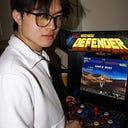
What It Means to Be Chinese Jamaican

Willy Chong’s Story, told by Willy Chong
Preface
“I’m fully Chinese, but this is my culture too, Jamaican culture.”
This is a conversation about the life of Willy Chong; it’s a conversation about family roots, work, community, and belonging.
Willy Chong is a third-generation Chinese-Jamaican; he was born into a family whose roots have already dug deep into the soil of Jamaica long before his own life began. Through a conversation with him, we begin to see the experience of Chinese-Jamaicans through his own memories, experiences, and understanding of the world around him.
This is not just a conversation about the life of Willy Chong; it expands way beyond it. His memories carry traces of those who came before him, and of the generations that came after. In his story are the countless stories of Chinese-Jamaicans, generation after generation, across years and decades, who built their family, connected their roots, and embraced their culture in this land of diversity.
Family Origins
Before the story about Jamaica, there was a story about movement. Willy Chong’s family story does not fit in one singular narrative. He describes the lives of his family members as if they were his own memories. He is the voice of his own bloodline, carrying pieces of those who came before him, and giving a voice to the story of where he came from.
Well. Jamaica.
I grew up in Jamaica.
What happened is that my Grandparents came here,
No, actually, no, my parents, my parents were born here, too.
You call it the second right?
My grandparents came from China.
Right. I was the third generation.
My mother was born in Port Antonio. My father was born in China, but he came to Jamaica. My brother was born in Hong Kong. So we have a sister born there too
(Regarding his grandparent’s origins)All of em Hakka
new Guang Dong, the chungs, and new Fu(新府), the Chings
(following a comment made on the origins of Chinese-Jamaicans)They came from Guangdong Province. In Guangdong, there are various districts. New Fu, New Guang Dong.
Yes, kingston
My parents taught me Hakka. Hakka is a village language. It’s another dialect in China.
It’s the second most spoken language in Canto
Hakka, Mandarin and Cantonese have the same characters, but different pronunciation. The surnames, Chungs, for example, depend on how you spell them, but it’s the same Chung
You still learn the culture. Sometimes you need to speak privately,
because you realize that sometimes people are with you and you might not want to talk about certain things.
So you just want to talk privately.
My grandparents came to Jamaica and started a business in Chinatown. They imported a lot of stuff, Chinese products, ingredients, groceries.
(Is it wholesale?)No, not wholesale, I don’t think wholesale existed at that time, so it was retail.
Not many people imported stuff, so they bought locally often
At that time, there weren’t many Chinese people, but there was a Chinatown.
The Chinese people who came to Jamaica came through Panama. Because a lot of them went to Panama to build the canal.
What really happened is that after a while, just like the Jamaican ones, the Chinese ones who came to Jamaica had a problem returning to China because they couldn’t afford to pay for the ship fare. So they relocated and stayed here.
The Chinese in Panama got wind, that it was much better to live in Jamaica than Panama. A lot of them died in Panama. A lot of them died here also.
But they came as indentured laborers. They worked on sugar plantations, but they couldn’t handle the temperature was too hot for them, plus the conditions they were working in. They weren’t used to that kind of working environment.
(At that time, Panama was extremely undeveloped). WORSE, You worked in the forest. You were making and cutting through the forest to make the canal. It was extremely humid, with a lot of mosquitoes… malira, It was like a wet zone.
My grandparents were involved in the trading business with imports.
When my grandparents got old, I don’t know why, but their children never inherited the business. I am not sure why, y’know, everybody went and did their own thing.
When the business was being sold, the children were looking for shops. They may have had grocery shops or ice cream parlors. My parents bought my auntie’s shop because she went to another location. So my father bought her a shop.
My parents were doing shop business too in rural Jamaica, outside Kingston, in the country area where it wasn’t as developed as the town, so they call it country area.
They started with the shop and the ice cream parlor, and later they went into the bar business and then a betting shop. They rent a place from a betting company, for bets, legal bets.
A betting shop is not a casino, but it’s where you look at the race form and say, “Give me number six, number five to win, and number three to come second.” It’s in collaboration with the local betting company. They buy the tickets and wait until the race is running
Youth and Bauxite
The story slowly becomes more personal, more engaged with the life of Willy Chong. He is a hard-working individual. Devoting his life to the jobs he’s worked in, most notably in the field of bauxite. He is not shy to talk about his past mistakes and challenges. He understands his own weaknesses, and he reflects on his own failures.
I went to Kingston College. I started with “Our Lady of The Angels” prep school and then went to Kingston College.
When I started to work, they sent me to a college called CSD, College of Arts, Science and Technology. The name changed to UTech, University of Technology.
I worked with the Jamaica Bauxite Institute for 17 years.
The Bauxite Institute monitors the bauxite companies operating in Jamaica. They monitor the operations, including how much tonnage they have.
To operate a bauxite company in Jamaica, if you have land that has bauxite, so you build the plants around the land.
We’ll go out and do the checks to see how much bauxite is in this area.
They call it the ore deposit.
Meaning that all the deposits are different in quantity and quality.
What we, our JBA, did was look at the deposits, survey them, and drill them.
So my function was to calculate the tonnage of bauxite within that deposit, do you understand?
Say this is the deposit, they would send us all in the field to go on the survey ugamank,
They guan say, okay, we drill right here. And fifty feet again here we drill right here, and we have fifty feet and fifty feet apart, some of them had a hundred feet apart.
The drill goes right down to the rock. You don’t know how deep you’re going to go. The drilling go down, and you have the grid
And what they don’t know after, they don’t really, they take up the sample at every 5 feet. They take all that sample, and then you go on again, drill again, 5 more feet, take out that sample, and then afterwards, no, they mix them up. And then carry to the lab, to test it, to see the aluminum content, the silica content, the iron, all of those minerals that is within the sample.
we monitored because of the fact that we want drill it. My group want drill it and then we’d pass the information to the lab.
So the lab is going to analyze the sample that we take in.
Then afterwards, we put those information, the data, on the map, for each hole.
So, you know, the quality, right here,this hole and the next row, you put all them together, and get the average.
Average quality for the whole deposit. So the deposit might have five billion tons, and we know exactly the quality of earth.
So as you go deeper, the quality is not as good.
Right? Say up to probably 20, 30 feet, you get very high quality in alumina content.
So we don’t process aluminum in Jamaica. Cause we don’t have the energy.
What we’re gonna do, aluminum, the powder. Look like cocaine. the white.
So what they do, they usually bleach the box sack and the box sack is red.
Red mud, right? And after they bleach it, they use caustic soda. And then bleach it, and then they separate, try separate that slow joint of it, which they call the red mud.
they’ll separate it, in the plant, you know.
you have some companies, they export their aluminum, only not dirt, alright?
Like Kaiser, they use to export the dirt. But before they can export the dirt, they will have to dry it like a powder, because they can’t export it in large quantity.
So they usually dried first, make sure. Bone dry, they call it. and export the dirt to America, the American companies.
(Is it profitable?) Well, must be profitable for them to come from America, Canada, and Russia and operate a planet here.
Jamaica is the leading producer of bauxite, before Australia started to be bigger than everybody else
Australia the biggest reserve in the world.
Because Jamaica has a more accessible distance, we have an advantage. So they would come to Jamaica, invest to Jamaica, build the plants, and export the bauxite.
Aluminum is very light and durable. When you have a war, they usually sell a lot of aluminum. When a war breaks out, every country wants to stockpile either bauxite or aluminum.
The demand increases when war happens because of the demand for the metal and all the different things that are built with it.
I was in that position for 17 years.
Yes, I mean, I did enjoy my job. It was a new and good experience. You get to travel to various different parts of Jamaica and go to the bauxite areas.
I’m a people’s person. I always talk to anybody.
At the same time, I was running some pizza shops. It was a part-time job, not every day, just some weekends and public holidays.
It was for the money. Work is work.
I was supposed to get married, and then it wasn’t appropriate. That’s why I went to work. I spent all my energy into the work.
Sometimes the job took me to sleep down in the country for a week or months. I would come back to Kingston on Friday afternoon.
The work took you over.
It’s hard to try not to do your work because you’re a professional.
That’s the reason why you find other people who spend so much time at work. Then the marriage will break up, or no matter what, nobody will talk. Someone will see someone on the side.
Community in the CBA
Work life is one way he spends his hours; CBA is the other. In here, Willy finds his youthfulness as he engages with the Chinese community. Willy is a builder. CBA is where he chose to spend his hours and energy, and his devotion brings vitality to this Chinese community
When you work in places like the CBA, I’m here until eight or nine o’clock at night. Sometimes, because you’re managing the place.
When we have events here and you have cleanup, like the last night market we had, I came here Saturday morning at 10 o’clock. I never leave here until Sunday morning.
No, no I didn’t sleep. I just worked. After leaving, you finish and check up your stuff, clean the place, pack the stuff back. Sometimes it never finished and I wanted to go home and sleep.
By the time I went home to sleep, somebody called me. I said, “Listen, I just got to bed two hours ago.” They said, “Oh no, so and so died” So I had to get up and go back.
(mentions a quote “Let me know when your whole life goes up in smoke. That means it’s time for a promotion.”)
There was no promotion. I am at the top already. There’s nothing extra
The CBA is really a volunteer organisation. Basically, Chinese community put money together and put up this building.
The CBA is very old. It started in down-town, on Barry Street, I think in the 1800s.
The CBA has a fact sheet about Chinese people coming to Jamaica, what they did, and how they started.
If you walk into this building and you see that glass case, those are the people that forefathers.
The CBA is a non-profit organisation, a charitable association. I was on the board before.
I changed my job and managed a sporting company for 10 years. Afterwards, I left there. I went to manage a wholesale place. so I went into different businesses.
After that, I worked for a company that manufactured paper cups for three or four years.
I was part of the CBA in terms of not being a member yet, but just coming to see them. I used to play a lot of badminton. I used to have a club. I’d win quite a bit of competitions.
I used to be up here too. They recruited me, I joined the CBA and played for the CBA under the CBA umbrella, the CBA Tigers.
I was quite good, not to brag, but in terms of dedication to the sport. I know the sport, I love this sport, and I recruit people to come and play. We did pretty well.
The Chinese people used to take part in Independence Day celebrations. The government invited them to take part.
When I was going to school at that time, I was invited to the Chinese school. We used to go there and practice for the festival.
I got to know a lot of Chinese people, young people. And they told me “We said we needed to have a young people’s association to put them together” instead of only meeting in July and August when they were practicing for the festival.
I went around and recruited some of the young people, whether boys or girls, and got them into an association. They called it the Chinese Youth Association.
Me and some other guys started it. The person who used to lend us their place was Gillon, the photographer, a Chinese man. His wife was a founder too, Chinese Jamaican. He told us to get them and come to the studio.
We had meetings and planned various activities, going to the beach, parties, putting things together, and getting all the young people together.
It was doing pretty good. But after a while, when they started to work, they had more serious work and less time.
I used to recruit young people. When you have the festival, you can tell everybody to come and practice.
But when I got a bigger position in my job, it was hard for me to do all of that. I couldn’t dedicate as much time to it.
Chinese history and Identity
At the center of this very conversation, we ultimately move to the question of identity. Willy answers the question by introducing history, how the identity of a group is built upon time. It began with people arriving in Jamaica to make a living, raising families between cultures. But identity changes throughout time, and culture is carried forward or lost as people leave and return.
Get Bruce Cai’s stories in your inbox
Join Medium for free to get updates from this writer.
For Willy, being Chinese does not mean he is separated from being Jamaican; his Jamaican identity does not erase his Chinese heritage. Both exist within him. People can view him as what they want, but for him, identity comes from within.
I am a Jamaican Chinese.
The Chinese people were some of the first people to strike in Jamaica. They stopped working on the sugar plantations.
When they realised they couldn’t handle the sugar plantation, they said, “Well, what we know, at least we can count.”
If you can count, and people buy stuff from you, you can make some money.
That’s why they opened little shops. They sold things that people wanted, bread, food items, and little haberdashery items.
That’s how the Chinese shops started.
Quite a few of them went into the shop business. What they did was give credit to generate customers and make customers come back. If you didn’t have money, they would say, “Okay, we’ll give you credit. Next time, come and pay us.”
That’s how they developed relationships with the local people. The locals were the ones who supported you, so you had to help them out too.
They built a reputation through years of trading.
After a while, when they had children, usually those men who opened the shops couldn’t bring their wives and children when they left China.
When they came to Jamaica, they can’t carry their wife and children over, but they needed company, so they would marry a local woman, a Black Jamaican woman, and have a family.
The children would be half Chinese. But when they had some money, they would send the first or two born children back to China to learn the culture and language.
The Chinese community kind of got messed up because the government changed and they were talking about communism in the 70s and early 80s.
The government of the day was close friends with Castro in Cuba.
People were afraid of communism because they knew communism wasn’t really for them. They worked so hard, and they thought, if communism came, they would take away what they had and give it away.
Because of that, they sold out their houses and businesses and went to England, America, Canada, Australia, all over.
That was the reason why. If they didn’t go, the Hakka community would be bigger in Jamaica.
The Chinese community is probably bigger now than when they were here, maybe double.
Jamaica is more free, most people in Jamaica, they’re not really timed person, they like to have their own pace. The country has a lot to offer, it’s very beautiful. So no matter how much bad publicity we get from the US, UK, or Canadian government, and they put up all the travel advisers “don’t go to Jamaica it’s dangerous”. The more they do that, the more tourists come, and the prove them wrong. They interview them, and they realise that it’s not like how it’s described in the advisers.
If you come her you have so much things to do like the river and whole lot of different things too. And Jamaicans are popular with sports again. We tried everything we don’t have snow, but we are good at bob sled.
I’m fully Chinese, but this is my culture too, Jamaican culture. I know the Jamaican patwah and the Jamaican culture itself, and I learned some of the Chinese culture from my parents.
What’s good is that you learn your culture because you can import that with your children too.
But when you send them to school, they have to blend in with the population. The majority will be 90 or 95 percent non-Chinese. That’s the way it goes.
“Out of many, one people.”
In Jamaica, we are a pot-pourri of several different nations. We incorporate them. You do find some racial people, but the majority are interracial because you grew up together with them.
There are one or two people who are racist, but it’s not serious. It’s mostly jokes. They might call you “Chinaman” or something like that.
The ones who doesn’t speak fluent Mandarin are regarded differently. If you don’t speak the language, they don’t look at you as 100 percent Chinese.
You don’t reach 12 o’clock yet. You’re not fully Chinese, you only look chinese. but if you can speak it fluently now, you’re one of them.
Sometimes they talk to you because they can’t avoid it. They have to talk to you.
You do find some people like that. They will have money, nice cars, live in big areas, and have big businesses.
That’s fine. It’s okay. You can do what you want to do. We’re not jealous of what you have. Everybody has their own life to live.
Regarding future generations
We can see an ongoing tension between the younger generation of Chinese Jamaicans. It’s not simply between staying and leaving, but different ideas of what a successful life can look like. Young people do not regard this place as a land of opportunity and community anymore, and that’s the ultimate and inevitable change. You cannot force it to be undone. You can only decide what is worth carrying forward.
The younger generations have changed.
Most of the parents want them to go to school abroad. We have a problem with young people coming back to the CBA and getting settled.
We teach them lion dance and ribbon dance.
But as they get older, the parents say, “No, you have to go abroad to school.” So the culture has shifted.
They don’t learn much of their Chinese culture because they’re at university and might not be meeting up with the Chinese group again. They find other friends and do different kinds of things.
When they come back, it’s a different thing. They don’t want to come to the CBA. The CBA is for children.
Teenagers want to go to parties. They want to be with their friends. They don’t want to come to the CBA because the CBA isn’t really conducive to what they want to do.
The culture changed and the ideas changed.
When you’re coming from childhood and you reach your teenage years, you want to be with your friends.
It’s a less strong connection. The parents would take them up here and leave them. The children would play and enjoy themselves.
But when they grow older, after a while they don’t want to come to the CBA again because the CBA doesn’t really have much to offer them.
That’s probably the problem. It doesn’t grow with them.
When you’re exposed to a broader view, you go abroad and you’re exposed to that type of culture. When you come to Jamaica, you miss some of it because you’re a foreigner.
If you never go there and live at all, and you live in Jamaica, it’s different because you’ll embrace the culture even more.
When I go away and just travel, I only go for a few weeks and then come back. It’s not really something I want to stay forever.
I love Jamaica because the country that you’re born and grew up in is what you’re attached to.
You go abroad and everything is faster-paced. You have to work harder. You don’t have as many friends. The whole mindset changes.
If you go to university and school, the kids you study with become your friends. After a while, you’ll get closer to them because they’re your friends.
But when you’re in a big country, you’re a stranger. Nobody knows you.
That’s the reason why here you know your neighbour, you know your friends, and you can call them. There’s the beach. You can go hang out, go party, go play badminton, or whatever.
Once you’re born and raised in Jamaica, you realise what Jamaica is when you go abroad.
You have to work harder. You don’t have as many friends. It’s like the whole mindset changes.
That’s the reason why you’re here, you know your neighbour, your friend down there, and you can socialise.
It’s similar to me. This is a gold mine for all Chinese people.
All of them come to Jamaica because, as long as you work hard, you can run a business and make good money. Someone can work for three years without a holiday and make good money, then expand the business.
You have to be young, not too old, to do that. That’s why they’re all first generation. They come here to work. That’s the idea, to work.
They don’t live here, they work here.
After a while, they realise that so much is to be made here. Why live in America where everything is restricted?
You don’t want to go back to China because it’s more difficult to make a living up there. There’s too many people and the competition is too hard.
Here, you build a shop, you’re your own boss, and people come and buy from you every day.
Anybody who wants to be in Jamaica must be younger. That’s a fact.
The younger people want to leave Jamaica. The parents don’t want to leave Jamaica because this is a gold mine for them. They realise it.
You can live in Jamaica and go abroad to live, but you have to start over. Nobody knows you. You’re on your own.
In Jamaica, you have your next-door neighbour and the Chinese community to talk to. You cannot socialise in that way abroad. Nobody knows you.
The younger people go abroad because they have ambitions. They want to go make money.
Chinese people come to Jamaica and make money. Younger people study abroad, have their profession, work over there, and get the money, but they still want to come back to Jamaica and visit.
I was supposed to go to China during COVID. Tickets and everything were bought to go tour Vietnam, Cambodia, and Hong Kong. But then everything was cancelled.
I still have family in Hong Kong. My nieces and sister-in-law live in Hong Kong. I have cousins there too. We’re connected.
The CBA has a fact sheet that tells you about Chinese people coming to Jamaica, the ships, what they started to do, and the history.
There’s more information too. When I give you the fact sheet, I can explain some other things I know.
You can find quite a few people who have the experience I have. I’m a people’s person, and I can sit down and talk to you about everything I’ve done.