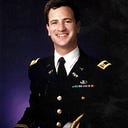
Chapter 12: Bad Kreuznach — Duty, Discipline and a Defining Choice
Believe Nothing You Hear, and Only Half of What You See — A memoir of Service, Shame and the Search for Truth


It was mid-junior year, right around New Year’s Day 1976, when my life changed again. We moved from Mannheim to Bad Kreuznach, Germany — just me, my parents, and my two younger sisters. Lynne was already in college in Boston, and Diana chose to stay behind in Mannheim to finish high school. This move marked a major shift not just for me, but for my father as well.

Dad was no longer commanding a front-line tank battalion. He had been selected for a prestigious yet grueling assignment at the 8th Infantry Division Headquarters at Rose Barracks — serving as the G3, or Plans and Operations Officer. In Army terms, the G3 is arguably the most critical position under the Division Commander, responsible for planning everything from readiness drills to potential combat scenarios. His new boss, Major General John Cleland, was a stern, humorless officer, and these were difficult years for my father.


Dad brought Major Jim Mills — his trusted officer from Mannheim — with him to the G3 office at BK. But even with a loyal team, the workload was relentless. He was up before dawn and often didn’t return home until well after dark. By the time I woke up for school each morning, he was already gone. But beside my bed, like clockwork, would be a pair of combat boots and a handwritten note. The note included five to ten daily tasks — each one numbered inside a small circle. It was understood that the boots needed to be shined, and when I completed each task, I’d color in the circle. This was how we communicated for most of my time in high school — short, silent exchanges of expectation and acknowledgment.

If Dad managed to sneak home for dinner, it was brief. He’d eat, maybe ask about our day, then disappear back to Headquarters. If he ever woke me up after I had gone to bed, it meant something hadn’t gone well. We lived in the same apartment, but we were passing shadows.
He never saw me play a single Varsity football or soccer game — even though that year, our school won the European Championship in both sports for our division. I was a starter on both teams. Not even one practice. It was always my mom and sisters on the sidelines, cheering me on. Maybe Auntie Norma, too.
Dad’s world was focused entirely on the Cold War’s ever-present threat. Much of his time as G3 was spent preparing for the possibility of Soviet invasion and coordinating readiness with NATO partners. The Army post at Bad Kreuznach was small — quieter, more insular than Mannheim. We lived in a government apartment in a cluster of buildings known as the “French Quarters,” perched on a hill overlooking the town. There were only three French Quarters buildings, and ours housed just eight families.


What I remember most? The smell of fresh bread from the nearby German bakery — twenty-four hours a day. And the sound of church bells from the Catholic church just down the street, ringing rhythmically throughout the day. Both scents and sounds would stay with me for life.


Bad Kreuznach American High School was a smaller, tighter-knit school than Mannheim. It was unusual in that it combined grades 7 through 12 in one building. That meant I shared a school with my little sister Cynthia, who was in 7th grade, and believe it or not, I often ate lunch with her and her group of friends. It gave me a break from the pressure of running the school — and those girls were funny, sweet, and surprisingly great company.


Although I was Senior Class President and knew everyone in our small school, I really had three closest friends: Jim Mills Jr., Greg Otte (another super-athlete), and Greg’s girlfriend, Debbie Wingfield. The school was so small and familiar that I could honestly say everyone was my friend, but I spent most of my free time with that trio.


Jim Mills was a star from the minute he arrived. It didn’t take long for everyone to realize that Bad Kreuznach had just inherited a rare specimen — a super athlete with brains and discipline. He was elected President of the Student Government, and his talents seemed endless. But if Jim had one dominant hobby, it was women. I wouldn’t call him a “player,” but let’s just say he was never without a girlfriend. With his muscular frame, thick hair, smooth charm, and unshakable confidence, he was a magnet.


To top it off, Jim drove around in his family’s Winnebago. Not a car. Not a van. A full-blown mobile bedroom with a rumbling engine and an 8-track stereo permanently loaded with Bad Company — especially “I Feel Like Making Love.” He literally drove everywhere in that machine. I was one of his copilots — or more accurately, his gas stamp collector. At the time, many things in Germany were still rationed for Americans, including gasoline, cigarettes, and alcohol. If you wanted a ride in the Winnebago, you handed over your gas stamps. I managed the trade like a logistics officer.


My own love life in Bad Kreuznach was much quieter than in Mannheim. I was so focused on schoolwork, school functions, sports, and applying to college that romance became more of a background story. In Woodbridge and Mannheim, I had always relied on my sisters — Lynne and Diana — to help me get socially connected and involved. At Bad Kreuznach, for the first time in my life, I was on my own. Things started off slowly. My father tried helping me out by occasionally surprising me on a Friday when he would drive his Porsche 911 the 82 kilometers to Mannheim and pick Jeff Bell up and bring him to Bad Kreuznach for the weekend. All that Jeff can remember about those trips is my father asking Jeff if he minded if he smoke one of his Italian stogie cigars and Jeff holding his breath for an hour.


My First Loves at Bad Kreuznach American
My first crush at Bad Kreuznach was Pauline Shortell (playing the guitar, and bottom right with the cheerleading squad), but she left for the States before she noticed me. Then sometime later, came Sherrie Sullivan, a sophomore on the cheerleading squad (top left cheerleader).


My Sister, Diana, remained in Mannheim
During my first semester at Bad Kreuznach, Diana was staying with the Colonel Roddy’s Family (right next to Colonel Bell’s quarters) in Mannheim. So, my father picked her up often and brought her home for weekends when she wasn’t cheerleading or otherwise busy.


My sister Lynne was going to nursing school at Northeastern in Boston in 1976 and 1977. She couldn’t visit us often, but when she did, it was an adventure. She would sometimes have to fly Space-Available on a U.S. Air Force C-141 Starlifter in the cargo hold with soldiers, and often with American flag draped metal caskets. The only consolation, was that when Lynne finally made it back to Bad Kreuznach, she dated the Commanding General’s son, Gary Cleland.


For my very first dance at Bad Kreuznach, I actually invited Diana up from Mannheim to be my date. She was attractive and charming, and everyone at the dance assumed she was my girlfriend — which had both advantages and drawbacks. On the one hand, it gave me some social credibility; on the other, people thought I was taken.
Then, for Spring Homecoming, Jeff’s sister Debbie Bell did me a huge favor by traveling to Bad Kreuznach to be my date. Debbie was beautiful — and importantly, not a blood relative — which helped spark my actual romantic life at BK.

Spring Break in Spain, 1976
In the spring of 1976, while I was living in Bad Kreuznach and my sister Diana was still in Mannheim, she wanted to go on her Senior Class trip to Lloret de Mar, near Barcelona, Spain. My parents wouldn’t let her go without a chaperone, so they volunteered me for the job. The Mannheim seniors traveled by bus all the way from Germany to Spain, and we stayed at the Flamingo Hotel in Lloret de Mar. This hotel was famous among military dependents across Europe as a Spring Break destination.


I was especially excited because Kelly Diest was on the trip with her brother Jack (who was sent as Kelly’s chaperone).

The Flamingo included three meals a day, but the food was terrible. On a side trip to Madrid to see a bullfight, the hotel packed us “chicken sandwiches” — except their idea of a chicken sandwich was a roll stuffed with an entire chicken thigh and drumstick, bones still inside, and, to my horror, the leg still had the foot attached. It was revolting.


Bad food aside, the trip was a blast. The hotel sat right on the beach, and we were out there every day. One night, we all went down to the water without realizing the beach was off-limits after dark. Out of nowhere, members of the Spanish Civil Guard appeared, surrounding us with machine guns pointed right at us. Most of our group was half-drunk and mouthing off, and I was certain they’d open fire if one of the Americans got too aggressive.


I instinctively stepped in front of Diana, raised my hands, and slowly walked us backward, saying, “We surrender!” The Guards kept yelling “Hotel!” and I replied, “Hotel Flamingo! We go now!” Miraculously, we made it back without incident — and learned that Francisco Franco’s fascist grip on Spain was still very real even a year after his death.
The rest of the week was sun, sand, and 24/7 teenage romance. I was completely smitten with Kelly Diest, but, unfortunately, the feeling wasn’t mutual.
Later that year, I developed a crush on Sherrie Sullivan, a varsity cheerleader, and we dated for a while. I was also very close to Debbie Wingfield. After Greg Otte left for the States, there was a strong mutual attraction between us, but neither of us could come to terms with what felt like disloyalty to a good friend, so we kept it at friends without benefits.


Let me tell you a little about my sports experiences at Bad Kreuznach. As I mentioned in the previous chapter, Rudy Glenn had taught me to play soccer in Mannheim, and I kept improving every year. By senior year, I made the Varsity Soccer Team at Bad Kreuznach and loved every minute of it.


Then came the fall of senior year — football season. My friends, who were already on the team, wanted me to join so we could travel together and hang out more. The problem? I had never played a single day of football in my life. I didn’t even know how to put on the uniform.

They taught me everything — starting with how to wear a girdle and pads. At first, they tried me out as a running back because of my speed from soccer. But my small body couldn’t take the hard tackles, and it became clear I’d need a less punishing position. That’s when they turned me into a wide receiver on offense and a safety on defense.
Get Anthony J. Carbone MD MPH’s stories in your inbox
Join Medium for free to get updates from this writer.
I had to learn how to run routes — and even more importantly, how to catch a football. I wasn’t a starter, so I spent most games standing next to the coach. But when he needed to send a play to the quarterback, he’d look around, spot me, and send me in with the call for our All-Europe quarterback, Jamey Boynton.


Now, Jamey was one of my good friends — and an incredibly talented QB with a mind of his own. Nearly every time I ran in with a play, he would change it on the spot. He’d send me deep and throw the ball to me. His aim? Unbelievable. He would hit the number “81” on my jersey dead center, over and over. I caught touchdown passes, built my confidence, and eventually earned a starting spot and my Varsity letter. I owe all of that to Jamey Boynton and he led our team on to become European Football Champions in our division.


During the Winter season, I didn’t have a sport, so I served as the Basketball Manager for both the men’s and women’s Varsity Basketball teams. We didn’t make the European championships in basketball, but basketball was filled with numerous road trips across Germany, and I was always looking to travel.


Soccer, though — was my game. I was co-captain with Bobbie Fredricks of the Varsity team that would go on to win the European Championship. I wore number 4, in honor of my childhood hero, Boston Bruins defenseman Bobby Orr. I played center halfback — the playmaker of the team — and I ran the entire field, from goal line to goal line, every minute of every game.

I led the team, but hated the spotlight. I would steal the ball near our goal, pass and move upfield, race toward the opposing keeper, and then — at the last second — I’d pass the ball to Bobbie for the score. The Americans would cheer for Bobbie. But the Germans, who truly understood the game, would run to me and cheer enthusiastically. Bobbie made the Stars & Stripesr newspaper regularly. I rarely got mentioned — but I knew I drove that team to European Champions.

One unforgettable game was in Berlin. We had to receive special military orders to ride the Troop Train through East Germany — still part of the Soviet-controlled Eastern Bloc at the time.

Soviet officers boarded the train at designated stops and checked our papers. It felt surreal.


When we reached Berlin, I was struck by how starkly the world divided at the Wall. On one side — West Berlin — was color: parks, flowers, movement, freedom. On the other side — East Berlin — everything was grey. Lifeless. And what stunned me even more was the direction of the machine guns. They weren’t pointed at us in the West. They were turned inward, aimed at their own people. That moment changed me forever. I realized that communism was not just flawed — it was oppressive. And I became determined, right then and there, to serve in the U.S. Army and help stop it from spreading.


Then came the championship game. Bad Kreuznach vs. Munich American for the European title. After regulation, we were tied 2–2. We went to 11-meter penalty kicks. After nine kicks, it was 4–4. I was the tenth shooter. I approached the ball. Looked down. Then up at the upper left corner. Then back down. I ran forward, sold the keeper on a power shot to the top shelf — and then gently rolled the ball along the ground to the opposite bottom corner.
Goal!
Game over!
European champions!
And for once, even the Americans cheered for me.

Prom Night on the Rhein
Right after we won the championship game in Munich, we sprinted to the locker room for the fastest showers of our lives, then piled onto the bus for the long ride back to Bad Kreuznach. That night was our Senior Prom, and we couldn’t miss it. Our tuxedos and shoes were stashed on the bus, so as we got closer to the Rhein, the whole team was changing in the aisles, tying bow ties and pulling on jackets while still buzzing from the win.
I hadn’t asked anyone to prom, but Lisa Schlieper — my friend and sparring partner since childhood — asked me, and my mother’s rule was always the same: you either go with the first person who asks, or you don’t go at all. It was a terrible rule, but I abided by it. To make things even more awkward, Lisa had just injured her leg and was stuck in a full cast beneath her prom dress, unable to dance. That hardly mattered to me — I had already burned every ounce of energy in the Munich game.
The prom itself was unforgettable: a moonlit cruise down the Rhein, castles glowing on the hillsides, the river shimmering in the night. And at some point that evening, I had a prom portrait taken with my good friend, Debbie Wingfield — a memory I still treasure.


Senior Class President
Outside of sports, I ran the Senior Class. I’d taken over the presidency as a write-in — awkwardly, since my nemesis (albeit good friend) Lisa Schlieper had officially run and lost. She also lost the National Honor Society election to me. I’ve always been an overachiever, but I dislike direct competition. I hated solo performances. I avoided leading roles in school plays. I’m naturally shy, yet oddly confident when leading groups. It’s a strange duality.


When I took over as Senior Class President, I discovered that the Class of 1976 had left us several hundred dollars in debt. I launched fundraisers and found our goldmine in a humble little operation: a snack closet in the student lounge. We sold chips, candy bars, and soda during lunch and made a fortune — hundreds of dollars.

I usually skipped lunch at school anyway. I preferred walking next door to the 56th General Hospital and eating in the Army mess hall. I loved Army food — meat, potatoes, hot trays. It sure beat soggy peanut butter sandwiches. But I gave up my mess hall meals when soccer practice was extended. Coach McCauley wanted to push practice later. I told him I’d have to quit.

Dinner was sacred in the Carbone household. We set the table each night with lace tablecloths, candlesticks lit, and casual china from Vietnam. My mother insisted that no condiment bottles be on the table — only crystal dishes. My father would go around and ask, “What did you do for your country today?” He praised improvement, but never perfect performance. He feared pride.

And then there was dessert. Every night, Dad turned to Mom: “Ellie Mae, what’s for dessert?” If there was none, he asked for candy. And in Germany, candy meant Haribo gummies — pronounced goo-mee, not gum-mee. He would lay them out in neat columns — one for each of us. When Lynne and Diana were gone, it meant more for the rest.


So when I told Coach McCauley I couldn’t miss dinner, he thought I was joking. “You’re the co-captain — we’re going to be European Champions!” But I wasn’t joking. He changed practice to our lunch hour. I lost my mess hall meals, but I kept dinner with my family — and we did go on to become European Soccer Champions.
We made enough money from the Snack Shack to pay off the senior class debt, buy brand-new caps and gowns for future graduates, purchase a new color Xerox copier for the administration — and still had money left over to gift to the Class of 1978.


And finally, college. I applied to Harvard, MIT, Tufts, and West Point. I got into every school — except Smith College (an all-girls school at the time). West Point was the first to accept me. I earned a Presidential Nomination. Everyone assumed I’d go. Visiting officers praised me. Cadets warned me about Beast Barracks and the Plebe Bible (Bugle Notes). But I had a secret: I couldn’t memorize. And West Point didn’t offer pre-med.


I was terrified. I talked to my parents. Their response: “Whatever you decide, we’ll support you.” So I turned it down. My father came into my room that night. “You turned down your appointment?” I replied, “Yes, Sir.” He responded quietly, “You know that West Point is completely free, right?” “Yes, Sir” I replied. “Well then, college is on you. Good luck.” And he walked out. I had no plan. I had no money. But I applied for an Army ROTC scholarship — one of the hardest to get — and I won it. And that scholarship opened the door to the opportunity to attend college, become an Army officer, and eventually a physician.


After I turned down my Presidential Nomination to West Point, my relationship with my father changed forever. His disappointment in me was immediate — and he couldn’t hide it. In the years and decades that followed, it festered. From that moment on, it felt as if nothing I did could make him proud — not even following in his footsteps to become an Army officer, a paratrooper, and later an Army flight surgeon. None of it mattered. He told others that he was convinced I had made such an idiotic career decision because West Point was an all-boys school— though West Point had started admitting women in 1976.


I never had the chance to explain to him that it wasn’t about women at all. It was about fear. I was terrified that my learning disability — my lifelong struggle with rote memorization — would doom me to fail out of Beast Barracks before my Plebe year even began. To this day, almost no one believes I have a memory issue — how could they, given that I made it through Georgetown Medical School and earned a degree from Harvard? But the fear of failure at West Point was real. And my father never knew the truth. After I signed away my appointment, we were never truly okay again.

Outside of school, like every American overseas, I got my entertainment from a single source: AFRTS — Armed Forces Radio and Television Service, affectionately nicknamed “A-Ferts.” There was one television station and one radio station for all of us. They rotated programming to please everyone — rock & roll hour, jazz hour, country, classical, Soul Train, Casey Kasem’s Top 40, and my personal favorite: Wolfman Jack. It was a strange mix — but it made you feel connected to home.


I had a very special relationship with our Vice Principal, Mr. Donald Boepple. He was like a gentleman’s gentleman — calm, refined, and quietly wise. When the weather was nice, he would sometimes meet me outside our government apartment building in the French Quarters, and together we’d walk the couple of kilometers to school, chatting along the way. At least once a day, he would send a student messenger to my classroom with a handwritten note asking the teacher to release me — always under the pretext of “Senior Class business.”

If the weather held, we’d walk down the hill from where the school perched on a mountain plateau above the Bad Kreuznach Salinental, the beautiful spa park nestled in the valley below our high school. The Salinental is famous for housing Europe’s largest open-air inhalatorium, a therapeutic health park lined with “Gradierwerke” — enormous wooden walls made of blackthorn brushwood designed to evaporate saline water and release mineral-rich mist into the air. The effect was like standing near the ocean, with air believed to soothe the lungs and restore the spirit.


Mr. Boepple and I would sit on one of the wooden benches near the Gradierwerke, breathing in the salt air and talking about the world, about life, and about my future. Those quiet conversations gave me a sense of calm and perspective during what was otherwise a whirlwind year of pressure, responsibility, and transition. He wasn’t just a school administrator to me — he was a steadying presence, a mentor who reminded me to slow down and take in the moment, even as everything in my life seemed to be racing forward.

Then graduation day arrived. I gave two speeches: one as Senior Class President, and one as Class Valedictorian. It’s a blur now. But I remember one moment clearly. I thanked Major General Cleland for finally giving my father an hour off work so he could attend my graduation. The entire auditorium let out a quiet, knowing chuckle. I was also awarded the Officers’ Wives’ Club Scholarship, which paid for my first year of college room and board — expenses not covered by my ROTC scholarship.

That night, while most of my classmates were celebrating with cold German beer, I was quiet. I wasn’t drinking. I wasn’t cheering. I sat still, knowing deep down that life might never be better than high school. I was already staring down the path ahead — four long years of hard study, training, and discipline to become what I had already committed to in my heart:
An Army doctor.