The question of Ancestral Curses

by Akinmayowa Akin-Otiko
My attention was drawn to a video made by a Catholic priest about ancestral curses. I watched it a bit, and my first reaction was to stop watching the video half way because I heard high flying ignorance, however, I watched it all through and was just going to keep quiet until I was told about the series of reactions in response to the video. This is therefore my response to the video. I also hope to discuss the issue in my next Chaplaincy Bible study because that was where the video was shared.
I wish to begin by recalling the evergreen saying of my mentor; Thomas Aquinas. He exhorts all to: “Never deny, Seldom affirm, and Always distinguish” when engaging in concept definitions, arguments, or clarifications.
This exaltation is important because it is arrogant to deny what one may not have full understanding of, in this case, the existence of ANCESTRAL CURSE as evident in the context of Africans. It is important to seldom affirm things because the full picture of what one affirms may not be available. In this case it is wise not to affirm as wrong, the claim that ancestral curses exist. And finally, it is of utmost importance to distinguish a particular understanding of a concept or idea from some others. In this case, the idea of ancestral curse in African reality from what is obtainable in christianity. This is important as the reality of ancestral curse in the African context is very different from the understanding in Christian theology.
In responding to the question of ancestral curse, I will do three things, first, to show that they exist in the worldview of the Africans. Second, to show how ancestral curses come about, and third to highlight what can be done about them. To achieve this, I wish to begin by making a distinction between what comes from an ancestors (that which was referred to as ancestral curse in the video) and that which follows from either a broken agreement between divinities and humans, or that which a human uttered as curses against another human as a result of some actions.
Rightfully as noted in the video, for Africans, ancestors represent good and should not be considered as the source of curses because they are revered good people. However, contrary to what was defined as ancestral curse in the video, ancestors do not curse the generation after them ordinarily. It may however happen that they place a curse on who will not continue what they have started. So, ancestral curses are consequences of the action or inaction of ancestors or generations after them.
Can a good or innocent person inherit a curse from an ancestor? In the Christian teaching, every human person inherited the consequence of original sin. This can be called an ancestral curse from Adam and Eve. It is because of the reality of this inherited sin that Christians are made to receive baptism even after Jesus had died and risen for the redemption of sin.
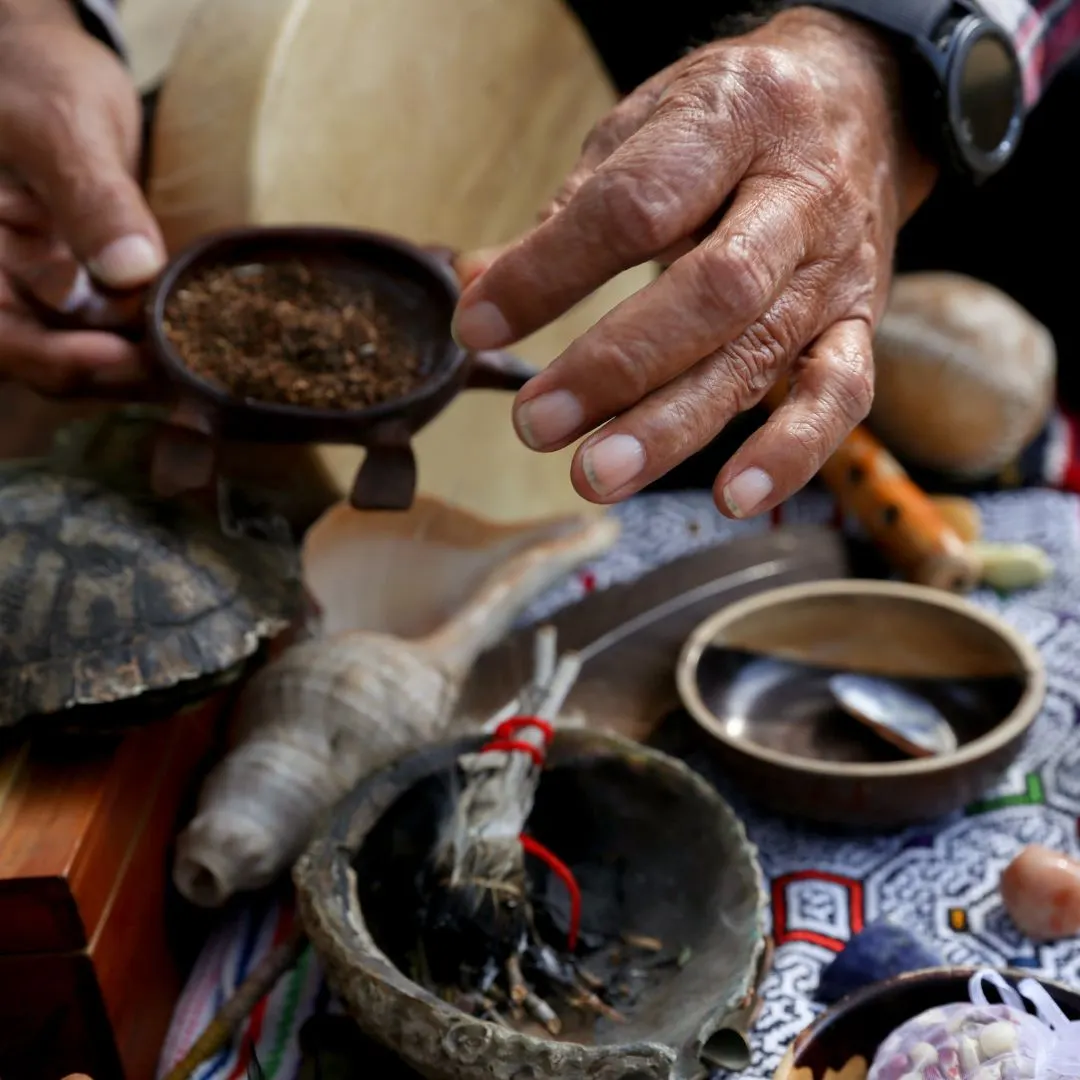
Likewise, in the case of the Africans, ancestral curses can affect anyone in the lineage, good or bad, Christian or not. And that is why it is now popular to have Pastors trying to break what is considered ancestral curses when unusual things begin to happen to individuals or a lineage. Africans have a clear understanding of the existence of divinities and powers that African ancestors related to. Africans are also aware of the fact that if these relationships are distorted wittingly or not, or if some agreements with divinities or powers are broken, the consequences of these actions can be loosely classified as ancestral curses.
Get Cathreaf’s stories in your inbox
Join Medium for free to get updates from this writer.
What happened in the video is an evaluation of African reality using Christian contexts and categories which often do not perfectly explain African realities. That was why the author of the video denied the existence of ancestral curses. As I wrote in my book Adimula (2015), the removal of the consequence of the actions of our ancestors (what is described in Christianity as original sin) is not done through baptism. In the religion of the Yoruba, Ela, through the activities of Orunmila and the content of Ifa corpus, determine what needs to be done to be SAVED. This is because unlike what is taught in Christianity, human nature was not damaged by original sin, and so incarnation is not considered necessary. What happened according to the theology of the Yoruba was a physical separation of God from the living space occupied by humans. So, salvation takes place when the distance between God and humans is bridged. The point here is that African realities are best understood and interpreted using African theologies and context.
What then is the source of ancestral curse? In African theology (how Africans perceive, understand and relate to God), curses do not come from mere conversion, curses come from the breaking of vows made with divinities, or abandoning promises made as a result of favours received, or a disregard of tradition(s) that one considers to be obsolete. These curses are real because among Africans (Yoruba), one does not ignite a relationship with a divinity and carelessly walk away from it. Such relationships are believed to outlive the human person that started them. CURSES are therefore consequences of actions or broken agreements with divinites or other humans. And these consequences usually outlive the person that brought them about, and in other instances, the curses are time specific if directed at generations to come.
Haven made the above distinction, one can then say that it is unwise to deny ancestral curses. It is important to state that if the author of the video had spoken about the exaggerations that are seen today among pentecostal preachers and ministry founders; as almost every misfortune is linked to ancestral curse, or if he refuted the method used in breaking ancestral curses, there most likely would not have been a need for this clarification. But the author toed the path of the early missionaries who denied everything African simply because African realities were different from what they knew in their context. Bolaji Idowu (1991) linked the actions of the missionaries to their lack of understanding of what they saw.
Now that we agree that we should not deny the reality of ancestral curses, the next big question should be; what can one do if ancestral curses are so real? For Christians, when conversion takes place, or when one begins to notice things that can fit into the category of ancestral curses, one must make sure that there is in place, and NECESSARILY so, a replacement of what one walked away from. Otherwise the analogy of Jesus in the Gospel of Matthew when he taught about what to do when evil spirits are cast out will happen.
So I say that although ancestral curses are real, they can be upturned, however, a replacement MUST be in place. In the case of Christians, the word of Jesus is apt: “43When an unclean spirit comes out of a man, it passes through arid places seeking rest and does not find it. 44Then it says, ‘I will return to the house I left.’ On its return, it finds the house vacant, swept clean, and put in order. 45Then it goes and brings with it seven other spirits more wicked than itself, and they go in and dwell there; and the final plight of that man is worse than the first.” (Matthew 12:43–45). In the case of traditional practitioners, they can upturn ancestral curses by either appeasing the forces that are responsible for the curses or maintain the relationships or agreement made by the ancestors and ensure it continues from generation to generation.
As I conclude, it is important to keep in mind that there is pluralism of religion and culture, this recognition is important when discussing African realities. It is correct to identify differences among religions, and to go further to clearly state what is acceptable or not acceptable in each religion. The author would probably have made a lot of sense by saying that in Christianity, the only ancestral curse that is inherited is from original sin, and this is broken by the waters of baptism. And he should also have recognised that Africans have ancestral curses given the relationships that African ancestors had prior to encountering Christianity.
References
Akin-Otiko, A. (2015). Àdìmúlà Religion of the Yoruba: A New Perspective. Ibadan:
Gold Press Limited. ISBN:978–978–8428–55–8.
Idowu, E.B. (1991). African Traditional Religion. Ibadan: S.C.M.