Arianespace, SpaceX, and Space Law’s Identity Crisis


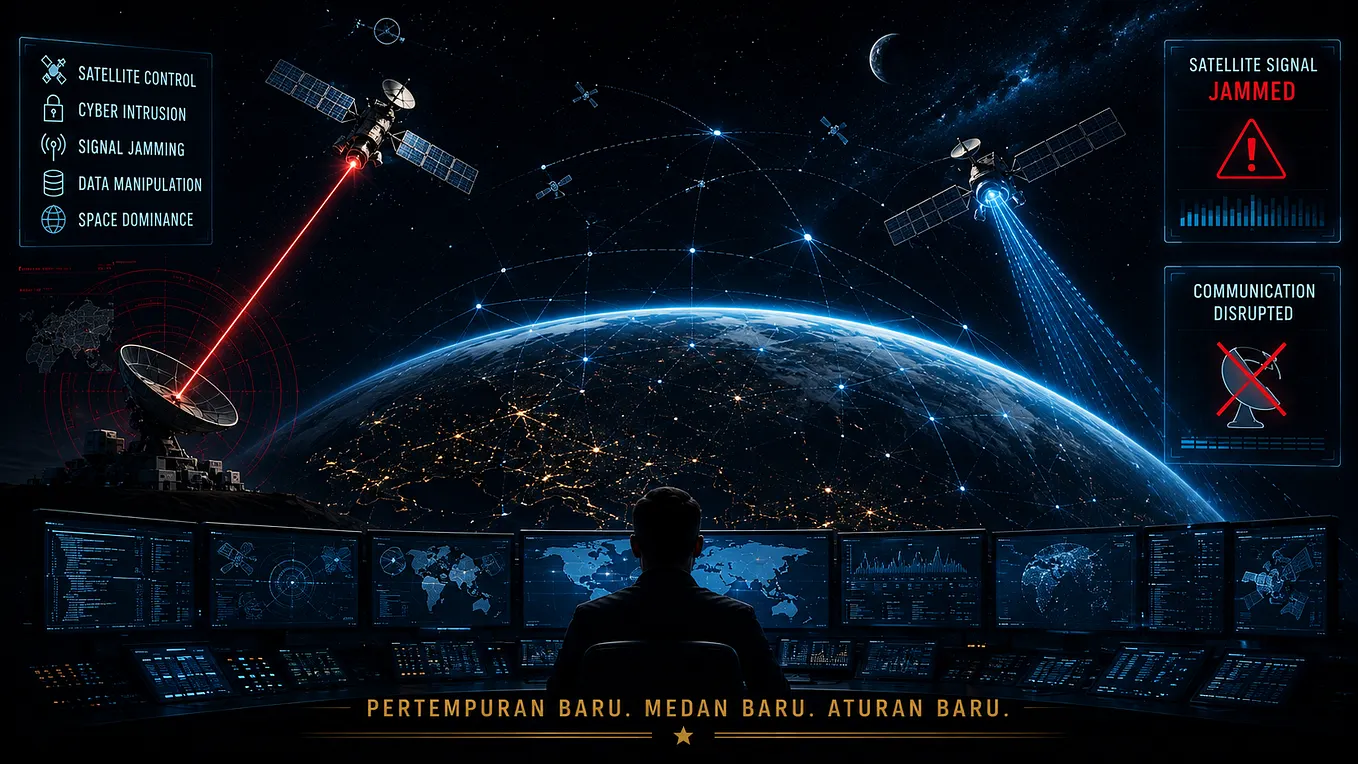
“The 1972 Liability Convention was written on a simple assumption: the one launching rockets into space is a state. Five decades later, that assumption has collapsed, and nothing has replaced it.”
The Launching State That No Longer Exists
Article I of the 1972 Liability Convention contains the definitions that form the basis of the entire liability regime under this convention, among them: Damage, meaning loss of life, personal injury, or other impairment of health; or loss of or damage to property belonging to a state, to persons (whether natural or juridical), or to property of an international intergovernmental organization. Launching, which also covers attempted launching — meaning it doesn’t have to successfully reach orbit to fall under this convention. Then Launching State, which has two categories: a state that launches or procures the launching of a space object, or a state from whose territory or facility a space object is launched. And finally, space object, which includes component parts of a space object as well as the launch vehicle and its parts.
The convention defines a launching state as a state that launches or procures the launching of an object into space, and a state whose territory or facility is used to launch that object. There are four categories that can qualify as a launching state:
- The state which launches
- The state which procures the launching
- The state whose territory is used for the launch
- The state whose facility is used for the launch
Every space object can be tied to at least one state, and often more than one. This concept looks simple and clever, but in practice it’s far more complicated, especially in today’s era of multi-actor commercial launches.
If there is more than one launching state in a single launch (for example: a US company launching from a French facility in Guiana carrying a third country’s satellite), the launching states are jointly and severally liable for any damage caused, including in cases of joint launches involving a third state.
A Concrete Case: Who Is Responsible?
A single modern launch can easily trigger all four categories at once, involving different states: the state where the company is registered, the state where the facility is located, and the states owning each payload in a single rideshare. That means a single launch could have as many as a dozen or more launching states at once — this isn’t merely a theoretical issue, but a structural consequence of a 1972 definition written for a world with very few actors.
Case Study: SpaceX Transporter-16
To understand just how far the assumptions of 1972 are from today’s reality, consider the following scenario, built from a real mission that actually took place.
In a single launch, a Falcon 9 carried as many as 119 payloads at once into a sun-synchronous low orbit from Vandenberg Space Force Base, California. Of that payload count, the sub-contractor SEOPS Space alone carried payloads originating from 13 different countries — including Canada, France, Malaysia, Nepal, Norway, Romania, Scotland, Spain, Switzerland, and Taiwan. Meanwhile, another integrator, Exolaunch, facilitated launch access for more than 25 commercial, institutional, and government clients from the United States, the United Kingdom, Bulgaria, France, Finland, Greece, Italy, Spain, South Korea, Taiwan, and Turkey.
Layers of actors in a single launch:
- Launching/facility state — US (Falcon 9 rocket, launched from a US base)
- Launch provider — SpaceX (private, US-registered)
- Rideshare integrators — Exolaunch (Germany), SEOPS (Texas, US), D-Orbit (Italy) — third-party companies that book launch slots for their clients
- End payload owners — a dozen or more different countries, from government agencies (Germany’s DLR for the SpaceMast camera) to private companies (Satellogic, OHB Sweden, Qubitrium)
The 1972 Convention did anticipate the possibility of more than one launching state — through the mechanism of joint and several liability. But this mechanism was designed for scenarios involving two or three states in a single launch, not for the reality of modern rideshares, in which a dozen or more countries can be involved at once, most of whom don’t even know who their payload’s “neighbor” is on the same rocket.
Fortunately, as of this writing, no real incident from these rideshare missions has actually been tested through the Liability Convention’s mechanism. But the absence of a case doesn’t mean the absence of risk — it more reflects the fact that this legal regime has never truly been tested by the world it is meant to govern.
SpaceX: When a Private Company Outgrows Many National Space Agencies
Throughout 2025, a single private company, SpaceX, launched rockets more often than every other country in the world combined. The world recorded a new milestone with a total of 315 orbital launch attempts worldwide. Of that total, SpaceX alone was responsible for 165 launches — more than half of the global total, and more than the combined total of every other country in the world.
By comparison: China, which ranks second among launching nations, recorded only 92 launches combined across its various state and private operators. Russia, through Roscosmos, ranks third with 17 launches, followed by Europe with 8 combined launches (Ariane 6, Vega C, and the debut of Isar Aerospace’s Spectrum).
This figure becomes even sharper when looking at mass delivered to orbit rather than just launch count. According to SpaceX’s S-1 filing, the company carried 2,213 metric tons of payload to orbit throughout 2025 — more than 80 percent of the world’s total mass-to-orbit. Its closest competitor, China’s CASC, carried only about 12 percent of what SpaceX achieved.
Get Nurul Khadhirah’s stories in your inbox
Join Medium for free to get updates from this writer.
In other words, a private company now controls greater physical access to space than every country in the world combined, including nations with space programs that have run for decades, such as Russia and the European states.
Not just a striking statistic, but a structural problem
The space law regime built between 1967 and 1979 was constructed on the assumption that states are the dominant actors, with private companies as peripheral players subject to state authority. The reality of 2025 inverts that assumption: the physical capacity to access space is now greater in the hands of a single private company than in the hands of nearly every sovereign state in the world.
The implication isn’t just about who profits commercially — it’s about who holds real bargaining power when other states need access to orbit, and who, de facto, determines the pace and direction of global space exploration.
The greatest irony: legally, SpaceX remains an entity subject to state authorization (the FAA-AST). But in terms of real power, its dominance makes the question of “who actually holds power over access to space” increasingly difficult to answer simply by pointing to state institutions.
Arianespace: When “Private” Turns Out to Still Be Half State
If SpaceX is the purest face of space capitalism, Arianespace is its opposite: a company that is legally “private,” but was born, raised, and remains, to this day, tied to the state.
Arianespace was founded on March 26, 1980, and holds the title of the world’s first private space transportation company. In its early days, its largest shareholder was CNES (France’s national space agency), with about 34 percent ownership, followed by various other French and German aerospace companies.
This ownership structure changed significantly in 2016, when CNES sold its shares to Airbus Safran Launchers (now ArianeGroup), raising pure private ownership to 74 percent. Today, Arianespace is a wholly owned subsidiary of ArianeGroup — a company whose own shares are held 50–50 by Airbus and Safran, two European aerospace giants.
On paper, this looks like full privatization: the state stepping out, private capital stepping in. But the reality is far more complicated. CNES’s president at the time of the share sale affirmed that the French government retained a strong supervisory role over Arianespace, even after divesting its ownership stake.
Furthermore, Arianespace operates from a state-owned facility: the Guiana Space Centre in Kourou — a facility that is a direct legacy of France’s strategic needs following the decolonization of Algeria. The Ariane rocket itself was born from an initiative by nine European governments through the European Space Agency (ESA) in the late 1970s, with most of the early development costs borne directly by the French government.
Why is this an important contrast to the previous section?
If SpaceX shows how state capacity can be decisively outmatched by a purely private company, Arianespace shows something different: the category of “private” itself is not binary but sits along a long spectrum between state and private — and Arianespace occupies a very different point on that spectrum from SpaceX, even though both are labeled “commercial companies” in industry reports.
This has a direct consequence for the murkiness of liability questions. If an Arianespace rocket fails and causes damage, the launching state is clear: France, through the Kourou facility it owns. But who bears the financial claim behind it — the French state, ArianeGroup, or some combination of both through insurance mechanisms — is a much murkier question when the operating company has such a layered ownership structure. Corporate structures like this also tend not to be static, especially in an industry currently consolidating under competitive pressure from SpaceX.
Answering the “Identity Crisis of Space Law”
So, is the space law regime really experiencing an identity crisis? The answer: yes — but not because the law itself is broken, but because its categories no longer reflect the reality they are meant to govern.
The 1972 Liability Convention was built on one simple assumption: the world of space is a world of states. The launching state was clear, because only states had the capacity to launch rockets. Private actors were barely worth discussing, because there was practically no private actor significant enough to be considered.
The cases of SpaceX and Arianespace show two different faces of that assumption’s collapse. SpaceX proves that state capacity can be decisively beaten by a single purely private company — not merely competing, but dominating more than 80 percent of the world’s mass-to-orbit. Arianespace, meanwhile, proves something different: even the category of “private” was never truly free of the state — it merely shifts position along the spectrum of ownership and control, from 34 percent owned by CNES in 1980 to a wholly owned subsidiary of ArianeGroup today, without ever truly escaping French state oversight.
This is where the identity crisis actually lies: not in any one company or state, but in the legal category of “launching state” itself. That category was designed to distinguish between two clear worlds — state versus non-state. But the reality of the 2020s reveals a much murkier spectrum: there is SpaceX, structurally purely private yet operating at a scale that surpasses the capacity of nearly every state; there is Arianespace, structurally “private” yet substantively still tightly bound to the state; and there are rideshare integrators like Exolaunch, booking launch slots for a dozen or more clients from different countries at once on a single rocket.
A law designed to distinguish between two categories now has to handle a gradient. And a gradient cannot be resolved with a binary definition written five decades ago.
Why Are Regulators Overwhelmed?
The licensing process — safety review, policy review, payload review, environmental review, financial responsibility — was designed on the assumption of one operator, one mission, one primary payload per application.
The reality of modern rideshares inverts that assumption. A single license application for a mission like Transporter-16 has to accommodate 119 payloads at once, from dozens of different clients, with non-uniform risk profiles.
Payload review, which is ideally meant to assess a single payload in depth, now has to process dozens of payloads at once in a single evaluation cycle, each potentially raising different issues around hazardous materials, disposal plans, or export sensitivities.
Financial responsibility, or proof of insurance based on maximum probable loss, is also more complicated to calculate when the failure of one payload could affect other payloads on the same rocket, while each payload has a different owner and jurisdiction.
Regulators were not redesigned to handle this complexity. What’s happening instead is procedural patchwork: old processes are kept in place, only expanded in scope to accommodate more actors, rather than overhauled to reflect the new reality. This is concrete proof that the legal identity crisis is not merely a matter of definitions on paper, but an issue already burdening regulators’ day-to-day work.
Today’s space law regime stands on a foundation written for a world that no longer exists — a world in which the state was the only relevant actor beyond Earth. SpaceX and Arianespace, each in its own way, now prove that this foundation is cracked: one shows that private actors can outmatch states; the other shows that private actors never truly stopped being states. The regulators meant to bridge the two are still working with tools designed for a simpler world.
This crisis will not resolve itself by waiting. It will resolve only if the world chooses to rewrite the definition of “launching state” — or keeps patching the old system until it finally fails to contain the complexity that keeps growing.
#connectingglobaldiplomacytothecelestialbodies #celestialpolicyprincess