Intellectual Assistant Weekly Brief
September 25 to October 1, 2026

Executive summary
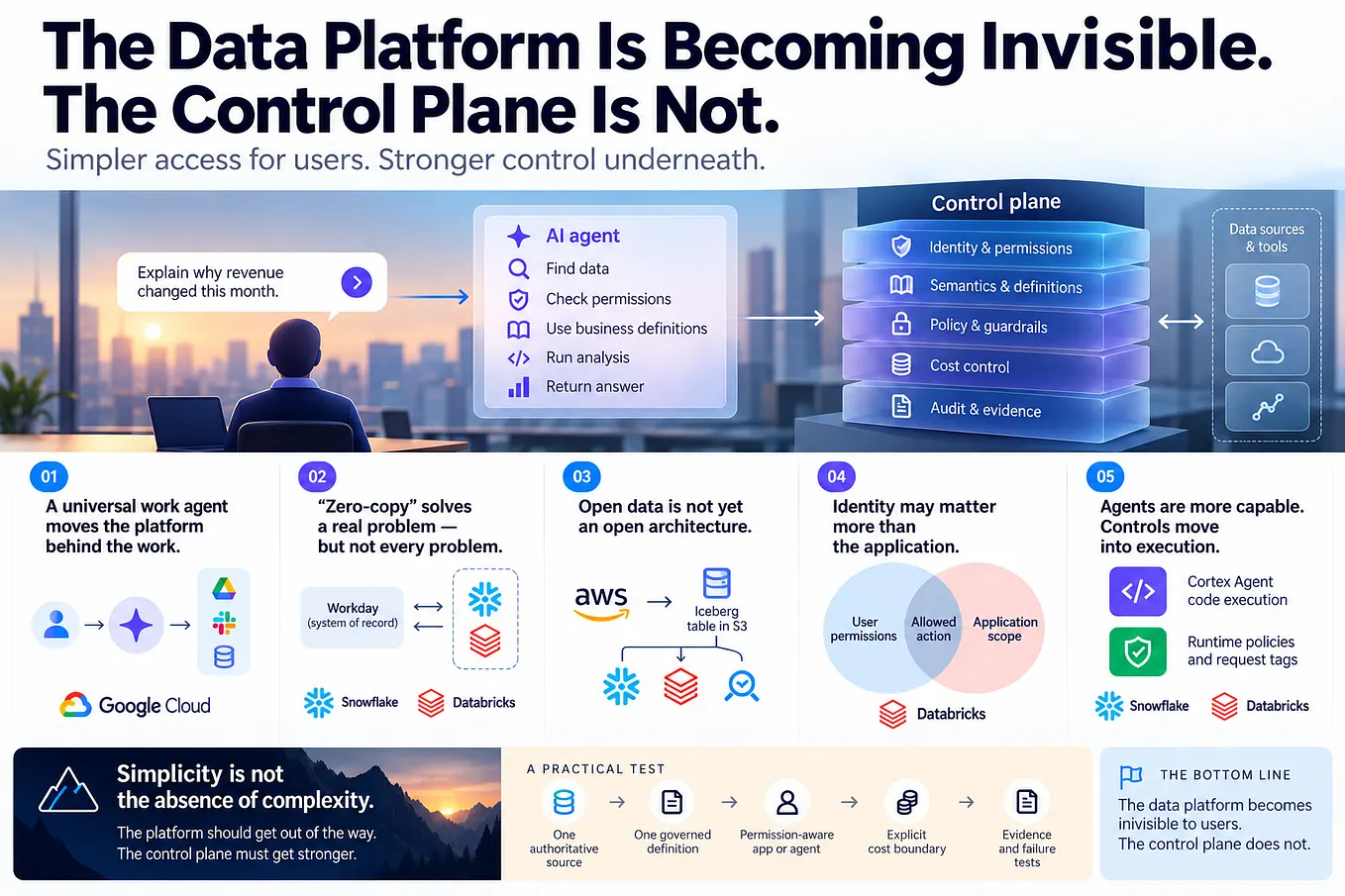
The biggest development this week isn't a new model. It is the emergence of assistant infrastructure that can remain active, hold responsibility over time, and act across systems.
OpenAI introduced always-on agents, while Microsoft presented a persistent work agent with its own identity, memory, computer, workspace, permissions, and governance. At the same time, NVIDIA and the National Institute of Standards and Technology pushed control outside the reasoning model itself through runtime boundaries, identity, authorization, and independent enforcement. New preliminary research adds two complementary ideas: assistants may need their own explicit evaluation criteria, and long-running work may require a maintained representation of what is known, missing, and unresolved rather than memory alone.
The overall evidence is strongest for the existence and architecture of released products and official governance work. Evidence that these approaches improve long-term user outcomes remains much weaker.

Key developments
1. Agent identity and authorization become first-class infrastructure
Area: Governance, safety, architecture
Date and status: September 29, 2026 — official National Institute of Standards and Technology stakeholder summary and project direction; not a final standard.
What changed:
The National Cybersecurity Center of Excellence published its synthesis of more than 600 responses from industry, government, and academia on software and artificial intelligence agent identity and authorization. It will use software development as the first implementation case for demonstrating how agents can be identified, authenticated, and authorized. NIST
The feedback was unusually consistent on several architectural points. Almost all respondents supported distinct, verifiable non-human identities for agents. Many favored stable trust anchors combined with short-lived, tightly scoped credentials. Respondents also favored deterministic policy enforcement for authorization, logically separate governance components, richer audit evidence, and risk-based human approval rather than requiring approval for every action. NIST Pages
Why it matters:
A capable Intellectual Assistant should not simply inherit the user’s identity and permissions. Systems increasingly need to know:
who the agent is → who authorized it → what task it is performing → what authority it currently has → what evidence exists for its actions
Who may benefit:
Enterprise architects, security teams, assistant-platform teams, governance teams, regulated organizations, and developers of assistants that perform actions.
Practical implication:
Agent identity should become a separate design object. Permissions should be task-scoped and temporary where possible. Reserve human approval for actions where the consequences justify interruption.
What remains uncertain:
This is a synthesis and implementation direction, not a completed technical standard. Respondents agreed more strongly on the problems and principles than on one universal technical implementation. NIST Pages
Evidence level: Strong evidence
Recommendation: Read and assess.
This is the most useful governance artifact of the week for teams building assistants that can act.
Sources:
National Institute of Standards and Technology — Comments on Software and Agentic Artificial Intelligence Identity Concept Paper, September 29, 2026
National Cybersecurity Center of Excellence — Summary of Comments on the Concept Paper
2. OpenAI introduces always-on agents for ongoing responsibility
Area: Tool use, context, controlled automation
Date and status: September 29, 2026 — product rollout to eligible users; enterprise access is beta and disabled by default.
What changed:
OpenAI introduced dots, persistent agents that can continue working between conversations. A user gives a dot a goal, connects the applications it needs, and defines what it may do independently. Each dot has its own cloud computer and returns work for user review. Access is rolling out to eligible Pro and Business Premium users, with beta access for Enterprise, Education, and Healthcare workspaces when an administrator enables it. OpenAI
The broader DevDay release also added shared workspaces, recurring team tasks, event-triggered plugin automation, and connected work that can continue without the user remaining in the conversation.
Why it matters:
The interaction model changes from:
ask → answer → session ends
to:
assign responsibility → define boundaries → monitor progress → review outcomes
That is a material change for Intellectual Assistant design.
Who may benefit:
Knowledge workers, researchers, project managers, operations teams, and people with recurring information or coordination work.
Practical implication:
Persistent assistants need a task ledger, explicit authority boundaries, durable context, progress reporting, and a clear way for the person to intervene or terminate work.
What remains uncertain:
Credible independent evidence on long-term accuracy, memory drift, permission mistakes, unwanted persistence, or net productivity benefits is still lacking.
Evidence level: Emerging evidence
Recommendation: Try now.
Start with one reversible recurring responsibility where you can review every result before taking consequential action.
Source:
OpenAI — DevDay 2026 Recap, September 29, 2026
3. Microsoft separates conversation, delegated work, creation, and persistent agency
Area: Architecture, workplace assistants, controlled actions
Date and status: September 25, 2026 — product announcement with staged rollout. Home and Code are entering the Frontier program; Copilot Managed Runtime is in preview; Autopilot is expanding to private preview.
What changed:
Microsoft reorganized Copilot around three forms of work.
Home combines conversation and delegated task execution and embeds editable Word, Excel, and PowerPoint work directly in Copilot. Code allows knowledge workers to create small applications, dashboards, workflows, and automations from natural-language instructions in a sandboxed environment. Autopilot is a cloud-hosted persistent agent with its own identity, memory, computer, workspace, objectives, permissions, audit controls, and governance. Microsoft Blog
Microsoft also introduced Copilot Managed Runtime, a governed environment for running applications and agent-created solutions inside the organization, plus a centralized plugin registry that lets administrators approve and manage connected capabilities.
Why it matters:
This separates different assistant jobs instead of forcing all of them through one conversational interface:
ask → delegate → build → automate
Who may benefit:
Enterprise knowledge workers, business analysts, operations teams, solution builders, information-technology administrators, and organizations standardizing assistant use.
Practical implication:
An Intellectual Assistant may benefit from explicit operating modes with different autonomy, execution environments, permissions, and review expectations.
What remains uncertain:
Many of the most consequential elements remain in preview or staged rollout. Claims about business value and reliability are currently provider-led.
Evidence level: Emerging evidence
Recommendation: Read and assess.
The architecture is useful to study now; broad deployment should wait until the individual modes and controls are validated.
Source:
Microsoft — Introducing the new Copilot with Home, Code and Autopilot, September 25, 2026
4. NVIDIA moves agent enforcement outside the reasoning system
Area: Safety, architecture, runtime control
Date and status: September 28, 2026 — Open Agent Safety Platform announced; OpenShell broadly available; Sentry presented as a reference system design.
What changed:
NVIDIA introduced an architecture with two separate control layers.
OpenShell runs an agent in an isolated environment, traces activity, and enforces policies around files, networks, tools, and services. Sentry monitors the agent independently from a separate BlueField-4 data processing unit and quarantines activity that moves outside defined boundaries. NVIDIA Investor Relations
The important architectural point is separation: the system deciding what to do is not the only system deciding whether the action is allowed. Independent technical coverage notes that this is a containment mechanism, not a complete solution to incorrect or deceptive model behavior. SecurityWeek
Why it matters:
Prompt instructions and model self-restraint are weak places to put the final security boundary for an assistant with significant authority.
A stronger pattern is:
agent reasoning → external policy boundary → independent monitoring → execution
Who may benefit:
Organizations running coding agents, infrastructure agents, security agents, robotics, or any assistant with meaningful access to systems or data.
Practical implication:
Do not make the assistant responsible for enforcing all of its own limitations. Important controls should exist outside its reasoning loop.
What remains uncertain:
The approach can constrain access but cannot ensure that the agent’s reasoning is correct. Independent evidence about false blocks, operational overhead, and real incident reduction remains limited. The Washington Post
Evidence level: Emerging evidence
Recommendation: Read and assess.
This is an important architecture for assistants with high-impact tools, but it still needs evidence from real deployments.
Sources:
NVIDIA — Open Agent Safety Platform, September 28, 2026
SecurityWeek — NVIDIA Unveils Artificial Intelligence Agent Safety Platform, September 28, 2026
5. Team-chat assistants gain better context, traceability, and recovery
Area: Knowledge work, tool use, reliability
Date and status: September 25, 2026 — public preview for GitHub Copilot Business and Enterprise organizations.
What changed:
GitHub improved its Copilot integration with Slack and Microsoft Teams so the assistant can use more of the surrounding work context. Slack files, attachments, and message links can become context; Microsoft Teams adds inline images, forwarded-message context, and channel or thread history. When Copilot creates GitHub work, it can link the result back to the originating discussion. The GitHub Blog
The update also improves long-running work: clearer implementation-plan status, recovery from interrupted or stale responses, reconnection after idle periods, and safer repository switching so an outdated session doesn't keep acting in a repository that has been superseded.
Why it matters:
Useful workplace assistants need more than retrieval. They need continuity between conversation, decision, task, action, and resulting artifact.
Who may benefit:
Software teams, engineering managers, product teams, and organizations already working heavily through shared chat channels.
Practical implication:
Preserve the source discussion and decision context when an assistant creates downstream work. Do not reduce a task to an isolated instruction if its rationale already exists elsewhere.
What remains uncertain:
The capability is coding-focused and remains in public preview. Independent measurements of error reduction or time saved are not available.
Evidence level: Emerging evidence
Recommendation: Try now.
Use a bounded workflow where you can inspect the source discussion, generated issue, implementation status, and final result.
Source:
GitHub — Updates to GitHub Copilot for Slack and Microsoft Teams, September 25, 2026
6. Long-running agents begin designing their own evaluation criteria
Area: Reliability, evaluation, memory
Date and status: September 27, 2026 — preliminary research preprint.
What changed:
Researchers introduced SelfSuite, a method for tool-using agents operating across a long series of tasks without an external success signal. The agent creates and freezes a small evaluation suite, then uses it to decide whether a result is good enough, whether a second attempt is justified, and how to label the experience in memory. arXiv
Across repeated evaluations on two agent benchmarks, the authors report that SelfSuite outperformed a plain agent without labels. In the ablation study, removing the evaluation-gated second attempt was the only tested removal that reduced performance in every repeat. On one benchmark, however, another method with a direct executable reward still performed better. The paper has not been peer-reviewed or independently reproduced. arXiv
Why it matters:
A persistent Intellectual Assistant needs a way to determine:
Get Oleg Gavrylenko’s stories in your inbox
Join Medium for free to get updates from this writer.
Did I actually succeed?
Without that, retrying, learning, and memory updates can all reinforce bad outcomes.
Who may benefit:
Teams building long-running assistants, workflow agents, evaluation infrastructure, and adaptive memory systems.
Practical implication:
Define acceptance criteria before execution and use them to decide whether to accept, retry, escalate, or learn from a result.
What remains uncertain:
The evaluator is created by the same model family performing the work, which can create correlated errors or self-confirmation. Results are benchmark-based.
Evidence level: Emerging evidence
Recommendation: Read and assess.
The practical pattern — criteria first, execution second, memory after validation — is worth testing even without adopting the complete research system.
7. Long-running assistants may need explicit state, not just more memory
Area: Context, memory, reasoning
Date and status: October 1, 2026 — preliminary research preprint.
What changed:
The Beyond Memory paper proposes maintaining an explicit belief state for a long-running agent. The state contains both an estimate of the current world and unresolved task requirements: what the assistant still needs to discover or complete. arXiv
The method also detects what the authors call Belief Trapping: the agent keeps acting but stops making meaningful progress. It then uses recovery strategies based on the unresolved requirement and failure pattern. The authors report the strongest overall performance across four tested benchmarks and three model backbones, with ablations supporting the role of consistency validation and recovery. These are preliminary author-reported research results. arXiv
Why it matters:
Conversation history does not necessarily tell an assistant what the current situation is.
A more useful working state may explicitly separate:
known → assumed → unresolved → completed → blocked
Who may benefit:
Research assistants, investigative assistants, project assistants, diagnostic systems, and other long-running workflows.
Practical implication:
Maintain a compact current-state record instead of repeatedly reasoning over the complete history.
What remains uncertain:
The work is preliminary and benchmark-based. Independent reproduction and real professional-work testing are still required.
Evidence level: Emerging evidence
Recommendation: Read and assess.
The state model is simple enough to prototype without adopting the full research framework.
Cross-cutting implications
Persistent assistants require persistent governance
OpenAI dots and Microsoft Autopilot move assistants from session-bound interaction toward ongoing responsibility. Developments from the National Institute of Standards and Technology and NVIDIA point to the corresponding control architecture: persistent work should have explicit identity, bounded authority, external enforcement, traceability, and ways for humans to intervene. This is a meaningful direction supported by several independent developments, though long-term deployment outcomes remain largely unknown. OpenAI
Context is shifting from history to operational state
Microsoft’s persistent agent includes durable memory and workspace, GitHub preserves conversation-to-action traceability, and the Beyond Memory research explicitly represents unresolved work. Together, these point toward a useful distinction:
History is what happened; state is what matters now.
The direction is credible, but more real-world testing is needed to determine which state representations remain reliable over weeks or months. Microsoft Blog
Evaluation is moving inside the execution loop
SelfSuite evaluates work before deciding whether to retry or learn from it; NVIDIA adds independent enforcement during execution; GitHub exposes clearer status and failure states. The common pattern is that quality control is moving from a final review step toward continuous supervision of the work itself. https://arxiv.org/abs/2609.33717
Practical improvement ideas
Idea: Agent Identity Card
Problem addressed:
An assistant can act without the user or downstream system clearly knowing whose authority it is using and why.
Suggested improvement:
Give every action-capable assistant an inspectable identity record containing owner, purpose, current task, allowed systems, allowed actions, credential lifetime, approval conditions, and responsible human.
Why now:
The National Institute of Standards and Technology stakeholder synthesis found very strong support for verifiable agent identity, short-lived scoped authority, and traceable delegation. NIST Pages
Small first test:
Create the record for one assistant and require it before one external tool can be used.
Expected value:
Clearer accountability and smaller permission scope.
Main risk or limitation:
Poor implementation could create administrative complexity without changing actual enforcement.
Success signal:
For every external action, a reviewer can immediately determine who authorized it, for what task, and within which boundary.
Idea: Runtime Safety Envelope
Problem addressed:
Prompt instructions are not a dependable final boundary for consequential actions.
Suggested improvement:
Move critical restrictions outside the assistant: filesystem limits, network limits, allowed tools, credential access, spending limits, and irreversible-action rules.
Why now:
NVIDIA’s OpenShell and Sentry architecture, and the National Institute of Standards and Technology feedback, independently support separating reasoning from authorization. NVIDIA Newsroom
Small first test:
Place one tool-using workflow inside a restrictive sandbox and intentionally request actions inside and outside the approved boundary.
Expected value:
Failures become contained rather than depending entirely on model compliance.
Main risk or limitation:
Overly restrictive policy can block legitimate work.
Success signal:
Allowed work succeeds while prohibited actions remain technically impossible without explicit policy change.
Idea: Progress State plus Acceptance Gate
Problem addressed:
Long-running assistants can continue acting after losing the task state or misjudge whether the work succeeded.
Suggested improvement:
Maintain a small record with current facts, open requirements, blockers, next action, acceptance criteria, and evidence of completion.
Why now:
The Beyond Memory research makes unresolved task state explicit, while SelfSuite uses predefined evaluation to decide whether to accept or retry an outcome. arXiv
Small first test:
Apply the structure to twenty multi-step tasks and compare it with the existing workflow.
Expected value:
Less aimless continuation, fewer forgotten requirements, and clearer completion decisions.
Main risk or limitation:
The state itself can become incorrect and must therefore be reviewable.
Success signal:
The assistant can explain at any point what is complete, what remains unresolved, why it is taking the next action, and what will count as success.
What is worth reading
1. Summary of Comments on the Software and Agentic Artificial Intelligence Identity and Authorization Concept Paper — September 29, 2026
Audience: architects, security, governance, and enterprise assistant teams.
The most useful document this week for understanding the identity, authority, delegation, privacy, audit, and human-control problems that become unavoidable once assistants can act.
Read the National Cybersecurity Center of Excellence summary
2. NVIDIA Open Agent Safety Platform — September 28, 2026
Audience: assistant-platform, infrastructure, and security teams.
Worth reading because it provides a concrete architecture where enforcement and monitoring don't depend solely on the reasoning agent.
Read the NVIDIA announcement
3. Introducing the new Copilot with Home, Code and Autopilot — September 25, 2026
Audience: workplace-assistant architects, business analysts, and enterprise platform teams.
Useful as a reference model for separating conversation, delegated work, solution creation, persistent agency, runtime governance, and cost control.
Read the Microsoft announcement
4. Self-Designed Evaluators and Warm Memory for Long-Horizon Agents — September 27, 2026
Audience: evaluation, memory, and long-running assistant teams.
Useful for the idea that assistants need explicit success criteria before deciding to retry or learn from experience.
Read the preliminary research
5. Beyond Memory: Harnessing Long-Horizon Agents with Explicit Belief States — October 1, 2026
Audience: context, reasoning, and long-running workflow teams.
Useful because it separates working state and unresolved requirements from raw conversational memory.
Read the preliminary research
Important areas with limited coverage
User-controlled memory correction and deletion
No consequential development with sufficient credible coverage was found during this reporting period.
Persistent agents and new context methods appeared, but credible evidence about user-visible correction, deletion, expiration, and separation of personal versus organizational memory remains weak.
Independent productivity and business-value outcomes
New persistent-agent products are significant, but independent evidence showing sustained improvements in productivity, decision quality, cost, or error rates remains insufficient.
Contradiction detection and uncertainty presentation
No consequential development with sufficient credible coverage was found during this reporting period.
The selected research improves state management and self-evaluation, but does not establish a mature method for surfacing contradictory evidence to professional users.
Long-term self-evaluation reliability
SelfSuite provides useful preliminary evidence, but lacks independent validation. It remains unclear how often an assistant-generated evaluator shares the same blind spots as the assistant it evaluates.
Cross-provider interoperability
Plugins, tool connections, registries, and open runtime components expanded this week, but this reporting period found no consequential new cross-provider interoperability standard with sufficiently mature evidence.
Glossary
Agent identity
A verifiable identity assigned to an assistant or software agent rather than letting it simply impersonate a human user.
Authorization
The rules that determine what an assistant can access or do.
Belief state
A compact representation of what an assistant currently believes about the situation and what remains unresolved.
Intellectual Assistant
A system that helps a person understand information, perform knowledge-intensive work, make supported decisions, manage context, or perform controlled actions through natural interaction.
Persistent agent
An assistant that can maintain goals or state and continue working beyond one conversation.
Runtime boundary
A technical control around the environment where an assistant executes, limiting access to files, networks, tools, or other systems.
Trust anchor
A stable, verifiable foundation used to establish a system's identity or integrity.
Acceptance gate
A check that determines whether work satisfies predefined criteria before it is accepted, retried, escalated, or stored as useful experience.