Brief History of the Turks and Caicos
The Turks and Caicos Islands are best known today for their turquoise water, calm shores, and postcard-perfect beaches — but behind the beauty lies a long, layered history that many visitors never hear about. From the earliest Indigenous peoples to the salt rakers, pirates, colonial powers, and the rise of modern tourism, the story of the Turks and Caicos is one of resilience, survival, and reinvention.
Let’s walk through it — chapter by chapter.
The First Islanders: The Lucayans
Long before cruise ships or beachfront villas existed, the Turks and Caicos Islands were home to the Lucayans, a peaceful Indigenous community that arrived between 700 and 1000 AD. They traveled across the Caribbean in handcrafted canoes, settling in areas with fresh water, fertile soil, and easy fishing.
They lived simple, balanced lives:
- fishing in the shallow banks
- harvesting conch and shellfish
- farming cassava, corn, and sweet potatoes
- crafting pottery and tools from stone and shell
The Lucayans loved these islands for the same reason people do today — the calm waters, the sunshine, and the abundance of marine life.
Sadly, by the early 1500s, the Lucayan people disappeared from the islands entirely. After Columbus’s arrival in the Bahamas in 1492, Spanish enslavers captured and transported the Lucayans to work in mines and plantations in Hispaniola and Cuba. Within a century, the islands were empty again — silent and uninhabited.
A Chain of Islands Without People
After the Indigenous population was taken, the islands sat largely untouched. The Spanish claimed the region, but they didn’t settle here or build towns. Instead, they used the area as a navigation landmark while focusing on territories with gold and wealth.
By the 1600s, the empty islands became a haven for pirates and privateers. The hidden channels, quiet cays, and shallow waters made it the perfect place to hide ships or escape from European navies. Many stories still circulate about pirates storing goods on East Caicos or using the Caicos Banks as secret routes.
The Salt That Changed Everything
The turning point in Turks and Caicos history came in the late 1600s, thanks to something simple but extremely valuable at the time: salt.
Salt was the refrigeration of the colonial world. Without it, food spoiled. With it, sailors could travel across oceans for months. The natural salt ponds on Grand Turk, Salt Cay, and South Caicos were perfect for producing high-quality sea salt with almost no equipment.
Bermudians were the first to seize the opportunity. Every year they sailed hundreds of miles to the islands to:
- rake salt from the flats
- build windmills and salt pans
- create temporary settlements
This small industry pulled the Turks and Caicos into global trade for the first time.
A Struggle for Control: Britain and France
Salt wasn’t the only thing that attracted attention. The islands were located along important trade and shipping routes, which made them strategically valuable. Throughout the 1700s, control of the islands bounced back and forth between the British and the French.
- The French briefly occupied Grand Turk in 1764.
- The British eventually took lasting control in the late 1700s.
When the British settled permanently, they expanded the salt industry and brought enslaved Africans to work under harsh and exhausting conditions. Their descendants form the heart of the Turks and Caicos population today.
Abolition, Transition, and Dependence
When slavery was abolished in 1834, everything changed. The islands’ economy was still tightly tied to salt, but now the people who maintained the industry were free — building families, villages, and cultural traditions that still shape local life.
Get RAJH’s stories in your inbox
Join Medium for free to get updates from this writer.
Politically, the islands bounced between different colonial administrations:
- Linked to the Bahamas until 1848
- Then governed by Jamaica from 1874 to 1959
- Had moments of local self-government and brief instability
- Returned to direct British rule after Jamaica pursued independence
Meanwhile, the salt industry began to decline. Other countries started using newer technologies, making TCI’s manual salt raking less profitable. Many islanders turned to fishing, farming, and boatbuilding to survive.
Reinvention in the 20th Century
The mid-1900s were a period of transformation. With little economic opportunity at home, many Turks and Caicos Islanders migrated to the Bahamas, the UK, and the US for work. Back home, the islands slowly modernized:
- electric power and telecommunication systems were developed
- roads, clinics, and schools expanded
- the US built facilities on South Caicos and Grand Turk during the Cold War
Then came an industry that would completely redefine the islands’ future: tourism.
The Rise of Modern Turks and Caicos
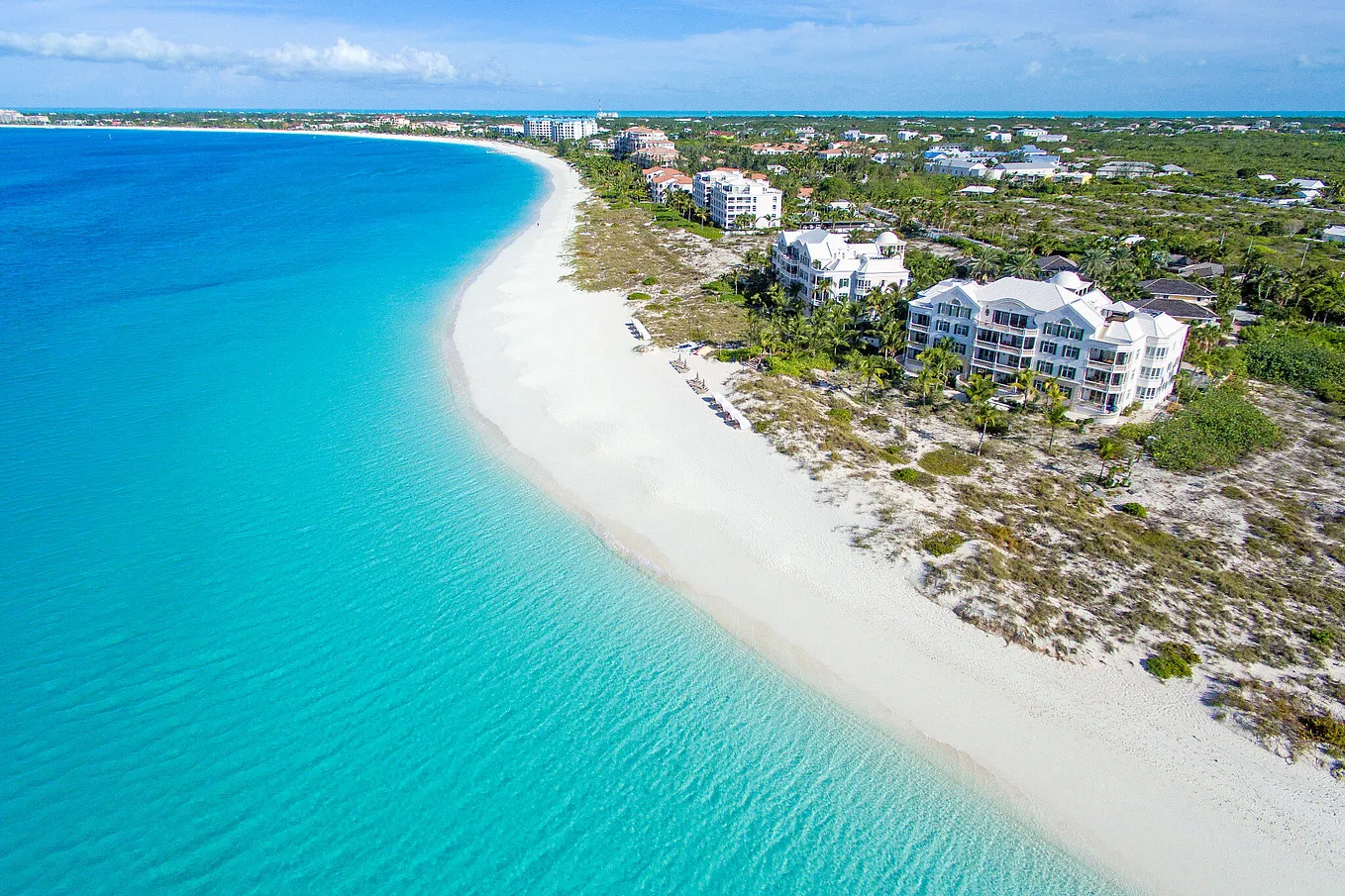
By the late 20th century, Providenciales — once sparsely populated — transformed into the main tourism hub. Resorts began to open along Grace Bay Beach. Scuba diving, bonefishing, and eco-tourism grew rapidly. Word spread about the pristine waters and peaceful atmosphere.
Today, TCI is known for:
- high-end tourism and hospitality
- protected marine reserves and national parks
- one of the strongest currencies in the region (the US dollar)
- a stable relationship with the UK as a British Overseas Territory
- a rich cultural blend of African, Caribbean, and British influences
What started as an economy built on salt now thrives on sunshine, sand, and sea.
A Story of Resilience and Transformation
The history of the Turks and Caicos Islands is not just a timeline — it’s a story of survival and reinvention. From the peaceful Lucayans to the salt rakers, from colonial battles to the rise of tourism, each chapter shaped the islands into what they are today.
Behind every conch shell, every quiet settlement, and every pink-and-gold sunset is a legacy of people who adapted, endured, and preserved the spirit of these islands.
The beaches may bring people here — but it’s the history, culture, and resilience that make Turks and Caicos unforgettable.