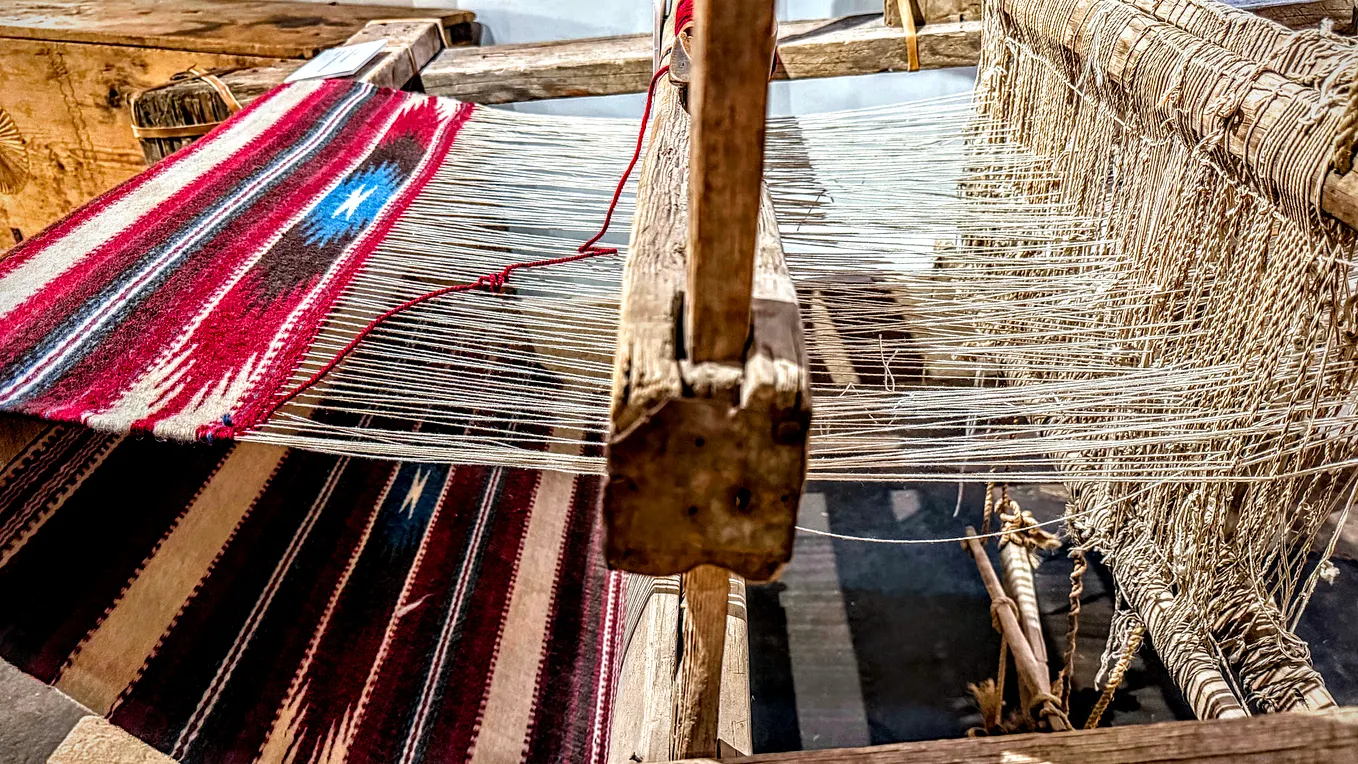
The Geometry and the Terror
On shame, survival, and the room between the signal and the act

My brother called from prison to tell me he thought he was going to die.
It was the first year of COVID. An abscessed tooth turned into an infection. A fever. The specific fear that arrives when your body is losing a fight and no one with keys will open the door. He had asked for care. Care didn’t come. So he called his family, because we were the last door left, and he told us he was afraid.
We made phone calls. All of us, for days. Our congressional offices. The Department of Corrections. Every advocacy group that would pick up. Somehow, I still don’t know exactly how, a message reached the cabinet secretary who ran the entire system.
Weeks later the warden, who didn’t like his bosses telling him how to run his prison, said something to my brother that I have never been able to put down. You must have a lot of friends.
He does.
Let’s go back to the fear… and being afraid. Not the infection — the fear. He wasn’t wrong to be afraid. The infection was real, the neglect was real, and people do die that way. But I want to know what the fear is. How a body running hot in a cell becomes, on the inside, the flat certainty that you are ending. I’ve seen that same certainty fire when nothing was wrong. In him. In me. In people in warm rooms, safe and loved, nowhere near danger.
That’s the thing I want to take apart. Not the tooth. The signal.
The signal doesn’t just make us afraid. It makes us move. It grabs the wheel before we’ve thought. And sometimes it hits someone.
Sometimes you catch a sentence halfway out of your mouth. You hear where it’s going and stop.
The first words are already in the room. The rest stay with you.
There’s a half-second in there. That’s the interval I mean.
So the real question was never only what is the fear. It’s this.
What do we call the thing in us that reacts as if it’s dying when it is only being contradicted? And what do we answer for, when it does harm in that gap, before the thinking mind arrives to stop it?
The self is not found. It’s generated.
Start with the part that sounds like philosophy and turns out to be plumbing.
You do not perceive the world and then consult a self behind your eyes that has opinions about it.
The brain never stops modeling two things at once. What seems to be out there. And the kind of creature that seems to be doing the experiencing.
The second model is the self.
It isn’t discovered by looking inward. It’s produced, the way your heartbeat is produced. Without your permission. Before anything you’d call a decision.
And it behaves like a prediction. The self-model is the running answer to a few questions the brain never stops asking.
Who am I. What am I worth. Am I safe. Am I lovable.
These aren’t musings… they’re load-bearing estimates. The whole system uses them to decide what to do next.
Some of those estimates the brain holds loosely, while others it holds with unquestionable confidence and precision.
And confidence here isn’t a mood. It’s a setting.
The most confident predictions are held as simply true. They are defended against contradiction with everything the system has.
Picture the self as a terrain. The same kind of terrain I’ve spent years mapping in networks, drawn inside a person. The confident predictions are the deep valleys. The places the whole terrain slopes toward. The organizing centers everything else is built on.
There is a machine that does something like this. Watching it run makes the metaphor feel less like one.
Teuvo Kohonen’s self-organizing map begins as a flat sheet of neurons that knows nothing about the world. You show it data, over and over. Each sample tugs the nearest neuron and its neighbors a little closer.
Slowly the sheet bends. Then it folds. Then it drapes itself over the hidden shape of the data, and the inputs it met most often become the deepest folds.
Nobody designs the landscape. It is fallen into, one small local update at a time. The places you were pressed hardest become the valleys everything after is built on.
No single neuron sees the shape it is helping to make. Each one answers the input in front of it, and its neighbors move with it.
The self works something like that sheet. The deep valleys are where the data of your early life ran densest. Which is also why, from down inside one, all you can feel is the slope.
None of this is abstract for me. I’ve seen it in my brother. I’ve seen it in me.
I design systems to survive attack. All day I look at them and ask what could hurt them, and how, and how soon. My work is about seeing the attack before it lands.
Sometimes I wonder what that work has carved in me. Then I wonder if it’s the other way around.
Was my mind shaped by the work? Or was it shaped already, and it happens to match the cyber terrain?
I can’t tell from in here. That’s the trouble with a valley.
Why a threat to the self can feel like a threat to the body
High confidence doesn’t buy you calm. It buys you sensitivity.
When information arrives that contradicts a deep valley, the brain doesn’t always take it as I may need to revise a belief.
The signal fires too fast and too low. The alarm systems go off before the thinking mind has the situation in hand. They’re faster. Older. Mostly beneath conscious speech.
And what they fire is not a memo. It’s an ancient signal calibrated across the length of human history, when the arithmetic was simple and total.
To belong to the group was to live. To be cast out of it was to die.
So the shame signal, I am unacceptable, I will be rejected, is not an emotion about social standing. Not underneath. It behaves like a mortality signal, an alarm built for a world where being cast out could kill you. Today it shows up looking like embarrassment.
The thinking mind understands, when it catches up, that a hard conversation is not an execution. But it arrives second.
The alarm has already gone off at full volume. The alarm was calibrated to death.
But there’s one valley worth naming on its own. I call it the installed watcher.
Surveillance is the word for being watched from outside. The installed watcher is what surveillance leaves behind when the watchers go home.
Some folds aren’t carved by what happened to you. They’re carved by being watched. A face across the table, a cell, a room where every sentence gets prosecuted, decided on, and ruled on before you’ve said anything at all. The model of you in someone’s mind, perhaps. Then, one day, the model of someone in yours.
Watch a person long enough and they start doing it for you. The watcher moves in. It settles into a valley and keeps score on your behalf.
In 1791 Jeremy Bentham published plans for the perfect prison. He called it the panopticon. A ring of cells around a single tower. The guard could see every prisoner. No prisoner could see the guard. They only had to believe someone might be looking.
Michel Foucault saw what that design really built, in Discipline and Punish. It wasn’t a building or place. It was a habit. The watched person, he wrote, “becomes the principle of his own subjection.” The guard can leave. The surveillance stays installed.
That’s why a contradiction can land like a sentence handed down. It isn’t only the other person judging you. It’s the watcher, agreeing with them.
My brother spent years where surveillance was built into the walls. Most of us carry the installed kind.
I don’t have to reach for a metaphor. I watched it happen to my brother, with a fever, in a prison cell, when being cast out really was a threat to his life and the institution around him felt nothing. It repaired nothing.
In that cell, being cast out and dying were the same thing. Most days they aren’t. The alarm doesn’t always know the difference.
The disturbing part, the part I’m writing about, is that the same signal fires when the walls are gone.
When there’s no cell, no fever, no infection. When the only thing under threat is a valley. A slope.
Get Chris Perkins’s stories in your inbox
Join Medium for free to get updates from this writer.
And it goes off too big.
This is the detail people feel in every hard fight and can rarely explain. Why is this so big? Why did something so small detonate something enormous?
The size of the signal was set a long time ago. The valley was carved by specific experiences, at a specific age. Its depth records the force and the timing of the original event. Not the size of whatever just brushed against it.
A new thing that merely rhymes with the old threat fires the old alarm at the old volume. “Triggered.”
A small remark can find an old fear. Then you’re at the kitchen table, answering for more than anyone at it said.
You are not overreacting to the present. Often you’re reacting to the past… down in the valley.
The vise
A self is a prediction that has to stay approximately true over time.
That continuity isn’t a nicety. It’s the substrate of being a someone at all.
So when a deep valley is genuinely threatened, the brain can register something with real force.
The person I have been predicting myself to be cannot survive this intact.
Not I’ll feel bad.
Closer to: the entity that comes out the other side of this update is not the one that went in.
Some people can say it out loud. If I admitted that, I wouldn’t know who I was.
That sentence sounds dramatic but it’s not… it’s an accurate readout of the machinery.
The defense that goes up in that moment is not stubbornness. It is not cruelty.
From the inside, the defense is survival.
My brother and I came out of the same home. The one our grandparents built, where our whole family has always gathered, the ground where both of us were carved. Same terrain. Same era. And two worldlines that ended up an almost unbelievable distance apart.
I could try to find where his valleys and mine split. I won’t. His valleys are his to name.
What I can say is this. I can’t tell you what was in him when he did what he did. I can tell you the architecture runs in all of us. The harm was real. The kind a whole society carries.
The people on the other side of his record don’t need me to narrate them. They need me not to erase them.
And then the system ran its own architecture back at him.
A prison has valleys too. Deep ones. Carved by every record and warden that came before him. When it looked at him it saw the file, not the man, and it fired at the old size, at the same old volume.
A fever in a cell. A request for care that didn’t come.
Care is what power becomes when something holds it. Nothing held it.
That’s the terror I mean. Not what he did. What was done to him, by something that could not feel him, because feeling was never its job.
So — are we monsters?
There are two things hiding inside that question.
Shame says I am unacceptable. The whole self, indicted at once, and you can’t look straight at it, so the machine defends before you’ve arrived. Guilt says something narrower. I did this, not I am this. It has edges. Holding it doesn’t end you. That’s why it’s the one that can be carried.
Shame is what the machine fires to survive. Guilt is what a person is left holding once it stops. Shame is about what you are, so the only defense is to deny it. Guilt is about what you did. And a thing you did can be answered for.
Sometimes the whole sentence gets out. The person across the table has heard it. The alarm explains why it came out. It doesn’t take it back. You still have to answer for what you said.
Fear and dread
Fear and dread aren’t the same thing.
Fear has an object. A specific thing trips a specific valley, and you’re afraid of something you could point to. The acute spike. Present at contact. Gone when the moment passes.
Dread has no object. It’s the hum of living next to a structure that could collapse, with no particular threat in view. The alarm not going off, but wired. Armed. Coming with you into every room for the rest of your life.
The fever is easy to picture. It has an object: the tooth, the cell, the door that wouldn’t open.
Dread is harder. From the outside it looks like nothing at all.
Picture an ordinary afternoon at the kitchen table… family around it, the food half-eaten, someone laughing at the far end of the table. Nothing is wrong. And a man at that table is reading the room the whole time — where the exits are, whose face just changed, which sentence is about to bend toward him. He tracks it the way you’d track weather from a canoe. He is not afraid of anything you could name, and he cannot stop. There is no tooth. There is no door. There is only the terrain, and the full-time work of managing a terrain that never gives its owner a day off. From across the table it looks like distance, or an edge, or nothing. It is a man walking the rim of a hole he has been circling his whole life, letting no one see the width of it.
Some of what looks like cruelty from across the table is dread. People do ugly things to stay away from the edge.
The interval
So is it hopeless? If the valley fires before you choose, and the signal is older than the trigger, and the defense is survival, where is the person in any of that?
Here is the one place the geometry is generous. It’s generous almost by accident.
The alarm fires first, low and fast. The thinking mind arrives second.
That lag is not only a flaw. It’s the room from the start, the one with the half-finished sentence in it. The space between the signal going off and the act going out.
Call it the interval.
Into that room a slower model can arrive and take the wheel. The valley still fires. You don’t get to stop that. But which model reaches the motor first is not fully settled by the alarm.
You can even train the slower one. That’s what the whole apparatus of therapy and contemplative practice is, underneath the vocabulary. Strengthening the quieter prediction until it can reach the interval in time.
The geometry gets me to the room and no further. It can tell me the room is real. A gap between the signal and the act, where a person is more than the machine firing inside him. It can’t tell me what goes in it.
That room is where the chain breaks, or holds. The system fires at him. He fires back. Each one reads the other as the threat, and the record grows.
He had asked for care. That should have been enough.
He finally came home about a year and a half ago. The reunion was at our mother’s house — which was our grandparents’ house, the house where everything in our family has always happened, births and holidays and the bad news too. Everyone came to his welcome home party.
Our dad drove down from Aurora with Leslie, his wife. Kevin’s daughter, Renee, who had carried his absence for all the years of it, in the particular way a daughter carries a father who is somewhere she cannot reach. My sisters, who cope the way our family copes, had decided, lovingly, that the homecoming should be a surprise party with a prison theme, because you survive the unbearable things by making them ridiculous first.
He walked through the door into the joke. A man the state had cast out, with the paperwork to prove it.
We could welcome him home. What he owed other people was still his to answer for.
And then he and Renee held each other. I have never, before or since, seen two people hold on like that. I watched a weight come off her — an actual weight, something she’d been carrying in her body the whole time he was gone. It left her right in front of us.
We were the last door left.
We still are.


This essay joins Different, and Held, a collection in progress. Previous: The Car Is Where You Sleep Now. Next: The Terrain That Made You.