Five years of bleeding

Five years ago today, a generation of Nigerian youth gathered peacefully, their voices amplified by the promise of change, only to be met by the murderous, state-sanctioned fire of the security services. On October 20, 2020, the massacre at the Lekki Toll Gate became a dark, indelible stain on Nigeria’s modern history . It was a moment where the social contract was not just frayed, but violently shredded. Today, as we commemorate this sombre anniversary, the appalling events unfolding in Abuja reveal a truth far more chilling: the Nigerian state’s brutal DNA of impunity remains fundamentally unchanged.
The initial shock of the Lekki killings has long since been compounded by the government’s calculated strategy of denial, obfuscation, and the tactical silencing of witnesses. Yet, the wound refuses to heal, particularly within Nigeria’s economic and professional classes. It was this enduring scar that informed my article for Financial Nigeria, “Lessons of Lekki Massacre for Nigerian Business Leaders”. In it, I argued that the business community’s traditional practice of quietly navigating state corruption, rather than actively combating it, had become a self-defeating strategy. We highlighted that the political instability and lack of justice were not isolated risks but existential threats to commerce itself.
Get Cheta Nwanze’s stories in your inbox
Join Medium for free to get updates from this writer.
The proof of this lies in the devastating economic fallout. The failure to hold the perpetrators of the massacre to account profoundly deepened the distrust between the government and its largest demographic — the youth. This betrayal served as a primary catalyst for the unprecedented wave of emigration, or ‘japa,’ shattering the faith of a generation of educated, middle-level managers who formed the backbone of the private sector. The resultant critical loss of human capital, coupled with the chilling effect on foreign direct investment, has left significant skills gaps and weakened institutional knowledge across vital sectors. This is the very essence of the Business Times’ commentary that one of my colleagues sent me, which correctly identifies how the violence of that night continues to actively haemorrhage the nation’s wealth and potential.
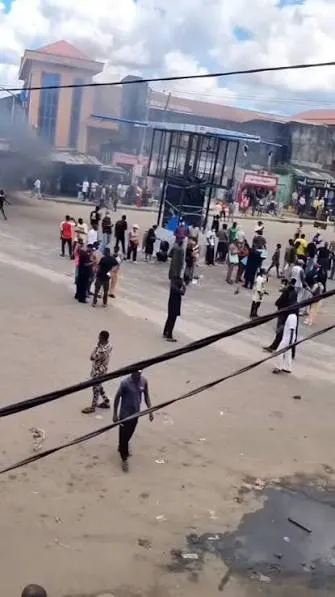
The most damning evidence of the state’s unlearned lesson, however, is not a financial report or an article, but the sickening repetition of history. Today, five years to the day after Lekki, reports are emerging from Abuja of the Nigerian security forces once again employing brutal, disproportionate force to suppress a peaceful demonstration. Activist Omoyele Sowore confirmed that security operatives launched an unprovoked attack on a rally, firing live bullets and tear gas to disperse citizens simply exercising their right to protest. Protesters, including the lawyer and younger brother of Nnamdi Kanu, were reportedly beaten and arrested. The synchronicity is not accidental; it is genetic. The violent clampdown on protesters on October 20, 2025, during an anniversary meant to reflect on the events of October 20, 2020, underscores a state mindset that sees its citizens not as constituents to be protected, but as enemies to be subdued.
The impunity shown five years ago gave security services the carte blanche to repeat the atrocity today. Lekki proved that they could use live ammunition against unarmed civilians without consequence, and today’s violence in Abuja confirms that this culture of impunity is now a permanent feature of the state’s security architecture.
For Nigeria’s business leaders, the message is stark and immediate. If the horrors of five years ago were not enough to compel a unified, forceful demand for the rule of law, the recurring tragedy today leaves no room for hesitation. The profits of their institutions will remain hostage to political instability until the business class actively uses its considerable influence to demand accountability and ensure that the ‘lessons of Lekki’ are finally learned by those in power. Until then, the wound remains unhealed, and the future of Nigeria continues to bleed out.