Tesco Lead Java Developer Interview — Q&A


1. What are the most important features introduced up to Java 17, and why are they useful in enterprise systems?
Java 17 is a Long-Term Support (LTS) release, which makes it particularly attractive for enterprises that value stability and long maintenance windows. Key features include sealed classes, records, pattern matching enhancements, and strong encapsulation of JDK internals. Records significantly reduce boilerplate for immutable data carriers, which is common in microservices DTOs and event models. Sealed classes help enforce domain constraints at compile time, improving maintainability in large codebases. Java 17 also brings performance and GC improvements, especially in G1 and ZGC. From an enterprise perspective, Java 17 improves developer productivity, code readability, and runtime performance while remaining backward compatible, which is critical when modernising legacy systems incrementally.
2. Explain records in Java 17 and when you would use them in a microservices architecture.
Records in Java 17 are a concise way to model immutable data objects. They automatically generate constructors, getters, equals, hashCode, and toString, reducing boilerplate significantly. In a microservices architecture, records are ideal for DTOs, API request/response models, and Kafka event payloads, where immutability and clarity are important. Since records are final and fields are implicitly private and final, they prevent accidental state mutation, which is valuable in concurrent systems. However, records should not contain complex business logic; they are meant to represent data, not behaviour. In scale systems handling high throughput, records improve readability and reduce bugs caused by mutable shared state.
3. What are sealed classes and how do they help in domain modelling?
Sealed classes allow developers to explicitly control which classes can extend or implement a class or interface. This is particularly powerful in domain modelling where the set of valid subtypes is known and fixed. For example, an OrderStatus hierarchy might allow only Created, Packed, Shipped, and Cancelled. By sealing the base class, Java enforces these constraints at compile time. This improves safety, readability, and maintainability in large teams. In enterprise systems like retail platforms, sealed classes help prevent unintended extensions that can introduce bugs. They also work well with pattern matching, making business logic clearer and less error-prone.
4. How does Java 17 improve performance compared to earlier versions?
Java 17 includes multiple performance improvements accumulated from previous releases. Garbage collectors like G1 have been further optimized, reducing pause times and improving throughput. ZGC and Shenandoah provide low-latency options for high-throughput systems. JVM startup and class-loading performance have improved, which benefits containerized microservices. Additionally, JIT compiler enhancements allow better inlining and optimization decisions. From an enterprise perspective, these improvements mean better resource utilization and lower infrastructure costs. In environments, where hundreds of services run on Kubernetes, even small performance gains per service translate into significant operational savings.
5. What is strong encapsulation in Java 17 and how does it affect legacy code?
Java 17 strongly encapsulates internal JDK APIs, meaning reflective access to internal packages like sun.misc is restricted by default. This improves security, maintainability, and long-term stability of the Java platform. However, legacy applications that relied on these internal APIs may face runtime issues. In enterprise environments, the recommended approach is to migrate such code to supported public APIs or use JVM arguments as a temporary workaround. For scale systems, strong encapsulation encourages cleaner architecture and reduces hidden dependencies, making upgrades safer and more predictable over time.
6. How does Java 17 support better immutability and why is that important?
Java 17 promotes immutability through features like records, final fields, and better API design. Immutability is crucial in distributed systems because it simplifies reasoning about state, improves thread safety, and reduces concurrency bugs. In microservices, immutable objects can be safely shared across threads and passed through asynchronous pipelines without defensive copying. For example, Kafka messages modeled as records reduce accidental mutation. In high-volume retail systems, immutability improves reliability and makes systems easier to scale horizontally, which is essential for peak traffic events.
7. Explain pattern matching enhancements and their benefits.
Java 17 continues improving pattern matching, especially for instanceof. Pattern matching allows developers to combine type checking and casting in a single expression, reducing boilerplate and improving readability. This is particularly useful when dealing with sealed class hierarchies. In enterprise applications, cleaner conditional logic reduces bugs and improves maintainability. For example, handling different payment methods or order states becomes clearer and safer. Over time, this leads to more expressive and self-documenting code, which is valuable in large teams like those found in engineering organization.
8. How does Java 17 help with backward compatibility in large enterprises?
Java maintains strong backward compatibility, and Java 17 continues this tradition. Most Java 8 or Java 11 applications can be upgraded with minimal code changes. This is crucial for enterprises that have large legacy codebases. While some reflective access may need adjustments, core language features remain stable. Java 17’s LTS status ensures long-term security updates, making it suitable for mission-critical systems. This allows teams to modernize incrementally without risky big-bang migrations, balancing innovation with operational stability.
9. What JVM options would you typically review when moving to Java 17?
When upgrading to Java 17, JVM options related to garbage collection, memory management, and container awareness should be reviewed. Many older flags are deprecated or ignored. For containerized environments, options like -XX:MaxRAMPercentage become important. GC selection, typically G1 or ZGC, should be validated under production-like load. Logging options have also changed, with unified logging providing better observability. In large-scale environments, proper JVM tuning directly impacts performance, cost efficiency, and reliability.
10. How does Java 17 improve security for enterprise applications?
Java 17 strengthens security through better encapsulation, updated cryptographic algorithms, and regular security patches under LTS support. Deprecated or weak algorithms are disabled by default, reducing exposure to vulnerabilities. Strong encapsulation prevents unsafe access to internal APIs, limiting attack surfaces. From an enterprise perspective, this aligns well with compliance and security standards. Handling customer data and payment information, these improvements reduce risk while maintaining performance and compatibility.
11. Why is Java 17 preferred over non-LTS versions in enterprises?
Enterprises prefer LTS versions like Java 17 because they offer long-term stability, predictable updates, and extended security support. Non-LTS versions introduce features faster but require frequent upgrades, which increases operational risk. In large organizations such as coordinating upgrades across hundreds of services is costly. Java 17 provides a stable foundation that teams can rely on for years while still benefiting from modern language and performance improvements.
12. How does Java 17 support modern cloud-native development?
Java 17 is well-suited for cloud-native development due to improved container awareness, faster startup times, and better memory handling. These enhancements make Java competitive with newer runtimes in Kubernetes environments. Records and functional-style improvements simplify API and event-driven code. Combined with frameworks like Spring Boot, Java 17 enables teams to build scalable, resilient microservices. This supports rapid feature delivery while maintaining enterprise-grade reliability.
13. Explain the impact of Java 17 on garbage collection strategies.
Java 17 enhances existing garbage collectors rather than introducing new ones. G1 is more predictable, and ZGC offers ultra-low latency for specific workloads. This flexibility allows teams to choose a GC strategy based on service requirements. In retail systems with mixed workloads — batch processing, APIs, and streaming — this is critical. Fine-tuning GC can significantly improve response times and throughput during peak shopping periods.
14. How would you migrate a Java 8 application to Java 17?
Migration typically involves upgrading dependencies, running compatibility tools, fixing reflective access issues, and updating JVM flags. Automated testing is crucial to validate behaviour. Incremental upgrades through Java 11 often reduce risk. In large organizations, this process is usually standardized through CI pipelines. Migration is less about language changes and more about ensuring operational stability across distributed systems.
15. What challenges might arise when using Java 17 in microservices?
Challenges include dependency compatibility, reflective access restrictions, and JVM tuning in containers. Some older libraries may not be fully compatible. Additionally, teams must understand new defaults and deprecated options. However, these challenges are manageable with proper tooling and testing. The benefits of performance, maintainability, and security usually outweigh the migration effort in enterprise environments.
16. How do records compare to Lombok-based DTOs?
Records provide native language support for immutable data classes, reducing reliance on annotation processors like Lombok. They are simpler, more transparent, and better supported by tooling. While Lombok offers more flexibility, records are safer and clearer for pure data carriers. In enterprise systems, reducing third-party dependencies improves maintainability and long-term stability.
17. Can records be used with frameworks like Spring Boot?
Yes, Spring Boot supports records for request/response bodies, configuration properties, and DTOs. However, records require all fields to be initialized via constructors, which may affect frameworks relying on proxies. With proper design, records integrate cleanly and improve code clarity. This aligns well with modern microservice design principles.
18. How does Java 17 improve developer productivity?
Java 17 reduces boilerplate through records and pattern matching, improves IDE support, and offers better diagnostics through unified logging. These improvements make code easier to read, write, and debug. In large teams, this directly impacts delivery speed and code quality, which is critical for fast-moving retail platforms.
19. What are the risks of staying on older Java versions?
Older Java versions lack security updates, performance improvements, and modern language features. Over time, this increases technical debt and operational risk. In regulated industries, outdated runtimes can also cause compliance issues. Upgrading to Java 17 mitigates these risks while providing a stable long-term platform.
20. How does Java 17 fit into large-scale engineering environment?
Java 17 aligns well with needs for scalability, reliability, and long-term maintainability. Its LTS status, performance improvements, and cloud-native readiness support high-traffic retail systems. Features like records and sealed classes improve code quality across large teams. Overall, Java 17 enables big MNC to modernize safely while continuing to operate at massive scale.
21. What is a microservices architecture and why do large enterprises adopt it?
Microservices architecture is an approach where applications are built as a collection of small, independently deployable services, each focused on a specific business capability. Large enterprises adopt microservices to improve scalability, resilience, and team autonomy. Each service can be developed, deployed, and scaled independently, which reduces release risk and accelerates delivery. This is especially important in retail systems where different domains — orders, payments, inventory, promotions — evolve at different speeds. Microservices also align well with cloud and container platforms, allowing better resource utilization. However, they introduce complexity in areas such as networking, monitoring, and data consistency, which must be managed carefully.
22. How do you decide service boundaries in a microservices system?
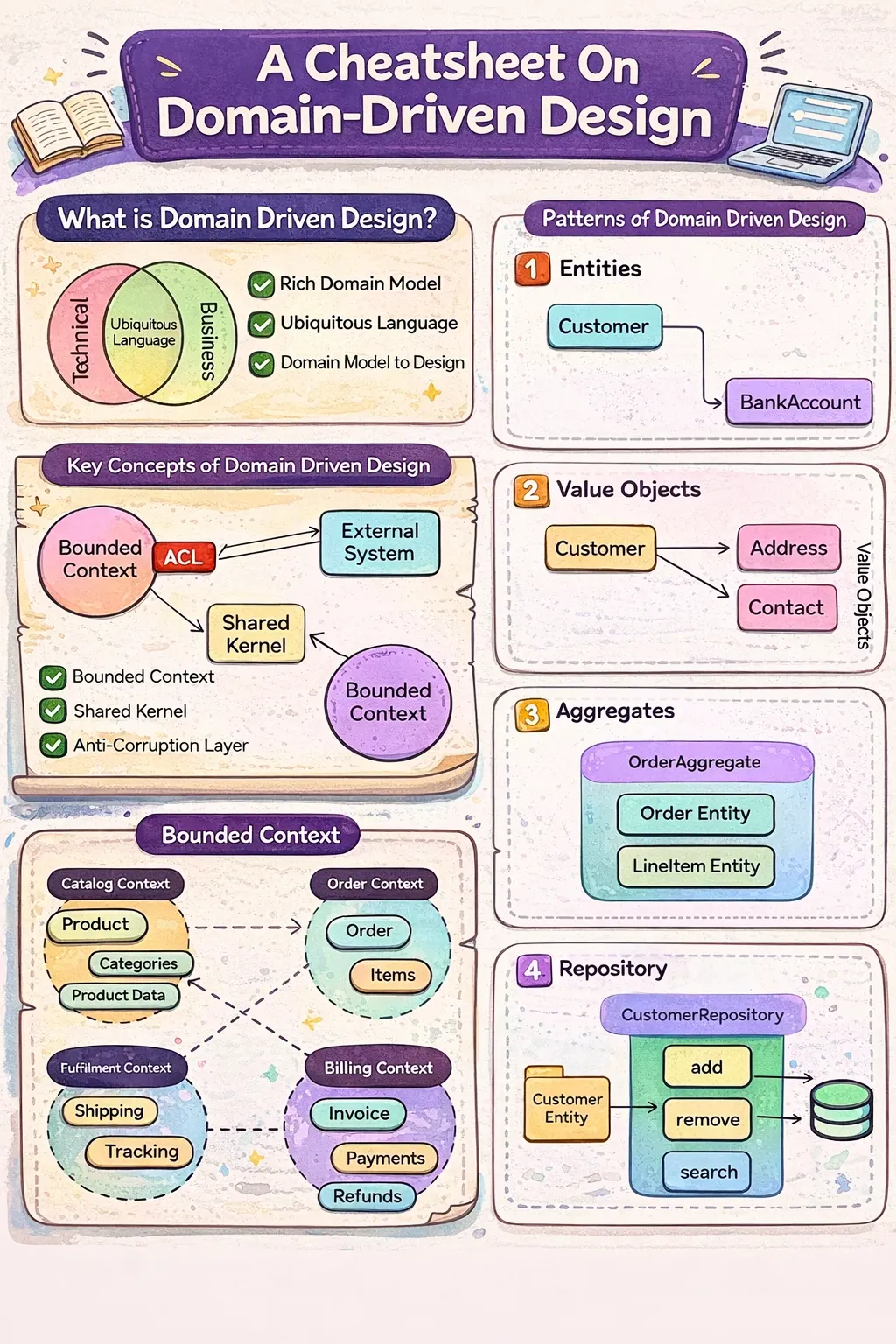
Service boundaries should be defined around business capabilities, not technical layers. A common approach is Domain-Driven Design (DDD), particularly the concept of bounded contexts. Each microservice owns its data and encapsulates a cohesive business function, such as “Order Management” or “Inventory Availability.” The goal is to minimize coupling and maximize cohesion. In large organizations, poorly defined boundaries lead to chatty services and deployment dependencies. At scale, clear boundaries allow teams to work independently and scale services differently based on traffic patterns, such as higher load on pricing during promotions versus lower load on admin services.
23. What are the main challenges of microservices compared to monoliths?
Microservices introduce operational and architectural complexity. Challenges include distributed data management, network latency, service discovery, observability, and failure handling. Debugging issues across multiple services is harder than in a monolith. There is also increased infrastructure and operational overhead due to containers, orchestration, and CI/CD pipelines. Additionally, enforcing consistency across services requires careful design. However, these challenges are often justified by improved scalability, faster deployments, and better fault isolation. In large retail systems, the ability to scale and deploy services independently during peak traffic outweighs the added complexity.
24. How do microservices communicate with each other?
Microservices typically communicate using synchronous methods like REST or gRPC, and asynchronous messaging using platforms like Kafka. Synchronous communication is simpler and suitable for request-response flows, such as fetching product details. Asynchronous communication is preferred for event-driven workflows, such as order events or inventory updates, as it improves decoupling and resilience. In large systems, a mix of both is common. For example, might use REST for real-time APIs and Kafka for propagating business events across domains, reducing tight coupling between services.
25. What is the Database-per-Service pattern and why is it important?
The Database-per-Service pattern ensures that each microservice owns its data store exclusively. Other services cannot directly access that database; they must interact through APIs or events. This prevents tight coupling at the data layer and allows teams to evolve schemas independently. It also enables services to choose the most appropriate storage technology. While this pattern introduces challenges around data consistency and reporting, it is essential for true service autonomy. In enterprise systems, violating this pattern often leads to distributed monoliths, undermining the benefits of microservices.
26. How do you handle data consistency in microservices?
Microservices typically use eventual consistency rather than strong consistency. Techniques like Saga patterns are used to manage long-running business transactions across services. Each service performs a local transaction and publishes events that trigger actions in other services. If something fails, compensating actions are executed. This approach avoids distributed transactions, which are complex and unreliable at scale. In retail systems, eventual consistency is usually acceptable — for example, inventory updates may lag slightly behind orders but converge quickly, ensuring scalability and resilience.
27. What is the Saga pattern and where would you use it?
The Saga pattern manages distributed transactions by breaking them into a sequence of local transactions coordinated through events or orchestration. Each step publishes an event that triggers the next action. If a step fails, compensating transactions undo previous steps. Sagas are commonly used in order processing, payments, and fulfillment workflows. In scale systems, Sagas help maintain consistency without relying on two-phase commits, which do not scale well. They also improve fault tolerance, as failures can be handled asynchronously and retried safely.
28. How do you design microservices for high availability?
High availability is achieved through stateless services, horizontal scaling, and redundancy. Services should not store session state locally; instead, state should be externalized to databases or caches. Load balancers distribute traffic across multiple instances. Circuit breakers and timeouts prevent cascading failures. In cloud environments, deploying services across multiple availability zones improves resilience. For large retailers, high availability is critical during peak periods like sales events, where even short outages can have significant business impact.
29. What is a circuit breaker and why is it important?
A circuit breaker prevents a service from repeatedly calling a failing dependency. When failures exceed a threshold, the circuit opens and requests fail fast, allowing the system to recover. After a cooldown period, the circuit transitions to a half-open state to test recovery. This pattern improves system stability and prevents cascading failures. In microservices architectures with many dependencies, circuit breakers are essential. For scale systems, they protect critical customer-facing services from being overwhelmed by downstream issues.
30. How do you manage configuration in microservices?
Configuration should be externalized and environment-specific, not hardcoded. Common approaches include configuration servers, environment variables, or centralized configuration management tools. This allows services to be deployed consistently across environments. Sensitive data like credentials should be stored securely using secrets management solutions. In large organizations, centralized configuration improves governance while still allowing service-level flexibility. This is critical when managing hundreds of services across multiple environments.
31. What is service discovery and why is it needed?
Service discovery allows services to dynamically locate each other without hardcoded endpoints. In dynamic environments like Kubernetes, service instances change frequently. Service discovery mechanisms register services and provide lookup capabilities. This enables scalability and resilience. Without service discovery, managing endpoints becomes error-prone. In enterprise microservices, service discovery is a foundational capability that supports elasticity and fault tolerance.
32. How do you secure communication between microservices?
Security is typically enforced using TLS for encryption and token-based authentication such as OAuth or JWT. Network policies restrict which services can communicate. Zero-trust principles are increasingly applied, where every request is authenticated and authorized. In large retail systems handling sensitive customer data, securing inter-service communication is critical. Proper security design ensures compliance while minimizing performance overhead.
33. What is API versioning and why is it important?
API versioning allows services to evolve without breaking consumers. Common strategies include URL versioning, header-based versioning, or semantic versioning. In microservices, backward compatibility is crucial because services are deployed independently. Versioning enables gradual migration and reduces coordination overhead between teams. For large organizations, this prevents release bottlenecks and service disruptions.
34. How do you avoid tight coupling between microservices?
Loose coupling is achieved by minimizing shared contracts, using asynchronous messaging, and avoiding shared databases. Services should communicate through well-defined APIs and events. Schema evolution should be backward compatible. At scale, tight coupling leads to cascading changes and slows delivery. Scaled systems emphasize autonomy, allowing teams to innovate without impacting unrelated services.
35. What is the role of API gateways in microservices?
An API gateway acts as a single entry point for clients, handling concerns like authentication, routing, rate limiting, and monitoring. It simplifies client interactions and reduces duplication across services. In large systems, gateways also help enforce security and governance. For retail platforms, API gateways protect backend services while enabling consistent customer experiences across channels.
36. How do you handle failures in distributed systems?
Failures are expected in distributed systems. Resilience is achieved through retries with backoff, circuit breakers, timeouts, and graceful degradation. Services should be designed to fail independently. Observability tools help detect and diagnose failures quickly. In retail systems, graceful degradation — such as showing cached data instead of failing completely — improves customer experience during partial outages.
37. What is eventual consistency and why is it acceptable?
Eventual consistency means that data may be temporarily inconsistent but will converge over time. This is acceptable in many business scenarios where immediate consistency is not required. It enables scalability and availability by avoiding distributed locks. In retail systems, eventual consistency is commonly used for inventory, recommendations, and analytics, where slight delays are tolerable.
38. How do you test microservices effectively?
Testing includes unit tests, integration tests, contract tests, and end-to-end tests. Contract testing ensures that service interactions remain compatible. Automated testing pipelines are essential to maintain quality. In large microservices environments, relying only on end-to-end tests is inefficient. A layered testing strategy balances speed and confidence.
39. How do microservices support independent team ownership?
Microservices align with small, cross-functional teams that own services end-to-end. Teams control development, deployment, and operations. This reduces dependencies and speeds up delivery. Clear ownership improves accountability and system reliability. For large enterprises, this organizational alignment is as important as the technical architecture.
40. How does microservices architecture fit into retail?
Microservices allow to scale individual business capabilities independently, handle peak traffic, and deploy features faster. They support global operations, diverse channels, and continuous innovation. While complex, the architecture enables resilience and agility required in modern retail. When designed well, microservices provide a strong foundation for long-term growth.
41. Why is Spring Boot widely used for building microservices in enterprises?
Spring Boot simplifies microservice development by providing convention over configuration, embedded servers, and strong integration with the Spring ecosystem. It reduces boilerplate and accelerates development, which is critical in large organizations where teams deliver frequently. Features such as auto-configuration, actuator endpoints, and seamless dependency injection make services easier to build and operate. Spring Boot also integrates well with cloud platforms, containerization, and observability tools. This combination allows teams to focus on business logic rather than infrastructure, while still meeting enterprise requirements for scalability, security, and reliability.
42. How does Spring Boot support externalized configuration?
Spring Boot supports externalized configuration through application.yml, environment variables, command-line arguments, and centralized configuration services. This allows the same artifact to be deployed across multiple environments without code changes. Configuration can be overridden based on profiles such as dev, test, or production. In cloud-native environments, environment variables and secrets management are commonly used. For enterprises system, externalized configuration enables consistent deployments, easier rollback, and compliance with security practices by keeping sensitive data out of source code.
43. What is Spring Boot Actuator and why is it important?
Spring Boot Actuator provides production-ready features such as health checks, metrics, environment info, and application status endpoints. These endpoints are critical for monitoring, alerting, and orchestration platforms like Kubernetes. Actuator integrates with monitoring tools to expose JVM, HTTP, and custom business metrics. In large-scale systems, Actuator helps detect issues early and supports automated health checks for scaling and failover. For scale platforms, Actuator is essential for operational visibility and reliability.
44. How does Spring Boot integrate with Kubernetes?
Spring Boot applications integrate seamlessly with Kubernetes through containerization and Actuator endpoints. Kubernetes uses readiness and liveness probes to manage service lifecycle, often backed by Actuator health checks. Configuration is injected via ConfigMaps and Secrets. Spring Boot applications are designed to be stateless, making them ideal for horizontal scaling. This integration allows enterprises to manage deployment, scaling, and resilience consistently across hundreds of services.
45. What is the role of Spring Profiles in cloud-native applications?
Spring Profiles allow conditional configuration based on environment or runtime context. Different beans or properties can be activated depending on the active profile. This is useful for switching between local, staging, and production configurations. In cloud-native systems, profiles help separate infrastructure concerns from application logic. For large organizations, profiles reduce configuration errors and support standardized deployment pipelines across environments.
46. How do you handle REST API versioning in Spring Boot?
Spring Boot supports API versioning through URL paths, request headers, or media types. URL-based versioning is the most common and simplest approach. Versioning allows backward compatibility while evolving APIs. In microservices, breaking changes can impact multiple consumers, so versioning enables gradual migration. For enterprise systems, a clear versioning strategy is essential to avoid release coordination issues and service downtime.
47. How does Spring Boot support resilience patterns?
Spring Boot integrates easily with libraries that implement resilience patterns such as circuit breakers, retries, and timeouts. These patterns protect services from cascading failures. Configuration-driven resilience allows tuning without code changes. In distributed systems, failures are inevitable, so resilience must be built in by design. For retail platforms with high traffic and many dependencies, resilience patterns ensure stable customer experiences even during partial outages.
48. How do you manage dependency injection effectively in large Spring Boot applications?
Effective dependency injection requires clear package structure, constructor injection, and avoiding excessive bean complexity. Constructor injection improves testability and immutability. In large applications, component scanning should be scoped carefully to reduce startup time. Clear layering and separation of concerns prevent circular dependencies. In enterprise environments, disciplined DI practices improve maintainability and onboarding of new developers.
49. What is Spring Boot’s auto-configuration and how does it work?
Auto-configuration automatically configures Spring beans based on classpath dependencies and application properties. It uses conditional annotations to activate configurations only when relevant. This reduces manual configuration and speeds up development. Developers can override defaults when needed. In enterprise systems, auto-configuration promotes consistency across services while still allowing customization for specific requirements.
50. How do you secure Spring Boot microservices?
Security is typically implemented using token-based authentication such as OAuth2 or JWT. Spring Boot integrates with security frameworks to handle authentication, authorization, and role-based access. Sensitive configuration is stored securely using secrets management. HTTPS is enforced for all communication. In large retail systems, security is critical to protect customer data and comply with regulations while maintaining performance.
51. How do you manage logging in Spring Boot microservices?
Spring Boot uses standardized logging frameworks and supports structured logging formats. Logs should include correlation IDs to trace requests across services. Centralized logging systems aggregate logs for analysis and alerting. In distributed systems, logs are often the first place engineers look during incidents. Consistent logging practices are essential for effective troubleshooting at scale.
52. What is Spring Boot’s support for metrics and monitoring?
Spring Boot integrates with metrics libraries to expose application and JVM metrics. These metrics include request latency, error rates, and resource usage. Monitoring systems consume these metrics for dashboards and alerts. In large-scale environments, metrics-driven monitoring enables proactive issue detection and capacity planning. This is especially important during peak retail traffic.
53. How do you design Spring Boot services to be stateless?
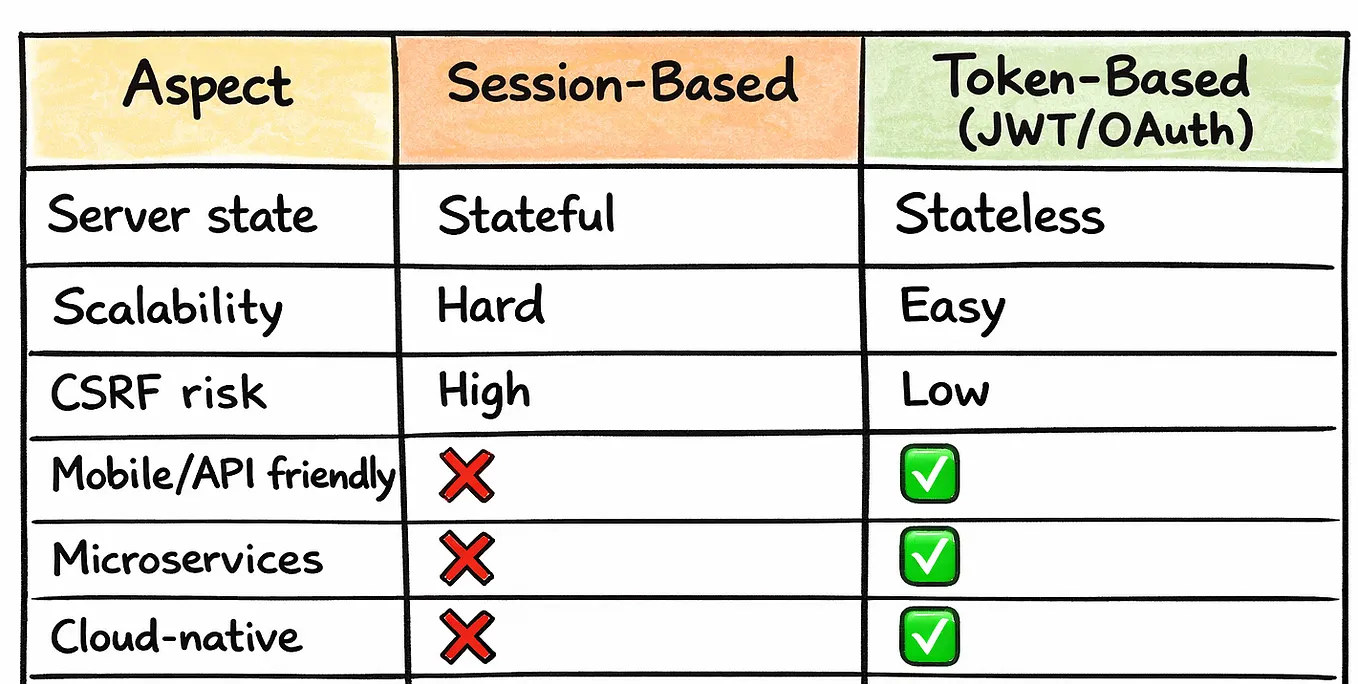
Stateless services do not store session data locally. All state is externalized to databases, caches, or messaging systems. This allows services to scale horizontally and recover easily from failures. In Spring Boot, statelessness is achieved by avoiding in-memory session storage and relying on external systems. Stateless design is a core principle of cloud-native architectures.
54. How do you handle configuration changes without redeploying services?
Dynamic configuration can be handled using centralized configuration services or refresh mechanisms. Services can reload configuration at runtime without restarting. This is useful for feature flags and tuning parameters. In enterprise environments, this reduces downtime and operational risk. Proper validation and rollback mechanisms are important to avoid introducing instability.
55. What is the role of health checks in Spring Boot services?
Health checks indicate whether a service is healthy and ready to receive traffic. Spring Boot Actuator provides health endpoints that integrate with orchestration platforms. Readiness checks prevent traffic from being routed to unhealthy instances. Liveness checks enable automatic restarts. In large systems, health checks are essential for resilience and automated recovery.
56. How do you test Spring Boot microservices?
Testing includes unit tests for business logic, integration tests for APIs, and contract tests for service interactions. Spring Boot provides testing support that simplifies context loading and mocking dependencies. Automated testing pipelines ensure quality and reduce regression risk. In enterprise microservices, testing strategy is critical due to frequent deployments.
57. How does Spring Boot support asynchronous processing?
Spring Boot supports asynchronous processing through non-blocking APIs, messaging, and task executors. Asynchronous processing improves throughput and responsiveness. In high-traffic systems, this is essential for handling spikes efficiently. Proper thread management and backpressure handling are important to avoid resource exhaustion.
58. What are common anti-patterns in Spring Boot microservices?
Common anti-patterns include shared databases, excessive synchronous calls, overuse of configuration, and treating microservices like distributed monoliths. These patterns reduce scalability and autonomy. Recognizing and avoiding them is key to successful microservices adoption. Large organizations must enforce architectural discipline to maintain long-term system health.
59. How do you optimize Spring Boot startup time?
Startup time can be optimized by reducing classpath size, limiting component scanning, and avoiding unnecessary auto-configuration. Faster startup improves scalability and resilience in containerized environments. In large-scale deployments, reduced startup time lowers recovery time during failures and rolling updates.
60. How does Spring Boot enable rapid delivery?
Spring Boot provides a standardized, opinionated framework that accelerates development while maintaining consistency. Its integration with cloud platforms, observability tools, and CI/CD pipelines enables rapid, reliable delivery. At scale, this balance of speed and stability is essential for continuous innovation in a competitive retail environment.
61. Why do enterprises like Tesco use AWS for microservices platforms?
AWS provides a mature, scalable, and highly available cloud platform that supports rapid growth and global operations. For enterprises like Tesco, AWS offers managed services that reduce operational overhead while allowing teams to focus on business logic. Services such as compute, storage, networking, and managed databases can scale elastically to handle retail traffic spikes. AWS’s pay-as-you-go model also helps optimize costs. Additionally, AWS integrates well with DevOps, security, and monitoring tools, making it suitable for large organizations running hundreds of microservices.
62. How do Java microservices typically run on AWS?
Java microservices on AWS commonly run inside containers orchestrated by managed container platforms. Applications are packaged as Docker images and deployed using orchestration services. Load balancers distribute traffic, while managed networking ensures service discovery and resilience. Configuration and secrets are externalized using AWS-managed services. This approach enables horizontal scaling, rolling deployments, and high availability. For large-scale systems, this architecture provides consistency across environments and simplifies operations.
63. What role does Amazon EC2 play in microservices architectures?
Amazon EC2 provides the underlying compute infrastructure for running containerized or virtualized microservices. It allows fine-grained control over instance types, networking, and scaling strategies. In container-based architectures, EC2 often serves as the worker nodes managed by orchestration platforms. Enterprises use EC2 to optimize performance and cost by selecting instance types based on workload characteristics. In retail systems with mixed workloads, EC2 flexibility supports both compute-intensive and memory-intensive services.
64. How do you handle scalability of Java services on AWS?
Scalability is achieved through horizontal scaling, auto-scaling policies, and stateless service design. AWS provides auto-scaling capabilities that adjust capacity based on metrics such as CPU or request count. Services should be designed to scale independently based on demand. In retail environments, scaling is critical during peak events like promotions. Proper scaling strategies ensure performance while controlling costs.
65. What is the role of AWS load balancing in microservices?
AWS load balancing distributes incoming traffic across multiple service instances to ensure high availability and reliability. Load balancers also perform health checks to route traffic only to healthy instances. They support secure communication through TLS termination. In microservices architectures, load balancing is essential for fault tolerance and consistent performance. For customer-facing retail APIs, effective load balancing ensures smooth user experiences even under heavy load.
66. How do you manage configuration in AWS-based microservices?
Configuration is externalized using environment variables and centralized configuration services. Sensitive information such as credentials is stored securely and injected at runtime. This allows the same application artifact to be deployed across environments without modification. Centralized configuration improves governance and consistency. In large organizations, this approach simplifies operations and reduces deployment errors.
67. How do you secure Java microservices on AWS?
Security is implemented using layered controls. Network isolation restricts access between services. Identity and access management controls permissions for services and users. Encryption is applied both in transit and at rest. Authentication and authorization are enforced at the application level using token-based mechanisms. In enterprise environments handling sensitive customer data, these controls are critical for compliance and trust.
68. What is the importance of IAM in AWS microservices?
Identity and Access Management (IAM) controls who and what can access AWS resources. Each service is assigned a role with the minimum permissions required. This follows the principle of least privilege, reducing security risk. In microservices architectures, IAM roles are often attached to compute resources and used to access other AWS services securely. Proper IAM design is essential in large enterprises to prevent unauthorized access and manage risk.
69. How do you design Java services to be fault-tolerant on AWS?
Fault tolerance is achieved through redundancy, stateless design, and automated recovery. Services are deployed across multiple availability zones to avoid single points of failure. Health checks and auto-scaling replace unhealthy instances automatically. Retry and timeout mechanisms handle transient failures. In retail systems, fault tolerance ensures continuous availability during infrastructure or service-level failures.
70. How do you manage secrets in AWS?
Secrets such as database credentials and API keys should never be hardcoded. AWS provides managed services for secure storage and rotation of secrets. Services retrieve secrets at runtime using secure APIs. This improves security and simplifies credential management. In enterprise systems, automated rotation reduces the risk of credential compromise while meeting compliance requirements.
71. What is the role of AWS networking in microservices?
AWS networking provides isolation, routing, and secure communication between services. Virtual networks segment workloads and control traffic flow. Subnets, routing rules, and security controls ensure services communicate safely. In large systems, proper network design improves performance, security, and scalability. Retail platforms rely on robust networking to support global traffic patterns.
72. How do you monitor Java microservices on AWS?
Monitoring includes metrics, logs, and alerts. JVM and application metrics track performance and resource usage. Centralized logging aggregates logs for troubleshooting. Alerts notify teams of abnormal behaviour. In large-scale environments, proactive monitoring is essential to detect issues early and maintain service reliability during high-traffic periods.
73. How do you handle high traffic spikes on AWS?
High traffic spikes are handled through auto-scaling, caching, and asynchronous processing. Scaling policies increase capacity automatically based on demand. Caching reduces load on backend services. Asynchronous messaging smooths traffic bursts. In retail environments, these strategies ensure consistent performance during sales events and promotions.
74. What is the importance of multi–availability zone deployments?
Deploying services across multiple availability zones improves resilience and availability. If one zone fails, traffic is routed to healthy zones automatically. This design reduces downtime and improves fault tolerance. In enterprise systems, multi-zone deployment is a standard practice to meet high availability requirements.
75. How do you manage cost optimization for Java microservices on AWS?
Cost optimization involves right-sizing resources, using auto-scaling, and monitoring usage. Services should scale down during low demand to reduce costs. Efficient JVM tuning reduces resource consumption. In large organizations, cost visibility and governance are essential to balance performance and budget constraints.
76. How do you deploy Java microservices on AWS?
Deployments are automated using CI/CD pipelines. New versions are deployed using rolling or blue-green strategies to minimize downtime. Infrastructure is defined as code for consistency and repeatability. Automated deployments reduce human error and speed up delivery. In enterprise environments, reliable deployment processes are critical for frequent releases.
77. How do you handle logging in AWS-based microservices?
Logs are centralized and structured for easy analysis. Each service includes contextual information such as request IDs. Centralized logging enables faster troubleshooting and root cause analysis. In large systems, effective logging is essential for maintaining operational excellence.
78. How do you ensure compliance and security in AWS environments?
Compliance is achieved through standardized configurations, auditing, and monitoring. Security controls are enforced consistently across environments. Regular reviews and automated checks help detect misconfigurations. In regulated industries like retail, compliance is a critical requirement alongside performance and scalability.
79. What challenges do Java teams face on AWS?
Challenges include managing distributed systems complexity, optimizing JVM performance in containers, and controlling cloud costs. Dependency management and observability also require careful attention. With proper tooling and best practices, these challenges are manageable and outweighed by the benefits of scalability and agility.
80. How does AWS support Tesco’s large-scale Java microservices ecosystem?
AWS provides the scalability, reliability, and managed services needed to support Tesco’s global retail platforms. Its flexibility allows teams to innovate while maintaining operational stability. Combined with Java and Spring Boot, AWS enables Tesco to deliver high-performance, resilient services at scale.
81. Why do enterprises use Kafka in microservices architectures?
Kafka is used because it enables high-throughput, fault-tolerant, and loosely coupled communication between services. Instead of services calling each other synchronously, Kafka allows them to publish and consume events asynchronously. This improves scalability and resilience, especially during traffic spikes common in retail systems. Kafka also enables event replay, which is valuable for debugging, recovery, and analytics. In large organizations, Kafka acts as a central event backbone, allowing teams to evolve independently without tightly coupling service lifecycles.
82. What is event-driven architecture and how does Kafka support it?
Event-driven architecture is a design where services react to events rather than direct requests. Events represent state changes, such as “Order Created” or “Inventory Updated.” Kafka supports this model by acting as a durable, distributed event log. Producers publish events, and consumers subscribe without knowing about each other. This decoupling improves scalability and fault tolerance. In retail systems, event-driven architecture allows downstream systems like inventory, payments, and analytics to react independently to business events.
83. Explain Kafka topics, partitions, and offsets.
A topic is a logical stream of events. Topics are divided into partitions, which allow Kafka to scale horizontally. Each partition is an ordered, immutable sequence of records. Offsets represent the position of a consumer within a partition. Consumers track offsets to know which messages have been processed. This design enables parallel processing and fault recovery. In high-volume retail environments, partitioning allows multiple consumers to process events concurrently while maintaining order within each partition.
84. How does Kafka guarantee message ordering?
Kafka guarantees ordering within a single partition, not across partitions. Messages written to the same partition are read in the exact order they were produced. Ordering is typically achieved by choosing an appropriate message key, such as order ID or customer ID. All events with the same key go to the same partition. In enterprise systems, understanding this limitation is critical when designing workflows that depend on strict ordering, such as order lifecycle events.
85. What is the role of consumer groups in Kafka?
Consumer groups allow multiple consumers to share the workload of processing a topic. Each partition is consumed by only one consumer within a group, ensuring parallel processing without duplication. If a consumer fails, Kafka rebalances partitions among remaining consumers. This provides fault tolerance and scalability. In large retail systems, consumer groups enable horizontal scaling of event processing during peak traffic while maintaining processing guarantees.
86. How does Kafka handle fault tolerance?
Kafka achieves fault tolerance through replication. Each partition has multiple replicas across different brokers. One replica acts as the leader, and others are followers. If a broker fails, a follower is elected leader automatically. Consumers and producers continue operating with minimal disruption. This design ensures durability and availability even during infrastructure failures. For enterprise systems, this reliability is critical when handling business-critical events such as payments or order processing.
87. What delivery semantics does Kafka support?
Kafka supports at-most-once, at-least-once, and exactly-once semantics. At-least-once is the most common, where messages may be processed more than once but are never lost. Exactly-once semantics are supported using transactional producers and idempotent consumers. In enterprise systems, choosing the right delivery model depends on business requirements. For example, duplicate events may be acceptable for analytics but not for payment processing.
88. How do you ensure idempotency in Kafka consumers?
Idempotency ensures that processing the same message multiple times does not produce incorrect results. This is typically achieved by tracking processed event IDs or using database constraints. Consumers should be designed to safely handle duplicates. In distributed systems, duplicates are inevitable due to retries or failures. In retail systems, idempotent processing prevents issues like double charging or incorrect inventory updates.
89. What is Kafka retention and why is it important?
Kafka retention defines how long messages are stored in a topic. Retention can be time-based or size-based. Unlike traditional queues, messages are not deleted after consumption. This allows event replay, recovery, and new consumers to read historical data. In enterprise systems, retention policies balance storage cost with business needs such as auditing, analytics, and debugging.
90. How do you design Kafka topics for scalability?
Scalability is achieved by choosing an appropriate number of partitions and a good keying strategy. Too few partitions limit parallelism, while too many increase overhead. Partition count should consider expected throughput and consumer scalability. In large retail systems, careful topic design ensures smooth handling of traffic spikes during sales or promotions.
91. How do you handle schema evolution in Kafka?
Schema evolution must be backward and forward compatible. Consumers and producers should tolerate changes without breaking. Versioning fields and avoiding breaking changes are key strategies. In enterprise environments, schema management is critical because many services may depend on the same events. Poor schema evolution can cause widespread outages.
92. What is the difference between Kafka and traditional message queues?
Kafka is a distributed log, not just a queue. Messages are persisted, ordered, and replayable. Consumers control their own offsets. Traditional queues typically delete messages after consumption and focus on point-to-point messaging. Kafka is better suited for event streaming, analytics, and decoupled architectures. In large systems, this makes Kafka more flexible and scalable.
93. How do you monitor Kafka-based systems?
Monitoring includes broker health, consumer lag, throughput, and error rates. Consumer lag is especially important, as it indicates whether consumers are keeping up with producers. JVM metrics and disk usage must also be monitored. In enterprise systems, proactive monitoring prevents backlog buildup that could impact downstream services.
94. What is backpressure and how do you handle it with Kafka?
Backpressure occurs when consumers cannot process messages as fast as producers generate them. Kafka handles this naturally by allowing consumers to read at their own pace. However, sustained backpressure leads to increasing lag. Solutions include scaling consumers, optimizing processing, or buffering with additional topics. In retail systems, backpressure handling is critical during sudden traffic spikes.
95. How does Kafka support decoupling between services?
Producers and consumers are completely independent. Producers do not know who consumes their events, and consumers do not depend on producer availability. This decoupling enables independent deployments and reduces failure propagation. In large organizations, this architectural style allows teams to innovate without coordination bottlenecks.
96. What are common Kafka anti-patterns?
Common anti-patterns include using Kafka as a request-response system, creating too many topics unnecessarily, and ignoring schema governance. Another mistake is relying on Kafka for strong consistency guarantees it does not provide. These anti-patterns reduce scalability and reliability. Mature organizations enforce Kafka usage guidelines to avoid them.
97. How do you secure Kafka in enterprise environments?
Security includes authentication, authorization, and encryption. Producers and consumers must be authenticated, and access controlled per topic. Data should be encrypted in transit. In regulated environments, auditing and monitoring access are also important. Secure Kafka setups protect sensitive business events and customer data.
98. How do Kafka consumers recover from failures?
Consumers recover by re-reading messages from their last committed offset. If a consumer crashes before committing, messages are reprocessed. This is why idempotency is critical. Kafka’s design makes recovery straightforward and reliable. In enterprise systems, this simplifies failure handling and improves resilience.
99. How do you test Kafka-based microservices?
Testing includes unit tests for producers and consumers, integration tests with embedded brokers, and contract tests for event schemas. Testing ensures compatibility and correct processing logic. In large systems, automated testing is essential to prevent breaking changes across teams.
Get Kaizen Chandra’s stories in your inbox
Join Medium for free to get updates from this writer.
100. How does Kafka enable scalable retail systems like Tesco’s?
Kafka enables real-time, event-driven communication across hundreds of services. It supports high throughput, resilience, and loose coupling, which are critical for retail platforms handling millions of events daily. By decoupling producers and consumers, Kafka allows Tesco to scale, innovate, and respond to business events efficiently.
101. Why is Docker important for modern Java microservices?
Docker allows Java microservices to be packaged with all their dependencies into a single, immutable image. This ensures consistency across development, testing, and production environments. For large enterprises like Tesco, Docker reduces the “it works on my machine” problem and simplifies deployments. Containers are lightweight compared to virtual machines, enabling higher density and faster startup times. This is particularly important for microservices that need to scale quickly during peak traffic. Docker also integrates well with CI/CD pipelines and orchestration platforms, making it a foundational technology for cloud-native systems.
102. How does containerization improve consistency across environments?
Containerization bundles the application, runtime, libraries, and configuration into a single image. This means the same container image runs in development, staging, and production, eliminating environment-specific issues. Configuration differences are injected at runtime rather than baked into the image. In enterprise environments, this consistency reduces deployment failures and accelerates troubleshooting. For large systems with many teams, standardized container images improve reliability and operational efficiency.
103. What is a Docker image and how is it different from a container?
A Docker image is a read-only template that contains the application and its dependencies. A container is a running instance of that image. Images are built once and reused, while containers are ephemeral and can be started or stopped as needed. This separation supports immutable infrastructure practices. In microservices architectures, images are versioned and promoted through environments, while containers provide runtime isolation and scalability.
104. How do you optimize Docker images for Java applications?
Optimizing Java Docker images involves reducing image size and startup time. Techniques include using slim base images, multi-stage builds, and removing unnecessary tools. Layer ordering is important to leverage caching. JVM options should be tuned for container environments. Smaller images improve security and speed up deployments. In large-scale systems, optimized images reduce network transfer time and resource usage across clusters.
105. What is a multi-stage Docker build and why is it useful?
Multi-stage builds allow separating build-time and runtime dependencies into different stages. The final image contains only what is needed to run the application, not to build it. This significantly reduces image size and attack surface. For Java applications, one stage compiles the code and another runs the compiled artifact. In enterprise environments, this leads to faster deployments and improved security.
106. How do containers handle resource isolation?
Containers use operating system features such as namespaces and cgroups to isolate processes and control resource usage. This ensures that one container does not consume excessive CPU or memory and impact others. Resource limits can be defined to enforce constraints. In multi-tenant environments, resource isolation is critical for stability and fairness. Large enterprises rely on these mechanisms to run many services efficiently on shared infrastructure.
107. How do you manage configuration in Docker containers?
Configuration is externalized using environment variables or mounted configuration files. This allows the same image to be reused across environments. Sensitive data should be injected securely at runtime rather than baked into images. In cloud-native systems, this approach enables flexible deployments and supports automated pipelines. For enterprises, externalized configuration reduces risk and improves compliance.
108. What are common security best practices for Docker?
Security best practices include using minimal base images, running containers as non-root users, scanning images for vulnerabilities, and limiting container permissions. Images should be built from trusted sources and updated regularly. Network access should be restricted to only what is necessary. In enterprise environments handling sensitive data, container security is a critical part of the overall security posture.
109. How does Docker support scalability?
Docker supports scalability by enabling fast startup and lightweight resource usage. Containers can be created and destroyed quickly, making horizontal scaling efficient. Combined with orchestration platforms, Docker allows services to scale automatically based on demand. In retail systems, this capability is essential for handling sudden traffic spikes without manual intervention.
110. How do you handle logging in Dockerized Java applications?
Applications should log to standard output and error streams rather than writing to local files. This allows container platforms to collect and aggregate logs centrally. Logs should be structured and include contextual information such as request IDs. Centralized logging improves observability and troubleshooting. In large-scale environments, consistent logging practices are essential for maintaining reliability.
111. What is the role of Docker in CI/CD pipelines?
Docker enables consistent build and deployment artifacts. CI pipelines build images, run tests, and push images to registries. CD pipelines deploy these images to environments. This reduces variability and improves release reliability. In enterprise setups, Docker-based pipelines support frequent, automated deployments with minimal risk.
112. How do you manage secrets in containerized environments?
Secrets should be managed externally and injected at runtime using secure mechanisms. They should never be stored in images or source control. Access to secrets should be restricted based on service identity. In enterprise environments, proper secrets management is essential for security and compliance.
113. What are common Docker anti-patterns?
Anti-patterns include building large images, storing state inside containers, hardcoding configuration, and running multiple processes in a single container. These practices reduce scalability and maintainability. Avoiding these anti-patterns is critical for building robust microservices.
114. How does Docker networking work for microservices?
Docker provides networking abstractions that allow containers to communicate securely. Containers can be connected to virtual networks, and service names can be resolved dynamically. This simplifies inter-service communication. In large systems, networking configuration must be carefully managed to ensure performance and security.
115. How do you handle Java memory settings in Docker containers?
JVM memory settings should be aligned with container resource limits. Java supports container awareness, allowing it to respect memory constraints. Proper tuning prevents out-of-memory errors and inefficient resource usage. In enterprise environments, JVM tuning in containers directly impacts stability and cost efficiency.
116. What is the difference between containers and virtual machines?
Containers share the host OS kernel, making them lighter and faster than virtual machines, which include a full OS. VMs provide stronger isolation but at higher cost. Containers are ideal for microservices due to their efficiency and scalability. Large organizations often use both depending on workload requirements.
117. How do you ensure high availability using containers?
High availability is achieved by running multiple container instances across different hosts. Orchestration platforms manage scheduling, health checks, and restarts. Containers should be stateless to allow easy replacement. In retail systems, this ensures continuous service even during failures.
118. How do you debug issues in Dockerized applications?
Debugging involves examining logs, metrics, and container state. Reproducing issues locally using the same container image helps identify problems. In enterprise environments, observability tools play a key role in diagnosing issues across distributed containers.
119. How does Docker help with rapid scaling during peak traffic?
Docker enables fast container startup and efficient resource usage, allowing services to scale quickly in response to demand. Combined with auto-scaling policies, this ensures consistent performance during peak periods. Retail platforms rely on this capability during promotions and sales events.
120. How does Docker fit into Tesco’s cloud-native architecture?
Docker provides a standardized packaging and deployment model that supports scalability, resilience, and rapid delivery. It enables Tesco to run hundreds of Java microservices consistently across environments. Docker’s integration with CI/CD and orchestration platforms makes it a core component of modern retail systems.
121. Why is Kubernetes important for running microservices at scale?
Kubernetes provides automated orchestration for containerized applications, handling deployment, scaling, self-healing, and networking. For large enterprises like Tesco, manually managing hundreds of Docker containers is impractical. Kubernetes abstracts infrastructure complexity and ensures services remain available even when individual containers or nodes fail. It enables consistent deployments across environments and supports rolling updates with minimal downtime. In retail systems with fluctuating traffic, Kubernetes’ ability to scale services dynamically is critical for maintaining performance during peak demand.
122. What is a Kubernetes pod and why is it the smallest deployable unit?
A pod is the smallest deployable unit in Kubernetes and represents one or more containers that share the same network and storage context. Containers within a pod communicate via localhost and are scheduled together. Typically, a pod contains a single application container, but sidecar containers may be included for logging or monitoring. Pods are ephemeral and can be recreated at any time. This design encourages stateless services and supports resilience in distributed systems.
123. How does Kubernetes handle service discovery?
Kubernetes provides built-in service discovery using Services and DNS. Each service is assigned a stable virtual IP and DNS name, allowing pods to discover and communicate with each other dynamically. This removes the need for hardcoded endpoints. As pods scale up or down, Kubernetes updates routing automatically. In large microservices environments, service discovery simplifies communication and supports elasticity.
124. What is a Kubernetes Deployment and how does it help with releases?
A Deployment defines the desired state of a set of pods and manages their lifecycle. It supports rolling updates, allowing new versions to be deployed gradually while maintaining availability. Deployments can also roll back to previous versions if issues arise. In enterprise systems, this enables safer releases and reduces downtime. Deployments are fundamental for continuous delivery in Kubernetes environments.
125. How does Kubernetes support auto-scaling?
Kubernetes supports auto-scaling through Horizontal Pod Autoscalers (HPA), which adjust the number of pod replicas based on metrics such as CPU or memory usage. This allows services to scale dynamically based on demand. Auto-scaling is essential in retail systems where traffic patterns are unpredictable. Properly configured auto-scaling improves performance and cost efficiency by matching capacity to demand.
126. What are liveness and readiness probes and why are they important?
Liveness probes determine whether a container is running correctly. If a liveness probe fails, Kubernetes restarts the container. Readiness probes determine whether a container is ready to receive traffic. If a readiness probe fails, traffic is stopped but the container is not restarted. These probes enable self-healing and zero-downtime deployments. In enterprise environments, they are critical for reliability and resilience.
127. How does Kubernetes ensure high availability?
High availability is achieved by running multiple replicas of pods across different nodes. If a node fails, Kubernetes reschedules pods on healthy nodes. Deploying clusters across multiple availability zones further improves resilience. Kubernetes continuously monitors pod health and replaces failed instances automatically. This design ensures minimal disruption during failures, which is crucial for customer-facing retail services.
128. What is a Kubernetes Service and how is it different from a pod?
A Service provides a stable network endpoint for a set of pods. While pods are ephemeral and can change IP addresses, a Service remains stable. It routes traffic to healthy pods using labels and selectors. This abstraction allows services to scale and update without affecting consumers. In microservices architectures, Services are essential for decoupling and resilience.
129. How do ConfigMaps and Secrets work in Kubernetes?
ConfigMaps store non-sensitive configuration data, while Secrets store sensitive information such as credentials. Both can be injected into pods as environment variables or mounted files. This allows configuration to be changed without rebuilding images. In enterprise environments, separating configuration from code improves security, flexibility, and compliance.
130. How do you secure applications running on Kubernetes?
Security includes restricting access through role-based access control, isolating workloads using namespaces, and securing network communication. Containers should run with minimal privileges. Secrets must be protected and accessed securely. In large organizations, security policies are enforced consistently across clusters. Strong Kubernetes security is essential for protecting sensitive customer and business data.
131. What is a namespace and why is it useful?
Namespaces provide logical isolation within a Kubernetes cluster. They are used to separate environments, teams, or applications. Namespaces help manage resource quotas, access control, and organization. In large enterprises, namespaces enable multiple teams to share clusters safely while maintaining boundaries.
132. How do you handle rolling updates in Kubernetes?
Rolling updates gradually replace old pod versions with new ones while keeping the service available. Kubernetes controls the update strategy, such as how many pods can be unavailable at a time. If issues occur, updates can be paused or rolled back. Rolling updates reduce deployment risk and support continuous delivery.
133. What is a Kubernetes Ingress and when would you use it?
Ingress manages external access to services, typically HTTP and HTTPS. It provides routing, TLS termination, and virtual hosting. Ingress simplifies exposing multiple services through a single entry point. In retail systems, Ingress controllers are often used to manage customer-facing APIs securely and efficiently.
134. How do you manage resource usage in Kubernetes?
Resource requests and limits define how much CPU and memory a pod requires and can consume. Requests influence scheduling, while limits enforce constraints. Proper resource management prevents noisy-neighbor issues and improves cluster stability. In large environments, tuning resources is essential for performance and cost control.
135. How do you monitor applications in Kubernetes?
Monitoring includes collecting metrics, logs, and events from pods and nodes. Metrics track performance and resource usage. Logs provide insight into application behaviour. Alerts notify teams of issues. In enterprise environments, observability is critical for maintaining reliability across large clusters.
136. What are common Kubernetes anti-patterns?
Anti-patterns include running stateful workloads without proper storage, ignoring resource limits, and deploying too many services in a single namespace. Another mistake is treating Kubernetes as a replacement for good application design. Avoiding these anti-patterns is essential for scalable, maintainable systems.
137. How does Kubernetes support CI/CD pipelines?
Kubernetes integrates with CI/CD pipelines by enabling automated deployments, rollbacks, and scaling. Pipelines build images, deploy manifests, and monitor rollout status. This supports frequent, reliable releases. In large enterprises, Kubernetes-based CI/CD accelerates delivery while maintaining stability.
138. How do you handle failures in Kubernetes clusters?
Failures are handled through automated restarts, rescheduling, and scaling. Kubernetes detects unhealthy components and takes corrective action. Proper monitoring and alerting ensure issues are addressed quickly. In retail systems, automated failure handling minimizes customer impact.
139. How do you manage stateful applications in Kubernetes?
Stateful applications require persistent storage and stable identities. Kubernetes provides abstractions to manage state safely. However, many microservices are designed to be stateless, with state stored externally. In enterprise systems, careful design is needed when running stateful workloads on Kubernetes.
140. How does Kubernetes fit into Tesco’s microservices ecosystem?
Kubernetes provides the orchestration layer that enables Tesco to run hundreds of Java microservices reliably and efficiently. It supports scalability, resilience, and rapid delivery. By abstracting infrastructure complexity, Kubernetes allows teams to focus on business innovation while maintaining operational excellence.
141. What is DevOps and why is it important in microservices architectures?
DevOps is a set of practices that combines software development and IT operations to enable faster, more reliable delivery of applications. In microservices architectures, DevOps is essential because services are developed, deployed, and scaled independently. Automation of build, test, and deployment pipelines reduces human error and accelerates releases. For large enterprises like Tesco, DevOps enables teams to deploy frequently while maintaining system stability. It also encourages shared ownership of services, improving accountability and operational quality.
142. How do CI/CD pipelines support microservices development?
CI/CD pipelines automate code integration, testing, and deployment. Each microservice has its own pipeline, enabling independent releases. Automated tests catch issues early, while continuous deployment ensures fast feedback. In enterprise environments, pipelines enforce quality gates and compliance checks. This approach reduces release risk and supports frequent deployments, which is critical for responding to business needs quickly.
143. What are the key stages of a CI/CD pipeline for Java microservices?
A typical pipeline includes code checkout, build, unit testing, static analysis, container image creation, integration testing, and deployment. Additional stages may include security scanning and performance testing. Each stage provides feedback and prevents faulty code from reaching production. In large organizations, standardized pipelines ensure consistency across teams while allowing service-specific customization.
144. How do you ensure quality in automated pipelines?
Quality is ensured through comprehensive testing, code reviews, and automated checks. Unit tests validate business logic, while integration and contract tests ensure service compatibility. Static analysis and security scans catch vulnerabilities early. Pipelines enforce these checks consistently. In enterprise systems, this automation maintains quality despite frequent deployments and large team sizes.
145. What is infrastructure as code and why is it important?
Infrastructure as code (IaC) involves defining infrastructure using declarative configuration files. This enables versioning, automation, and repeatability. Changes can be reviewed and tested like application code. In microservices environments, IaC ensures consistent infrastructure across environments. For large enterprises, IaC reduces configuration drift and improves reliability.
146. How do you manage deployments with zero downtime?
Zero-downtime deployments are achieved using rolling updates, blue-green deployments, or canary releases. These strategies gradually introduce new versions while keeping the service available. Health checks and automated rollbacks reduce risk. In retail systems, zero-downtime deployments are critical to maintain customer experience during updates.
147. What is observability and how is it different from monitoring?
Observability focuses on understanding the internal state of a system through metrics, logs, and traces. Monitoring tells you when something is wrong; observability helps you understand why. In distributed systems, observability is essential for diagnosing issues across services. For large enterprises, strong observability reduces mean time to recovery and improves system reliability.
148. What metrics are important for Java microservices?
Key metrics include request latency, error rates, throughput, JVM memory usage, garbage collection, and CPU utilization. Business metrics such as order success rates are also important. These metrics provide insight into system health and performance. In retail systems, monitoring both technical and business metrics ensures alignment with customer experience.
149. How do you implement distributed tracing?
Distributed tracing tracks requests as they flow across multiple services. Each request is assigned a trace ID that is propagated between services. Traces help identify bottlenecks and failures in complex workflows. In enterprise systems, tracing is invaluable for debugging performance issues and understanding service interactions.
150. How do you handle logging in distributed systems?
Logs should be centralized, structured, and correlated using request IDs. Centralized logging systems aggregate logs from all services, enabling efficient searching and analysis. In microservices architectures, logs are a primary tool for troubleshooting. Consistent logging practices improve operational efficiency in large environments.
151. What is the role of alerting in DevOps?
Alerting notifies teams of abnormal conditions requiring attention. Alerts should be actionable and based on meaningful thresholds. Too many alerts cause fatigue, while too few delay response. In enterprise systems, well-designed alerting supports fast incident response and system reliability.
152. How do you manage configuration changes safely?
Configuration changes should be versioned, validated, and rolled out gradually. Feature flags can enable or disable functionality without redeployment. Automated testing and rollback mechanisms reduce risk. In large systems, controlled configuration management prevents widespread outages.
153. What is canary deployment and when would you use it?
Canary deployments release a new version to a small subset of users or traffic before full rollout. This allows real-world testing with minimal risk. Metrics and logs are monitored to detect issues. In retail systems, canary deployments are useful for validating changes during high-risk periods.
154. How do you handle failures in production environments?
Failures are handled through automated recovery, clear runbooks, and observability. Teams should be able to detect, diagnose, and resolve issues quickly. Post-incident reviews help prevent recurrence. In enterprise environments, strong incident management practices are essential for reliability.
155. What is the importance of rollback strategies?
Rollback strategies allow systems to revert to a previous stable version if issues occur. Automated rollbacks reduce downtime and risk. In microservices environments with frequent deployments, reliable rollback mechanisms are critical for maintaining system stability.
156. How do you ensure security in CI/CD pipelines?
Security is enforced through automated scans, access controls, and secure secrets management. Pipelines should follow least privilege principles. Regular audits and updates reduce risk. In enterprise environments, secure pipelines protect both infrastructure and customer data.
157. What is the role of SRE practices in DevOps?
Site Reliability Engineering (SRE) applies software engineering principles to operations. It focuses on reliability, automation, and measurable objectives. SRE practices improve system resilience and operational efficiency. In large organizations, SRE complements DevOps by providing a reliability-focused perspective.
158. How do you measure success of DevOps practices?
Success is measured through deployment frequency, lead time, failure rates, and recovery time. These metrics reflect delivery speed and reliability. In enterprise systems, improved metrics indicate effective DevOps adoption and business alignment.
159. What are common DevOps anti-patterns?
Anti-patterns include manual deployments, lack of testing, and siloed teams. These practices slow delivery and increase risk. Avoiding them is essential for scalable DevOps adoption. Large organizations must actively address cultural and technical barriers.
160. How does DevOps enable Tesco’s large-scale microservices platform?
DevOps enables Tesco to deliver features rapidly while maintaining reliability. Automated pipelines, strong observability, and shared ownership allow teams to operate independently. This approach supports continuous innovation in a competitive retail environment.
161. How would you design a highly available online ordering system for a retailer like Tesco?
A highly available ordering system should be built using stateless microservices deployed across multiple availability zones. An API gateway handles client traffic and routes requests to order services. Orders are persisted using reliable storage with replication. Event-driven messaging is used to propagate order events to downstream systems like inventory and payments. Caching improves performance for frequently accessed data. Circuit breakers, retries, and timeouts protect against downstream failures. This architecture ensures resilience, scalability, and consistent customer experience even during peak traffic.
162. How would you design an inventory management system at retail scale?
Inventory management requires eventual consistency and high throughput. Each product’s inventory is owned by a dedicated service that processes updates asynchronously via events. Inventory changes are published when orders are placed or canceled. To avoid overselling, reservations may be used during checkout. Caching improves read performance for availability checks. This design balances accuracy with scalability and supports high transaction volumes during promotions.
163. How do you handle peak traffic during sales events?
Peak traffic is handled through horizontal scaling, caching, and asynchronous processing. Auto-scaling policies increase service instances based on load. Read-heavy endpoints use caching to reduce backend load. Non-critical workflows are processed asynchronously to smooth spikes. Load testing and capacity planning are essential. For retail systems, designing for peak demand ensures stable performance during promotions and prevents customer frustration.
164. How would you design a checkout system to be resilient?
Checkout systems should isolate failures and degrade gracefully. Each step — pricing, inventory, payments — is handled by separate services. Timeouts and circuit breakers prevent cascading failures. Idempotency ensures retries do not cause duplicate charges. Events capture state transitions for recovery. In retail environments, resilience in checkout is critical because failures directly impact revenue.
165. How do you ensure data consistency across distributed services?
Data consistency is managed using eventual consistency and Saga patterns. Each service commits local transactions and emits events. Compensating actions handle failures. Strong consistency is avoided due to scalability constraints. In retail systems, this approach ensures reliability without sacrificing performance during high traffic.
166. How would you design a pricing and promotions system?
Pricing systems must support frequent updates and complex rules. Pricing logic is encapsulated in a dedicated service. Promotions are evaluated dynamically and cached for performance. Events notify downstream services of pricing changes. This allows rapid updates during campaigns without redeploying dependent services. Scalability and flexibility are key for competitive retail pricing.
167. How do you design systems for global availability?
Global availability is achieved using regionally deployed services and routing traffic to the nearest region. Data replication ensures consistency across regions. Stateless services enable easy scaling. Failover mechanisms redirect traffic during regional outages. For global retailers, this design ensures low latency and high availability worldwide.
168. How do you handle failures in downstream dependencies?
Failures are handled using retries with backoff, circuit breakers, and fallbacks. Services degrade gracefully rather than failing completely. Asynchronous messaging decouples dependencies. In retail systems, this prevents minor failures from causing widespread outages.
169. How would you design an order tracking system?
Order tracking is event-driven. Order status updates are published as events and consumed by tracking services. The latest status is stored in a read-optimized store for fast access. This design supports real-time updates and scalability. Customers receive accurate tracking information without overloading core order systems.
170. How do you design APIs for high throughput?
High-throughput APIs use stateless design, efficient serialization, and caching. Pagination and filtering reduce payload size. Rate limiting protects backend services. Horizontal scaling ensures capacity. In retail systems, efficient API design improves performance during peak usage.
171. How do you ensure security in retail system design?
Security includes authentication, authorization, encryption, and auditing. Sensitive operations are protected by strong access controls. Data is encrypted in transit and at rest. Monitoring detects suspicious activity. In retail environments, security protects customer trust and compliance.
172. How do you design for observability in large systems?
Observability is built in using metrics, logs, and traces. Each request carries correlation IDs. Dashboards provide system health visibility. Alerts notify teams of anomalies. In large systems, observability reduces downtime and improves reliability.
173. How do you design a recommendation system?
Recommendations are generated using event-driven data pipelines. User behavior events feed analytics models. Recommendations are precomputed and cached for fast retrieval. This approach balances personalization with performance. Retail platforms use recommendations to improve customer engagement without impacting core transaction systems.
174. How do you manage schema evolution in distributed systems?
Schema evolution requires backward-compatible changes and versioned APIs or events. Consumers must tolerate missing or extra fields. Automated testing validates compatibility. In large organizations, governance ensures safe evolution without breaking consumers.
175. How do you design systems for scalability and cost efficiency?
Scalability is achieved through stateless services, auto-scaling, and asynchronous workflows. Cost efficiency is improved by right-sizing resources and caching. Monitoring helps identify inefficiencies. Retail systems must balance performance with operational cost.
176. How would you design a customer notification system?
Notifications are handled asynchronously using events. Dedicated services process notification requests and integrate with external channels. Retry mechanisms handle transient failures. This decouples notifications from core workflows and improves reliability.
177. How do you design systems to handle partial failures?
Partial failures are expected. Systems should continue operating with reduced functionality. Graceful degradation and fallbacks maintain user experience. Monitoring helps detect and resolve issues quickly. This approach is critical for resilient retail platforms.
178. How do you design systems for continuous evolution?
Systems should be modular, loosely coupled, and backward compatible. Independent deployments allow incremental changes. Strong testing and observability support safe evolution. Retail systems must evolve continuously to remain competitive.
179. How do you balance consistency, availability, and performance?
Trade-offs are made based on business needs. Eventual consistency is often acceptable to achieve high availability and performance. Critical paths may require stronger guarantees. Understanding these trade-offs is key to system design.
180. How does system design at Tesco scale differ from smaller systems?
Tesco-scale systems prioritize resilience, scalability, and operational excellence. Failures are expected and designed for. Automation, observability, and governance are essential. This mindset distinguishes enterprise system design from smaller applications.
181. Tell me about a time you handled a production incident.
In a previous role, a critical customer-facing service started timing out during peak usage. I first focused on stabilizing the system by reducing traffic to the affected dependency and enabling graceful degradation. Once customer impact was minimized, I coordinated with the team to identify the root cause using logs and metrics. We found a downstream service latency issue triggered by an unoptimized query. After fixing and deploying a patch, I led a post-incident review to improve monitoring and update runbooks. This experience reinforced the importance of calm decision-making, teamwork, and learning from incidents rather than assigning blame.
182. How do you prioritize work when everything feels urgent?
I prioritize by focusing on customer impact and business value. First, I assess which tasks directly affect customers or system stability. Production issues always take precedence. For feature work, I collaborate with product owners to understand deadlines and dependencies. I also break large tasks into smaller deliverables to make progress visible. Clear communication is key — I keep stakeholders informed if priorities shift. This structured approach ensures critical work is addressed without losing momentum on long-term goals.
183. Describe a time you disagreed with a design decision.
I once disagreed with introducing tight synchronous dependencies between services. Instead of pushing back emotionally, I gathered data on potential risks such as latency and cascading failures. I presented alternative designs using asynchronous messaging and highlighted trade-offs. The team discussed the options openly and eventually adopted a hybrid approach. This experience taught me that respectful, evidence-based discussions lead to better outcomes. Even when my preferred solution isn’t chosen, I support the final decision fully once agreed.
184. How do you ensure code quality in fast-moving teams?
I focus on automation and shared ownership. Automated tests, static analysis, and CI pipelines catch issues early. Code reviews are used for knowledge sharing, not gatekeeping. I encourage small, frequent commits to reduce risk. Clear coding standards and documentation also help maintain consistency. In fast-moving environments, these practices ensure quality without slowing delivery.
185. Tell me about a time you improved system performance.
In one project, API response times increased during peak traffic. I analyzed metrics and identified excessive synchronous calls to downstream services. We introduced caching and asynchronous processing for non-critical paths. JVM tuning also reduced memory pressure. After deployment, response times improved significantly and infrastructure costs decreased. This experience showed how data-driven optimization can improve both performance and cost efficiency.
186. How do you handle feedback or criticism?
I view feedback as an opportunity to grow. I listen carefully, ask clarifying questions, and reflect before responding. If the feedback is valid, I act on it and follow up to show improvement. If I disagree, I discuss it constructively with examples. Maintaining an open mindset helps build trust and improves collaboration.
187. Describe a time you mentored or helped a teammate.
A junior developer struggled with understanding microservices patterns. I paired with them during design discussions and code reviews, explaining decisions and trade-offs. Over time, they became more confident and started contributing independently. Mentoring strengthened the team and reduced future bottlenecks. I believe sharing knowledge is essential in large teams.
188. How do you handle tight deadlines without sacrificing quality?
I focus on scope management and prioritization. We identify the minimum viable solution and defer non-critical enhancements. Automated testing ensures quality remains high. Clear communication with stakeholders avoids last-minute surprises. This approach delivers value on time while maintaining system stability.
189. Tell me about a failure and what you learned.
Early in my career, I underestimated the impact of a configuration change, leading to a service outage. I took responsibility, fixed the issue, and documented the lessons learned. We added validation and better monitoring to prevent recurrence. This experience taught me humility, accountability, and the importance of safeguards in production systems.
190. How do you handle ambiguity in requirements?
I clarify assumptions early by asking questions and proposing options. I work closely with product and business teams to align on goals. When ambiguity remains, I build flexible solutions that can evolve. Clear documentation and regular feedback loops reduce risk. This approach helps deliver value even when requirements change.
191. How do you balance speed and stability?
Speed and stability are not opposites when supported by automation. CI/CD pipelines, testing, and monitoring allow fast changes with confidence. I advocate for small, incremental releases rather than large risky ones. This balance is critical in enterprise systems.
192. Describe a time you improved a process.
I noticed frequent deployment issues caused by manual steps. I helped automate the deployment pipeline and added validation checks. This reduced failures and improved team confidence. Process improvements compound over time and significantly boost productivity.
193. How do you approach collaboration in large teams?
I prioritize clear communication and shared goals. Regular syncs, documentation, and openness help align teams. I respect different perspectives and encourage constructive discussions. Strong collaboration reduces rework and improves outcomes.
194. How do you handle conflicting priorities from stakeholders?
I bring stakeholders together to align on impact and urgency. Data-driven discussions help resolve conflicts. If trade-offs are required, I communicate them transparently. This ensures decisions are understood and supported.
195. What motivates you as an engineer?
I’m motivated by solving complex problems that have real-world impact. Building reliable systems that customers depend on is deeply satisfying. Continuous learning and collaboration also drive me. Large-scale systems offer constant opportunities to improve and innovate.
196. How do you handle production pressure?
I stay calm and focus on facts. Clear roles, communication, and checklists help manage pressure. After stabilization, I reflect on improvements. Staying composed builds trust during critical situations.
197. How do you ensure customer focus in engineering decisions?
I consider how decisions affect reliability, performance, and user experience. Metrics and feedback guide priorities. Customer impact always outweighs technical elegance alone. This mindset aligns engineering with business value.
198. Describe a time you had to learn something quickly.
I once had to learn a new messaging system under tight timelines. I focused on fundamentals, reviewed documentation, and sought help from experienced teammates. Rapid learning enabled successful delivery. Adaptability is key in evolving systems.
199. How do you deal with technical debt?
I make technical debt visible and prioritize it alongside feature work. Small, continuous improvements prevent accumulation. Clear justification helps stakeholders understand the trade-offs. Managing technical debt ensures long-term sustainability.
200. Why do you want to work at Tesco?
Tesco operates at massive scale and impacts millions of customers daily. I’m excited by the challenge of building resilient, high-performance systems in such an environment. Tesco’s focus on teamwork, innovation, and customer value aligns with my own values. I see this as an opportunity to grow while contributing meaningfully to a platform people rely on every day.