The Complete Roadmap for Learning Android App Development

Android app development is a dynamic and rewarding field that offers the opportunity to create innovative and impactful applications used by millions of people worldwide. Whether you’re a beginner looking to dive into the world of Android or an experienced developer seeking to expand your skills, this comprehensive roadmap will guide you through every step of the learning journey.
1. Programming Fundamentals:
Before diving into Android-specific topics, ensure you have a solid foundation in programming concepts:
- Learn a programming language (Java or Kotlin). Kotlin is the recommended language due to its modern features and improved syntax.
2. Introduction to Android:
Get acquainted with the Android platform, its components, and tools:
- Understand the Android ecosystem, its architecture, and key components.
- Learn about the Android Studio IDE and its features.
3. Basic UI Design:
Master the basics of creating user interfaces:
- Learn XML layout design for building app interfaces.
- Understand Views, ViewGroups, and UI components.
- Explore resources, themes, and styles.
4. Activities and Intents:
Learn how to create and manage multiple screens:
- Understand Activities and their lifecycle.
- Use Intents to navigate between activities.
5. User Interaction:
Implement user interactions and input handling:
- Learn about user input handling using event listeners.
- Work with buttons, text fields, checkboxes, and other UI elements.
6. RecyclerView and Adapter:
Learn to display dynamic lists efficiently:
- Master the RecyclerView and its Adapter for displaying lists and grids.
- Understand item layouts and data binding.
7. Fragments:
Explore the modularization of UI components:
- Understand Fragments and their lifecycle.
- Create responsive UIs for different screen sizes.
8. Data Storage:
Learn how to store and manage data within your app:
- Explore SharedPreferences for small data storage.
- Use SQLite databases for structured data storage.
- Understand Room, a SQLite abstraction library.
9. Networking:
Implement network communication in your app:
- Learn about HTTP requests and responses.
- Use libraries like Retrofit or Volley for networking tasks.
- Handle background tasks using AsyncTask, Threads, or Kotlin Coroutines.
Get Chirag Vasani’s stories in your inbox
Join Medium for free to get updates from this writer.
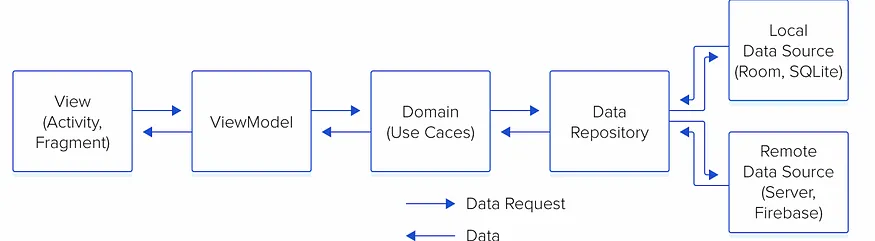
10. Architecture Patterns:
Explore design patterns for creating maintainable and scalable apps:
- Understand Model-View-ViewModel (MVVM) or Model-View-Presenter (MVP) architecture.
- Use LiveData and ViewModel to manage UI-related data.
- Learn about Dependency Injection with Dagger or Hilt.
11. Advanced UI:
Enhance your UI skills:
- Implement animations and transitions.
- Create custom views and drawables.
- Learn about Material Design guidelines.
12. Background Processing:
Understand how to perform tasks in the background:
- Implement background processing using Services.
- Use WorkManager for scheduling and executing background tasks.
13. Publishing:
Prepare your app for release:
- Generate signed APKs.
- Learn about Google Play Store guidelines and publishing process.
14. Testing:
Ensure your app’s quality through testing:
- Write unit tests using JUnit and Mockito.
- Perform UI testing using Espresso.
- Explore automated testing with frameworks like Robolectric.
15. Security:
Learn about app security practices:
- Understand data encryption and secure coding practices.
- Implement authentication and authorization.
16. Performance Optimization:
Optimize your app for better performance:
- Profile your app using Android Profiler.
- Optimize memory usage and reduce CPU load.
- Implement caching and optimize network requests.
17. Continuous Learning:
Stay updated with the latest trends and technologies:
- Follow Android developer blogs, forums, and YouTube channels.
- Explore Android Jetpack components and new features.
18. Personal Projects:
Apply your skills by building your own apps:
- Work on real-world projects to reinforce your learning.
- Experiment with different app ideas to enhance your portfolio.
Remember, the learning process is ongoing. The Android development landscape is constantly evolving, so staying curious and open to learning new concepts is essential. As you progress through this roadmap, you’ll gain the skills and knowledge needed to create impactful, user-friendly, and innovative Android applications. Happy coding!