Systems Failure: Why Getting a Business Permit Still Feels Like 1995


The Philippines has modern businesses operating inside government processes that were designed for a different era.
There is something almost absurd about starting a business in the Philippines today.
You can register a company online.
You can open a digital bank account from your phone.
You can sell to customers in another country without ever meeting them.
You can run a software company from a bedroom.
You can receive international payments in minutes.
You can build a global business with a laptop and an internet connection.
And yet, depending on where you operate and what your business does, getting the permits to legally operate can still involve documents, clearances, signatures, inspections, separate government offices, repeated information, and processes that feel disconnected from the way modern businesses actually work.
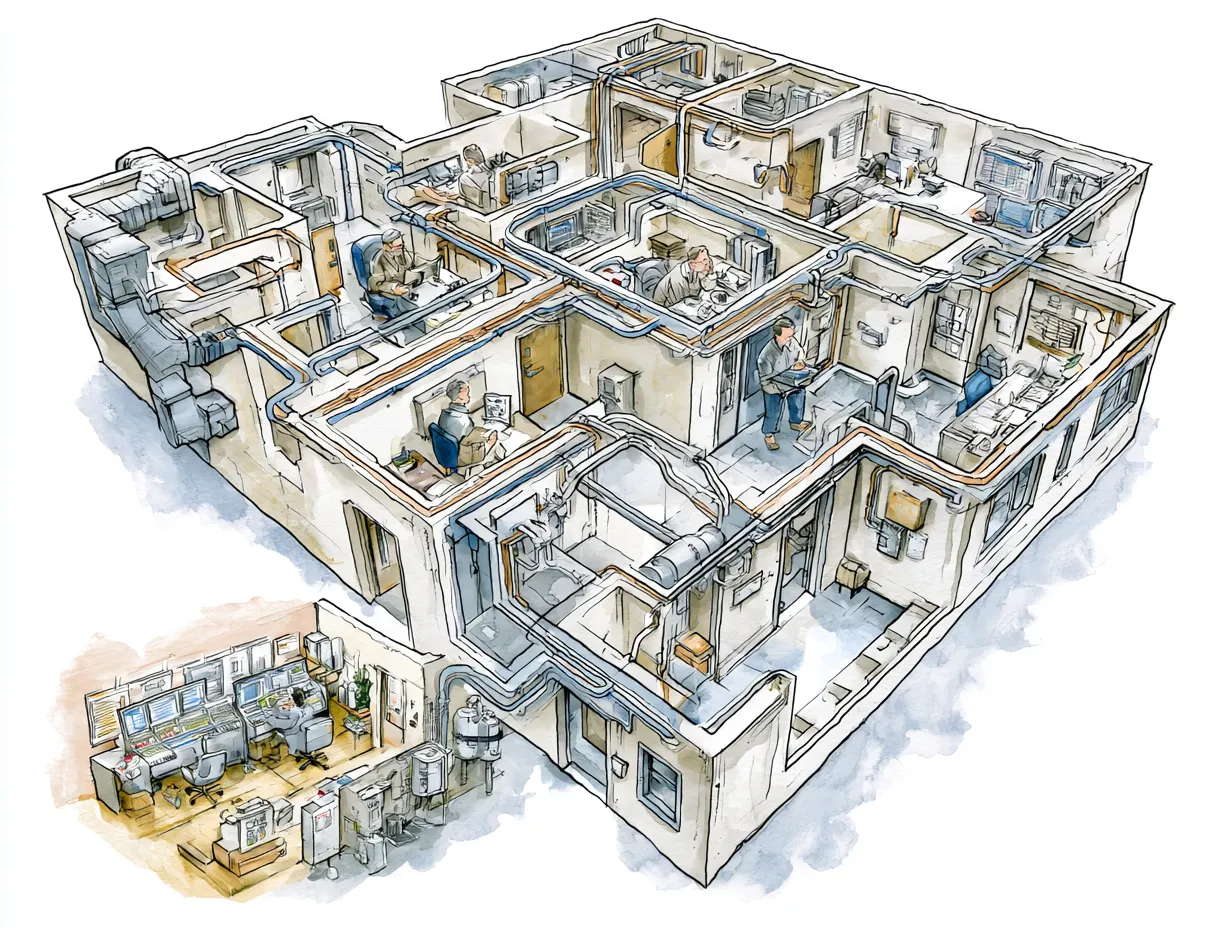
We have a 2026 economy running on top of pieces of a 1995 administrative system.
That is the real problem.
And I don’t think the answer is simply to put the existing process online.
We need to redesign the process itself.
The Problem Is Not Regulation
Before going further, I want to make one distinction.
I am not arguing that businesses should be allowed to operate without regulation.
Government has legitimate reasons to regulate businesses.
A restaurant should meet sanitation requirements.
A factory should comply with environmental and safety standards.
A construction company should follow building codes.
A hospital should meet strict health requirements.
Businesses that pose greater risks should face greater scrutiny.
The problem is when the government treats compliance itself as the objective, rather than using regulation to achieve a public purpose.
A good regulatory system asks:
What risk are we trying to control?
A bad one asks:
What form haven’t you submitted yet?
Those are very different approaches.
A Business Is One Entity. Government Treats It Like Ten.
Imagine you are opening a small restaurant.
From your perspective, you have one business.
From government’s perspective, you may have to interact with multiple institutions and comply with different requirements involving business registration, local permits, taxation, fire safety, sanitation, zoning, labor, and other regulations depending on the circumstances.
Again, there may be legitimate reasons for each requirement.
But the entrepreneur should not have to become an expert in the structure of government just to operate legally.
This is the fundamental design problem.
The government is organized around agencies. The citizen is organized around needs.
The entrepreneur thinks:
“I want to open my restaurant.”
Government responds:
“Here are the offices you need to deal with.”
A modern government should reverse that.
The citizen should say what they are trying to accomplish.
Government should coordinate the necessary processes behind the scenes.
We Have Digitized Forms Instead of Redesigning Government
This is one of my biggest frustrations with digital transformation.
Sometimes we take an old process and put it on a website.
That’s not transformation.
If the old process required twelve steps, the online version should not simply reproduce the same twelve steps with digital forms.
The question should be:
Why do all twelve steps exist?
Can three be eliminated?
Can five be automated?
Can two agencies share the information directly?
Can one approval cover multiple related requirements?
Can the government verify something without asking the citizen to upload another document?
That is where real digital transformation begins.
The technology is often the easy part.
Changing the process is the difficult part.
The “Once Only” Principle
One of the simplest reforms I would introduce across Philippine government is what I would call the once-only principle.
If government already has verified information, citizens should not repeatedly provide it unless there is a legitimate legal, security, or privacy reason.
If the government already knows a company’s:
legal name,
registration number,
tax information,
ownership information,
registered address,
and other verified details,
why should the entrepreneur repeatedly type or submit the same information?
Because agencies have historically operated as separate institutions.
That is understandable historically.
It is increasingly difficult to justify technologically.
The citizen should not be the government’s data-transfer mechanism.
The Entrepreneur Should Not Be the Integration Layer
This is perhaps the clearest way to describe the problem.
Agency A needs information from Agency B.
Instead of Agency A securely retrieving that information from Agency B, the entrepreneur is told to obtain a document from Agency B and bring it back.
The human being becomes the API.
That is backwards.
If government agencies are legally allowed to share specific information, they should build systems that allow authorized verification to happen automatically.
Of course, this requires strong cybersecurity and privacy protections.
Not every agency should have access to everything.
But legitimate data sharing can be designed around permissions, audit trails, and purpose limitations.
The answer to privacy concerns should be better architecture, not permanent administrative fragmentation.
Not Every Business Needs the Same Level of Government Friction
A freelance graphic designer and a chemical processing plant are not equivalent regulatory risks.
Neither are:
a home-based online seller,
a restaurant,
a warehouse,
a construction company,
a hospital,
a financial institution.
Yet regulatory systems can become complicated because they accumulate requirements over time rather than continuously evaluating actual risk.
I would rather see the Philippines adopt a stronger risk-based permitting model.
Low-risk businesses should receive simplified registration and fast approval.
Medium-risk businesses should receive appropriate verification.
High-risk businesses should receive detailed technical review and inspection.
This would actually allow government to become stricter where it matters while becoming much easier for everyone else.
That is smarter regulation.
The Goal Should Be Fast Compliance, Not Weak Compliance
These are not the same thing.
Suppose I operate a restaurant.
I want the government to verify that my establishment meets health and safety standards.
I don’t want a system that ignores those standards.
But I also don’t want to spend weeks figuring out which office needs which document.
The ideal process would be:
I declare the business.
Government identifies the applicable requirements.
I submit the necessary information.
The system verifies what it can automatically.
The relevant inspector visits if necessary.
The permit is issued once compliance is established.
That’s it.
Strict where necessary.
Simple everywhere else.
Government Should Tell Businesses Exactly What Is Required
One of the most frustrating aspects of bureaucracy is uncertainty.
A checklist might say one thing.
An office might request something else.
A website may be outdated.
A citizen may receive different instructions from different employees.
That is a systems failure.
Every business permit should have a standardized digital checklist.
It should show:
Required
Not required
Conditionally required
Government will verify automatically
Applicant must provide
The legal basis for each requirement should also be visible.
That creates something extremely valuable:
predictability.
An entrepreneur should know what government expects before submitting an application.
Processing Time Should Be a Government Promise
Another simple reform:
Every government transaction should have a published service-level standard.
Not vague language such as “processing time may vary.”
A real commitment.
For example:
Low-risk permit: X working days.
Permit requiring inspection: Y working days.
Complex application: Z working days.
If the deadline is missed, the system should show why.
Was information incomplete?
Was an inspection delayed?
Was another agency responsible?
Was there an extraordinary circumstance?
This turns government performance into something measurable.
And once it is measurable, it can be improved.
The Entrepreneur Should Never Have to Ask, “Where Is My Application?”
Think about almost any modern commercial service.
You order something online.
You can see:
Order received.
Processing.
Shipped.
Out for delivery.
Delivered.
Government should provide the same basic visibility.
A business permit application should show:
Submitted
Documents verified
Under review
Inspection required
Inspection completed
Approved
or
Rejected, with explanation
The citizen should never have to physically visit an office simply to ask what happened to their application.
This Would Also Reduce Corruption
This is where business reform connects directly to our earlier discussions about corruption.
Corruption becomes easier when government processes contain unnecessary discretion.
If an employee can decide whether your application moves today or next month, that creates an opportunity.
If the rules are unclear, negotiation becomes possible.
If the process is invisible, accountability becomes difficult.
If every step is automated, timestamped, and auditable, those opportunities shrink.
I’m not suggesting that technology magically eliminates corruption.
It doesn’t.
But it can change the environment in which corruption occurs.
Instead of asking citizens to trust every individual official, we can design systems that make transactions transparent.
That’s a much stronger foundation.
The Philippines Already Has the Legal Direction
This is not an entirely new idea.
The Philippines has already enacted the Ease of Doing Business and Efficient Government Service Delivery Act, and the Anti-Red Tape Authority was created to push government agencies toward faster and more efficient service delivery.
The law established mechanisms including Citizen’s Charters and standards for government transactions.
The problem is that having a law requiring efficient service is not the same as having an efficiently designed government.
The next stage has to move from compliance with anti-red-tape rules toward redesigning the architecture of government services.
That is a much bigger project.
Local Governments Are Where This Gets Complicated
There is an important reason this problem cannot simply be solved with one national website.
Local governments have legitimate authority.
A municipality in a rural area does not have the same economic conditions as a major metropolitan city.
Zoning rules differ.
Local ordinances differ.
Infrastructure differs.
Risk profiles differ.
That variation is sometimes appropriate.
But variation in policy does not require variation in the technology platform.
A city can maintain its own legitimate requirements while using a common national digital infrastructure.
Think of it like this:
The rules can remain local.
The user experience can become national.
Imagine One Business Government Account
This is what I would eventually like to see.
An entrepreneur creates a single verified government business account.
That account becomes the digital identity of the company.
From there, the entrepreneur can:
register the business,
apply for permits,
renew licenses,
manage tax obligations,
submit required reports,
receive government notices,
apply for incentives,
track compliance,
and access relevant government services.
The entrepreneur should not need to understand which department owns each process.
Get Caramel Macchiato’s stories in your inbox
Join Medium for free to get updates from this writer.
The platform routes the transaction internally.
Government remains decentralized where necessary.
The experience becomes unified.
That is the difference between one government and merely having many government agencies with websites.
AI Could Take This Further
This is where the AI discussion from the previous articles becomes practical.
Imagine an AI layer sitting on top of government services.
You tell it:
“I’m opening a small café in this location.”
The system identifies the applicable regulatory requirements.
It checks the business category.
It identifies which permits apply.
It tells you what information is missing.
It retrieves information government already has.
It calculates applicable fees.
It checks whether the proposed location has relevant restrictions.
It schedules inspections.
It tracks deadlines.
And it tells you what is happening at every stage.
The AI is not making political decisions.
It is navigating administrative complexity.
That is exactly the kind of work technology should be doing.
But We Should Not Automate Bad Rules
This is where reformers need discipline.
There is a temptation to say:
“Let’s build an AI system for business permits.”
Fine.
But first ask:
Are the rules themselves rational?
If an unnecessary requirement exists, automating it simply creates a faster unnecessary requirement.
If five agencies ask for the same information, connecting them without eliminating duplication still leaves the underlying problem.
Technology should come after process redesign, not instead of it.
The order should be:
Simplify.
Standardize.
Integrate.
Automate.
Then continuously measure.
The Economic Cost Is Bigger Than It Looks
It is easy to dismiss permit delays as an inconvenience.
But time is money.
Suppose an entrepreneur spends several days dealing with government.
That is several days not spent:
selling,
developing products,
training employees,
meeting customers,
managing suppliers,
or hiring.
Now multiply that across hundreds of thousands of businesses.
The aggregate cost becomes significant.
The World Bank’s recent assessment of Philippine growth identifies regulatory complexity, barriers to business entry and scaling, customs inefficiencies, and weak competition in some sectors as constraints on productivity and investment. It recommends reforms including simplifying and digitizing permits and improving the investment environment.
This is why I don’t consider business permitting a minor bureaucratic problem.
It is a productivity problem.
Small Businesses Pay the Highest Price
Large companies can absorb bureaucracy.
They can hire:
lawyers,
accountants,
consultants,
compliance officers,
government-relations teams.
A small business owner usually cannot.
For them, every unnecessary requirement is a larger percentage of their available time and money.
This creates an unintended bias.
The more complicated government becomes, the easier it is for large businesses to absorb the cost.
Small businesses struggle more.
That is the opposite of what we should want from a country trying to expand entrepreneurship.
The Government Should Make Formalization Worth It
There is another issue we don’t discuss enough.
If formal businesses face significant administrative costs while informal businesses avoid many of them, the system creates an incentive to remain informal.
Then government asks:
“Why aren’t more businesses registering?”
Because sometimes formalization feels like taking on a permanent administrative burden.
The answer should not be simply stronger enforcement.
It should also be making formalization easier and more valuable.
A registered business should gain easier access to:
banking,
credit,
government contracts,
digital services,
export support,
insurance,
training,
and other economic opportunities.
The formal economy should be easier to enter and more rewarding to remain in.
Government Should Spend Less Time Processing and More Time Enforcing
This is the transformation I would like to see.
Today, government can spend enormous amounts of effort checking whether people have completed paperwork.
A modern government should spend more effort ensuring that businesses actually comply with substantive standards.
There is a huge difference.
Instead of asking:
“Did you submit Form 17?”
Government should increasingly ask:
“Is this restaurant safe?”
“Is this factory complying with environmental standards?”
“Is this building structurally sound?”
“Is this company paying the taxes it owes?”
“Is this business protecting its workers?”
The purpose of regulation should be outcomes.
Not paperwork.
What I Would Change First
If I were given the responsibility of redesigning Philippine business permitting, I would not begin by building another government website.
I would begin with a national process audit.
Every major business permit would be mapped from start to finish.
For every step, we would ask:
Why does this exist?
Who performs it?
What information is required?
Who already has that information?
Can the step be eliminated?
Can it be merged?
Can it be automated?
Can the requirement be made risk-based?
What is the legal basis?
What does it cost?
How long does it take?
What happens if the agency misses the deadline?
Then I would publish the answers.
The public should be able to see how the system works.
Then Build the Infrastructure
Once the process has been simplified, government could build the technical architecture around it.
A unified business identity.
Interoperable government databases.
Digital signatures.
Online payments.
Secure document exchange.
Application tracking.
Automated verification.
Risk scoring.
Inspection scheduling.
Audit trails.
Public performance dashboards.
And eventually, AI-assisted navigation.
The important thing is that the technology follows the redesigned process.
Not the other way around.
Then Measure Every Office
Every permitting office should have a dashboard.
Average processing time.
Median processing time.
Percentage completed within the legal standard.
Number of applications.
Number of rejected applications.
Reasons for rejection.
Number of complaints.
Appeal outcomes.
Citizen satisfaction.
These numbers should not exist simply for reporting.
They should be used to identify where systems are failing.
If one city consistently processes a permit in two days and another takes twelve, we should be able to ask why.
Maybe the rules differ.
Maybe staffing differs.
Maybe one system is better.
Maybe one office has unnecessary steps.
The data gives us somewhere to start.
And Then Do Something Very Unusual in Government
Fix the problem.
Not create another committee.
Not create another task force.
Not launch another campaign.
Fix the workflow.
If an approval is unnecessary, remove it.
If two forms duplicate each other, merge them.
If three agencies verify the same information, connect them.
If an employee spends most of the day encoding data, automate it.
If an office consistently misses its deadlines, investigate the bottleneck.
If a regulation no longer serves its original purpose, review it.
Reform should be operational.
A Business Permit Should Eventually Become Boring
That is actually my dream for Philippine government.
Not futuristic.
Not flashy.
Boring.
You want to start a business.
You log in.
You tell the government what you’re doing.
The system tells you what is required.
You provide the information once.
Government verifies what it already knows.
The relevant agencies perform their checks.
You receive a decision.
You pay the required fees.
You download the permit.
Done.
No special connection.
No mystery.
No repeated trips.
No wondering whether you missed an invisible requirement.
No waiting indefinitely.
No feeling like you need a government survival guide.
Just a functioning transaction.
We Don’t Need to Go Back to 1995
The Philippines has changed enormously since then.
Our entrepreneurs have changed.
Our technology has changed.
Our economy has changed.
The way Filipinos work has changed.
The way Filipinos buy, sell, communicate, bank, and build businesses has changed.
Government has to catch up.
Not by trying to make government look modern.
By making government work like it belongs in the modern economy.
The ultimate test is simple.
A Filipino should be able to have an idea on Monday, legally establish the business, complete the necessary compliance, and start serving customers without spending the next several weeks figuring out how government works.
That does not mean eliminating regulation.
It means making regulation understandable.
It does not mean eliminating oversight.
It means focusing oversight where risk actually exists.
It does not mean firing government workers.
It means giving them better systems.
And it does not mean replacing government with AI.
It means using technology to remove the work that never needed a human being in the first place.
The Philippines does not need fewer rules simply for the sake of having fewer rules.
It needs better rules.
Better processes.
Better technology.
Better coordination.
And, ultimately, a government that understands one simple principle:
The citizen should not have to navigate the structure of government in order to receive a government service.
That is the real meaning of digital government.
And until we achieve it, a modern Filipino entrepreneur will continue to experience something that should have disappeared decades ago:
A 2026 business operating inside a 1995 bureaucracy.